KWB – Related? The 1960 Ethiopian Coup Attempt
- Date: December 13–17, 1960
- Main Players:
- Emperor Haile Selassie I (on the throne since 1930)
- Mengistu Neway (Commander of the Imperial Guard)
- Germame Neway (Provincial governor, Mengistu’s brother)
- Other dissident officers and intellectuals
- Setting: Addis Ababa, Ethiopia
What Happened
- Emperor Abroad:
- In December 1960, Haile Selassie was on a state visit to Brazil.
- His absence created an opportunity for conspirators to attempt a coup.
- Coup Launched:
- On December 13, 1960, the Imperial Guard seized key government buildings in Addis Ababa and took several government officials hostage at the Guenete Leul Palace (also known as the Jubilee Palace).
- Crown Prince Asfaw Wossen (later Emperor Amha Selassie) was forced to announce on radio that his father had been deposed and a new government would enact reforms.
- The Green Room Massacre:
- When loyalist forces moved to retake the palace, coup plotters executed at least 15 prominent officials inside the palace’s Green Salon (Green Room).
- This massacre shocked the country and solidified resistance against the coup.
- Coup Collapses:
- By December 17, 1960, the army, air force, and police—still loyal to Haile Selassie—crushed the coup.
- Mengistu Neway was captured and executed; Germame Neway committed suicide to avoid capture.
- Emperor Returns:
- Haile Selassie returned from Brazil on December 17 to a triumphant welcome and regained control.
Why It Mattered
- The coup highlighted growing dissatisfaction with Ethiopia’s feudal system and lack of modernization.
- Though it failed, it marked a turning point: many intellectuals, students, and military officers began questioning Haile Selassie’s rule, planting seeds of unrest that would later contribute to his overthrow in 1974.
- The Green Room Massacre became a symbol of the coup’s violence and tragedy.
Blogpost 1
Amerikaanse Ambassade / support coup 1960
Volgens sommige Ethiopische bronnen werd de mislukte coup van 13 December 1960 door de Amerikaanse ambassade in Addis Abeba ondersteund. Dit is gebasseerd op verklaringen van een van de coupplegers Generaal Mengistu Neway welke zijn afgelegd bij ondervragingen na zijn arrestatie. Het onderstaande relaas wordt o.a. als een bevestiging van het verhaal van Mengistu Neway aangedragen.
In de hoop dat door Amerikaanse bemiddeling het leven van de gegijzelde ministers en ambtenaren van de koninklijke regering beschermd zou worden, begaf de Amerikaanse ambassadeur L. Richards vergezeld door de C.I.A. station chef W.M. McGhee en de attache van het Amerikaanse leger W.H. Crosson Jr., zich naar het paleis van Haile Selassie, waar deze gevangen werden gehouden. Daar ontmoetten ze de leiders van de staatsgreep, die werden geconfronteerd met de eisen van het loyalistische leger om zich over te geven.
Met de oprukkende eenheden van het leger aan de poorten van het paleis (die direct begonnen het paleis te beschieten), werd de C.I.A chef W.M. McGhee door zijn rebellencontact gewaarschuwd om het paleis onmiddellijk met de ambassadeur te verlaten. Het voortdurende schieten op de voorkant van het paleis dwong de Amerikanen door het dichtsbijzijnde raam te springen, om te ontdekken dat ze gestrand waren, hun ambassade auto was verdwenen. Na een paar zeer spannende minuten in een gehurkte vlucht, vond het trio een auto in de garage van het paleis met de sleutels nog in het contact. Met de opgeeiste auto vluchtten ze door de achterpoort van het paleis naar de veiligheid.
Momenten nadat de Amerikaanse delegatie was vertrokken, voerden de coupplegers de beruchte Green Room Massacre uit. Hierbij werden 15 van de gijzelaars geexecuteerd.
Blogpost 1
The failed coup of 1960
The next day, on 14 December 1960, crown prince Assfa Wossen went on the radio to announce the coup and the formation of a new government and a pay raise for the armed forces. Whether he did this willing or by force has remained a topic of controversy. Marcus points out that it was to his “advantage to cooperate…he could always claim, if the coup failed, that he had acted under mortal threat.”
The conspirators hoped the crown prince’s speech would buy them the support of the Army and the Air Force while also gaining support from the populace of Addis Ababa. However, the speech did not have the intended effect. Most felt that the crown prince gave the speech under duress. Imperial Body Guard troops, the majority of whom learned for the first time that they were fighting against the emperor when they heard the radio broadcasts, lost their will to fight.
By this time the Air Force had decided to join the group loyal to the emperor. Troops were being recalled and were pouring into Addis Ababa.
Another important player in town were the Americans. The conspirators asked that the new government be given recognition by the United States government. However, the Americans were also in contact with the loyalist camp and had not yet decided on which side they would give support.
(bron: https://thehaileselassie.com/)
Blogpost 3
Een bijzonder groot schandaal
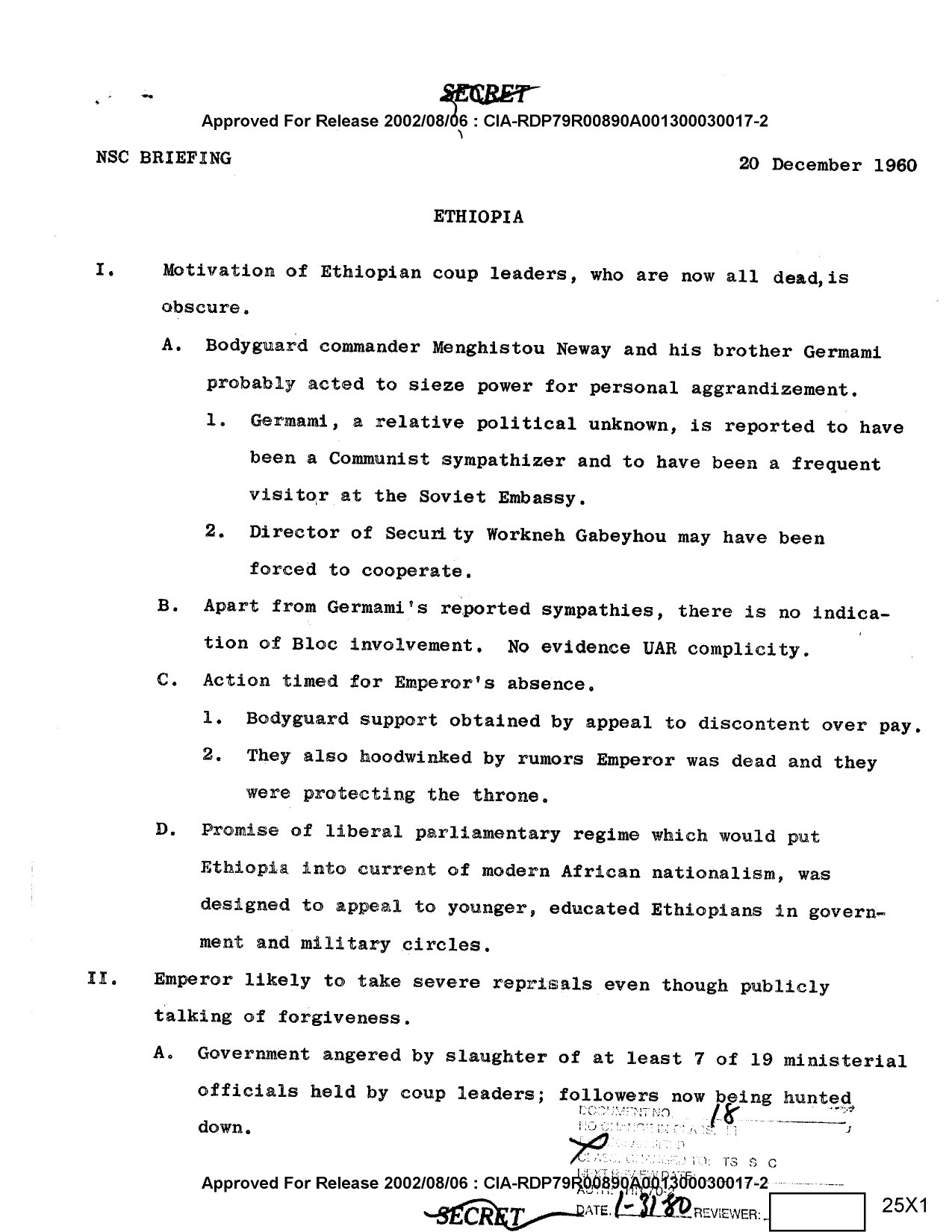
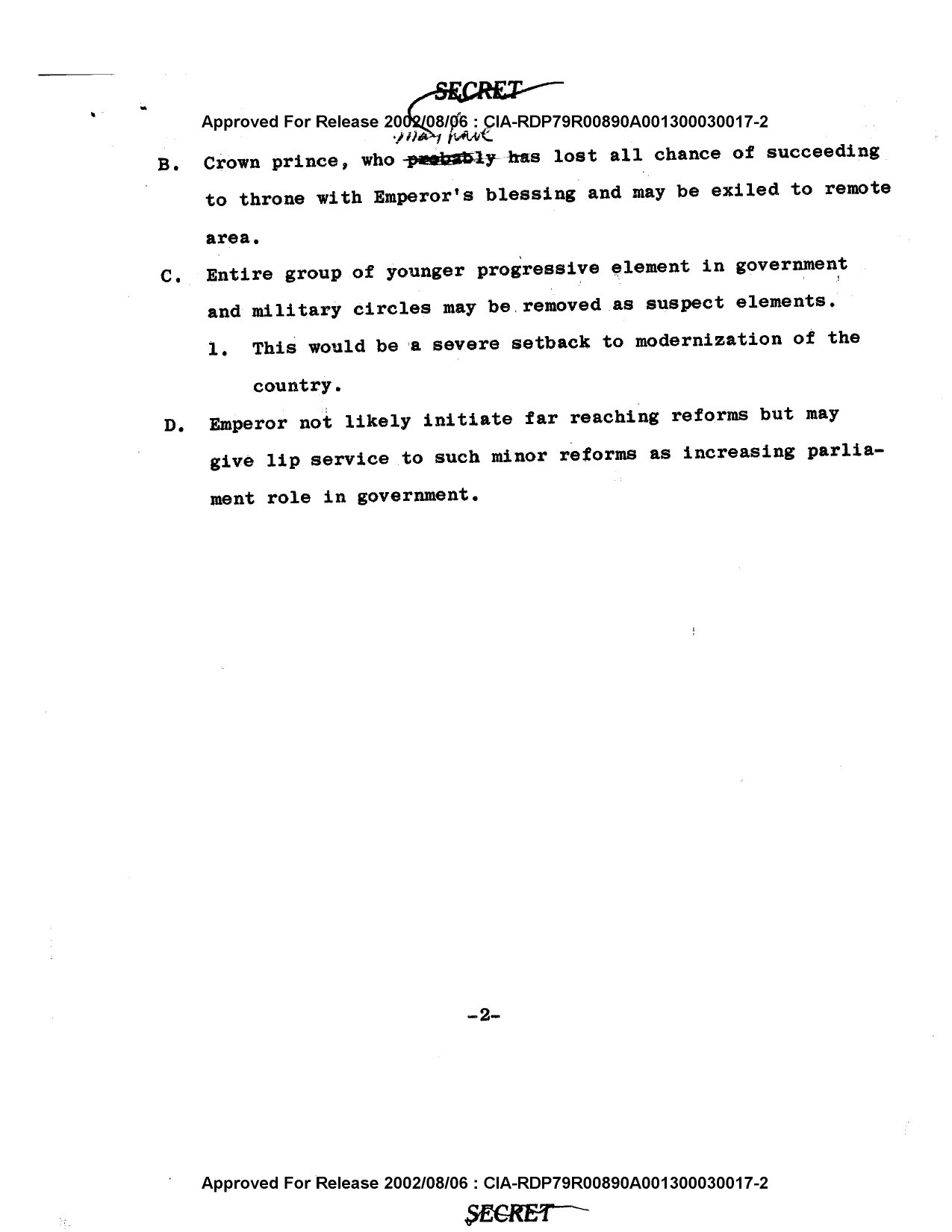
Nadat de Ethiopische coup van 13 December 1960 was mislukt verklaarde de C.I.A. op 20 December 1960 in een NSC Briefing het volgende:
https://www.cia.gov/readingroom/docs/CIA-RDP79R00890A001300030017-2.pdf
Motivation of Ethiopian coup leaders, who are now all dead, is obscure,
Bodyguard commander Menghistu Neway and his brother Germame probably acted to sieze power for personal aggrandizement.
- Germame, a relative political unknown, is reported to have been a Communist sympathizer and to have been a frequent visitor at the Soviet Embassy.
- Director of Security Workneh Gabeyhu may have been forced to cooperate.
In deze briefing aan de National Security Council stelt men dus dat de coupplegers puur uit eigen belang( macht, rijkdom) hebben gehandeld, en dus niet volgens een politieke ideologie. Deze NSC Briefing is op internet beschikbaar( pas na 40 jaar declassified).
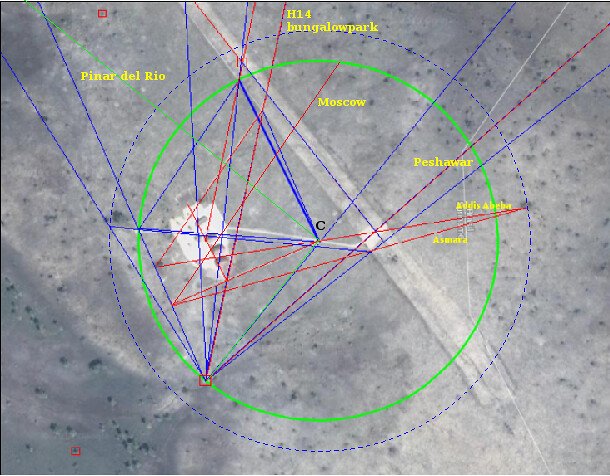
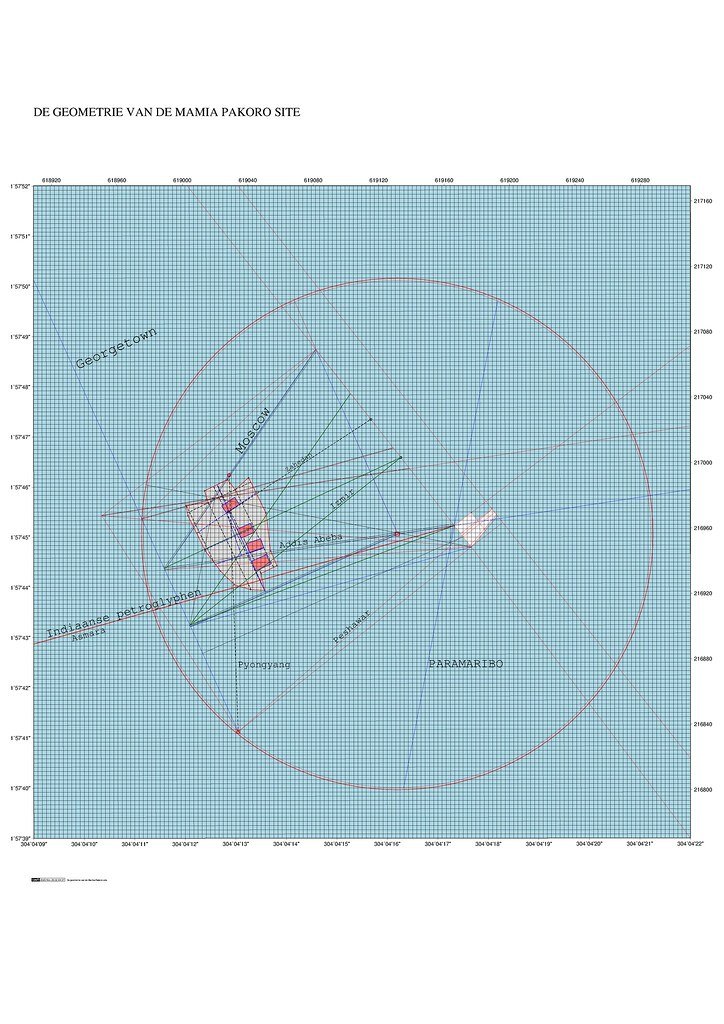
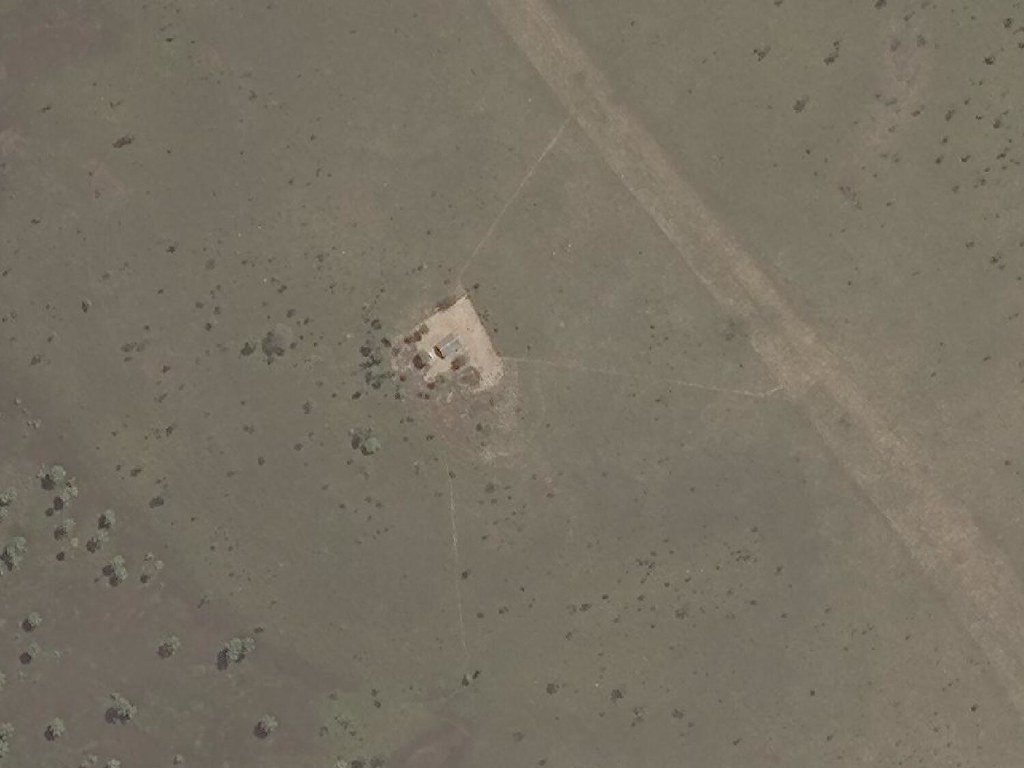
Op basis van de afbeeldingen is er dus een verband tussen de mislukte coup van 13 December 1960 in Addis Abeba en de Mamia Pakoro site.
Did the same thing happen in Suriname?
Date:
September 6, 2025