Matthew Smith Podcast: The Suriname Contra Affair – Part 7
Source: https://bymatthewsmith.substack.com/p/the-suriname-contra-affair-part-7
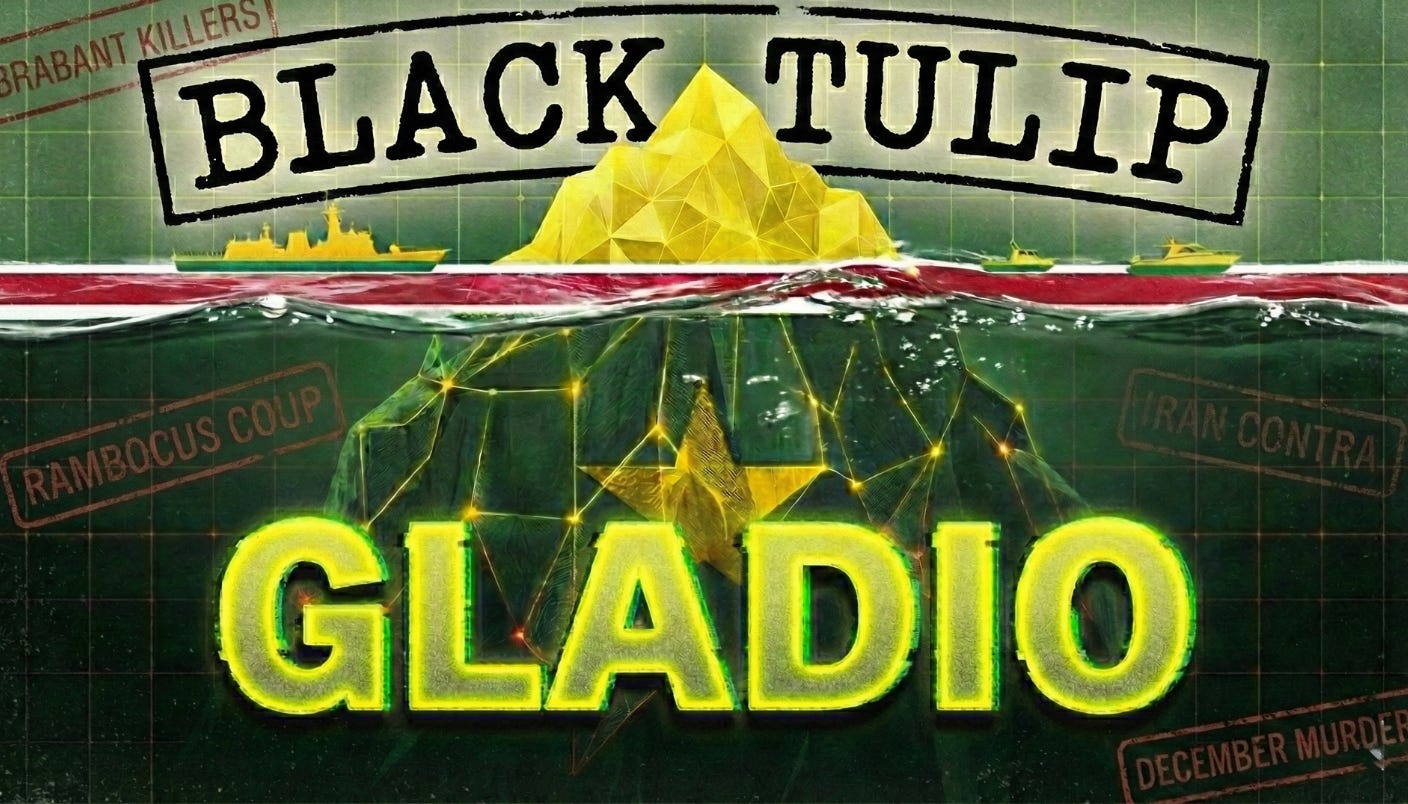
The Gladio Question
August 3, 1990. The Italian Prime Minister Giulio Andreotti stands before Parliament and confirmed what conspiracy theorists had been saying for years: 1
Yes, we had secret armies. Yes, they operated for decades. Yes, it was all real.
Within weeks, governments across Europe were forced to make the same confession. The secret they’d kept since World War II? It was called Operation Gladio.
For a long time, Gladio sounded like a conspiracy theory. Then, in 1990, it stopped being one. Parliamentary investigations and judicial inquiries across Europe forced governments to acknowledge what had existed all along: clandestine “stay-behind” networks, created during the Cold War and deliberately kept outside democratic oversight.
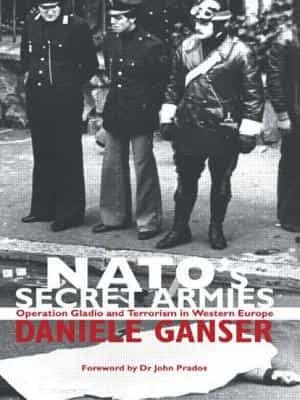
After World War II, the CIA and MI6 helped organize covert structures across Western Europe designed to activate if the Soviet Union invaded. To do that, they stockpiled weapons, explosives, and communications equipment in secret caches. By 1990, governments across Europe—including the Netherlands—were forced to admit they had their own versions of these secret armies. Historian Daniele Ganser in their book, NATO’s Secret Armies: Operation Gladio and Terrorism in Western Europe, has documented that these networks existed in 16 different countries.2
The Netherlands held out longer than most.
November 13, 1990. Prime Minister Ruud Lubbers finally confirmed what everyone suspected: yes, the Dutch had a stay-behind network too. But his admission came with a carefully worded disclaimer.3 The organization operated “under the responsibility of the Dutch government.” There had been no “foreign or NATO supervision.”4
The Dutch network, Lubbers insisted, was different. More controlled. Nothing like the Italian mess with its links to terrorism and right-wing extremism.
That reassurance would prove difficult to maintain.
Critics often ask if there is proof these networks operated in former colonies. The answer is yes. The Belgian government admitted that its secret army (SDRA8) operated in the Congo, Rwanda, and Burundi.5 Portugal used similar networks for anti-insurgency in Angola and Mozambique. Suriname wasn’t an isolated case; it was the Dutch application of a proven colonial model.
This mattered because it revealed something fundamental about how Western states managed risk. When normal diplomacy failed, and when overt force was politically impossible, governments reached for quieter tools: deniable funds, unofficial intermediaries, inducements rather than arrests, exile rather than trials.
The Man Who Broke the Silence
But here’s what made the Dutch case unusual: we actually have insider testimony.
Herman Schoemaker as a radio instructor at O&I served for over 25 years—mid-1960s until 1992—as an agent, instructor, and staff member for the Dutch stay-behind organization. 6When the network finally dissolved in 1992, two years after the Italian exposure forced everyone’s hand, Schoemaker received an official letter from Prime Minister Lubbers. A thank-you note. For his “many years of dedicated service.”7
Think about that timing for a second.
Andreotti’s confession comes in August 1990. Lubbers admits in November 1990. The Dutch network quietly shuts down in 1992. And a veteran operative gets a personal thank-you from the Prime Minister.
After retiring in 2004, Schoemaker did something unexpected: he studied history at Utrecht University. And in 2013, he broke his secrecy vow by writing a master’s thesis titled Een geheime organisatie in beeld (A Secret Organization in View) under the supervision of Prof. Dr. Bob G.J. de Graaff, professor of Intelligence and Security Studies at the department for History of International Relations and Villa Maarheeze.8
This wasn’t conspiracy theory from some fringe activist. This was primary source testimony from a 25-year veteran who’d operated at every level—agent, instructor, staff member.
Here’s what Schoemaker revealed.
The Dutch network wasn’t called “Gladio.” That was the Italian name. The Dutch called it I&O—Inlichtingen en Operatiën. Intelligence and Operations.9
The Geography of the Secret: Villa Maarheeze
One of the clearest points of overlap for our story is a place called Villa Maarheeze, in Wassenaar.
Villa Maarheeze sits at Generaal van Heutszlaan in Wassenaar, one of the wealthiest neighborhoods in the Netherlands. To anyone driving past, it looks like what it is—a stately mansion built in 1916, surrounded by gardens and trees.
But inside that building operated something else entirely: the nerve center of Dutch covert operations.
Villa Maarheeze housed two organizations under one roof.
Section I (Inlichtingen/Intelligence): The IDB—Inlichtingendienst Buitenland, the Dutch Foreign Intelligence Service. The people who collected intelligence abroad, maintained liaison with allied services, ran operations beyond Dutch borders. This is what everyone thought operated at Villa Maarheeze.10
Section O (Operatiën/Operations): The stay-behind network. Sabotage. Psychological warfare. Resistance operations. This section reported directly to the Prime Minister, bypassing the Ministry of Defense’s normal chain of command.11
The camouflage was elegant.
As Herman Schoemaker wrote:
“The unknown stay-behind organization hid behind the skirts of this service for decades. If questions arose among officials about certain activities, secrecy seemed a logical consequence of an intelligence service.”12
Read that again. “Hid behind the skirts.“
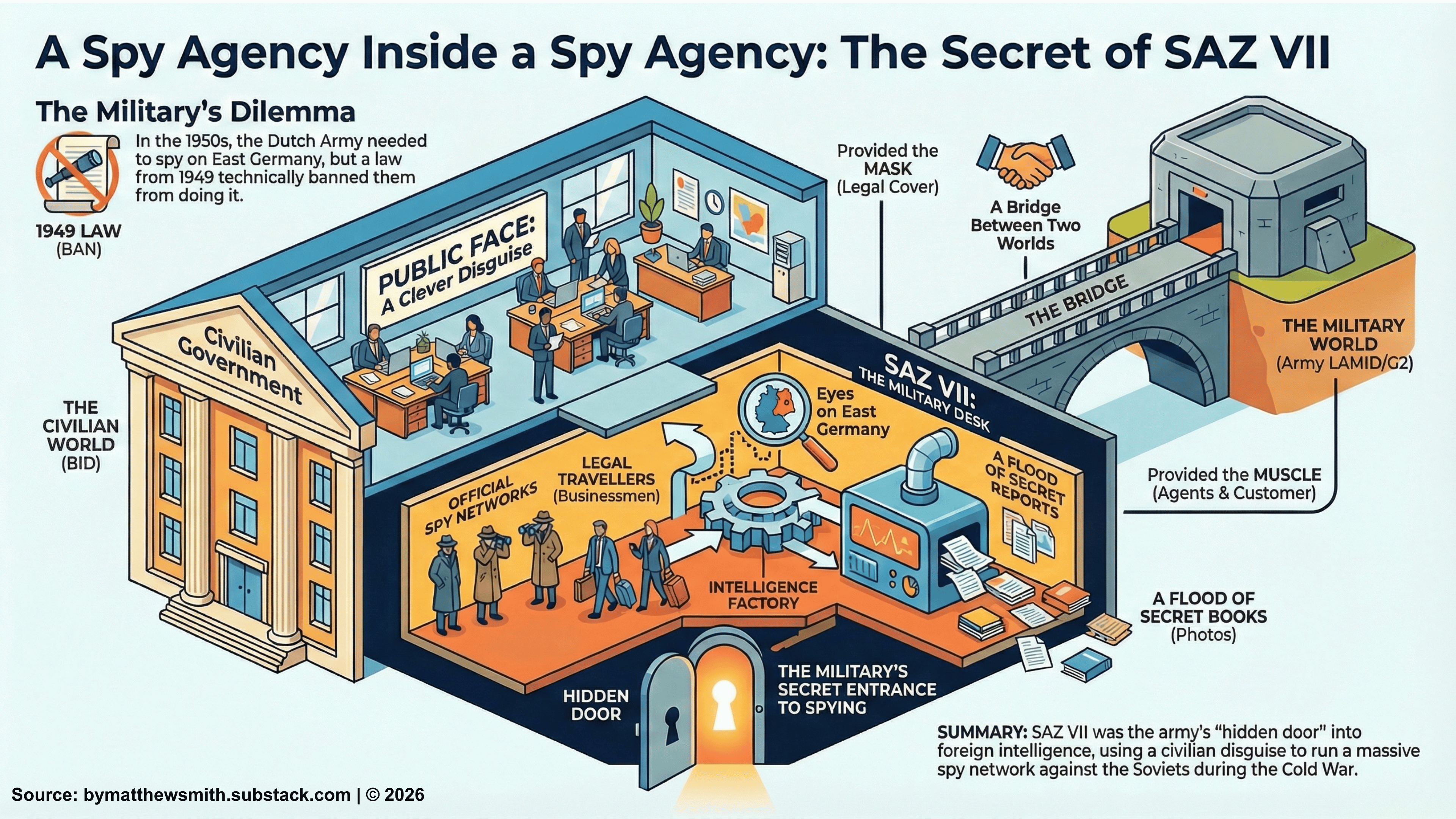
So a quick side note: in the 1950’s the Dutch military wasn’t technically allowed to run spy operations in foreign countries—that was the job of a civilian agency called the BID (the Foreign Intelligence Service).
However, the military didn’t think the civilian agency was doing a good enough job. So, they created a “Shadow Agency” called SAZ-VII. It was specifically to spy on East Germany.
They hid this agency inside the civilian one, essentially using the BID as a “skirt” or a “mask” to hide behind. Official MIVD selection lists now confirm the sheer scale of this shadow output. Government records admit that through SAZ-VII, military intelligence (G2) received “dozens of reports per week” sourced from what they termed a “perfectly functioning agent network.” They had books titled “Barracks in Eastern Germany,” filled with clandestine photos of military buildings taken by these secret agents. This admission validates that Villa Maarheeze wasn’t just a passive storage site but the hub of a high-volume intelligence factory that bypassed traditional oversight.13
What about equipment for Section O? Procured through Section I. Finances for stay-behind operations? Arranged under collective budget headings through Section I’s accounts. The two organizations operated in the same building, sharing infrastructure, but maintaining strict internal separation.14
“Also internally,” Schoemaker noted, “the strictest possible separation between I and O was maintained.”15
This wasn’t just convenient. It was an operational firewall. You could work for the Foreign Intelligence Service and never know that the office down the hall was running NATO’s secret army.
This is the same location to which figures like Sgt. Krishna Mahabier were taken for five days of closed-door debriefing after fleeing Suriname following the Rambocus Coup.16
But understanding the building’s dual structure isn’t enough. To understand how stay-behind operations actually functioned, you need to understand the operational protocols that made them possible.
The IDB worked in Suriname using two main methods: talking to people (HUMINT) and listening to secret messages (SIGINT). One of their best tools was a listening station. It tracked phone calls and radio messages between Suriname and the Netherlands. This information was put into a daily report called the ‘Green Book’. By listening to these messages, the IDB likely found out that the relationship between Bouterse and Horb was falling apart. This gave them a great view of the crisis. However, they could not do much to change things because the government in The Hague could not make a decision.
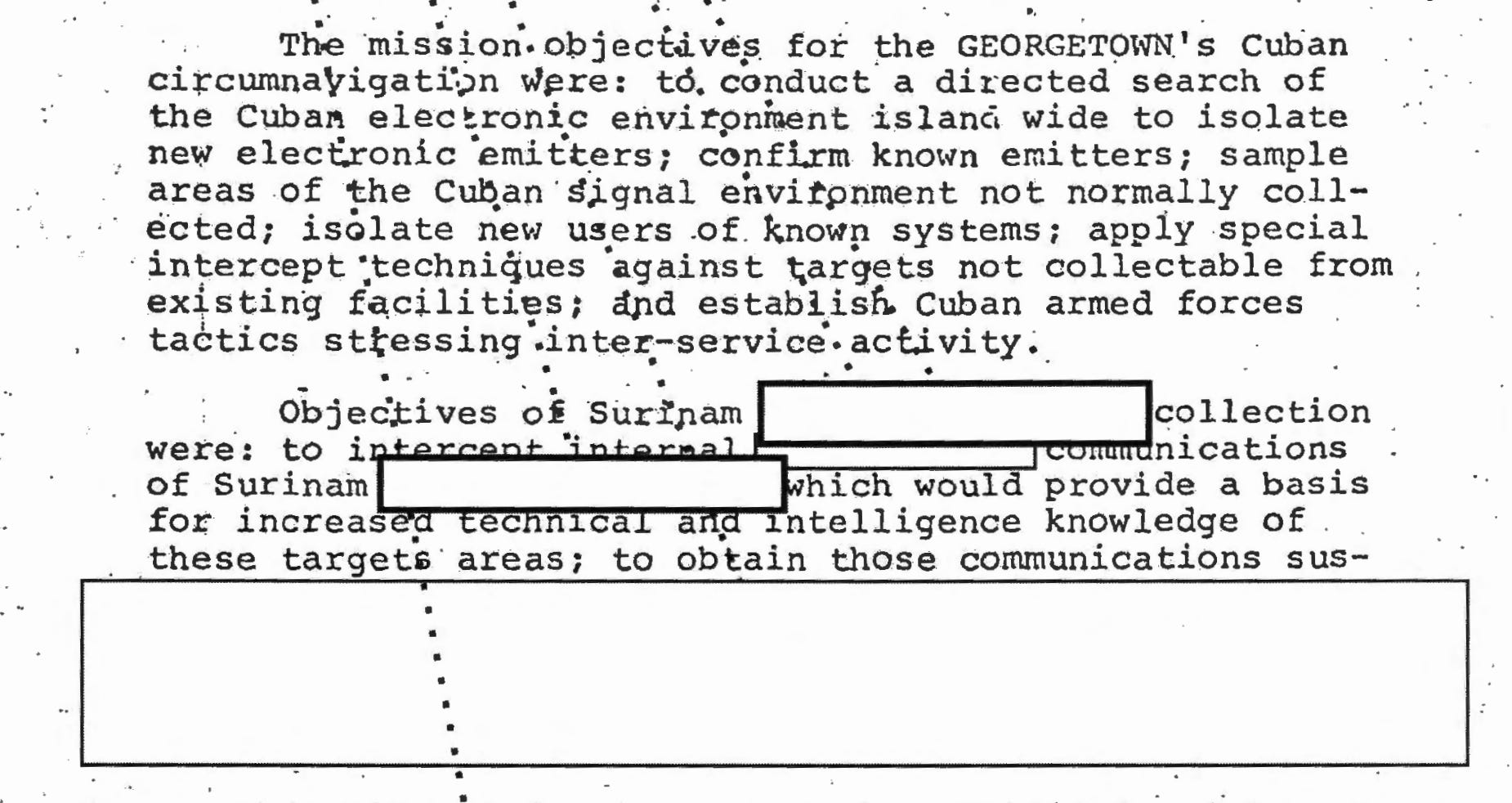
Evidence of the NSA electronic spying on Suriname dates back to the late 1960s when the USS Georgetown, Belmont and Valdez conducted operations off the coast of Suriname. The ships used a cover story—investigating “natural phenomena, including radio wave propagation, hydrography and oceanography”—to hide their true mission: “intercept communications which would provide a basis for increased technical and intelligence knowledge.”17
A declassified CIA memorandum dated March 5, 1982, days before the Rambocus coup, recorded the dissemination of names of U.S. persons caught in an “Electronic Net.”18 This was not a passive sweep; the timing coincides exactly with the launch of Operation Queens Hunter, a clandestine SIGINT mission using modified Beechcraft King Air aircraft to conduct theater-wide eavesdropping.19 On this high-priority distribution list, alongside President Ronald Reagan and Secretary of State Alexander Haig, sits Colonel Albert Buys, the U.S. military attaché in Suriname.He was the U.S. military attaché in Suriname at the time whose background we cover in the “Wolves of Paramaribo” episode.
The presence of Buys’s name proves that Suriname—just six days before the Rambocus coup attempt—had been elevated to the same urgent “surveillance dashboard” as the wars in El Salvador and Nicaragua. This technical architecture likely utilized repurposed geodetic mapping tools and satellites to provide the White House with real-time visibility. For the Dutch “Yellow Edition” and the CIA, SIGINT was no longer just a source; it was a permanent, 24-hour listening net that placed the burgeoning unrest in Paramaribo directly under the stare of the Reagan Administration’s “Rollback” doctrine.20
THE OPERATIONAL PROTOCOLS: How the Machinery Actually Worked
Understanding Gladio requires understanding how stay-behind networks operated outside democratic oversight while maintaining plausible deniability. Three protocols made this possible:
The Green Pass (De Groene Pas)
Handlers like Schoemaker didn’t operate as freelance agents. They carried official authorization: a specialized pass signed by the Chief of the Army Staff (also Commander-in-Chief) and the Secretary-General on behalf of the Minister of Justice.
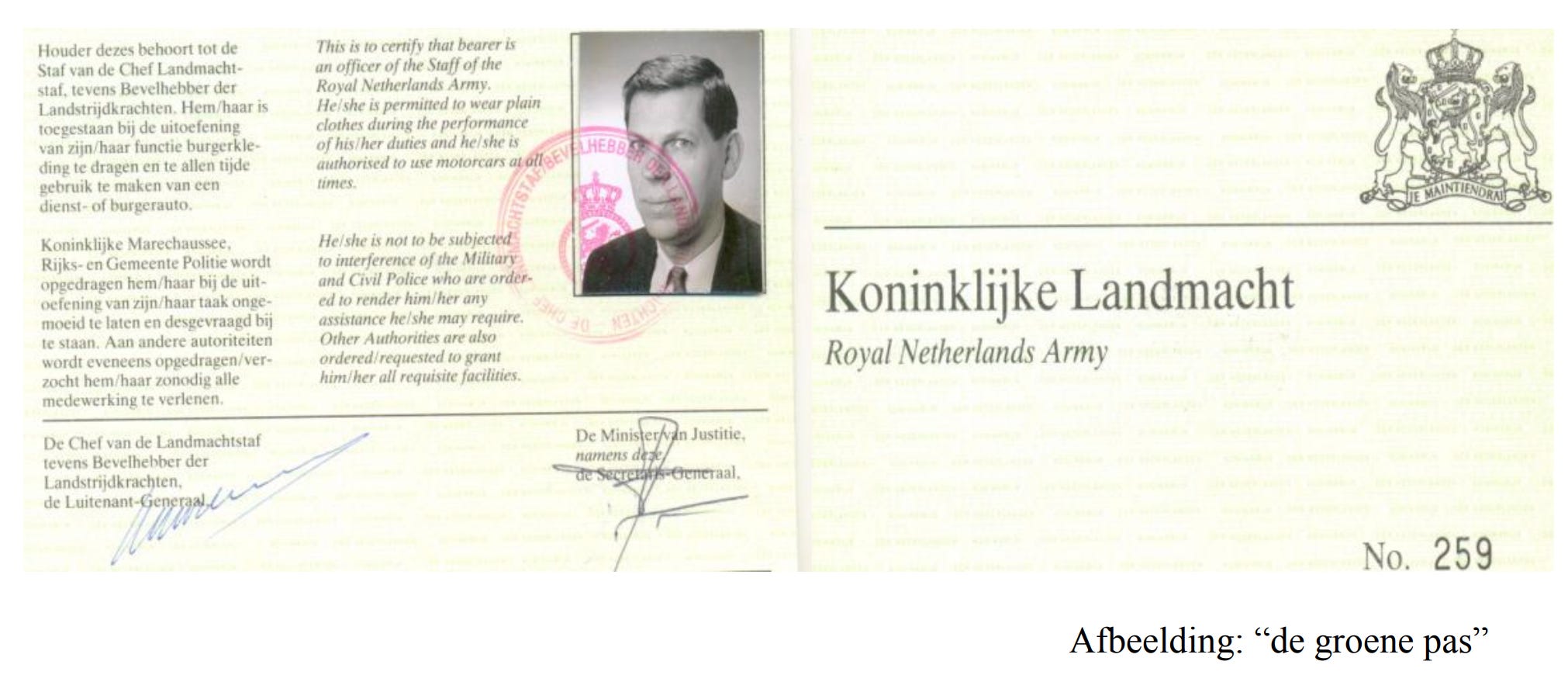
The Green Pass ordered police and military personnel (KMar – Royal Marechaussee) to assist the bearer without question. No explanations required. No paperwork filed. No records maintained.21
This provided legal immunity for moving weapons, radios, and classified materials across the Netherlands. A handler with a Green Pass could transport stay-behind equipment, recruit assets, conduct operations—all with the full backing of state authority but none of the accountability.
If questioned, the handler simply produced the pass. The investigating officer was ordered to assist and forget. The system was designed to leave no trail.
This explains how individual like Peter Van Haperen could access military facilities (Johan Willem Friso Barracks in Assen, Schipborg obstacle course in May 1983) despite having no official military status.22 His handlers carried authorization that overrode normal security protocols.
The Harpoon Loop: Circular Intelligence Routing
Stay-behind operations generated intelligence. But that intelligence couldn’t be reported through normal channels—it would expose the parallel network’s existence.
The solution: the Harpoon Loop.
Agents used Harpoon burst-transmission radios to send encrypted signals to UK or US base stations. Allied intelligence decoded the transmissions and relayed the intelligence back to Villa Maarheeze as “allied sharing.”
This circular routing created plausible deniability:
– Parliamentary oversight saw “intelligence from allied services”
– They didn’t see “domestic stay-behind operations”
– The source was hidden in the routing
When questioned about intelligence origins, officials could truthfully say: “We received this from our NATO partners.” They just omitted that Dutch agents had generated it first.
The Harpoon Loop explains how Villa Maarheeze processed Suriname intelligence “from allied sources” during the March 1982 crisis—intelligence that Dutch handlers like Görlitz had actually collected but routed through allied stations for cover.
SAZ-VII: The Cleaning Station
Inside Villa Maarheeze operated a specific liaison bureau: SAZ-VII, the “military desk.”
SAZ-VII’s function was simple but critical: take intelligence from O&I (stay-behind operations) and reformat it for distribution to military intelligence services (MID, G2, LAMID).23
The “cleaning” process removed operational fingerprints:
– Source attribution changed from “O&I agent” to “foreign intelligence contact”
– Collection methodology sanitized
– Distribution routing altered
– Classification levels adjusted
The ‘Generieke selectielijst’—an official government document—calls this ‘forced constructions of authority.’ By 1956, this secret unit was officially hidden inside the BID to maintain plausible deniability for operations like Suriname.24
By the time intelligence reached military commanders, it appeared to come from regular foreign intelligence collection rather than domestic stay-behind operations.
This institutional laundering explains how Koenders could receive and process stay-behind intelligence at Villa Maarheeze while maintaining separation between I (regular intelligence) and O (clandestine operations).
SAZ-VII was the invisible translator—converting parallel network intelligence into official military reporting without exposing the source.
Why These Protocols Mattered
These three mechanisms—legal immunity (Green Pass), circular routing (Harpoon Loop), and intelligence laundering (SAZ-VII)—made stay-behind operations possible.
The machinery wasn’t improvised; it was systematic. These protocols—the Green Pass, the Harpoon Loop, and the SAZ-VII cleaning station—ensured that even if a paper trail existed, the operational methods would remain incomprehensible to an outside observer. Investigators might find a routing slip or a meeting minute, but without these three keys, they could never reconstruct how the engine actually functioned. This structural ‘encryption’ was the network’s primary protection until 1992, when the remaining physical evidence was systematically erased in a final, unilateral act of destruction.25
INTERDOC: The Academic Mask
Understanding the Dutch stay-behind network requires understanding its most sophisticated piece of protective camouflage: Interdoc.
While Villa Maarheeze housed the physical infrastructure and the Green Pass/Harpoon Loop/SAZ-VII protocols enabled operations, something else was needed—a public face that could explain why former intelligence officers were meeting with CIA officials, hosting conferences across Europe, and coordinating with anti-communist networks worldwide.
That public face was the International Documentation and Information Centre—Interdoc.
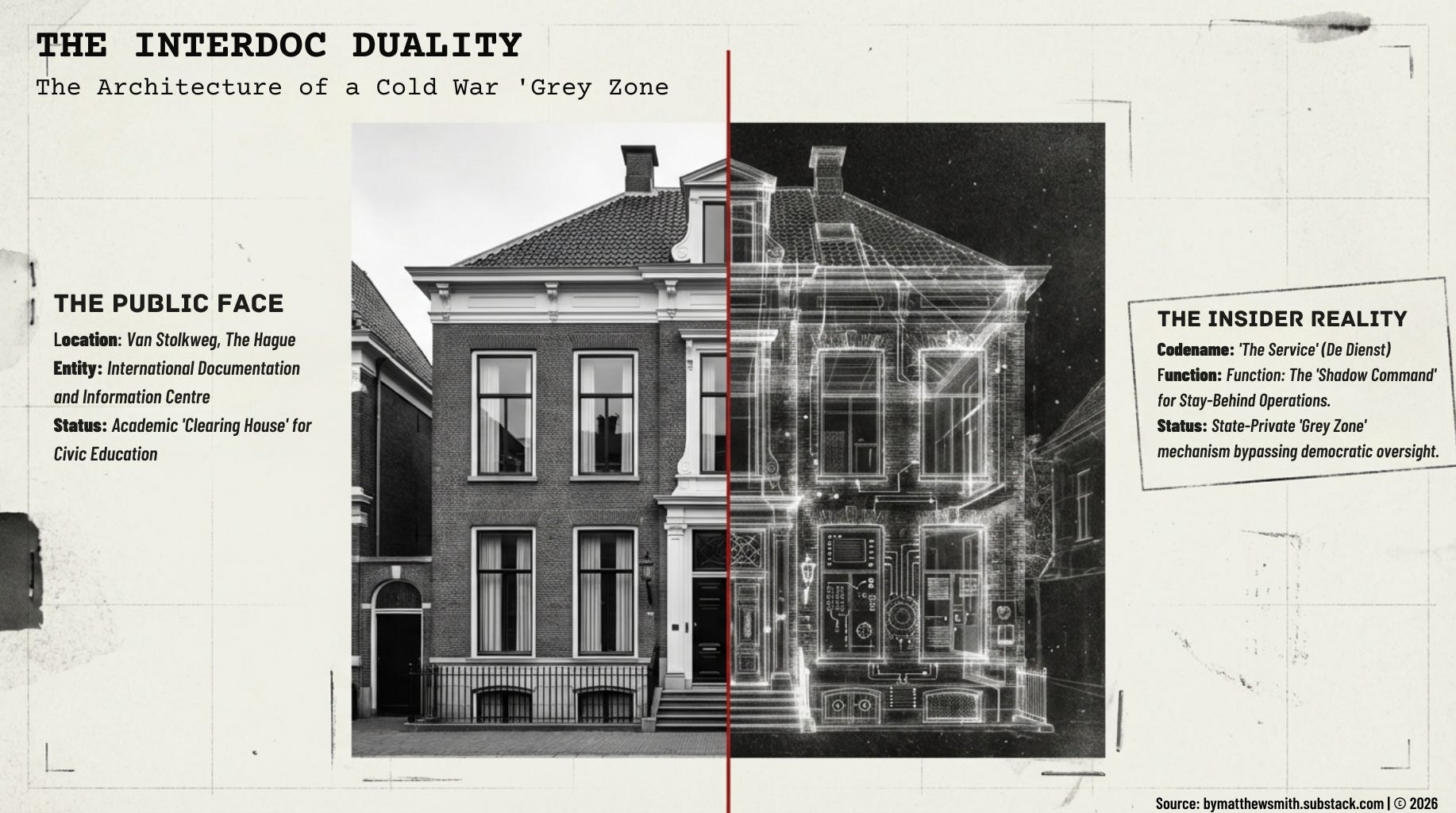
The Foundation
Interdoc—the International Documentation and Information Centre—was founded in 1963 and headquartered at Van Stolkweg 10 in The Hague.26 To parliamentary observers and the general public, it appeared to be exactly what its name suggested: a scholarly institute focused on documenting international affairs and countering Soviet propaganda through research and education.
The institute published journals, hosted conferences, and maintained a library of documentation on Soviet activities and communist movements across Europe. Scholars presented papers. Academics debated ideology. Journalists consulted the archives. All perfectly legitimate.
But this legitimacy was precisely the point.
The reality was more complex.
Historian Giles Scott-Smith, who studied Interdoc’s operations extensively, identified it as what intelligence professionals call a “state-private network”—an organization existing in the “grey zone” between government and civil society.27 Because Interdoc wasn’t officially part of the government, it couldn’t be subjected to the same oversight mechanisms that constrained the BVD or military intelligence. Yet because it maintained close relationships with those same services—and drew personnel from them—it could coordinate operations that official agencies couldn’t publicly acknowledge.
It functioned as what one scholar termed a “revolving door” between the secret and non-secret worlds.28
This positioning was deliberate. Because Interdoc was technically a private organization, it could:
- Receive funding from intelligence services without appearing on government budgets
- Host international conferences without diplomatic protocols
- Coordinate with foreign agencies without ministerial oversight
- Maintain relationships the Dutch government couldn’t officially acknowledge
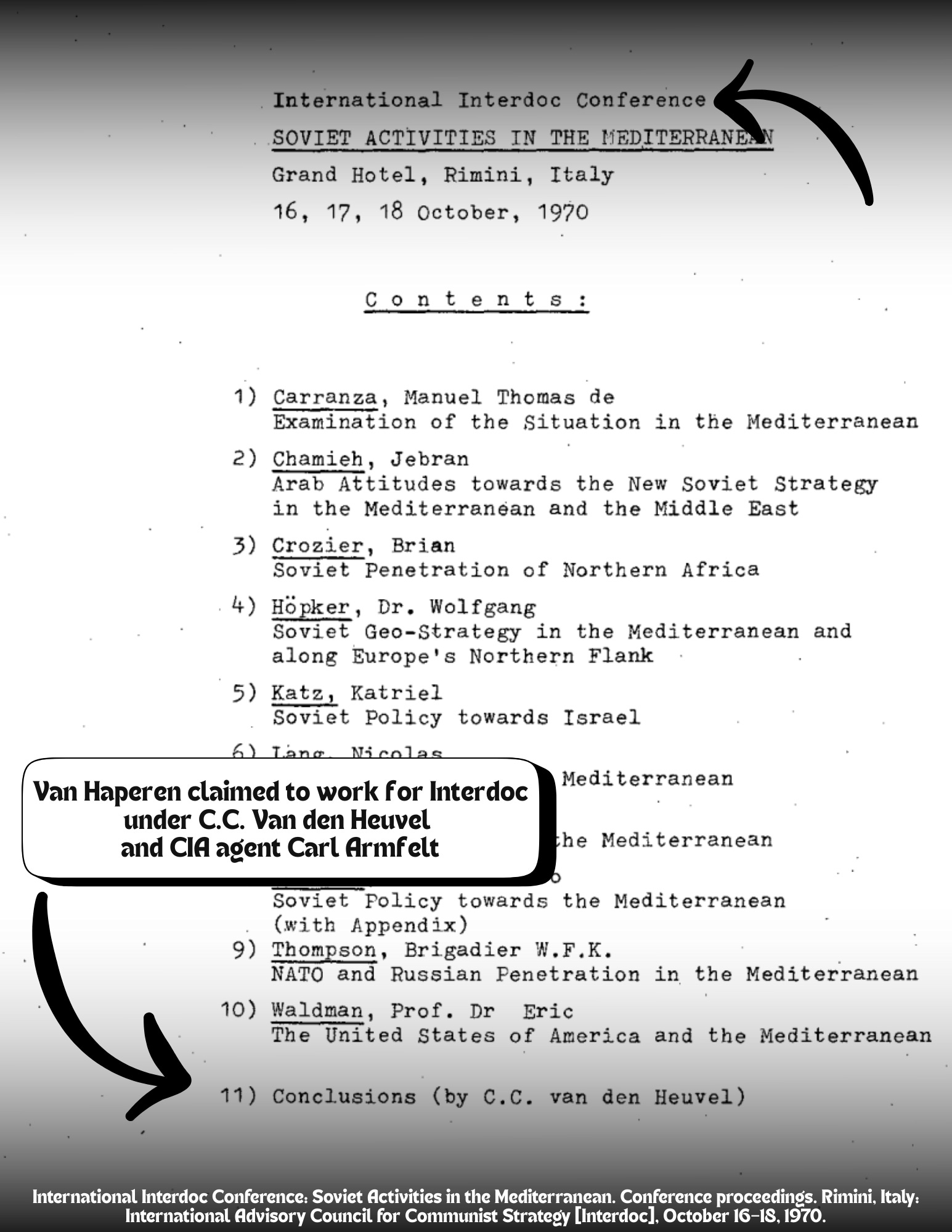
The Funding Network
The financial architecture supporting Interdoc revealed its true purpose. While it maintained the appearance of an academic institute through publications and conferences, its actual funding came from three sources that had nothing to do with scholarly research.29
First, Western intelligence services: The CIA provided funding through various foundations and front organizations. The West German BND contributed as well. These intelligence agencies needed a mechanism for coordinating anti-communist operations across Western Europe without the complications of official government-to-government cooperation.
Second, multinational corporations: Shell and Philips, two Dutch industrial giants with global operations, contributed substantial funding. Their interests aligned with Western intelligence services—stable, anti-communist governments in resource-rich regions protected their investments and supply chains.
Third, private contributions: Wealthy individuals with anti-communist convictions provided additional resources, often channeled through foundations that obscured the ultimate donors. People like Joseph Coors, the brewing magnate and Coors Brewing Company executive, was one of the early directors and advisors of the National Strategy Information Center (NSIC). The NSIC was the primary American organization that partnered with Interdoc to coordinate transatlantic “psychological defense” and anti-communist operations.30 Coors would later become embroiled in the Iran-Contra Affair. 31
This diversified funding structure meant Interdoc could claim independence from any single government while actually serving the strategic interests of multiple Western intelligence services and corporate entities simultaneously.
The Public Mission: Ideological Warfare
Interdoc’s stated purpose was “citizenship training”—educating Europeans about the threats posed by communist ideology and nurturing the “free individual” capable of defending democratic values.32
This framing was critical. The organization wasn’t engaged in “espionage” (which would be illegal). It was conducting “civic education” (which was patriotic).
This language allowed Interdoc to:
- Screen potential recruits through educational programs
- Identify individuals with anti-communist commitments
- Assess candidates’ reliability and discretion
- Create networks of trusted contacts across Europe
All under the cover of academic conferences and citizenship seminars.
The “citizenship training” programs were particularly effective as recruitment cover. Young men and women would attend seminars on “Western values” and “resistance to totalitarianism.” Those who showed aptitude, discretion, and the right ideological commitment might receive additional attention. Some would be recruited directly. Others would be cultivated over years, gradually drawn into the parallel world that existed alongside Interdoc’s public activities.
As one operative later testified, Interdoc was established specifically for “misleading and disinformation”—a way to “hide the real nature” of intelligence operations behind the facade of academic respectability.33
The Operational Reality: Intelligence Coordination
Behind the academic conferences and research publications, Interdoc served three critical intelligence functions.
First: Personnel Pipeline
Interdoc provided a recruitment and vetting mechanism outside official government channels. The BVD’s former Head of Training, who founded the organization, had spent years developing expertise in identifying and cultivating intelligence assets. His “citizenship training” programs allowed him to continue this work in a private capacity, screening candidates who could then be passed to official services or employed in stay-behind networks.34
Second: International Coordination
Western intelligence services needed mechanisms for coordinating operations across national boundaries without the complications of formal diplomatic channels. Interdoc’s international conferences provided perfect cover. Intelligence officers from different services could meet, exchange information, and coordinate operations while appearing to attend academic symposiums on communist ideology.
Third: Plausible Deniability
When sensitive operations required CIA or BVD involvement but official participation would create political complications, Interdoc provided the solution. Its private status meant operations could be conducted “at arm’s length” from government agencies. If exposed, officials could claim ignorance—after all, Interdoc was a private organization, not a government entity.
Maintaining the Duality: Three Protective Layers
The success of Interdoc’s dual role required sophisticated protection mechanisms. Three techniques proved particularly effective in maintaining the illusion of academic independence while conducting intelligence operations.
Layer One: Press Manipulation
Rather than avoiding publicity, Interdoc actively cultivated media relationships. In one documented case from 1957, the BVD fabricated internal opposition letters designed to sow discord within the Communist Party of the Netherlands. Instead of keeping this covert, these fabricated materials were leaked to Het Vrije Volk newspaper, which published them as authentic political documents.35
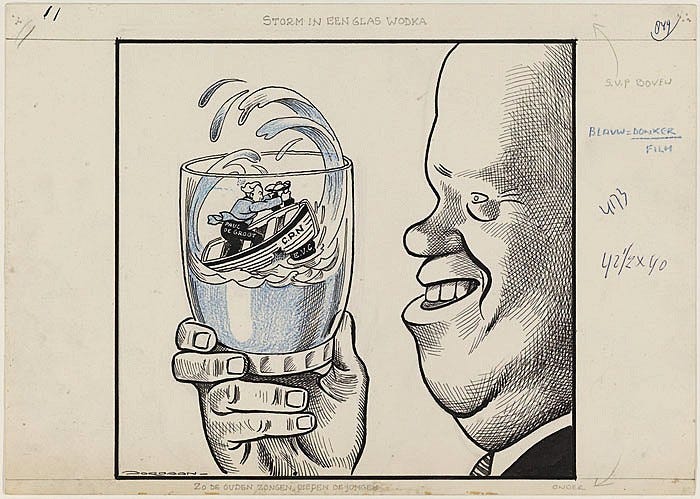
The technique was subtle but powerful: intelligence operations appeared as political news. The source remained hidden while the product became public. Journalists saw informed sources providing newsworthy material. They didn’t see fabricated disinformation designed to destabilize a political party.
This pattern continued for decades. When Interdoc-affiliated individuals provided information to media, it appeared as expert analysis rather than intelligence dissemination. The academic reputation legitimized the information while obscuring its operational origins.
Layer Two: Parliamentary Blindspots
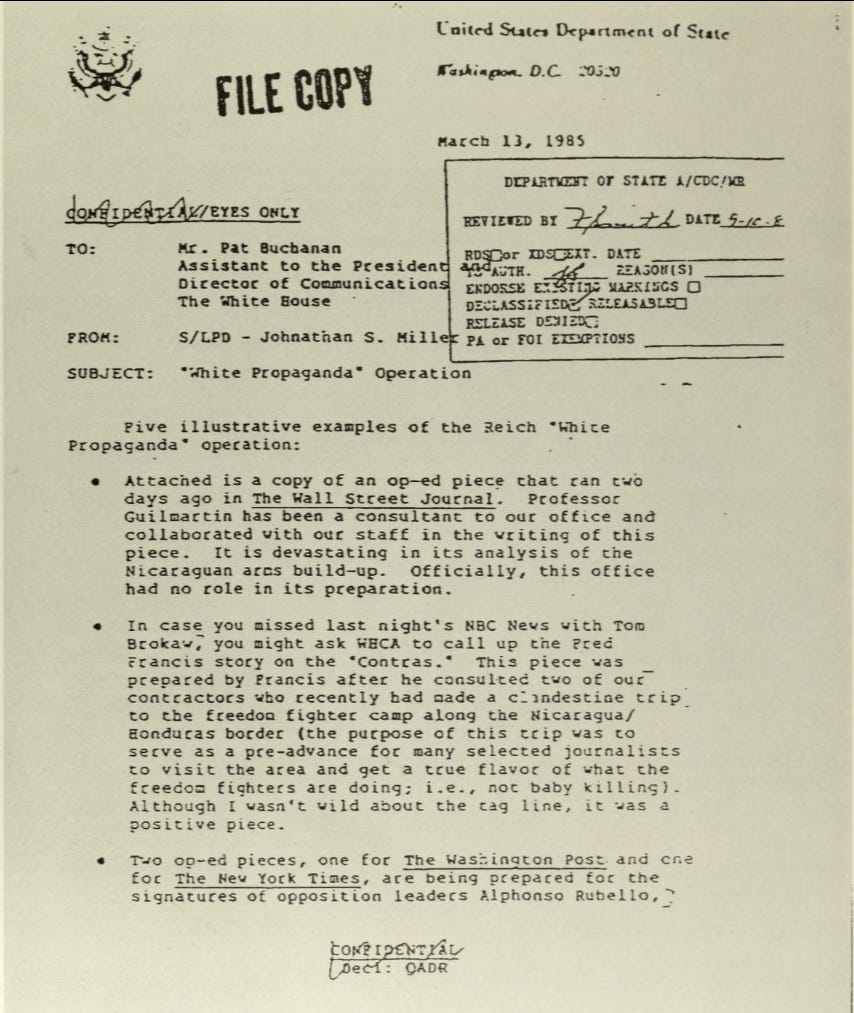
The BVD, which maintained close ties with Interdoc, deliberately withheld operational methods from parliamentary oversight committees. When briefing legislators about intelligence activities, officials would present the results of operations while concealing the methods used to achieve those results.36
The rationale was straightforward: avoid the accusation that intelligence services were “doing politics”—engaging in domestic political manipulation rather than foreign intelligence collection. By presenting only the analytical products rather than the operational techniques, the BVD protected Interdoc’s role in recruiting, coordinating, and executing sensitive operations.
Parliamentary investigators could examine Interdoc’s conferences, publications, and public activities. They couldn’t examine the recruitment occurring under cover of “citizenship training” or the operational coordination masked as academic cooperation.
Layer Three: Institutional Ambiguity
The most effective protection was structural. Because Interdoc existed in the “grey zone” between government and private sector, it was genuinely unclear who had oversight authority.
Was it a private think tank? Then parliamentary intelligence oversight didn’t apply.
Was it conducting intelligence work? Then it should be subject to government scrutiny.
The answer was: both and neither. This institutional ambiguity created a protection mechanism stronger than any classification system. Investigators couldn’t oversee what they couldn’t definitively categorize.
Why the Front Mattered
By the time Suriname became a crisis point in 1980-1982, Interdoc had been operating for nearly two decades. The infrastructure was mature, the cover was established, and the coordination mechanisms were proven.
By the time the network’s existence became undeniable in the early 1990s, the operations were long complete and the evidence was being systematically destroyed.
“In the beginning it [Interdoc] represented European Cold War concerns and priorities as something of a reaction to the perceived failure of US approaches. Yet the American influence is evident throughout, from the study trip of the Dutch in 1959 to the 10,000 Guilders in a brown paper bag in 1982.” — Giles Scott-Smith, “Interdoc and West European Psychological Warfare: The American Connection”. 37
Why the Documents Don’t Exist
“Valk hopes the Englandspiel and Suriname files will still be found. But the file on Gladio—the secret organization intended for resistance in the event of war—appears to have completely disappeared.“
— PvdA MP Valk, Chairman of the Parliamentary Working Group on Archive Management, Algemeen Dagblad, May 14, 199838
I know what you are thinking (because I thought it too): if this structure existed, where are the documents?
Here’s where the story gets interesting.
Following the organization’s dissolution in 1992, investigators discovered that nearly the entire archive of the Section General Affairs (SAZ)—the branch responsible for the Intelligence side of the stay-behind network—had been destroyed.39
While some files were destroyed, others were hidden in a different way. The 1998 Tweede Kamer report revealed that the military intelligence service (MID) was in a state of “administrative chaos.” This wasn’t just poor filing; it was a way to make sure sensitive documents remained “unfindable.” When people asked for files about the 1982 December Murders, the government could truthfully say they couldn’t find them, even if they technically still existed somewhere in the mess. This “scattered” system ensured that no single investigator could ever see the full picture of what happened in Suriname.40
Just like CIA Director Richard Helms ordered the destruction of records related to MKUltra (a key part of the agency’s “Family Jewels”).
Rein Jan Hoekstra, director of the General Affairs section and top advisor to the Prime Minister, was found administratively negligent by a 1998 parliamentary committee. But Hoekstra denied personally oversaw what his own former operative, Herman Schoemaker, characterized as “destructive work”. Official reports state the archives were destroyed “eigenmachtig“—arbitrarily, unilaterally—by a high-ranking SAZ employee in late 1992.41 In his Master’s thesis, Schoemaker revealed that Hoekstra blocked the National Archivist’s attempts to stop the purge.
But the suppression went deeper than simple obstruction. later revealed that his attempts to intervene were systematically discouraged by Hoekstra. The pressure was so intense that Ketelaar testified that continuing his oversight would have been “political suicide.”42
A 1998 parliamentary committee later leveled “severe reproaches” against Hoekstra for this systemic erasure. While Hoekstra denied personally ordering the act—blaming a high-ranking employee who allegedly acted “eigenmachtig” (arbitrarily)—the committee found that misinformation had traveled to the very top. Prime Minister Lubbers had previously assured the House of Representatives that “no destruction was and is taking place,” a statement the working group flatly declared incorrect.43
This destruction wasn’t an accident. The parliamentary report confirmed that almost the entire archive of the Section General Affairs (SAZ)—the secret branch that managed the stay-behind intelligence—was wiped out in late 1992. This happened right as the organization was being shut down. Even though Prime Minister Lubbers told Parliament that “no destruction was taking place,” the investigation found he was wrong. The report notes that a high-ranking employee acted on their own to erase this history, making it impossible to trace the secret “contacts” that linked Dutch intelligence to the events in Suriname. 44
Either way, the bulk of the history was simply gone. Financial ledgers that could have traced exactly how Section O operations were funded and operational reports detailing their true activities were reduced to dust. As Schoemaker pointedly notes, it was suggested that these destroyed archives contained information about the network’s most sensitive and controversial “contacts,” including the Englandspiel and Suriname.4546
By grouping Suriname with the Englandspiel—one of the most controversial intelligence failures in Dutch history—Schoemaker implies that the Suriname files held secrets that top officials were willing to illegally destroy history to protect those secrets. This structural disappearance in 1985 effectively ensured that the true nature of these operations would remain, as the committee found, unanswered.47
All of it destroyed. Only a small fraction survived on low-quality microfilm.48
And by the time the responsible minister was notified? The legal window for prosecution had closed.49
No charges. No consequences. Just missing history.
So when people ask “where’s the proof?”—this is part of the answer. The proof was destroyed, deliberately and systematically, by the people who would have been implicated by its existence. As PvdA MP Valk, chairman of the parliamentary committee, put it: the administration that could deduce what activities were undertaken “is no longer there”.50
Once you see all of this, the “big machine” whisteblowers later spoke about becomes easier to imagine. This was not improvisation. It was a professional system—built over decades, trained to absorb crises, and finally, accustomed to erasing its own tracks to ensure the question of why so much was destroyed remained unanswered.
ACT II: Pulling Back the Mask
Daniele Ganser did the world a service. His 2005 book, NATO’s Secret Armies, compiled what parliamentary investigations across Europe had confirmed: Operation Gladio was real, it operated in at least 16 countries, and it frequently crossed the line from defensive preparation to offensive political action.
Herman Schoemaker did something even more remarkable. After serving over 25 years inside the Dutch stay-behind organization—O&I—he wrote his Master’s thesis explaining exactly how it worked. Where it operated. How it was structured. Why the archives were destroyed.
For the first time, Gladio had a face. A name. A former insider willing to document what couldn’t be denied anymore.
But if we’re ever going to understand how this machinery connected to Suriname, we need to do some archaeological work.
Because while Ganser proved the network existed across Europe, and Schoemaker proved it existed in the Netherlands, neither fully documented how European methodology was adapted for post-colonial operations in the Caribbean. The paper trail for that was deliberately destroyed—the SAZ archives in 1992, Colonel Görlitz’s documents in 1984, key operational files that “could not be found” when investigators came looking.
What we have instead are fragments. Leaked documents stolen by activists. Testimony from operatives decades later. Meeting minutes that survived because nobody realized their significance. Routing slips showing custody of materials.
You know those scenes in the movies where the lawyers are sitting with bags of shredded evidence and they start taping them together on the boardroom table?
Yeah, that’s us. So let’s get busy.
Double Dutch: The Belgian and Dutch Gladio Networks
In 1992, two years after Prime Minister Giulio Andreotti made his announcement to Parliament, the BBC dropped a documentary titled “Operation Gladio: State-Sponsored Terror.” For the first time, audiences were able to put a face to the shrouded figures behind the Gladio mask. At least some of them. Many of the witnesses chose to have their faces obscured.51
For Surinamese, Dutch and Belgian audiences interested in Gladio operations in their countries, this documentary is an invaluable piece of evidence as it interviews operatives who lay bare the nature and structure of these shadow networks that Ganser may have missed.
In July 1981, according to the BBC, an issue of the magazine “Pour” covered Belgian neo-fascist organizations. One of them was known as Westland New Post. Michel Libert was a key operative in that group and he sat down with the BBC to give an interview where he described the structure and actions of that organization.52
Westland New Post started as a militant right-wing youth organization known as the Front de la Jeunesse, founded by a man named Francis Dossogne, before the most hardcore of the Front merged into the WNP in the early 1980s. They would train on private camps in the Ardennes with former military and members of the Belgian Gendarmerie.
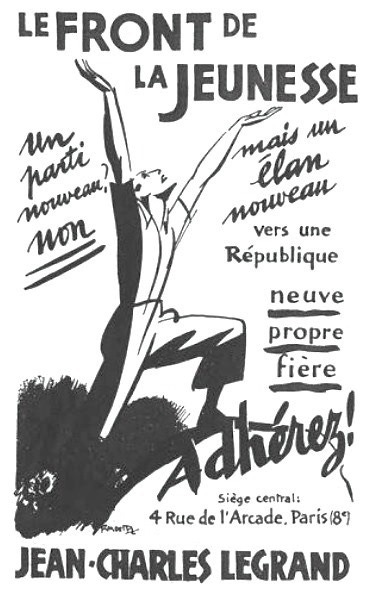
“The FdlJ essentially ceased to exist after it became publicly known that one of the confidants of the former Prime Minister of Belgium, Paul Vanden Boeynants, namely Baron Benoît de Bonvoisin, was the financier of the FdlJ,” according to testimony given years later.53
This is important to remember, because star witness in the Dési Bouterse murder trials, Peter Van Haperen, would claim to have been a part of both of these organizations and began, alongside the Surinamese resistance, to recruit from these cells. You should also know that the Belgian Senate investigated these groups when the Gladio revelations became known and found that SDRA8 (Belgian stay-behind network) “collaborated with extreme-right elements, including WNP.”54
Michel laid bare for the interviewers the nature of the Gladio cells in Europe. His recollections, combined with leaked documents, would form the basis for our investigation and allow us to place certain named operatives in their proper positions.
So what exactly did Michel say?
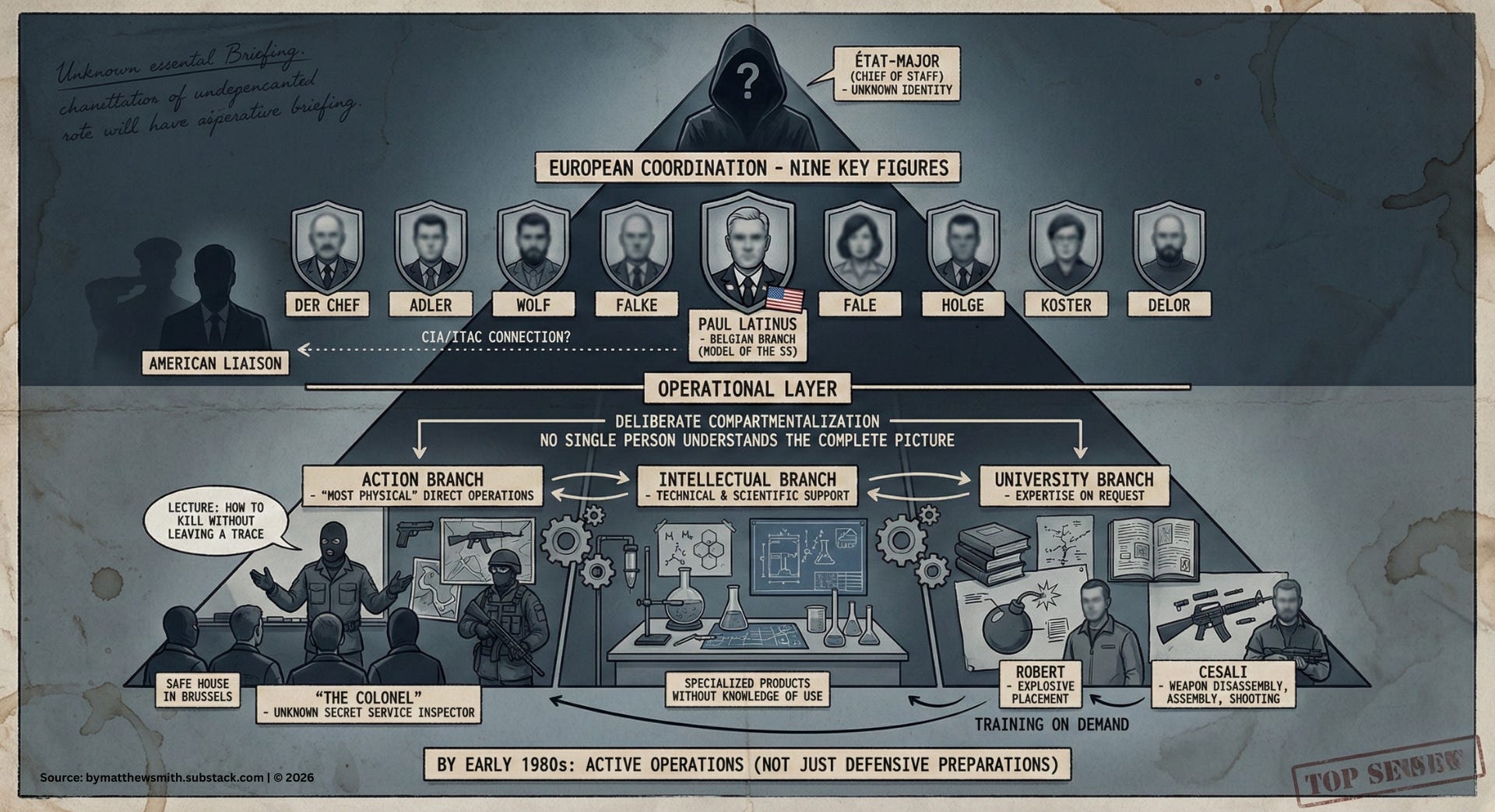
The WNP operated with a strict hierarchical structure modeled on military and intelligence frameworks. At the top of the pyramid you had the État-major (Chief of Staff) whose identity was kept unknown to the rank and file. Beneath them were nine key figures across Europe who coordinated operations in Belgium, western Germany, northern France, and the Netherlands. Each member had a double name—a code name, usually in German.55
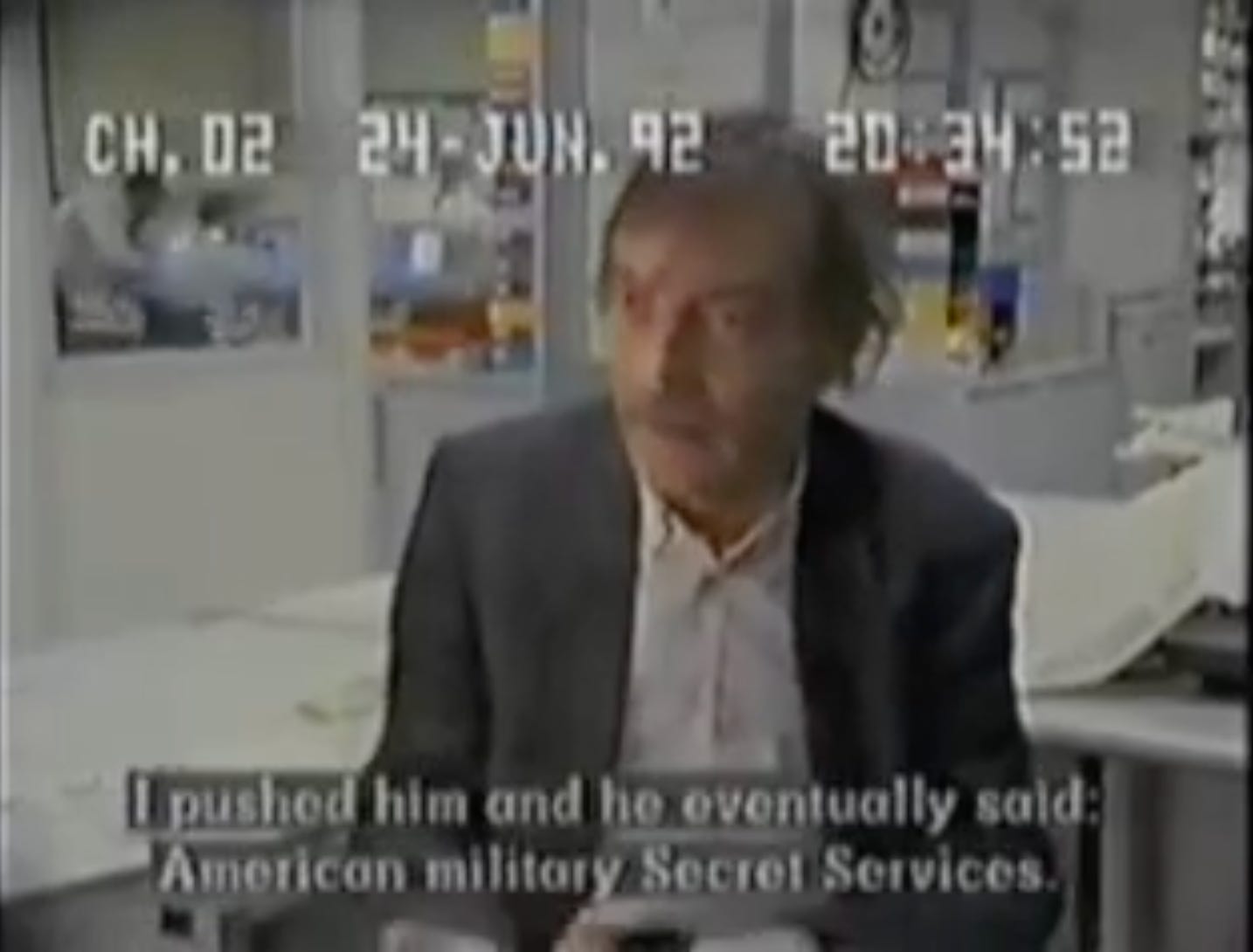
A key player at this level for our story is a man named Paul Latinus. He was charged with building the Belgian branch “on the model of the SS.” When pressed by reporters on who gave him this assignment, he admitted it was the Americans.
Think about that. An American intelligence service ordering a European to build a paramilitary network modeled on the Nazi SS.
This means there was an American liaison working with their European Gladio counterparts on these operations. The BBC documentary names and interviews one of those agents—a CIA operative who discusses his role in infiltrating the Italian Red Brigades and framing leftist organizations.56
This means there was an American liaison working with their European Gladio counterparts on these operations. The BBC documentary interviews one of these primary witnesses—Oswald LeWinter—who identified himself as a CIA-ITAC liaison officer and discussed his role in infiltrating the Italian Red Brigades. However, in a twist that defines the era’s murkiness, the CIA later stated they had no record of LeWinter, and he eventually admitted under oath that his “Colonel” persona was a fabrication.57 This raises a haunting question: was he a genuine “deniable asset” or a professional fabricator muddying the waters?58
Beneath the regional players like Latinus, you started to get into the operational layer. This is where you could find other people with code names like “The Colonel”—an unknown Secret Service inspector who would give lectures in private apartments wearing a balaclava, like a ninja mask, to maintain anonymity.
Picture that scene for a second. A safe house in Brussels. Young men—former military, off-duty gendarmes, extreme-right activists—sitting in a living room. And a Belgian State Security inspector walks in wearing a balaclava over his face. He’s holding a WNP membership card despite being an official government employee.
His lecture topic? “How to kill without leaving a trace.”59
They had other trainers in what they called the “university”—specialists they would call when operatives needed advice on poisoning or explosives. One trainer, Robert, gave courses on explosive placement. Another, Cesali, taught weapon disassembly, assembly, and shooting.60
Whether it was LeWinter presenting himself as a military liaison to the BBC or an unknown Secret Service inspector giving lectures in a safe house while wearing a balaclava to maintain anonymity, the structure was the same. It was a world designed to be impenetrable, where the agents exposing the secrets were often as shrouded as the secrets themselves.
The structure wasn’t random. It was deliberate compartmentalization:
Action branch: The “most physical”—conducted direct operations
Intellectual branch: Technical and scientific support, like a laboratory that could provide specialized chemical products for operations without knowing what they would be used for
University branch: Provided expertise on request61
The system was designed so that no single person—except those at the very top—understood the complete picture.
But here’s what makes this testimony critical for our story: By the early 1980s, these weren’t just defensive preparations for Soviet invasion. They were active operations.
The “Strategy of Tension”
Here’s where Gladio gets dark. It is what historians later called the “Strategy of Tension.”62 In Italy, Belgium, and elsewhere, the secret networks didn’t just prepare for Soviet invasion. They created chaos.
Bomb a train station.
Blame the communists.
Start a riot at a peace rally
Blame left wing agitators.
Watch the government crack down.
Keep everyone scared enough to vote right-wing.
They called it the ‘Strategy of Tension,’ and sounds insane until you understand how these operations work. Keep the population terrified, keep them loyal, keep the left out of power. Whatever it takes.
Italy, 1969-1980: A series of bombings rocked the country. The deadliest was the Bologna train station bombing in August 1980, months after the Sergeant’s Coup—85 people killed, over 200 injured. Initially blamed on left-wing terrorists. Later investigations revealed connections to Gladio networks and neo-fascist groups working with intelligence services.63
Italian Judge Felice Casson investigated these bombings for years. In the BBC documentary, he stated on camera: “The Gladio organization was used for different purposes—not the original anti-Soviet purpose, but for internal control, to stop the rise of the left.”64
Belgium, 1982-1985: The Brabant Killers (also known as the Gang of Nijvel) conducted a series of brutal attacks on supermarkets and restaurants. Twenty-eight people killed. The attacks were militarily precise—sophisticated weapons, coordinated tactics, escape routes planned to the minute. The gang was never caught.65
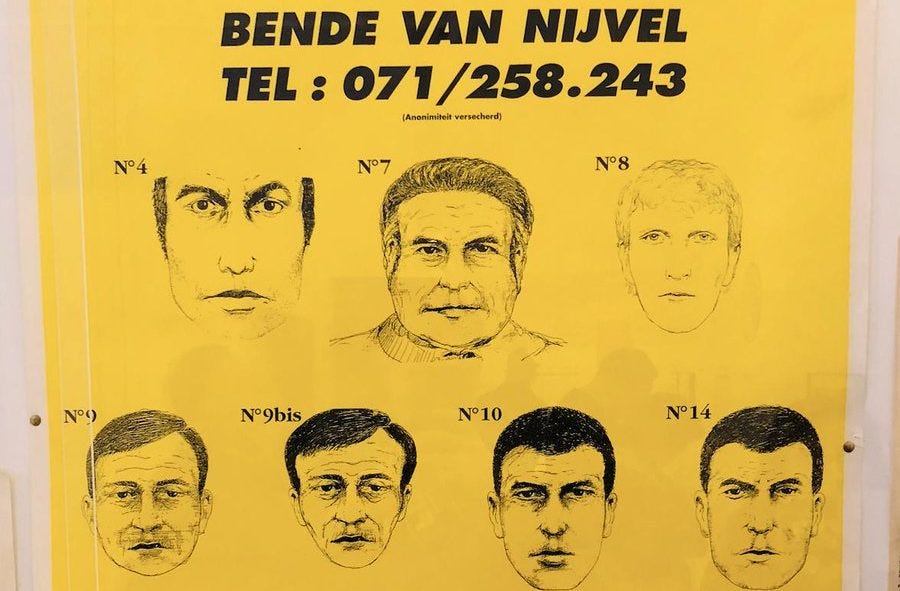
Years later, Peter Van Haperen—the operative we’ll meet properly in Chapter 9—was questioned by Belgian police about these killings. The police verified he possessed “perpetrator information” about unpublished crime scene details from a 1985 murder. Information he shouldn’t have had unless he was involved or connected to those who were.66
The pattern was consistent: Create violence. Blame the left. Justify crackdowns. Prevent leftward political shifts.
But to make this work, you needed i nfiltration. Not to help opposition movements succeed, but to understand them, steer them, and prevent outcomes that would force overt intervention.
They had a name for it: Encapsulation. By infiltrating the group with agents, intelligence services could “manage” the failures. Not so fast the groups gave up entirely. Not so slow they might actually succeed. Just… managed failure. Keep everyone weak. Keep everyone dependent. Keep total control.
For the longest time, this network of agent provocateurs and Gladio saboteurs remained hidden in the shadows, their connections to Suriname unknown.
Then, in 1984, that all changed.
ACT III: The Accidental Archaeologists
November 18-19, 1984. Utrecht.
Anti-militarist activists broke into the offices of 450 Counter-Intelligence Detachment—the very unit tasked with surveilling them. It was an act of defiance against a state apparatus they knew was monitoring churches, peace groups, and soldier unions.
What they found was bigger than they’d imagined.
Thousands of pages of classified documents. Personnel lists. Organizational charts. Operational protocols. Meeting minutes documenting systematic infiltration operations against Dutch citizens exercising constitutional rights to oppose nuclear weapons deployment.
They called it Project Fatima.67
The leaked materials—published in 1985 by the activist magazine Onkruit—exposed how LAMID (Army Intelligence Service) had embedded infiltrators inside soldier unions, peace organizations, and anti-militarist groups. Not passive observers. Active participants who attended meetings, collected membership lists, photographed demonstrations, and reported back to handlers.
At its peak in June 1982: 11 active infiltrators operational in the field. 37 more in preparation. 7 pre-service candidates identified and being groomed.68
Fifty-five infiltrators in the pipeline. For organizations with 6,500-14,000 members.
And they recruited operatives? That’s where it gets disturbing.
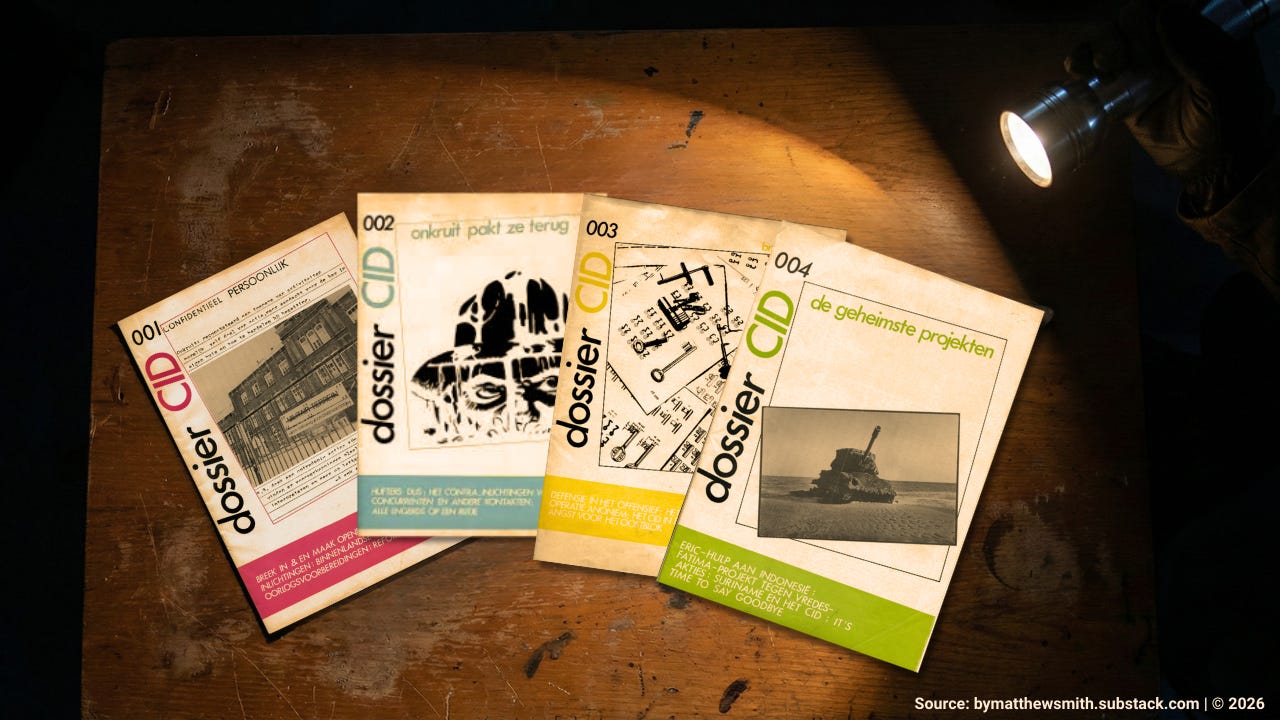
From the leaked Onkruit documents:
“A new method to recruit infiltrators has been found: principals, vice-principals and other school staff must watch which of their students (boys who will later have to do military service) would be suitable as F-infiltrants. They must pass these names on to the CID. This method has the advantage that a lot is known about the candidates in advance—who knows better than a teacher whether the boys are obedient to authority?”69
Schools became talent-spotting infrastructure. Teachers identified “gezagsgetrouw” (authority-obedient) boys. Names passed to 450 CID. Background investigations conducted. Approached during military service. Trained as infiltrators. Deployed after service ended. Eventually the technology evolved to computer screening.
It was a conveyor belt from high school to intelligence operations. Not too dissimilar to “Mormon-to-Intelligence” pipeline in America.70
But buried in those documents was something that didn’t quite fit the domestic surveillance narrative.
References to Suriname operations. A major named Koenders who appeared in multiple contexts. A planned deployment to Suriname in early 1982 that was suddenly cancelled after the Rambocus coup attempt failed. Materials in someone’s custody—attack plans, photographs—with a parenthetical question from the Onkruit editors themselves:
“(dankzij Koenders?)”
(Thanks to Koenders?)71
That question mark is important. That question mark is the key to everything.
Even the activists who stole these documents weren’t entirely sure what they’d found. They saw the connection—domestic infiltration operations and Suriname intelligence work overlapping through the same officer—but they couldn’t prove the mechanism.
Here’s what that question might unlock:
- Why the Rambocus Coup failed with such suspicious precision
- Why fifteen men were murdered in Fort Zeelandia in December 1982
- Why Peter Meyer died on a wet road in June 1983
- Why Dési Bouterse would stake his entire defense—thirty years later, in a murder trial that could send him to prison for life—on the credibility of a Dutch operative named Peter Van Haperen
The Onkruit activists didn’t know what they’d found. They saw the connection but couldn’t prove it.
We can.
ACT IV: The Dutch Machinery
The 450 CID: Institutionalized Infiltration
To understand who Koenders was and what he was managing, you have to understand the organization he commanded.
450 Contra-Inlichtingen Detachement wasn’t a rogue unit. This diagram reconstructed by activists using stolen documents illustrates the command structure of the 450 CID based in The Hague (Den Haag). It had institutional infrastructure with headquarters in Alphen aan de Rijn, an operational base at Schefferkamp in De Lier, and three regional teams covering the Netherlands:72
Ploeg Noord-Holland (Amsterdam and Noord-Holland province)
Ploeg Zuid-Holland (Zuid-Holland province)
Ploeg Utrecht (Utrecht province—this was the team that infiltrated VVDM headquarters)
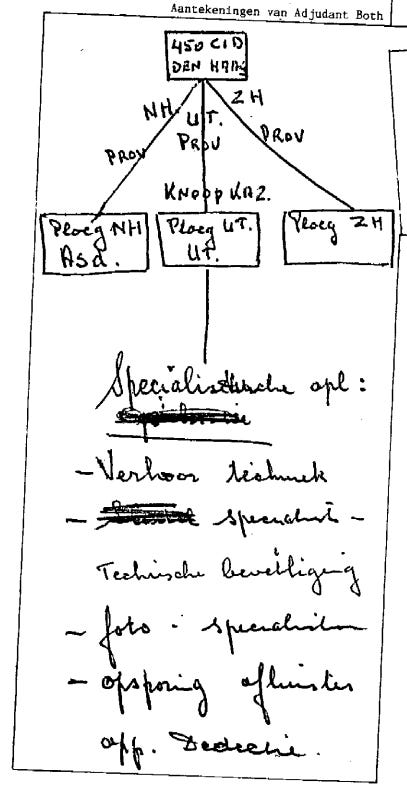
Each team had a commander, handlers, and a rotating stable of infiltrators—the “F-functionaries” who embedded in target organizations.
The organizational chart was meticulous. Staff departments for:
- Documentatie I & II (Documentation—registration of operational matters, personnel dossiers)
- Observatieploeg (Observation Team—surveillance operations, “secret photography”)
- Afdeling Informatieververking (Information Processing—intelligence analysis and reporting)
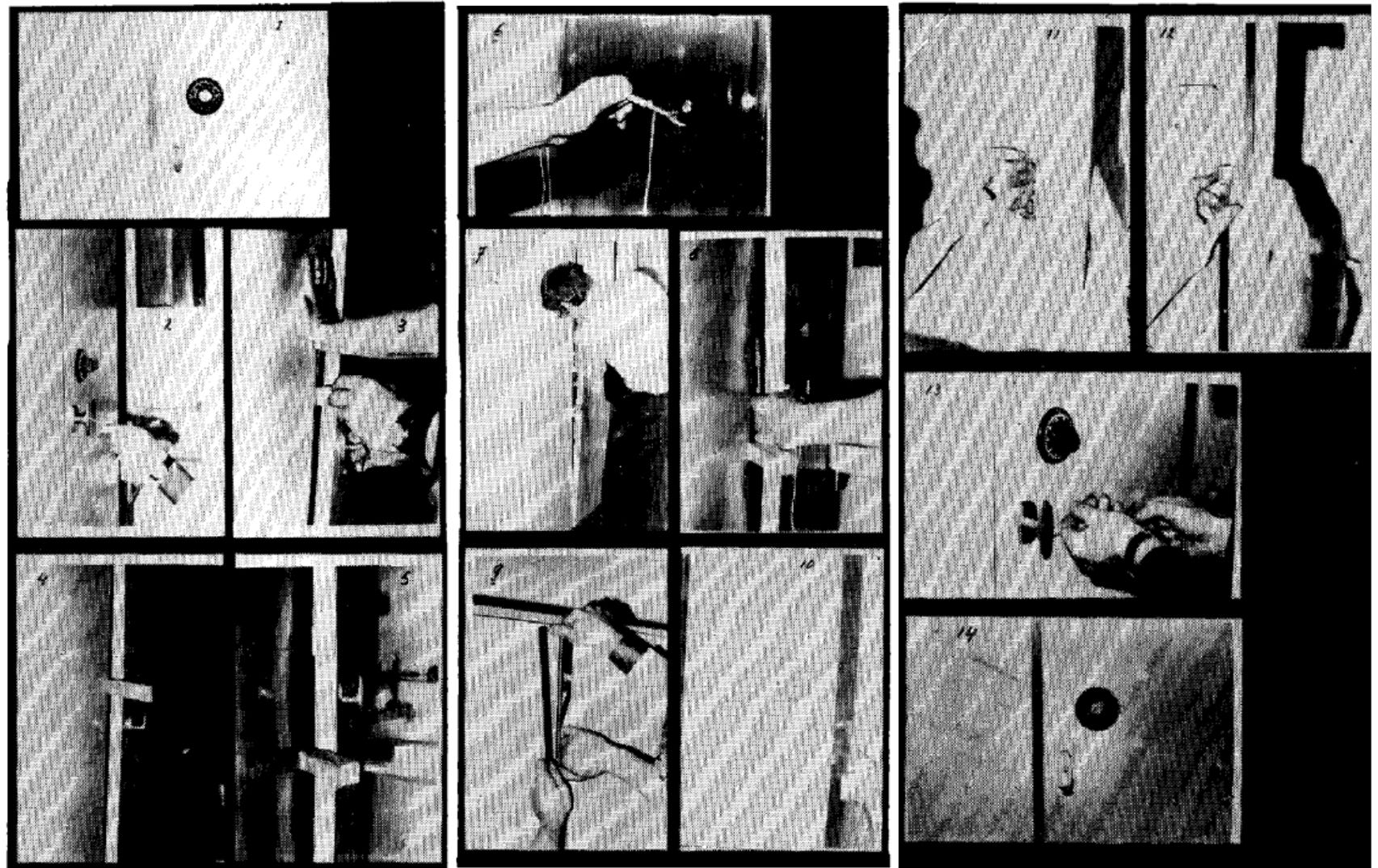
This wasn’t improv like the Onkruit team who’d infiltrated them. It was systematic methodology and practice built over years of practice. Photos and diagrams from the break in show the specialized training listed—including covert photography, surreptitious entry (lock manipulation), and interrogation techniques—provided the operational toolkit used by the very same networks that monitored and influenced political developments in Suriname during the 1980s.73
And after April 1982, the man commanding this apparatus as deputy commander was Major J. Koenders—the same officer who had been coordinating Suriname intelligence operations at Villa Maarheeze just months earlier.
The Koenders Throughline
Here’s what makes Koenders remarkable: he appears at every critical juncture in Suriname’s history.
February 25, 1980: The day of Bouterse’s Sergeant’s Coup, Koenders is assigned to analyze what happened. His task: determine what exactly occurred in Suriname, what course Bouterse will follow, and what role the Netherlands and the military mission played.74
December 1981: The Suriname Desk is formed at Villa Maarheeze. Koenders becomes coordinator, producing intelligence reporting that flows directly to IDB—the Foreign Intelligence Service housed in the same building as the stay-behind network.75
March 2, 1982: CCIV meeting—the highest-level intelligence coordination body in the Netherlands. Suriname operations documented as “ongoing.” Koenders’ deployment to Suriname scheduled for March/April 1982. This is nine days before the Rambocus Coup begins.76
March 17, 1982: Krishna Mahabier—one of the coup participants—walks into the Dutch Embassy in Paramaribo requesting extraction.
March 18-23, 1982: Mahabier undergoes five days of debriefing at Villa Maarheeze. Professional intelligence extraction: names, addresses, organizational structure, operational plans, weapons sources, funding networks.77
March 31, 1982: Routing document 807488 shows attack plans and photographs in Koenders’ custody. The chain of custody is documented.78
April 22, 1982: Koenders’ Suriname deployment is cancelled. Why deploy an officer to set up an intelligence organization when the intelligence just came to him via Mahabier’s extraction?79
Post-April 1982: Koenders becomes Deputy Commander of 450 Counter-Intelligence Detachment. The officer who coordinated Suriname intelligence for two years now commands domestic infiltration operations.80
February 23, 1984: As deputy commander of 450 CID, Koenders proposes expanding Project Fatima to “all groups directed against defense.” The Onkruit editors note: “The deputy commander who comes up with this unfortunate idea is Major J. Koenders, whom we also encounter in the story about Suriname.”81
Same officer. Same institutional knowledge. Different applications depending on operational requirements.
THE VILLA MAARHEEZE NEXUS
Why does the same officer move so seamlessly between foreign intelligence (Suriname) and domestic operations (450 CID infiltration)?
Because both operated from the same institutional hub: Villa Maarheeze in Wassenaar.
As we’ve discovered, this wasn’t just a building. It was architecture as operational security.
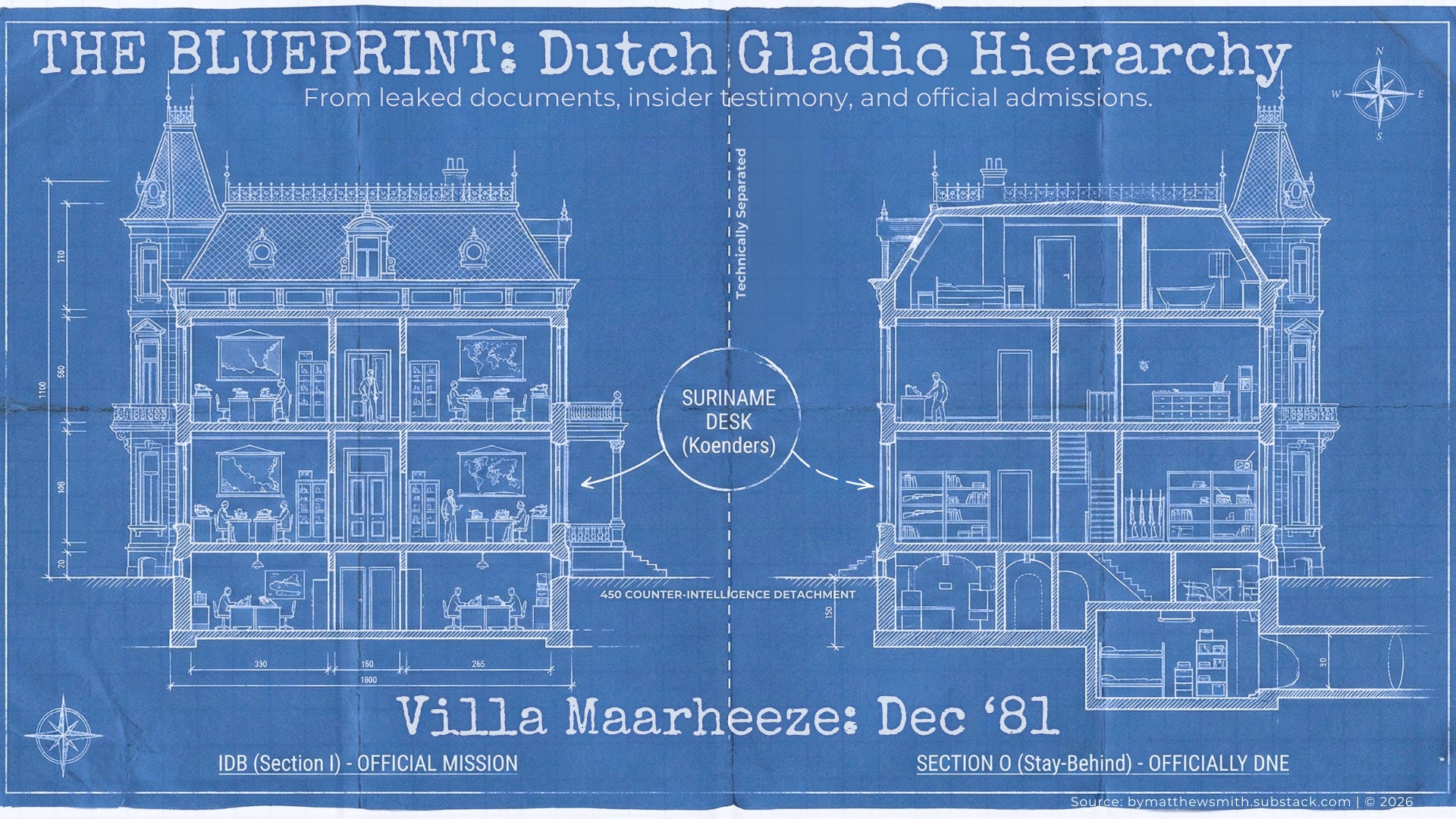
The villa officially housed IDB (Inlichtingendienst Buitenland—Foreign Intelligence Service). Regular employees came to work every day collecting intelligence on foreign military capabilities, diplomatic communications, economic espionage.
But hidden within that same building—sharing infrastructure, using the same budgets, operating from the same facility—was O&I (Operaties en Inlichtingen), the Dutch stay-behind network that Schoemaker documented and Lubbers finally admitted in 1990.
Schoemaker described it perfectly: “The unknown stay-behind organization hid behind the skirts of this service for decades.”
If IDB employees had questions about certain activities? Secrecy seemed natural for an intelligence service. If accountants questioned budget items? Those were classified procurement for foreign intelligence operations. If someone saw unfamiliar personnel? They must work in a different section.
The firewall was internal. Strict separation maintained even within the same building. “Also internally,” Schoemaker noted, “the strictest possible separation between I and O was maintained.”
And LAMID (Landmachtinlichtingendienst—Army Intelligence Service) coordinated with both.
While Colonel Bram Schulte (Head of LAMID from 1981-1984) ran his service from the Prinses Julianakazerne in The Hague, his subordinate, Major Koenders, operated as the coordinator for the Joint Suriname Desk located at Villa Maarheeze. This desk served as the institutional glue, binding together LAMID, the IDB, and the BVD.
Same intelligence. Same reporting. Three simultaneous channels ensuring everyone with need-to-know received identical refined assessments.
When Corporal Krishna Mahabier—later identified by Bouterse as the ‘brains’ behind the Rambocus coup—fled Suriname via a vegetable truck to French Guiana on March 17, 1982, he was eventually funneled back to the Netherlands. By April 1982, he was in the hands of the intelligence apparatus centered at Villa Maarheeze. Professional debriefing by officers who knew exactly what questions to ask because they’d been tracking Surinamese resistance networks for over a year.
This overlap at Villa Maarheeze provided the perfect ‘skirt’ that Schoemaker described to hide the more aggressive operations of Section O (Stay-Behind). While the Suriname Desk appeared as a standard intelligence-sharing hub, it served as an intelligence laundromat . Strategic data gathered by Section I (Foreign Intelligence) was systematically reformatted by the SAZ-VII ‘cleaning station’ into the offensive tactical protocols capable of use by Major Koenders and his domestic 450 CID teams. This ensured that the specialized techniques of stay-behind networks—such as secret break-in techniques and interrogation—could be redirected toward the Surinamese resistance while maintaining total plausible deniability
THE CCIV
If you want proof this wasn’t a rogue operation, simply look at the CCIV (Commissie Coördinatie Inlichtingendiensten en Veiligheidsdiensten) meeting of March 2, 1982.
The Commission for Coordination of Intelligence and Security Services (CCIV) was the highest-level intelligence coordination body in the Netherlands. Chaired by the Secretary-General of Ministry of Defense. Members included representatives from every intelligence and security service.
This wasn’t a casual working group; it was where operations requiring cross-agency authorization received their final blessing.
Evidence A: The Blueprint (January 27, 1982)
The planning for the final phase of the Dutch’s secret planning began in earnest in early 1982. While Colonel Schulte was in Washington negotiating a public policy of “appeasement” and “stabilization,” his own department was already ordering the tactical deployment of Major Koenders to Paramaribo to set up an intelligence organization
Minutes from a military intelligence meeting on January 27th record the explicit order for Major Koenders’ next rotation.
“Maj. Koenders zal ongeveer 2 mndn in Suriname worden det voor het opzetten van een inlnorg. Verm maart/april.” (Major Koenders will be detached to Suriname for approximately 2 months to set up an intelligence organization. Estimated March/April.)
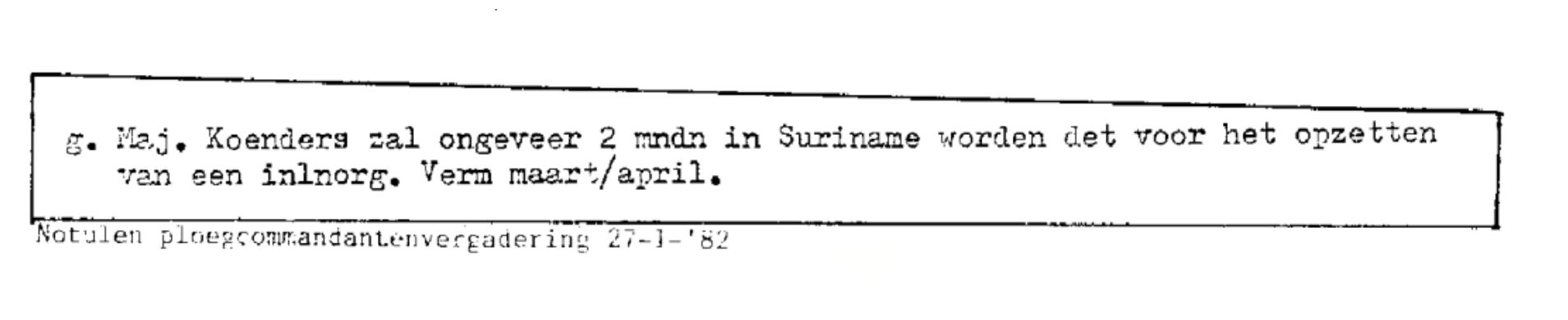
This documents a deliberate plan to install a formal intelligence architecture in Paramaribo, scheduled exactly for the window when the Rambocus Coup would eventually strike.
Evidence B: The Green Light (March 2, 1982)
If the January order was the blueprint, the CCIV meeting on March 2, 1982, was the green light. Just nine days before the Rambocus Coup began, the nation’s top intelligence brass met in Room 240 of the Prinses Julianakazerne to confirm the status of the mission. The report from that meeting contains a brief, yet chillingly update when we know what’s to come:
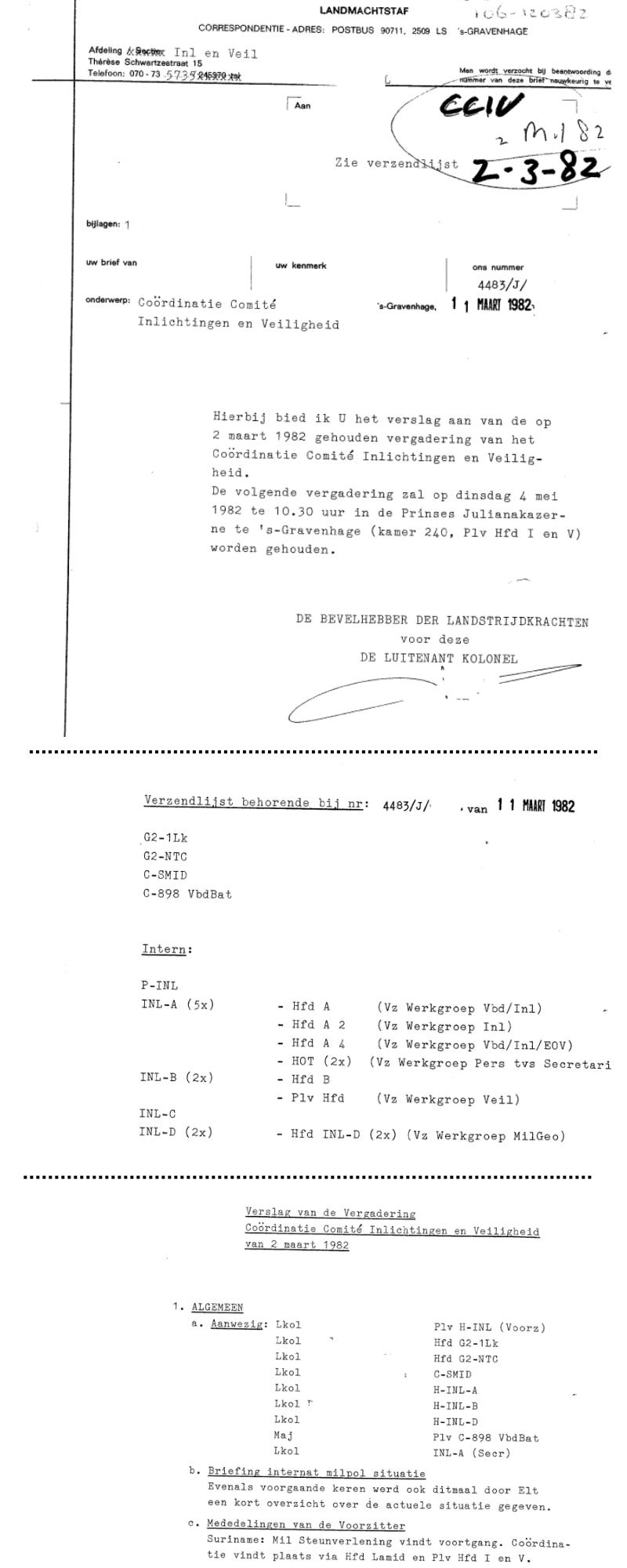
“Suriname: Mil Steunverlening vindt voortgang. Coördinatie vindt plaats via Hfd Lamid en Plv Hfd I en V.” (Suriname: Military support is progressing. Coordination is taking place via the Head of LAMID and the Deputy Head of Intelligence and Security.)82
This single meeting proves:
- Suriname operations weren’t improvised. They were planned, coordinated, and resourced through the highest channels.
- Intelligence led the “Support.” Standard military support is usually handled by logistics. This was coordinated directly by the Head of LAMID (Colonel Schulte), proving it was an intelligence-led operation.
- Timing was deliberate. The meeting occurred nine days before the coup. The deployment was scheduled for the exact moment the crisis broke.
- Institutional authorization existed. The CCIV doesn’t document operations that haven’t been approved by senior leadership.
The Architecture of Awakening
When people ask, “Where is the proof the government knew?”—this is the wrong question. Awareness is passive. What the March 2nd report documents is activation.
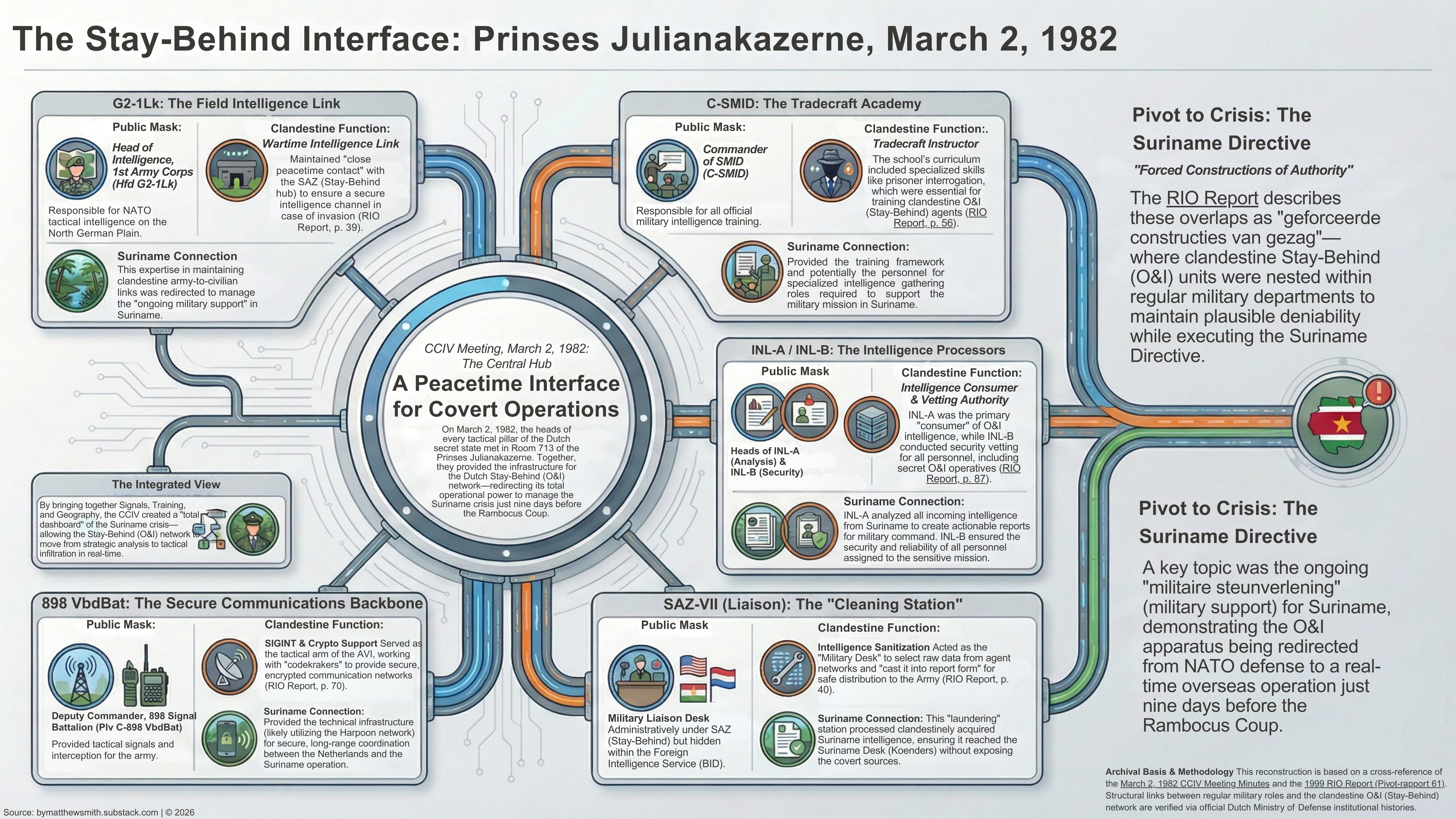
Nine days before the Rambocus Coup, the nation’s top intelligence brass confirmed the mission was “progressing.” But look closely at who was in that room. This wasn’t a meeting of diplomats or logistics officers; it was a gathering of the specialized heads of the Dutch Stay-Behind (O&I) network.
The Dutch didn’t build a new organization to manage Suriname. They simply took the engine designed for NATO’s “Gladio” resistance—built for secrecy, sabotage, and deniable communications—and pointed it at Paramaribo.
By cross-referencing this meeting’s attendance list with the official institutional history of the services, we can see the “Double Vision” of the Dutch secret state in Room 240. Many of the top individuals in that room held a “Public Mask” of regular military duty, but possessed a “Clandestine Function” designed for the shadows of a Stay-Behind war
So when people ask, ‘Where is the proof the government knew?’—this is the dual-track evidence. On one hand, you have a tactical blueprint from the leaked Onkruit archives ordering Koenders to Suriname. On the other, you have the strategic green light from the March 2nd CCIV report, where the nation’s top intelligence brass confirmed the mission was ‘progressing’ just nine days before the Rambocus Coup struck.
Together, these documents prove that the Netherlands’ most senior intelligence body wasn’t just aware of the Suriname crisis—they were actively managing the deployment of their key operator right into the heart of it.
THE METHODOLOGY TRANSFER
Now we can answer the question the Onkruit editors posed but couldn’t prove:
“Handwritten attack plan of Rambocus and photos from those days (thanks to Koenders?)”
When Van Haperen met with members of the Surinamese resistance needing to convince them of his bona fides, he opened his suitcase and produced Rambocus’s original attack plan, complete with his own handwritten annotations. He doubled the stakes, but providing photos featuring Krishna Mahabier himself, a fact that was “incomprehensible” for an outsider to possess.
This got his foot in the door. When he needed someone to vouch for the veracity of Rambocus’s coup plans and handwriting, where did he turn? Krishna Mahabier — the mastermind who’d be exfiltrated by Dutch intelligence services, who vouched for the new infiltrator and saboteur.
Van Haperen couldn’t have gathered this intelligence through normal infiltration. Security-conscious resistance movements plotting coups don’t provide complete network maps to new members. Trust is built gradually. Compartmentalization protects against infiltration.
But Van Haperen had access to intelligence that matched exactly what Mahabier would have provided during his five-day Villa Maarheeze debriefing.
- Same facility where Koenders coordinated Suriname operations (Villa Maarheeze).
- Same officer who had custody of Rambocus materials (Koenders, per routing document 807488).
- Same officer who commanded domestic infiltration operations (Fatima: Koenders as 450 CID deputy commander).
- Same methodology (extract intelligence from insider, weaponize it for infiltration).
- Same man vouching for him (Mahabier)
The Onkruit editors asked the right question. Our additional documents provide the answer.
This wasn’t coincidence. It was institutional methodology transfer.
The Dutch had spent decades developing infiltration techniques through Project Fatima and domestic surveillance operations. Recruit assets. Embed them in target organizations. Extract intelligence. Neutralize networks.
That same methodology—proven effective against Dutch peace groups and soldier unions—was adapted for Surinamese resistance networks.
Different target. Different geography. Different political context.
Same machinery. Same operator. Same facility. Same outcome.
How Van Haperen used that intelligence—what he did with it, who he met, what operations he ran—that’s a story for later chapters. What matters here is proving the machinery existed and the transfer occurred.
THE “STOELENDANS” ROTATION
The Dutch called it “stoelendans”—chair dance. The systematic rotation of counter-intelligence officers through different positions. In America, we call it musical chairs.
It wasn’t bureaucratic shuffling of the deck. It was deliberate design.
Officers moved through a typical career path:
- Ploegcommandant (Team Commander—tactical operations)
- Staff function at Security Section or NATO liaison (strategic planning)
- Deputy Detachment Commander or Head of CI training (operational command)
- Detachment Commander or bureau chief at LAMID-B (institutional leadership)83
The system ensured officers gained expertise across multiple domains: tactical operations, strategic intelligence, institutional coordination, command responsibility.
This created dangerous institutional memory.
An officer who learned infiltration techniques in domestic operations could apply them to foreign theaters. An officer who coordinated foreign intelligence could command domestic surveillance. The methods transferred through personnel rotation.
Koenders fit this pattern perfectly—but with Suriname specialization layered in:
Foreign intelligence analysis (investigating the 1980 coup) → Strategic coordination (Suriname Desk at Villa Maarheeze) → Operational planning (scheduled deployment March/April 1982) → Domestic command (450 CID deputy commander) → Operational expansion (Project Fatima to “all groups directed against the defense apparatus”)
Same institutional knowledge. Same classified materials. Same facility (Villa Maarheeze coordination). Different applications depending on operational requirements.
This wasn’t a rogue officer going maverick. This was the system working exactly as designed.
The stoelendans “chair dance,”ensured that expertise built infiltrating Dutch peace groups could be applied to infiltrating Surinamese resistance networks. That intelligence extraction protocols developed for domestic operations could be used for foreign assets. That the machinery built for one purpose could seamlessly shift to another.
And because everything operated through compartmentalized structures—O&I hidden within IDB, LAMID coordinating with both, 450 CID as a separate detachment—no single person outside the coordination level (Schulte, Demmink, Koenders) needed to understand the complete picture.
The architecture created deniability through fragmentation.
WHY THIS MATTERS
When governments admitted Gladio existed in 1990, they emphasized the defensive purpose: resistance networks prepared to fight Soviet invasion.
But what the Onkruit leaks and Koenders’ career trajectory prove is something more disturbing:
The same infrastructure built for defensive preparation could be—and was—used for offensive political operations.
The organizational charts. The infiltration protocols. The handler networks. The training facilities. The secure debriefing locations. The highest-level coordination bodies.
All of it existed. All of it was documented. All of it was authorized.
And when operational requirements changed—when the American’s decided to invade, when Suriname became a “problem” requiring management rather than a former colony requiring evacuation—the machinery didn’t need to be built from scratch.
It just needed to be redirected.
The American Connection
Gladio was never purely a European phenomenon. From the beginning, it was a transatlantic project. You may remember that Latinus claimed that it was American intelligence that constructed his Gladio cell. 84
America didn’t need a stay-behind army in America. The communists never reached its shores, with two oceans serving as a buffer. But during the Reagan administration, it wanted to manage the advance of communism during the Cold War—to actively roll it back.
But sometimes, allied countries had their own domestic agendas that stood counter to America’s anti-communist agenda. For situations like that, US Army Field Manual 30-31B, Supplement B (March 18, 1970), signed by General William Westmoreland, had three core provisions:85
The Doctrine
The first provision authorized the provocation of violence:
“There may be times when HC (Host Country) governments show passivity or indecision in face of Communist or Communist-inspired subversion, and react with inadequate vigor to intelligence estimates transmitted by U.S. agencies. Such situations are particularly likely to arise when the insurgency seeks to achieve tactical advantage by temporarily refraining from violence, thus lulling HC authorities into a state of false security. In such cases, U.S. Army intelligence must have the means of launching special operations which will convince HC governments and public opinion of the reality of the insurgent danger and of the necessity of counteraction.”86
Read that carefully. When foreign governments— like the Netherlands— don’t see the Communist threat as seriously as US intelligence prefers, American forces are authorized to conduct “special operations” that will create the perception of insurgent danger.
The second provision establishes that casualties among civilians and friendly forces are acceptable costs.
- Small-scale violence prevents large-scale revolution
- Targeted casualties justify security apparatus expansion
- Public fear enables policy changes impossible during stability
- “Managed chaos” is preferable to uncontrolled opposition
The third provision sounds quite a bit like the NSDD-17 directive signed in November of 1981. It emphasizes recruiting officers from the host country’s military who can implement operations while maintaining plausible deniability for US involvement.
This created:
- Indigenous operational capacity (not foreign invasion)
- Institutional cover (military acting in “national interest”)
- Deniability (US role hidden behind local actors)
- Sustainability (network survives personnel changes)
The BBC Timewatch documentary offers multiple speakers who debated FM 30-31B’s authenticity back in 1992. An Italian source said:
“A document that was given to me by a very dear friend who was part of SCIA before returning to headquarters, he said ‘take this when you have a moment of time, read it.'” An American intelligence official stated: “I suspect is authentic document… it’s the kind of special forbidden… But if it’s not authentic, you need someone…” 87
Then, the documented was published and authenticated by Daniele Ganser, NATO’s Secret Armies and you can read it for yourself in 2026 on Wikispooks.
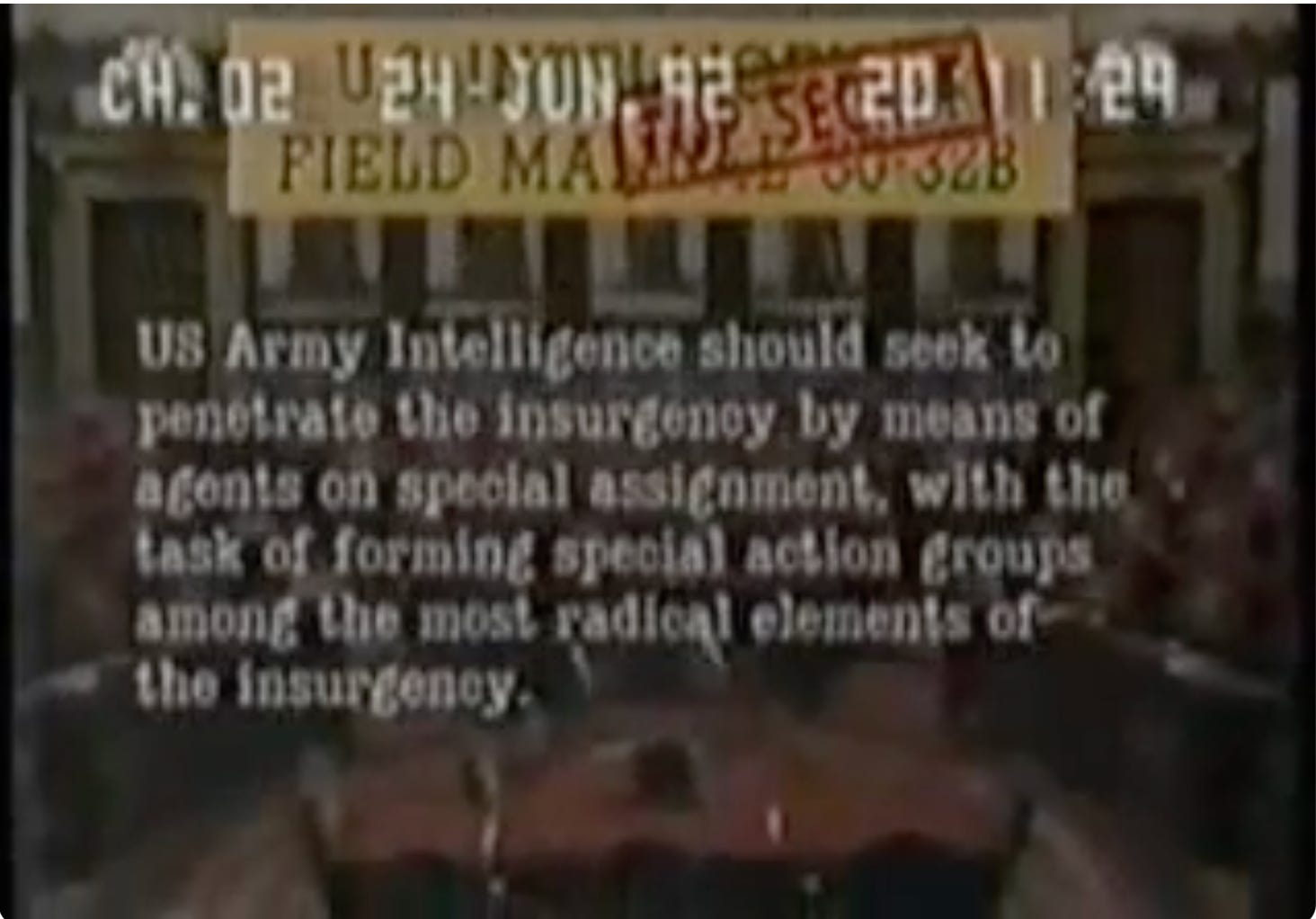
Remember this doctrine. Because when the Rambocus coup fails in March 1982, and the Dutch still won’t act, you’re about to watch FM 30-31B protocols deploy in real-time – both in Belgium and Suriname.
The Gladio Sync
By late 1981, Dutch officials were under heavy pressure from Washington to keep the Caribbean “streamlined” against communist influence, but were reluctant to directly intervene in their former colony.
That pressure helps explain why the Suriname Desk was created in December 1981. It wasn’t just an administrative fix. It was a coordination hub—designed to encapsulate Dési Bouterse, surround him with Dutch-trained advisors, prevent a Cuban alignment, and manage the resistance so that no outcome forced American intervention.
This matters for our story because of what happened in December 1981.
One month after Major Koenders investigated and confirmed Valk’s role, then watched his report get buried. One month after Meyer started documenting the mission members’ “compromised loyalties.” One month after Dutch spy Peter Meyer discovered Operation Black Tulip in a Paramaribo filing cabinet.
December 1981: the Dutch established something called the “Suriname Desk.”88
According to historians Bob de Graaff and Cees Wiebes in Villa Maarheeze, this wasn’t a normal intelligence coordination unit. The Suriname Desk combined three services:
- IDB (Foreign Intelligence)
- LAMID (Military Intelligence)
- BVD (Domestic Security)
And Major Koenders—the same officer who’d just investigated Valk’s coup role—did the reporting for this desk.89
But here’s the key detail: that reporting went directly to the IDB.
Not through the Ministry of Foreign Affairs. Not through normal diplomatic channels. As Ellen de Vries documents: “This was the task of the IDB, but because LAMID had expert personnel in the person of Koenders, this service did the reporting on Suriname. That was usually sent simultaneously to Demmink… the chief of the army staff and IDB.”90
Catch that? Suriname intelligence was flowing directly to Villa Maarheeze—the same building that housed Section I&O. The same location where stay-behind operations were concealed behind foreign intelligence cover. The same infrastructure where, as Schoemaker documented, Section O operations were funded through Section I budgets.
The machinery Meyer had discovered wasn’t historical.
It was currently operational.
The American Parallel
But the Dutch weren’t working alone.
One month after the Suriname Desk was established—January 12, 1982—President Ronald Reagan signed National Security Decision Directive 2.91
On paper, NSDD-2 just reorganized the National Security Council. Created some new interagency groups. Standard bureaucratic housekeeping.
In reality, it did exactly what the Dutch had just done: created mechanisms to bypass normal oversight.
NSDD-2 established flexible Crisis Pre-Planning Groups that could coordinate multi-theater operations without traditional congressional constraints. These groups—chaired by Vice President George H.W. Bush—could respond to perceived crises in real-time, without going through normal diplomatic channels.92
Sound familiar?
The Dutch created a desk that bypassed the Ministry of Foreign Affairs, funneling intelligence directly to Villa Maarheeze.
The Americans created groups that bypassed Congress, funneling operations directly to Bush’s Special Situation Group.
Same month. Same structure. Same purpose.93
And here’s what makes the timing even more interesting: In January 1982—between the Suriname Desk’s December formation and NSDD-2’s January signing—LAMID chief Colonel Schulte flew to Washington.94
His mission? Coordinate with the CIA and inform American officials about Dutch policy in Suriname.
According to historians de Graaff and Wiebes, “Schulte also made arrangements for more intensive communication between the CIA on one side and the IDB and LAMID on the other. The American conversation partners of Schulte emphasized their wish that the Netherlands would establish a joint Suriname desk composed of the IDB, BVD, and LAMID.”95
Read that again.
The Americans requested the joint Suriname Desk. The desk that would funnel intelligence to Villa Maarheeze. The desk that Koenders would run.
This wasn’t parallel development. This was coordinated restructuring across NATO intelligence services.
The Americans had already laid the groundwork. Executive Order 12333, signed December 4, 1981, had “unleashed” intelligence agencies by loosening restrictions on domestic surveillance and covert operations.6 NSDD-3, signed December 14, 1981, had created Bush’s Special Situation Group with authority to manage “national security crises” without normal oversight.96
Now they were asking the Dutch to create matching infrastructure.
And the Dutch complied. Because both governments had the same problem: democratic oversight was incompatible with the kind of operations they wanted to run in the Caribbean Basin.
The Brazil Model had taught them well. When you can’t operate openly, you create shadow structures. You establish special authorities. You build parallel systems that look bureaucratic but function operationally.
By January 1982, both the Dutch and Americans had constructed those systems.
The Dutch had their Suriname Desk at Villa Maarheeze—intelligence flowing to the building that housed Section I&O, bypassing the Ministry of Foreign Affairs.
The Americans had their Crisis Pre-Planning Groups under Bush—operations flowing to the Vice President’s shadow cabinet, bypassing Congress.
And both systems pointed at Suriname.
Epilogue: The Fund
It is in that context that an otherwise baffling claim begins to make sense.
In August 1994, a Dutch record producer named Frits Hirschland walks into a newspaper office with a hell of a story.
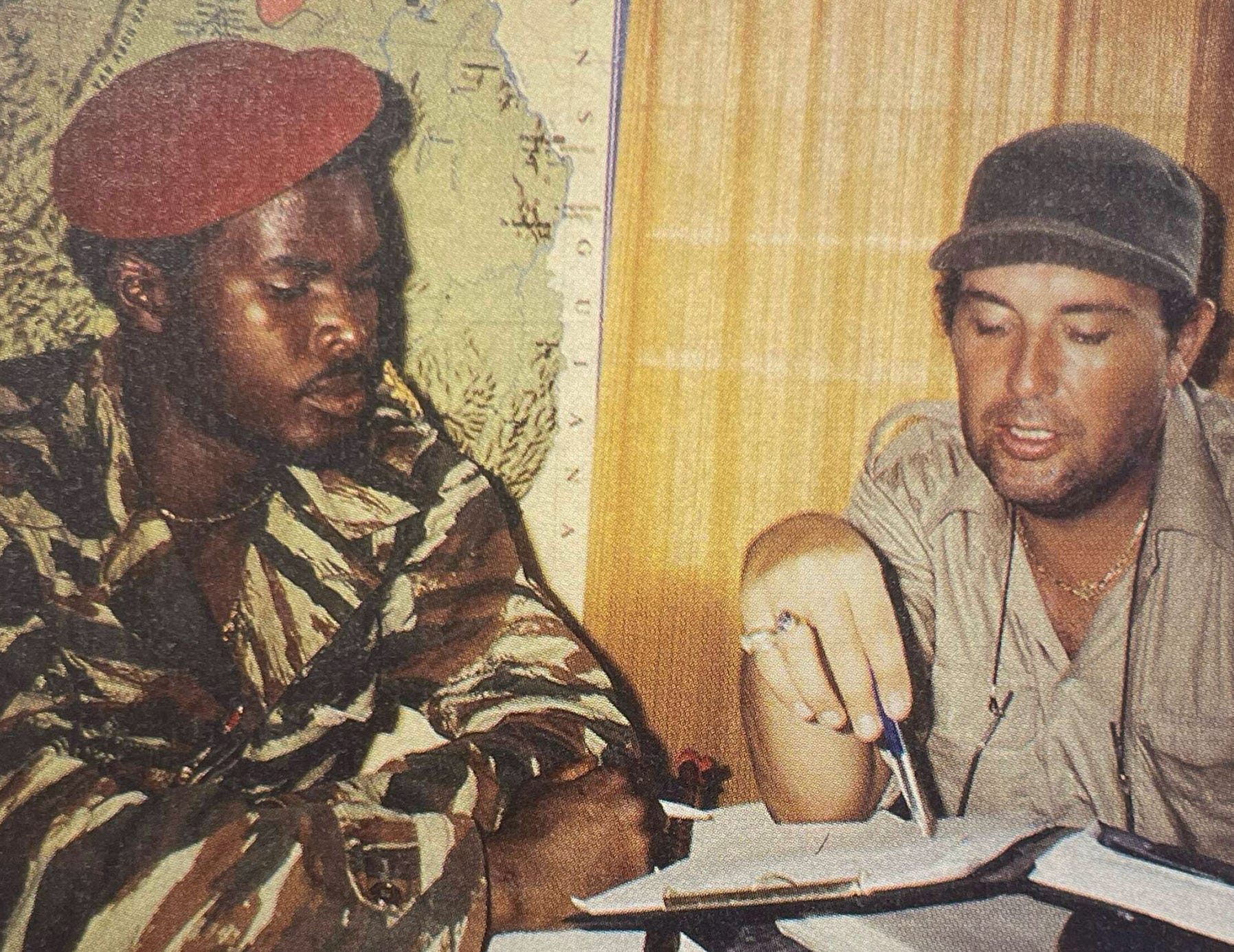
He’d worked as press secretary to Ronnie Brunswijk’s Jungle Commando—the resistance fighters battling Bouterse through the mid-80s. And in 1991, Dutch intelligence had sent him to Paramaribo with an offer for Bouterse: Eight million guilders if you relocate quietly to Brazil.97
Where would the money come from?
According to Hirschland, the money was to come from what he was told was a so-called “Gladio fund.”
The allegation was never proven. No document surfaced. No official confirmed it. Hirschland himself was an unconventional witness (as are many during this period), it was alleged that he himself may have been an IDB agent, but, he offered a paper trail in the form of a memoir. On its own, his claim would be easy to dismiss as rumor or self-mythology.
But it does not stand alone.
Professor Bob de Graaff, in his book Villa Maarheeze, states that this was the second time an offer had been made to Bouterse. The first was in 1986/87 when the IDB—which we now know housed the Gladio network—offered Bouterse millions of guilders to leave Suriname as an alternative to the invasion plans then on the table. Both alleged payoffs involved the IDB’s secret internal funds, which Frits Hirschland explicitly labeled the ‘Gladio fund.’98
What is documented is that, a decade earlier, the Dutch state had already chosen accommodation over confrontation. In late 1981—while Bouterse was consolidating power and months before the December murders—the Netherlands quietly authorized training for Suriname’s military intelligence service. That training was carried out by officers of LAMID, the intelligence service of the Dutch army. A Dutch non-commissioned officer was dispatched to Paramaribo and began instructing Bouterse’s Section 2 shortly thereafter.99
That decision is not alleged. It is established.
Placed side by side, Hirschland’s claim and the LAMID training program do not prove the existence of a Gladio fund operating in Suriname. They do something subtler—and more revealing. They show continuity of method.
The same state that officially condemned Bouterse publicly was, in practice, willing to stabilize his regime quietly: training its intelligence service, providing weapons, maintaining channels, and—if Hirschland’s account is accurate—exploring the possibility of buying off the problem away rather than confronting it.
This is precisely how Cold War containment had worked elsewhere in Europe. Not through NATO orders or formal resolutions, but through parallel structures: off-ledger money, unofficial envoys, and solutions designed to leave no fingerprints.
Whether the money Hirschland described truly came from a “Gladio fund?” We may never know. What can be said with confidence is that by the early 1980s, the Netherlands possessed both the institutional Gladio experience and the covert infrastructure to attempt such a solution—and every incentive to prefer it over a public reckoning.
The danger, in such systems, is not secrecy itself. It is what happens when someone inside the machinery begins asking the wrong questions.
Gladio: NATO’s stay-behind armies and terrorism in Cold War Italy | Frieden durch Recht, n.d., accessed January 4, 2026, http://frieden-durch-recht.info/gladio-natos-stay-behind-armies-and-terrorism-in-cold-war-italy/.
Ganser, Daniele. NATO’s Secret Armies: Operation Gladio and Terrorism in Western Europe. United Kingdom: Frank Cass, 2005. https://blogs.shu.edu/journalofdiplomacy/files/archives/08_ganser27.pdf
redactie, onze politieke. “Digibron, Lubbers Erkent Bestaan Zeer Geheime Dienst.” Digibron, 19901114. https://www.digibron.nl/viewer/collectie/Digibron/id/tag:RD.nl,19901114:newsml_6f583713cfc6d8985618d8c237bd11a8.
Ruud Lubbers, Letter to the Chairman of the Second Chamber regarding the stay-behind organization, November 13, 1990 (Handelingen van de Tweede Kamer, 1990-1991, 21895 nr. 1), as cited in Schoemaker, H., Een geheime organisatie in beeld, 2013, p. 7
Ganser, Daniele. “Terrorism in Western Europe: An Approach to NATO’s Secret Stay-Behind Armies.” The Whitehead Journal of Diplomacy and International Relations (Winter/Spring 2005): 69–92.
“Stay-behind in The Netherlands.” Accessed January 9, 2026. https://www.cryptomuseum.com/spy/sbo/nl/index.htm.
Herman Schoemaker, “Een geheime organisatie in beeld: De Nederlandse stay-behind-organisatie, geheim, onafhankelijk en zelfstandig?” (Master’s thesis, Utrecht University, 2013), 3. https://www.cryptomuseum.com/spy/sbo/nl/files/schoemaker_stay_behind.pdf
Schoemaker, Een geheime organisatie in beeld, 1
Schoemaker, Een geheime organisatie in beeld, 28.
Bob de Graaff and Cees Wiebes, Villa Maarheeze: De Geschiedenis van de Inlichtingendienst Buitenland 1946-1994 (The Hague: SDU Uitgevers, 1998), 15-23.
Schoemaker, Een geheime organisatie in beeld, 28; Lubbers, Letter to the Chairman of the Second Chamber, November 13, 1990.
Schoemaker, Een geheime organisatie in beeld, 28. Original Dutch: “De onbekende stay-behind-organisatie heeft zich decennia lang achter de rokken van deze dienst kunnen verschuilen.”
Generieke selectielijst voor de archiefbescheiden van de Militaire Inlichtingen- en Veiligheidsdienst en taakvoorgangers vanaf 1945, Ministerie van Defensie (Sept. 2015), Section 2.2.1, p. 23. The MIVD acknowledges that G2 (Military Intelligence) received “dozens of reports per week” concerning the DDR through a “perfectly functioning agent network” managed via the SAZ-VII liaison. https://cyberwar.nl/d/20151221-Generieke-selectielijst-voor-de-archiefbescheiden-van-de-Militaire-Inlichtingen-en-Veiligheidsdienst-en-taakvoorgangers-vanaf-1945_blg-646463.pdf
Schoemaker, Een geheime organisatie in beeld, 28
Schoemaker, Een geheime organisatie in beeld, 28. Original Dutch: “Ook intern werd een zo strikt mogelijke scheiding tussen I en O gehanteerd. Materiaal en voorzieningen ten behoeve van O werden via I gerealiseerd. Financiën werden onder een verzamelrubriek door I geregeld.”
Mahabier extraction March 17-23, 1982: U.S. State Department cable PARAMA 00529 documents embassy contact March 17. Five-day period at Villa Maarheeze (LAMID headquarters The Hague). Dutch diplomatic cable March 23 (Chargé d’Affaires Heldring) documents “de gevraagde materialen” (the requested materials) provided to Dutch military intelligence—indicating specific intelligence requirements communicated to Mahabier rather than voluntary information offering. Full evidence chain including routing documents documented in Episode 9. This operation occurred nine days after March 2, 1982 CCIV (Coördinatie Comité Inlichtingen en Veiligheid) meeting documented “Suriname: Mil Steunverlening vindt voortgang” (Suriname: Military support assistance is ongoing)—proving extraction infrastructure pre-existed crisis.
Alger, Julie. “A Review of the Technical Research Ship Program 1961–1969.” Prepared by K18, National Security Agency, May 1, 1970. Declassified January 17, 2017. https://documents.theblackvault.com/documents/terrorism/AReviewoftheTechnicalResearchShipProgram-postMDR.pdf.
CIA/FBIS documen gt, “Dissemination of the Names of U.S. Persons Acquired Through Electronic Surveillance,” Distribution dated March 5, 1982 (Document ID: CIA-RDP85-00024R000400340003-7).
Emerson, Steven. Secret Warriors: Inside the Covert Military Operations of the Reagan Era. G.P. Putnam’s Sons, 1988. 87. (Details on Operation Queens Hunter and Seaspray). https://www.lander.odessa.ua/doc/Secret%20Warriors%20-%20Inside%20the%20Covert%20Military%20Operations%20of%20the%20Reagan%20Era.compressed.pdf
Ibid,.
Schoemaker, Herman. “Een geheime organisatie in beeld: De Nederlandse stay-behind-organisatie, geheim, onafhankelijk en zelfstandig?” Thesis, Utrecht University, 2013. https://www.cryptomuseum.com/spy/sbo/nl/files/schoemaker_stay_behind.pdf
Westerloo, Gerard van, and Elma Verhey. “Contra Wie.” Vrij Nederland, July 16, 1983. Vol. 44, 1983, no. 28 Edition. https://resolver.kb.nl/resolve?urn=KBVRNL01:252330003:00003.
Herman Schoemaker, Een geheime organisatie in beeld, 2013, p. 55. The Sectie Algemene Zaken (SAZ) served as the administrative and financial hub for both Section I (Intelligence) and Section O (Operations) at Villa Maarheeze. While SAZ-VII reformatted clandestine O-intelligence for military distribution, the structural records of this “laundering” process were almost entirely lost when a high-ranking SAZ employee unilaterally destroyed the organization’s archives in late 1992. This destruction—later labeled “eigenmachtig” (arbitrary) by the 1998 Valk Committee—ensured that the specific operational fingerprints of stay-behind intelligence shared with services like LAMID or MID remain historically obscured.
Generieke selectielijst voor de archiefbescheiden van de Militaire Inlichtingen- en Veiligheidsdienst en taakvoorgangers vanaf 1945, Ministerie van Defensie (Sept. 2015), Section 2.2.1, p. 23. The document explicitly describes the organizational overlap between the civilian Buitenlandse Inlichtingendienst (BID) and military intelligence as “forced constructions of authority” (geforceerde constructies van gezag). This structure was formalized in 1956 to house the “military desk” within the civilian service while maintaining administrative ties to the Sectie Algemene Zaken (SAZ).
Herman Schoemaker, Een geheime organisatie in beeld, 2013, p. 8. Schoemaker confirms that at the end of 1992, as the organization was being dissolved, nearly the entire archive of the Sectie Algemene Zaken (SAZ)—the branch responsible for the intelligence side of the network—was destroyed. This act was later investigated by the 1998 Valk Committee (Parliamentary Working Group on Archive Management), which leveled “severe reproaches” against top officials for what was deemed a structural and arbitrary (”eigenmachtig”) erasure of history.
Giles Scott-Smith, Networks of Empire: The US State Department’s Foreign Leader Program in the Netherlands, France, and Britain 1950-70 (Brussels: P.I.E. Peter Lang, 2008), 156-159. Scott-Smith documents Interdoc’s founding and Van Stolkweg 10 location as part of broader US-European anti-communist networks.
Ibid., 188. Scott-Smith identifies Interdoc as operating in what he terms the “grey zone” between state and private networks, a “state-private” hybrid that enabled operations outside normal governmental oversight while maintaining state connections.
Ibid.
Scott-Smith, Networks of Empire, 158-161; documents CIA funding through foundations and corporate contributions from Shell and Philips. See also: Bob de Graaff and Cees Wiebes, Villa Maarheeze: De Geschiedenis van de Inlichtingendienst Buitenland 1946-1994 (The Hague: SDU Uitgevers, 1998), 362-364, which confirms CIA financial support for anti-communist networks including Interdoc.
Scott-Smith, Giles. “Interdoc and West European Psychological Warfare: The American Connection.” Intelligence and National Security 26, no. 2-3 (2011): 366. https://doi.org/10.1080/02 684527.2011.559324.
The Bangor Daily News (Bangor, Maine). “Donors to Contras Tell of White House Briefings.” May 22, 1987.
Scott-Smith, Networks of Empire, 159. “Citizenship training” and “ideological warfare” were Interdoc’s stated mission areas, carefully chosen to sound educational rather than operational.
Belgian Federal Police, interrogation of Peter van Haperen, June 30, 2009, Case File 61/05 (Brabant Killers investigation). Van Haperen testified: “Interdoc was established for misleading and disinformation… to hide the real nature of intelligence operations.” Cited in: Debels, Thierry, “Onderzoek Bende van Nijvel: Onderzoeksrechter Martine Michel Kreeg Deze Merkwaardige Brief,” P Magazine, January 30, 2023.
Scott-Smith, Networks of Empire, 156-157. C.C. van den Heuvel served as BVD Head of Training from 1952-1962 before founding Interdoc, bringing two decades of recruitment and vetting expertise to the organization.
Dick Engelen, Frontdienst: De BVD in de Koude Oorlog (Amsterdam: Boom, 2007), 127-130. Documents the 1957 BVD “brievenactie” (letter campaign) against the CPN, including the deliberate leaking of fabricated materials to Het Vrije Volk on January 7, 1957. The BVD withheld information about its active role from the Parliamentary Intelligence Committee “to avoid the accusation that the BVD was ‘doing politics.’”
Engelen, Frontdienst, 128-129. The BVD informed parliamentary oversight about CPN internal conflicts while omitting that the BVD had created those conflicts through fabricated correspondence and disinformation operations.
Scott-Smith, Giles. “Interdoc and West European Psychological Warfare: The American Connection.” Intelligence and National Security 26, no. 2-3 (2011): 375. https://doi.org/10.1080/02 684527.2011.559324.
Chaos redde militair archief “ Algemeen Dagblad “ (General Daily). Rotterdam, May 14, 1998. Retrieved from Delpher on January 10, 2026, https://resolver.kb.nl/resolve?urn=KBPERS01:003153012:mpeg21:p00004
Dick Engelen, De Nederlandse stay-behind-organisatie in de Koude Oorlog, 1945-1992, PIVOT Report (The Hague: Ministerie van Algemene Zaken, 2005), referenced in Schoemaker, Een geheime organisatie in beeld, 8.
Tweede Kamer Report 25 809, nr. 5, vergaderjaar 1997–1998, p. 7. https://zoek.officielebekendmakingen.nl/kst-25809-5.pdf This report documents the “chaotic” management of MID archives and the temporary “disappearance” of files related to the 1982 December Murders.
Schoemaker, Een geheime organisatie in beeld, 8.
Chaos redde militair archief “ Algemeen Dagblad “ (General Daily). Rotterdam, May 14, 1998. Retrieved from Delpher on January 10, 2026, https://resolver.kb.nl/resolve?urn=KBPERS01:003153012:mpeg21:p00004
Ibid.
Tweede Kamer Report 25 809, nr. 5, vergaderjaar 1997–1998, p. 8. The working group confirmed that the SAZ archives were destroyed “eigenmachtig” (arbitrarily and unilaterally) in 1992, and that the Prime Minister’s assurances regarding archive preservation were incorrect.
Schoemaker, Een geheime organisatie in beeld, 55.
‘Geen grote schade door vernietiging MID-archief’. “Algemeen Dagblad”. Rotterdam, 10-12-1997. Geraadpleegd op Delpher op 09-01-2026, https://resolver.kb.nl/resolve?urn=KBPERS01:003147009:mpeg21:p00007
‘Geen grote schade door vernietiging MID-archief’. “Algemeen Dagblad”. Rotterdam, 10-12-1997. Geraadpleegd op Delpher op 09-01-2026, https://resolver.kb.nl/resolve?urn=KBPERS01:003147009:mpeg21:p00007
Schoemaker, Een geheime organisatie in beeld, 8.
Schoemaker, Een geheime organisatie in beeld, 8.
Ibid. 50.
BBC Timewatch, Operation Gladio: State-Sponsored Terror, directed by Allan Francovich, 1992.
Ibid.; René Haquin interview segments.
Peter van Haperen, testimony to Belgian authorities, June 30, 2009, as documented in PALU-Seniorencollectief, Laat ons samen de onafhankelijkheid voltooien voor welvaart en welzijn voor een vrije Surinaamse natie: 1977 – 12 Maart – 2017, 40 Jaar EVE Arbeiders en Landbouwers Unie (PALU) (PALU, 2017).
Belgian Senate, “Report on the Existence of a Secret Parallel Intelligence and Action Network in Belgium”; US State Department cable, Brussels 16954, November 9, 1990.
BBC Timewatch, Operation Gladio; Michel Libert interview segments.
Ibid.
“Oswald LeWinter,” Wikipedia, last modified December 29, 2025, https://en.wikipedia.org/wiki/Oswald_LeWinter.
BBC Timewatch, Operation Gladio; Michel Libert interview segments.
Ibid.; René Haquin testimony regarding “The Colonel.”
Ibid.
Ibid.
Ganser, Daniele. NATO’s Secret Armies: Operation Gladio and Terrorism in Western Europe. United Kingdom: Frank Cass, 2005. 20, 101, 253. https://blogs.shu.edu/journalofdiplomacy/files/archives/08_ganser27.pdf
Ganser, NATO’s Secret Armies, 64-92; documentation of Bologna bombing (August 2, 1980) and subsequent investigations.
BBC Timewatch, Operation Gladio; Judge Felice Casson interview.
Belgian parliamentary investigations into the Brabant Killers/Gang of Nijvel, 1982-1985 attacks; see Thierry Debels, “Onderzoek Bende van Nijvel: Onderzoeksrechter Martine Michel Kreeg Deze Merkwaardige Brief,” P Magazine, January 30, 2023.
Van Haperen letter to Judge Martine Michel, November 16, 2012, as documented in Debels, “Onderzoek Bende van Nijvel.”
Onkruit, “Dossier 004: De Geheimste Projekten,” May 1985.
Ibid., 6-7; meeting minutes June 10, 1982.
Ibid., 6.
John Heinerman and Anson Shupe, The Mormon Corporate Empire (Boston: Beacon Press, 1985), 162, https://archive.org/details/mormoncorporatee00hein/page/161/mode/2up?q=CIA.
Onkruit, “Dossier 004: De Geheimste Projekten,” May 1985. 13.
Onkruit, “Dossier 002: De Militaire Inlichtingendienst,” March 1985; organizational structure documentation.
Onkruit. “Dossier CID 003: Defensie in het offensief – Het veiligheidssyndroom.” CID-dossiers, Apr. 1985.
Onkruit, “Dossier 004,” 13; documentation of February 25, 1980 assignment.
Ellen de Vries, Hans Valk: Over een Nederlandse kolonel en een coup in Suriname (1980) (Zutphen: Walburg Pers, 2021), 228-229.
Landmachtstaf, Afdeling Inlichtingen en Veiligheid. “Verslag van de Vergadering Coördinatie Comité Inlichtingen en Veiligheid van 2 maart 1982” [Report of the meeting of the Intelligence and Security Coordination Committee of March 2, 1982]. March 11, 1982. https://www.inlichtingendiensten.nl/militair/cciv820302.pdf.; March 2, 1982 CCIV meeting documentation.
Bob de Graaff and Cees Wiebes, Villa Maarheeze: De Geschiedenis van de Inlichtingendienst Buitenland 1946-1994 (The Hague: SDU Uitgevers, 1998), 362-364.
Onkruit, “Dossier 004,” 13; routing document 807488, March 31, 1982. Mahabier is exfiltrated, interrogated and then the Rambocus plans end up in the hands of Peter van Haperen who uses them as his bona fides to infiltrate the Surinamese resistance. They hire him to launch a coup against Bouterse in 1982-3.
Ibid.; meeting minutes April 22, 1982.
Ibid.
Ibid.
Landmachtstaf, Afdeling Inlichtingen en Veiligheid. “Verslag van de Vergadering Coördinatie Comité Inlichtingen en Veiligheid van 2 maart 1982”
Onkruit, “Dossier 002,” organizational structure and career path documentation.
BBC Timewatch, Operation Gladio: State-Sponsored Terror, directed by Allan Francovich, 1992. René Haquin interview segments.
US Army Field Manual 30-31B, Supplement B, “Stability Operations – Intelligence,” signed March 18, 1970 by General William Westmoreland; published and authenticated in Ganser, NATO’s Secret Armies, appendix materials.
Ibid., Section 11.
BBC Timewatch, Operation Gladio; debate segments regarding FM 30-31B authenticity.
De Graaff and Wiebes, Villa Maarheeze, 362-4 .
Ellen de Vries, Hans Valk: Over een Nederlandse kolonel en een coup in Suriname (1980) (Zutphen: Walburg Pers, 2021), 228-229. Original Dutch: “De missie was reeds lang ter ziele toen de LAMID vanaf december 1981 ging samenwerken met de veiligheidsdiensten Inlichtingendienst Buitenland (IDB) en Binnenlandse Veiligheidsdienst (BVD) in de zogenaamde Suriname desk.”
De Vries, Hans Valk, 229. Original Dutch: “Na de staatsgreep werd in het Comité van de Verenigde Inlichtingendiensten gesproken over het inwinnen van inlichtingen over Suriname. Dit was de taak van de IDB, maar omdat de LAMID over terzake kundig personeel beschikte in de persoon van Koenders, deed deze dienst de rapportage over Suriname. Die werd meestal gelijktijdig naar Demmink gestuurd als verantwoordelijke ambtenaar op het ministerie van Defensie, de chef landmachtstaf en IDB.”
National Security Decision Directive 2, “National Security Council Structure,” January 12, 1982, The White House, Washington, D.C https://irp.fas.org/offdocs/nsdd/nsdd-2.pdf
For detailed analysis of NSDD-2’s creation of Crisis Pre-Planning Groups and their operational authorities, see Matthew Smith, “The Suriname Contra Affair (Part 2): The Deep State is Born (Again),” By Matthew Smith (blog), October 2025.
The parallel timing and structure of Dutch and American intelligence reorganizations in December 1981-January 1982 represents coordinated implementation of crisis management capabilities outside normal oversight mechanisms. Both systems were designed to enable rapid operational deployment while maintaining plausible deniability through bureaucratic complexity.
De Graaff and Wiebes, Villa Maarheeze, 362-4 https://archive.org/details/villamaarheezede0000graa/page/362/mode/2up?
De Graaff and Wiebes, Villa Maarheeze, 362-4
National Security Decision Directive 3, “Crisis Management,” December 14, 1981, The White House, Washington, D.C. For documentation of how the Washington Post revealed that Bush’s Special Situation Group met secretly on martial law in Poland before the group’s existence was even officially acknowledged, operating as “NSC-minus-one meetings,” see Matthew Smith, “The Suriname Contra Affair (Part 2).”
“Brandend Geheim,” De Groene Amsterdammer, August 27, 1997, https://www.groene.nl/artikel/brandend-geheim citing telexes unearthed by Hirschland.
Graaff, Bob de, and Cees Wiebes. Villa Maarheeze: De Geschiedenis van de Inlichtingendienst Buitenland 1946-1994. The Hague: SDU Uitgevers, 1998. Note on the SAZ: While the outreach to Bouterse was conducted by the IDB (Foreign Intelligence Service), the funds were managed by the SAZ (Section General Affairs). This was the administrative branch at Villa Maarheeze responsible for the secret finances of both the IDB and the stay-behind organization (Section O). Because these accounts were consolidated under collective budget headings, the SAZ functioned as the financial engine for Dutch Gladio operations.
“Van Mierlo: Geen steun voor Bouterse,” Algemeen Dagblad, April 23, 1996; documentation of Adjutant Verdier’s January 1982 deployment to train Bouterse’s Section 2, commissioned by LAMID.
Source:
Link:
Internal Link:
Date:
February 3, 2026
Categories:
Matthew Smith, Media, Mercenaries, Mind Control, Podcast, Soft War, State Sponsored Terrorism, The Secret War for Suriname, The Suriname Archive, The Suriname Contra Affair