Advent Countdown to Revolution
Democracy’ing ain’t easy
The Situation Room hummed with tension, its dim interior illuminated by the harsh glow of fluorescent lights and the flicker of computer screens. Around the large conference table, representatives from various agencies shifted uneasily in their seats. The room had weathered countless crises, but today’s gathering crackled with an urgency that set teeth on edge.
Richard J. Kerr, Deputy Director for the Defense Intelligence Agency, stood at the head of the table, his usually unflappable demeanor visibly strained. The electric anxiety in the air spoke volumes: Suriname, a small South American nation, had suddenly become the epicenter of a potential global crisis.
The Situation Room was a place of calculated calm, where decisions of global importance were made with a steely resolve. Today, however, the atmosphere was electric with anxiety. The topic on the table: the growing conflict in Suriname.
“Ladies and gentlemen,” Kerr began, his measured cadence a thin veil over the gravity of his words, “Ronnie Brunswijk’s rebels are gaining ground. Their destabilizing campaign against Bouterse’s government has reached a critical juncture.”
He clicked a remote, and the screen behind him shifted to a satellite image showing rebel movements in the dense jungles of eastern Suriname. The room fell silent, the enormity of the situation sinking in.
Michael H. Armacost, Under Secretary of State for Political Affairs, leaned in, his furrowed brow casting shadows across his face. “What are Brunswijk’s odds, Richard? Does he have the muscle he needs?”
Kerr’s response was a study in diplomatic caution. “Brunswijk lacks the resources for an immediate coup, but his guerrilla tactics are biting deep. And Bouterse’s support is hemorrhaging.”
The room seemed to close in around them, the walls covered in maps and intelligence reports. Each official felt the weight of their responsibility pressing down on them. They were not just dealing with abstract concepts; they were handling the fates of nations.
Elliot Abrams, the Assistant Secretary of State for Inter-American Affairs, frowned as he reviewed his notes. “What about Brunswijk’s ideology? Do we know if he plans to restore democracy, or is he just another opportunist?”
Kerr’s hesitation spoke volumes. “Unclear. His spokesmen preach democracy, but his base is narrow, fragmented. If Bouterse falls, we’re looking at a powder keg of instability.”
As the officials absorbed this information, the room buzzed with the quiet hum of anxious whispers. The fate of Suriname seemed to hang in the balance, teetering on the edge of chaos.
General John Moellering’s voice sliced through the anxious whispers. “And Bouterse? If he’s cornered, could he turn to Gaddafi?”
“It’s a real concern,” Kerr confirmed grimly. “We have intel on a recent Libyan delegation in Paramaribo. No deals yet, but Bouterse’s frustration with the West is mounting.”
Rodney McDaniel, Executive Secretary of the National Security Council, scribbled furiously on his notepad. The sound of pen scratching paper filled the room, a stark reminder of the urgency of their task.
“Bouterse turning to Libya would be a disaster,” McDaniel said, his voice low but intense. “We can’t afford a Libya-backed regime in our backyard. What are our options?”
Kerr’s gaze swept the room, locking eyes with each official. “A purely military solution is off the table. We need a multi-pronged assault—intelligence, diplomacy, and possibly… covert support to Brunswijk.”
Raymond Burghardt, Special Assistant to the President, arched an eyebrow. “Covert support? For a man with murky intentions and limited backing?”
“Every option is a roll of the dice,” Kerr admitted, his shoulders sagging under the weight of the moment. “But if we do nothing, we risk losing Suriname. We need to stabilize the region, and that might mean backing the lesser evil.”
The room fell into a heavy silence, each official lost in their own thoughts. The enormity of the decision ahead loomed over them like a dark cloud.
William Perry, a member of the National Security Council, broke the silence. “We need a contingency plan. What if Bouterse embraces Gaddafi, how do we counterpunch?”
Kerr’s resolve crystallized before their eyes. “We ramp up intelligence, shadow every Libyan move, and stand ready to strike. Diplomatic efforts with neighboring countries like Brazil and French Guiana will be crucial.”
Peter W. Rodman, Reagan’s Deputy National Security Advisor , tapped his pen against the table, his mind racing. “What about the Dutch? Doesn’t Brunswijk have ties to exile groups in the Netherlands? Can we leverage that?”
Kerr managed a small smile, a glimmer of hope in his eyes. “It’s a possibility. If we can ensure those groups provide more structured support, it could bolster Brunswijk’s position.”
As the meeting adjourned, the officials filed out, their minds weighed down with the gravity of the decisions ahead. The fate of Suriname hung in the balance, and the clock was ticking. 12 34567
A biting chill hung over The Hague on that early October morning, carrying with it an undercurrent of foreboding. Within the austere walls of the Ministry of Foreign Affairs, tension coiled like a serpent, ready to strike. The arrival of a clandestine missive, hand-delivered by a Surinamese envoy, had set room abuzz with hushed whispers.
The letter, its crisp folds belying the gravity of its contents, bore the signatures of Prime Minister Pretaap Radhakishun and two of his most trusted advisors. Its message was as audacious as it was desperate: Help us topple Desi Bouterse.
Radhakishun’s words, a blend of raw hope and barely concealed anguish, seemed to leap from the page. “We believe that with Bouterse sidelined, Suriname can return to democracy, to free elections. We need your help to make this a reality.”
The Dutch officials exchanged glances laden with trepidation. The obstacles before them loomed like specters: the logistics of mounting an invasion, a crippling dearth of military hardware, the untested mettle of their Marines. The shadow of potential reprisals against Dutch citizens in Suriname stretched long and dark across their minds.
Then there was the matter of American support—a crucial linchpin for transport logistics. Without it, any plan would be stillborn.
The ghosts of recent failures haunted the room. Captain Zack’s ill-fated venture, Tommy Lynn Denley’s botched incursion—each had only served to fuel Bouterse’s paranoia, his vitriolic accusations of Dutch interference echoing across the Atlantic.
A leaden question hung in the air, unspoken yet palpable: Could they really stake their one shot at Surinamese redemption on Ronnie Brunswijk, a man as green as he was volatile?
The clock on the wall ticked relentlessly, each second a reminder of the razor’s edge they walked. One misstep, and they risked plunging Suriname deeper into the abyss. But inaction? That road led to a future too grim to contemplate.
As morning light slanted through the windows, casting long shadows across the room, the weight of history pressed down upon them. The fate of a nation, poised between tyranny and liberty, rested in their hands. And the path ahead, shrouded in uncertainty, demanded nothing short of unwavering resolve.8
In the labyrinthine corridors of international diplomacy, former Surinamese President Henk Chin A Sen found himself once again treading the hallowed halls of the State Department. The echoes of his previous visit—a clandestine attempt to sway Bouterse’s second-in-command, Roy Horb, into supporting Andre Haakmat’s destabilization efforts—still lingered in the air. But today, his mission bore a different weight: to secure a lifeline for Ronnie Brunswijk’s Jungle Commandos.
In a nondescript office, far from prying eyes, Chin A Sen leaned across a metal desk, his voice a low, urgent murmur. The American diplomat opposite him listened with laser focus, the desk lamp’s glow carving deep shadows across their faces.
“Moral support is a luxury Brunswijk can no longer afford,” Chin A Sen intoned, his gaze boring into the diplomat. “He needs money and the means to fight. The real question, my friend, is whether America has the stomach for it.”
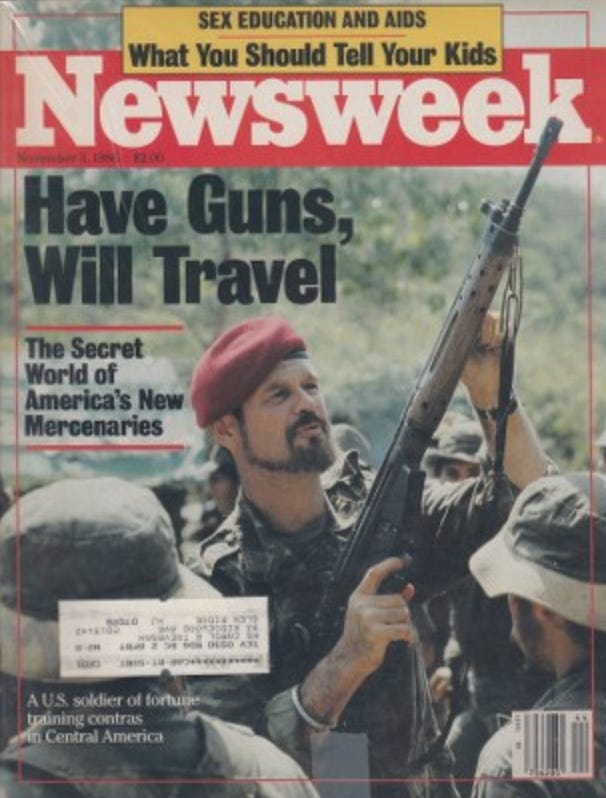
The diplomat’s fingers formed a steeple, his expression inscrutable. Dr. Chin A Sen’s timing was nothing short of disastrous. The recent Newsweek exposé, “Have Guns, Will Travel,” had ripped the veil off Project Democracy’s shadowy web of private military aid. The capture of Eugene Hasenfus, a Midwestern ex-Marine turned gun-runner, had blown the lid off a secret Contra supply operation. His downed cargo plane in Nicaragua, carrying Robert Owen’s business card, left a trail of breadcrumbs leading straight to the White House and Lt. Col. Oliver North.
The Iran-Contra Affair was a ticking time bomb, and the State Department was caught in the blast radius. Any whisper of new clandestine support for foreign insurgents was political suicide.
“Brunswijk’s ideology remains a black box,” the diplomat countered, his tone measured. “What’s his endgame? And more crucially, what’s his timeline for restoring democratic order?”
Chin A Sen paused, the silence pregnant with implications. “Brunswijk is committed to democracy,” he began, each word carefully chosen. “A Suriname where power flows not from the barrel of a gun, but from a coalition of resistance groups, political entities, religious institutions, and labor unions. He’s poised to usher in free elections, to pass the torch to civilian hands. But without concrete backing, that vision withers on the vine.”
A weary sigh escaped the diplomat, the specter of recent scandals looming large. “In this climate, every cent, every bullet we provide will be scrutinized under a microscope. Promises don’t cut it anymore—we need ironclad plans, unimpeachable guarantees.”
Chin A Sen nodded, understanding the gravity of the situation. “I’ll return with a detailed proposal. We are committed to transparency and to working with all democratic forces in Suriname. But without your help, our chances diminish significantly.”
Rising from his chair, Chin A Sen fixed the diplomat with a final, penetrating stare. The unspoken message hung in the air: the clock was ticking, and the stakes couldn’t be higher.
As he navigated his way out of the State Department’s maze, Chin A Sen’s mind raced. He had to distill the raw urgency and unwavering conviction of their cause into a proposal that would cut through the morass of bureaucratic hesitation. The road ahead was mired in uncertainty, but their destination—a free, democratic Suriname—burned bright, a beacon in the darkness..9
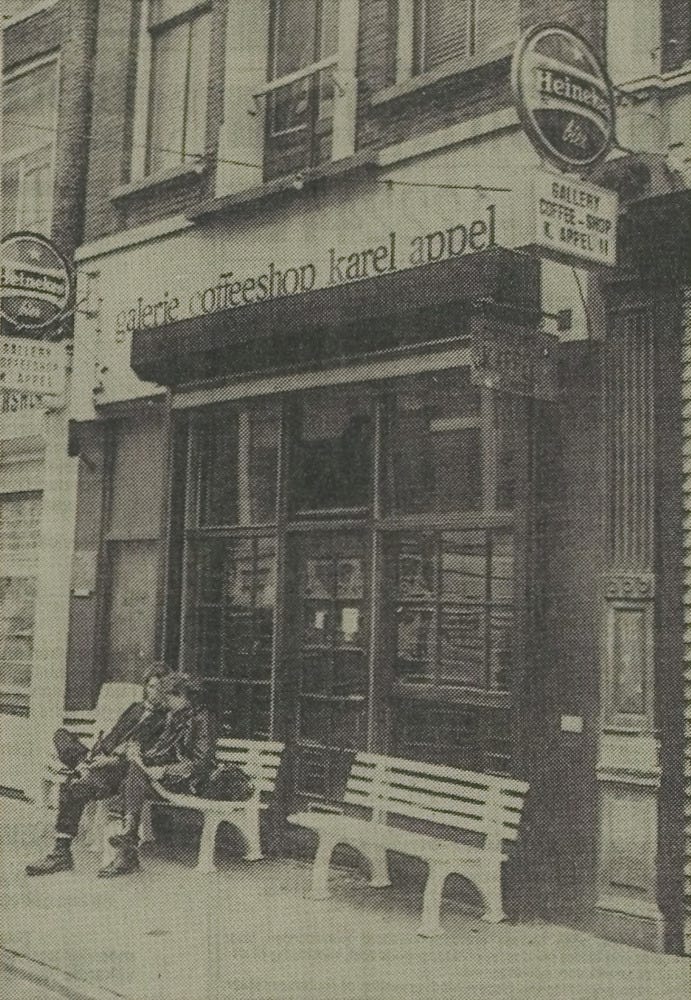
The hash bar’s cellar in the Red Light District reeked of stale smoke and suspicion. An undercover reporter from Brabant Pers, masquerading as a would-be mercenary, perched on a rickety chair across from George Baker. Baker’s eyes, narrow with distrust, darted over the hulking Dutchman before him.
“One misstep on Dutch soil,” Baker hissed, “and I’m behind bars. Nothing’s allowed here. How do I know you’re not Homeland Security?”10
The reporter, armed with a fictitious identity, leaned in. “I need work. Six years in the Navy, including a stint in Suriname. I want back in.”
Baker’s interest piqued, but wariness clung to him like a second skin. “Suriname, eh? What’s the real draw? A woman?”
The mercenary’s vague reply about seeking “something different” hung in the musty air. Baker’s lips tightened. “If I was 100% sure of who you are, maybe we could do business.”
Only when the reporter made to leave, his curt “Do you need people or not?” echoing off the dank walls, did Baker’s façade crack.
“Navy experience? That’s gold. What are your terms?”
The conversation shifted, probing the mercenary’s availability, destination, weaponry, and payment. Baker grew increasingly evasive, the secrets of his operation held close.
“Good men are hard to come by,” he confided. “Most Surinamese? Unsuitable.” His voice dropped to a whisper. “Brunswijk’s arsenal is woefully lacking. We need heavy artillery to take Paramaribo. Once we secure that—and negotiations are… delicate—you’ll be wheels up within 48 hours. Count on it.”
The reporter pressed for details. Baker’s response was a mix of bravado and vagueness. “You’ll get a round-trip to Cayenne, French Guiana. My contact picks you up, you sign a contract. First order: talk money. Tell them George said you get this much.”
Hesitation flickered across Baker’s face. “Got a wife? Kids?” At the mercenary’s headshake, he continued, “No immediate payout then. Family men get an advance. For you? Payday comes later. But oh, it’ll be worth the wait. Three hundred guilders daily rate? Try six hundred. They’ll owe you double for the delay.”
“Who’s footing the bill? And when?” the mercenary demanded.
“They will. When we win the game,” Baker said, eyes glinting.
“And if we lose?”
“Losing,” Baker scoffed, “is not an option.”
Baker’s assurances flowed like the hash smoke—three weeks to Paramaribo, guaranteed cash, and a bonus to boot. “You can only profit. Handsomely.”
Pressed about his Brunswijk connection, Baker boasted, “I’ve got a meet set up. Talked to his right-hand man. They’ll pay, or we’ll take what’s ours. Our conditions for democracy, backed by muscle. Nothing can go sideways. The longer the wait, the fatter your wallet.”
Sensing lingering doubt, Baker upped the ante. “You’re mercenary number fifty-something. It’s all squared away. I guarantee—not 99, but 100 percent—you get paid. If those contracts fall through? I’ll cover you myself.”
As they parted, Baker’s final words hung in the air like a prophecy. “I won’t send you in under-equipped. When I call—and we’re talking days, not weeks—be ready. A few more weeks of this, and they’re in for a world of hurt. The clock’s ticking.”
The reporter slipped away, leaving behind a fake number and carrying a chilling glimpse into the shadowy underbelly of a looming conflict.11
The television crackled with static before resolving into AVRO’s Televizier’s unflinching exposé: ‘Ronnie Brunswijk’s Suriname.’ Raw footage spilled across the screen, casting Brunswijk in the stark light of a guerrilla freedom fighter. He commanded an armed cadre of 200—a motley crew of jungle warriors and hardened mercenaries from Britain and the Netherlands.
The report pulled no punches, revealing the brutal realities of their campaign. Suspected Bouterse loyalists, beaten and trussed up like game, their fate a grim harbinger of the savagery that consumed the rainforest.
In a room bathed in the television’s cold glow, Glenn Tjong Akiet, the Liberation Council’s new militant leader, killed the power. The abrupt silence was deafening. He turned to face the assembled resistance leaders, his voice a steel blade. “We must make our position crystal clear. The Council harbors no political ambitions. When Bouterse falls, we will not claim seats in the transitional government.”
The air in the room grew thick with unspoken tension. The Surinamese diaspora in the Netherlands was fracturing, split over who should wield power in a post-Bouterse Paramaribo. The Council’s recent proclamation—that Brunswijk intended to hand them the reins—had ignited a powder keg of controversy.
Dr. Eddy Jozefzoon, a philosophy professor turned unlikely rebel spokesman, surged to his feet. The staid halls of academia seemed a world away from this pressure cooker of revolutionary politics. “Brunswijk’s vision transcends any single council,” he declared, passion eclipsing his usual academic reserve. “He sees a tapestry of power—woven from resistance groups, political parties, the clergy, the unions. A true coalition.”
As Jozefzoon’s words hung in the air, those present grappled with a stark irony: the eloquent professor was giving voice to a man who could neither read nor write. The lines blurred between Brunswijk’s raw ambition and Jozefzoon’s political acumen.
Beside him, André Haakmat, the ex-Prime Minister, nodded his assent. His gravitas lent weight to Jozefzoon’s words. “Diversity and inclusivity,” Haakmat intoned, “these must be the cornerstones of our transitional leadership.”
The room buzzed with murmurs—a hornet’s nest of conflicting ideologies and personal ambitions stirred to life. The battle for Suriname’s soul was being waged not just in distant jungles, but right there, in the heart of the Netherlands.
As the debate raged on, the specter of Brunswijk loomed large—a cipher onto which each faction projected its own vision of Suriname’s future. The true test, they all knew, would come not in these heated discussions, but in the crucible of revolution that awaited them across the Atlantic.12
November 1986 cast long shadows over the jungles of Suriname. In this verdant abyss, former Council Chairman Henk Chin A Sen and Eddy Jozefzoon embarked on a journey fraught with danger. Their destination: Langatabbetje, the heart of the Jungle Commandos’ domain. Their mission: to forge a future from the crucible of rebellion.
Bouterse’s eyes and ears seemed omnipresent, forcing them to delay their exodus from St. Laurent du Maroni, a frontier town in French Guiana where colonial ghosts still whispered. When they finally slipped away, the Marowijne River became their stealthy conveyor, its inky waters alive with secrets. Each lap against the dugout canoe sounded like a shout in the engulfing darkness, every ripple a potential betrayal.
The rebel camp materialized from the mist like a feverish dream. Brunswijk’s guerrillas, hardened by months of jungle warfare, received Chin A Sen and Jozefzoon not as visitors, but as saviors returned from exile. The air thrummed with an electric mixture of gun oil, sweat, and tamped-down hope.
In a bamboo stilt house, bathed in the tremulous glow of kerosene lamps, Chin A Sen, Jozefzoon, and Brunswijk convened. The susurrus of the jungle faded against the weight of their whispers.13
“Brunswijk,” Chin A Sen leaned in, his words sharp with urgency, “America’s ears are open, but their hands are still. They need more than the song of revolution—they need the sheet music for what comes after.”
Brunswijk’s eyes, reflecting the lamplight, were fathomless pools of determination. He understood. The time had come to transmute their dreams into blueprints.
As dawn began to bleed through the jungle canopy, they gazed upon their handiwork. This was no mere document; it was the first light of a new era. In the damp air of that stilt house, deep in rebel territory, the future of Suriname had been written—not in the cold ink of diplomacy, but in the raw pigment of revolutionary zeal.
The proclamation lay before them, still glistening with promise. Now, the real war would begin—not just against Bouterse’s guns, but against cynicism, against the inertia of the international community. Chin A Sen and Jozefzoon knew their journey back would be as perilous as their arrival, but a fire had been lit. And in the heart of the jungle, that fire began to spread.
November’s iron fist closed around Paramaribo, choking the city into an uncanny silence. Darkness reigned, not just from the pervasive blackouts, but from the looming shadow of impending chaos. The air was thick with rumors, each whisper a match threatening to ignite: Ronnie Brunswijk was advancing.
His path was scorched earth—bauxite mines ground to a halt, the Victoria Palm Oil Company reduced to smoldering ruins. These were not random acts of violence, but calculated strikes. The Jungle Commando’s talons were sinking deeper into the nation’s vital arteries.
Brownsweg fell, its strategic value amplified by its proximity to the Afobaka Dam—Suriname’s hydroelectric heart. Moengo, once a bustling mining town, now found itself under siege. A corridor of insurgent control snaked through the jungle, its maw yawning towards the capital, hungry for more.
Nights in Paramaribo became a symphony of terror—sporadic gunfire the percussion, the acrid stench of smoke its melody. Dawn’s weak light illuminated grim new additions to the cityscape: bodies, mostly of Bush Negroes, their lifeless forms a brutal signature of Bouterse’s death squads. Yet, as another blood-red sun climbed the sky, there he remained—Desi Bouterse, his regime battered but unbroken, its grip on power white-knuckled and unyielding.1415
The rumblings of conflict echoed beyond Suriname’s borders. Elliott Abrams, the architect of U.S. foreign policy in the region, set his sights on Holland. His mission: to forge a united front with the Dutch, to hammer out a strategy that could tip the scales. Simultaneously, in the Netherlands, Chin A Sen and Jozefzoon became vocal evangelists for Brunswijk’s cause. Their gospel was clear and urgent: support the rebels, or watch democracy wither on the vine.
Then came November 29, 1986—a date that would be etched in blood on Suriname’s collective memory. The Moiwana Massacre erupted like a long-dormant volcano. Eighteen confirmed dead, all Bush Negroes. Whispers of hundreds more, their fates unknown, rippled through the international community. The world watched, aghast, as reports trickled in. In the crucible of this horror, the resistance’s determination was forged anew, hardened to a lethal edge.
Behind closed doors, in wood-paneled rooms far from the jungle heat, plans crystallized. Dutch Prime Minister Ruud Lubbers and Defense Minister Willem van Eekelen pored over intelligence briefings. The outlines of a daring intervention took shape: 850 Dutch marines, backed by a fleet of helicopters, primed to descend upon Paramaribo-Zanderij International Airport. A phantom unit, wreathed in secrecy, would penetrate the heart of the capital. A shadow unit would infiltrate the capital, their target—lay just over our back fence.16
As December’s first light spilled over Suriname’s shores, bathing it in an almost mocking radiance, the country trembled on a knife’s edge. Our family, like the nation itself, counted down the days of advent with bated breath. Each candle lit was both a prayer and a countdown—to salvation or damnation, only the coming days would tell.
The fate of a nation hung in the balance. Would Suriname sink deeper into the abyss, or could it claw its way towards a new dawn? The answer lay shrouded in the mist of an uncertain future, waiting to be written in the annals of history.
Links
“AGENDA FOR SEPTEMBER 1986 LATIN AMERICA WARNING AND FORECAST MEETING | CIA FOIA (Foia.Cia.Gov).” Accessed August 27, 2023. https://www.cia.gov/readingroom/docs/CIA-RDP93B01478R000300020029-4.pdf.
Ronald Reagan. “Nominations & Appointments, October 24, 1985.” Accessed August 27, 2023. https://www.reaganlibrary.gov/archives/speech/nominations-appointments-october-24-1985.
CIA.gov. “CPPG ON SURINAME, THURSDAY, SEPTEMBER 25, 1986 1:30-2:30 PM, WHITE HOUSE SITUATION ROOM | CIA FOIA (Foia.Cia.Gov).” Freedom of Information Act Electronic Reading Room. Accessed July 15, 2023. https://www.cia.gov/readingroom/document/cia-rdp88g01117r000601820002-2.
CIA. “CRISIS PRE-PLANNING GROUP MEETING THURSDAY, SEPTEMBER 25, 1986 WHITE HOUSE SITUATION ROOM 1:30-2:30 P.M. SURINAME AGENDA | CIA FOIA (Foia.Cia.Gov).” Freedom of Information Act Electronic Reading Room, September 25, 1986. https://www.cia.gov/readingroom/document/cia-rdp91b00874r000200190004-7.
“SURINAME: THREATS TO THE BOUTERSE REGIME | CIA FOIA (Foia.Cia.Gov).” Accessed August 27, 2023. https://www.cia.gov/readingroom/docs/CIA-RDP86T01017R000707410001-1.pdf.
“SURINAME: THREATS TO THE BOUTERSE REGIME | CIA FOIA (Foia.Cia.Gov).” Accessed August 27, 2023. https://www.cia.gov/readingroom/docs/CIA-RDP91B00874R000200190003-8.pdf.
“SURINAME: THE LIBYAN PRESENCE | CIA FOIA (Foia.Cia.Gov).” Accessed August 27, 2023. https://www.cia.gov/readingroom/document/cia-rdp90t00114r000100010002-5.
Staff Editor. “Holland Preparing Detailed Response on 1986 Plans to Invade Suriname – Stabroek News.” Stabroek News, January 4, 2011. https://www.stabroeknews.com/2011/01/04/news/guyana/holland-preparing-detailed-response-on-1986-plans-to-invade-suriname/.
Leidse Courant. “Haakmat: Amerikaanse Steun Voor Rebellen Brunkswijk.” October 20, 1986. Historische Kranten, Erfgoed Leiden en Omstreken. https://leiden.courant.nu/issue/LLC/1986-10-20/edition/0/page/5.
Leidsch Dagblad. “Suriname (1).” November 3, 1986. Historische Kranten, Erfgoed Leiden en Omstreken. https://leiden.courant.nu/issue/LD/1986-11-03/edition/0/page/7.
Leidse Courant. “Huurling Suriname Krijgt Zeshonderd Gulden per Dag.” November 1, 1986. Historical Newspapers, Heritage Leiden and Surroundings. https://leiden.courant.nu/issue/LLC/1986-11-01/edition/0/page/5.
Amigoe. “Jozefzoon: Verkiezing in Oorlogsgebieden Vermindert Kansen Oude Partijen.” October 26, 1987. Delpher. https://www.delpher.nl/nl/kranten/view?coll=ddd&identifier=ddd:010641975:mpeg21:a0108.
Leidse Courant. “Chin a Sen Begroet Als ‘Vader Des Vaderlands.’” December 1, 1986. Historische Kranten, Erfgoed Leiden en Omstreken. https://leiden.courant.nu/issue/LLC/1986-12-01/edition/0/page/1.
Dew, Edward M. The Trouble in Suriname, 1975-1993. Westport, Conn. : Praeger, 1994. 125. http://archive.org/details/troubleinsurinam0000dewe.
The Miami Herald. “Uncertainty Grips Suriname Beset by Strange Civil War.” November 29, 1986. https://www.newspapers.com/article/the-miami-herald-uncertainty-grips-surin/127385200/
BNO News. “The Netherlands Planned U.S.-Supported Invasion of Suriname in 1986 » Breaking News | Wire Update News | News Wires -.” November 24, 2010. Wire Update News. https://web.archive.org/web/20101124153832/http://wireupdate.com/wires/12538/the-netherlands-planned-u-s-supported-invasion-of-suriname-in-1986/.
Date:
September 2, 2025