Cafe de Dood (Cafe of Death)
Cafe de Dood (Cafe of Death)
Mar 13, 2024
For a quick recap of our story so far click here.
1985 had been a wild ride for investigative reporter Jurgen Roth. In the early months, an assassination attempt aimed at the former Council for the Liberation of Suriname president, Henk Chin a Sen, went awry. Tragically, gunmen carrying diplomatic passports, mistakenly killed three musicians sharing an office building with the Council in Rijswijk. This event steeled Roth’s investigation into the depths of international arms dealings and the rumored South American coup, where he found himself navigating a world shaped by legacy, intrigue, and clandestine operations.
Roth’s journey led him into the heart of the Far Right Catholic Organization, Opus Dei. Roth’s famed father-in-law, an arms dealer himself, proved invaluable. Meetings unfolded in Frankfurt with notorious figures like Gunther Leinhäuser, Prince Michel de Bourbon, and the enigmatic German arms dealer, known only as “Wenzel,” unfolded. Wenzel was a linchpin in a complex network, running guns to the Contras in Nicaragua. His specialty? Sourcing Russian weapons for the CIA to ease the Contras’ ammunition resupply from fallen soldiers, cleverly reducing American fingerprint on the operation.
The plot thickened in the fall of 1985 when Leinhäuser secured a staggering deal. He managed to send 10,500 TOW missiles, manufactured in the USA, to Iran. This move unfolded as Iraq, under Saddam Hussein, was embroiled in war with Ayatollah Khomeini’s Iran. At the same time, Iran was under suspicion for supporting terrorist acts against Americans, including the Beirut barracks bombings and the hijacking of TWA Flight 847.
But Leinhäuser’s dealings were just the tip of the iceberg. The Reagan administration, seeking to sway moderates within the Iranian government (which few outside the President believed existed), undertook a similar venture. Publicly, Reagan proclaimed the hard line, “We do not negotiate with terrorists.” Privately, the administration sold 96 TOW antitank missiles through an Israeli go-between. When this failed to free any hostages, they upped the ante with 400 more missiles. This daring gambit resulted in the release of a single American hostage.
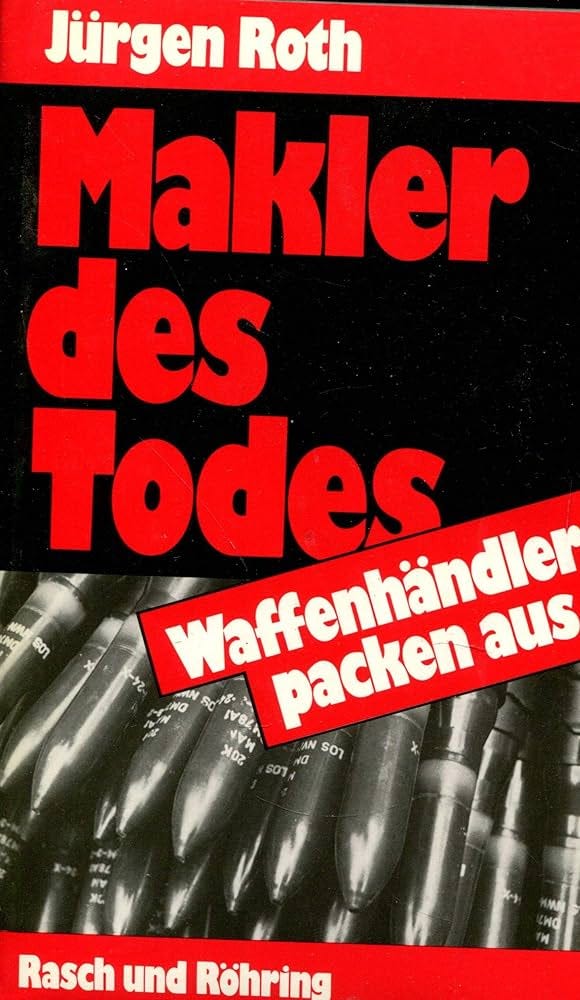
Why delve into these intricacies? By the fall of 1985, Jurgen Roth was piecing together a narrative poised to expose the Iran-Contra scandal, a term yet to enter the public lexicon. His findings suggested a blueprint for an arms deal valued over $116 million—dwarfing the known extent of Reagan’s missile sales revealed in later hearings. His book contained the blueprint for moving these missiles that Oliver North later followed almost to the letter.
Roth’s investigative lens then shifted towards a more obscure plot, one involving a cadre of Americans eerily reminiscent of Oliver North and his Project Democracy allies. They were offering intelligence and support to orchestrate a coup on the same Surinamese shores that I’d just released my sea turtle. It was this lead, teeming with potential for explosive revelations, that Roth decided to chase, which we will now explore.
On September 9th, Roth dialed a number for the Ansus Foundation. Seeking Mr. George Baker, he navigated a maze of representatives, finally receiving a promise of future correspondence only after he submitted a formal mail request.
Roth’s written inquiry prompted a guarded reply from the Foundation, hinting at a partnership provided he could introduce them to his German business contacts. Their error in sending a second, more revealing letter, intended only for seriously interested parties, laid bare their coup plans in Suriname, eyeing bauxite riches.
This slip spurred Roth deeper into the Foundation’s shadowy agenda. He uncovered a wide range of global applications for their veiled mission. These came from diverse figures, from a humanitarian German veteran to a security-savvy language operator, each offering unique skills for the Suriname plot.
Among the respondents was MacMillan Associates from Reading, England. An odd trio—a young welder, a troubled factory worker, and a Tory council member turned inventor—proposed assembling a cadre of ex-Paratroopers and ex-SAS personnel for the Foundation. They suggested that Ansus pursue CIA backing or corporate funding, attracted by Suriname’s resources, detailing a £600,000 plan for a three-month mercenary stint.
Not to be outdone, Amsterdam’s Amnat Manpower, which offered services from Thailand, submitted a bid. Then, in late autumn, the enigmatic “David Randolph Enterprises” from the U.S., threw their hats into the ring, armed with detailed plans for an “efficient coup.
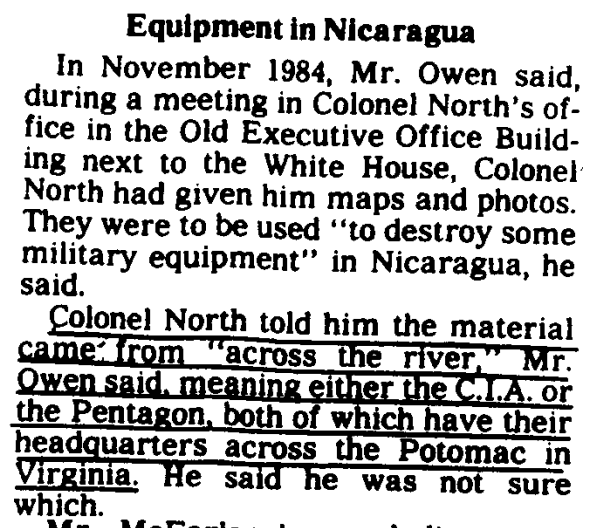
Quick aside: A year earlier, Oliver North’s sidekick, Robert Owen, met Colonel “right outside the White House situation room.” There he received maps prepared by the Central Intelligence Agency or the Defense Department to take to the rebels in Nicaragua. Owen said that North intended the maps to be used for a Contra military operation. At the time, such tactical assistance was covered by a Congressional ban.
In the shadowy confines of a dimly lit room, George Baker and other Ansus Foundation members convened with military and political leaders of the Surinamese “Democratic Party.” The atmosphere was charged, each participant aware of the gravity of their undertaking. At the helm stood “David Randolph,” exuding the confidence of a seasoned Wall Street broker ready to seal a monumental deal.
Randolph initiated the briefing with an authoritative tone, “Our first option is direct action—striking vital targets to cripple the opposition. This might involve a mix of airborne and amphibious operations to neutralize any potential counterattacks.” His gaze swept across the room, assessing the Surinamese attendees’ reactions to the prospect of an assault on their homeland.
He deftly shifted gears, suggesting, “Let’s think about unconventional warfare, nurturing a liberation movement step by step to overthrow the oppressive government.” This idea struck a chord, kindling a sharp intensity in George Baker’s gaze. The Americans, schooled by the missteps in Hungary and the Bay of Pigs debacle, knew that uprisings without local backing were doomed to fail.
Baker, always a man with hidden depths, patience was running thin, “So, this unconventional warfare you propose seems to be quite lengthy. But we don’t want to wait that long.”
A colleague of Randolph’s interjected, calming the room with a gesture, “Please, be patient for a moment. Success requires highly trained personnel, both for the initial conflict and the subsequent governance. We’re talking about comprehensive training, logistics, and even compensation for advisors.”
The pitch unfolded with military precision, revealing promotional materials that detailed every facet of their coup strategy—from training timelines for new military and police forces to logistical plans for establishing operational bases and a post-coup government. It was evident; these men had orchestrated such ventures before, their confidence underscored by a meticulous presentation.
As the Surinamese suggested names from their ranks for key roles, Randolph’s team pushed back, advocating for the discreet recruitment of international personnel. “Our network is vast. We ensure confidentiality and discretion in our operations,” they assured, their proposal underscored by a deep understanding of covert activities.
The financial discussion was stark—$6.2 million for a comprehensive three-phase operation, a figure dwarfing MacMillan Associates’s estimates tenfold. Yet, it was the assurance that there would be no issues with the U.S.-Suriname security pact that underscored their audacity. “Given the current administration’s stance and Suriname’s human rights track record, we anticipate minimal interference from the U.S.,” Randolph explained, his tone blending assurance with a hint of conspiracy. “David Randolph Enterprises offers a full-scale solution tailored to your objectives.”
As the meeting unfolded, a question lingered in the charged air, “Were they speaking with the authority of the President, or was this display merely an act of bravado?”
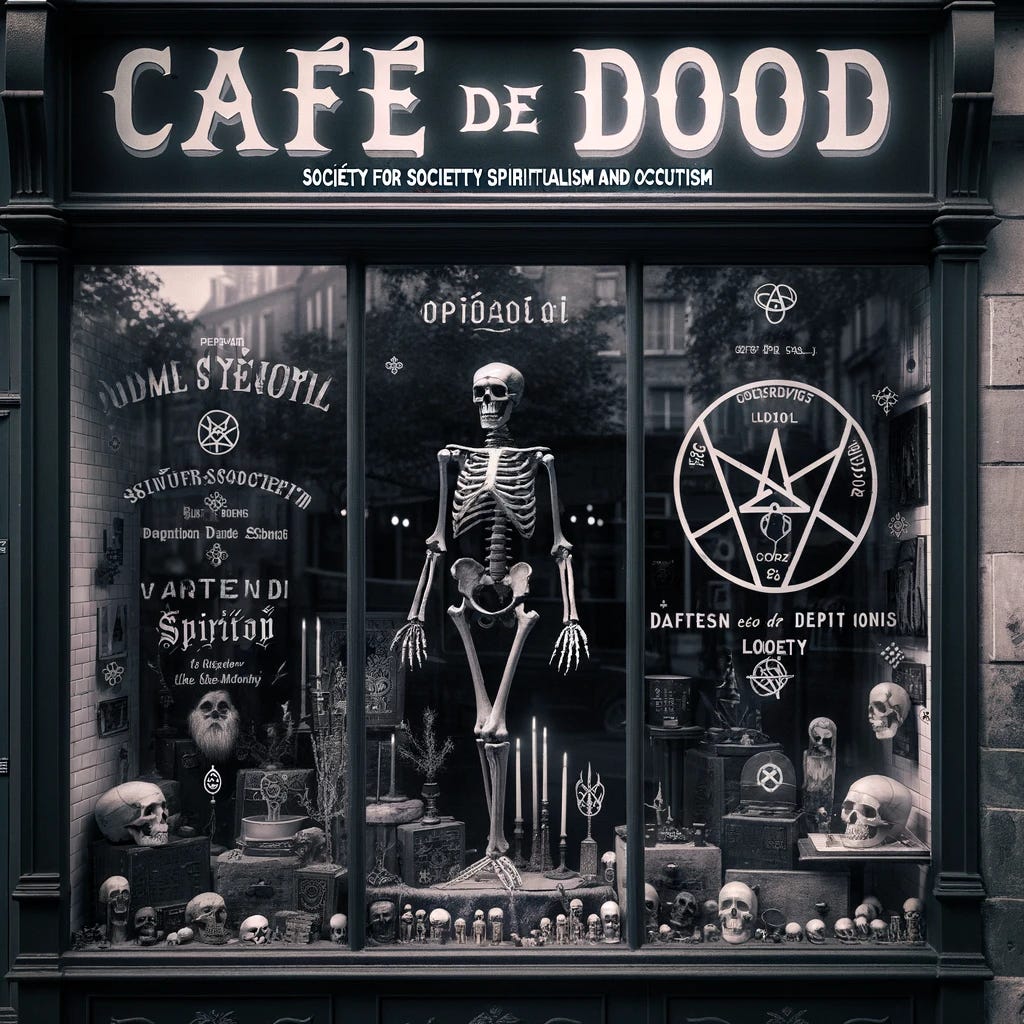
Faced with the audacious scope of the enterprise (which, coincidentally, was the other nickname for Project Democracy), Roth found himself at a crossroads, his journalistic instincts aflame. The calculated assurances and veiled threats spoke of a reality far removed from public knowledge—a reality teetering on the edge of legality and morality. The stakes were higher than ever, demanding more than just passive observation. Determined to peel back the layers of secrecy, Roth decided it was time to confront the shadows head-on. His next step was clear: a direct encounter with George Baker. The designated meeting location was a hash bar, discreetly tucked away in the shadows of the red-light district and merely a stone’s throw from the ominously named Cafe de Dood (Cafe of Death). It was here, in this unlikely venue, that Roth hoped to unearth the truths buried beneath layers of intrigue and deception.
Desperate to track down the mastermind behind the invasion plans, Roth called in a favor from a journalist friend. Circumventing the Data Protection Act with the help of a postal service insider, he obtained the address of the Ansus Foundation: 29 Oude Hoogstraat. The street, a chaotic stretch in the heart of Amsterdam, teemed with life—skinny junkies shuffled between alleyways, their eyes glazed and lifeless, while tourists wandered wide-eyed, oblivious to the undercurrents of danger. Amidst them, spiky-haired punks loitered, exuding an air of rebellion as they huddled in doorways. It was a neighborhood where the edges of legality blurred, the perfect backdrop for a man like George Baker.
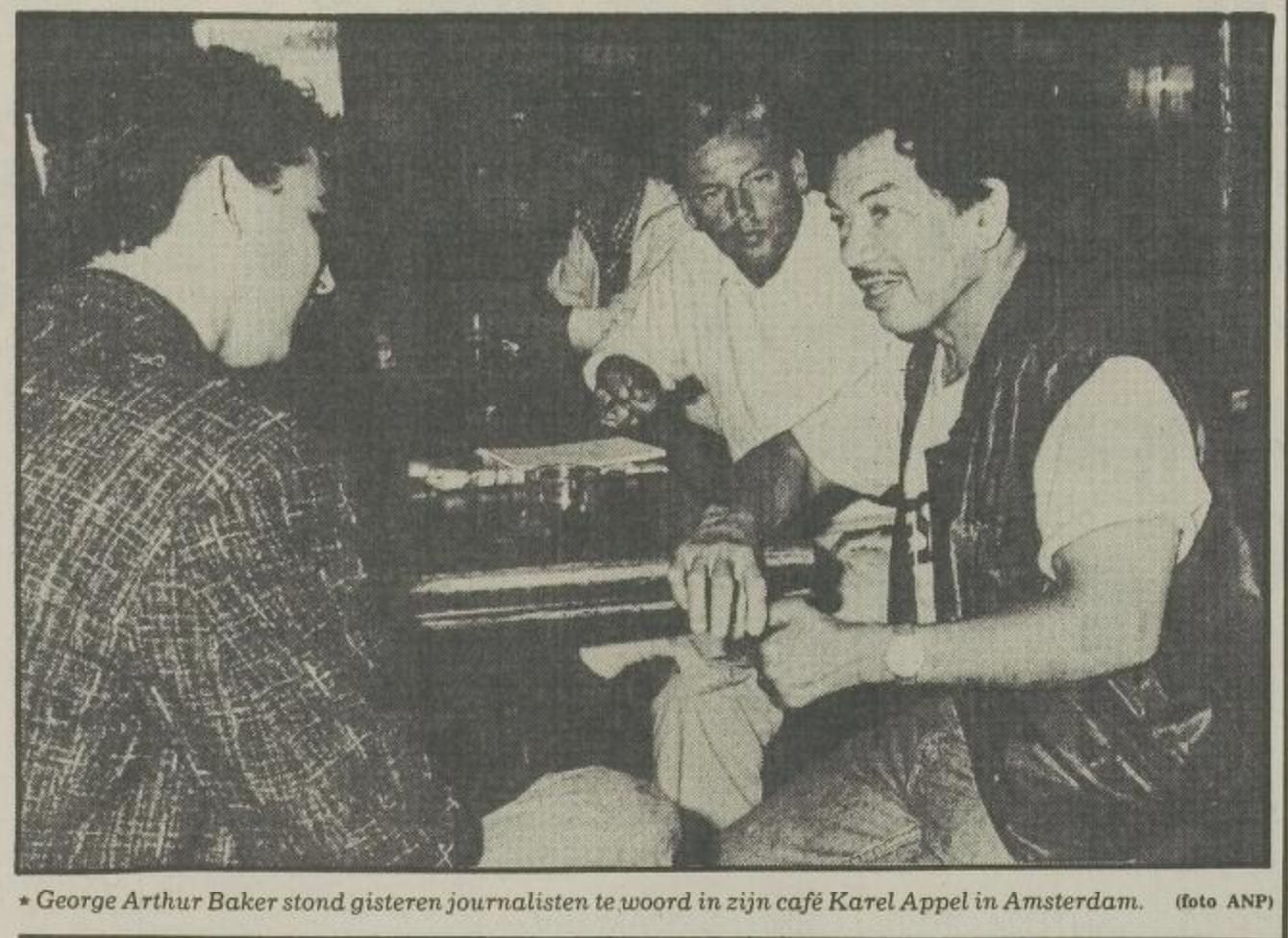
Two ominous cafés dominated the street—Café De Dood, with its occult symbols and darkened windows, and the neighboring Karel Appel Café (later the Josephine Baker Café), both fixtures in Amsterdam’s underworld.
But while George Arthur Baker, the owner of the Josephine Baker Café, was no stranger to the darker side of European crime, there was another side to him that few would expect. Baker had a penchant for books, curating an eclectic collection that ranged from intellectual works to lurid, scandalous novels. He even ran a book exchange in the cellar behind his café, a small sanctuary where people could exchange not just books, but ideas. Here, frustrated writers whose manuscripts had been rejected by mainstream publishers could leave their works, hoping for recognition. It was an oddly cultured side to a man who was deeply entrenched in the criminal underworld—a paradox that baffled even those closest to him.1
Decades earlier, Baker had been caught up in an international narcotics investigation that spanned from Copenhagen to Amsterdam and Stockholm, with authorities linking him to a European marijuana trafficking ring. The operation was believed to be based in Amsterdam or Paris, making Baker’s café in the heart of Amsterdam a key node in a much larger network. Alongside American blues singer Nat Russell (charged with possession),23 Baker had been arrested for allegedly selling marijuana in Copenhagen, though both denied the charges. The investigation revealed connections to arrests in the Netherlands and Sweden, with multiple European police forces collaborating to dismantle the drug ring. Despite his denials, Baker’s history with international smuggling laid the groundwork for his later, more dangerous ventures in Amsterdam’s seedy underbelly. By the time Roth encountered him, Baker had expanded his operations, occupying several connected properties on Oude Hoogstraat, their walls steeped in secrets and illicit activity.45
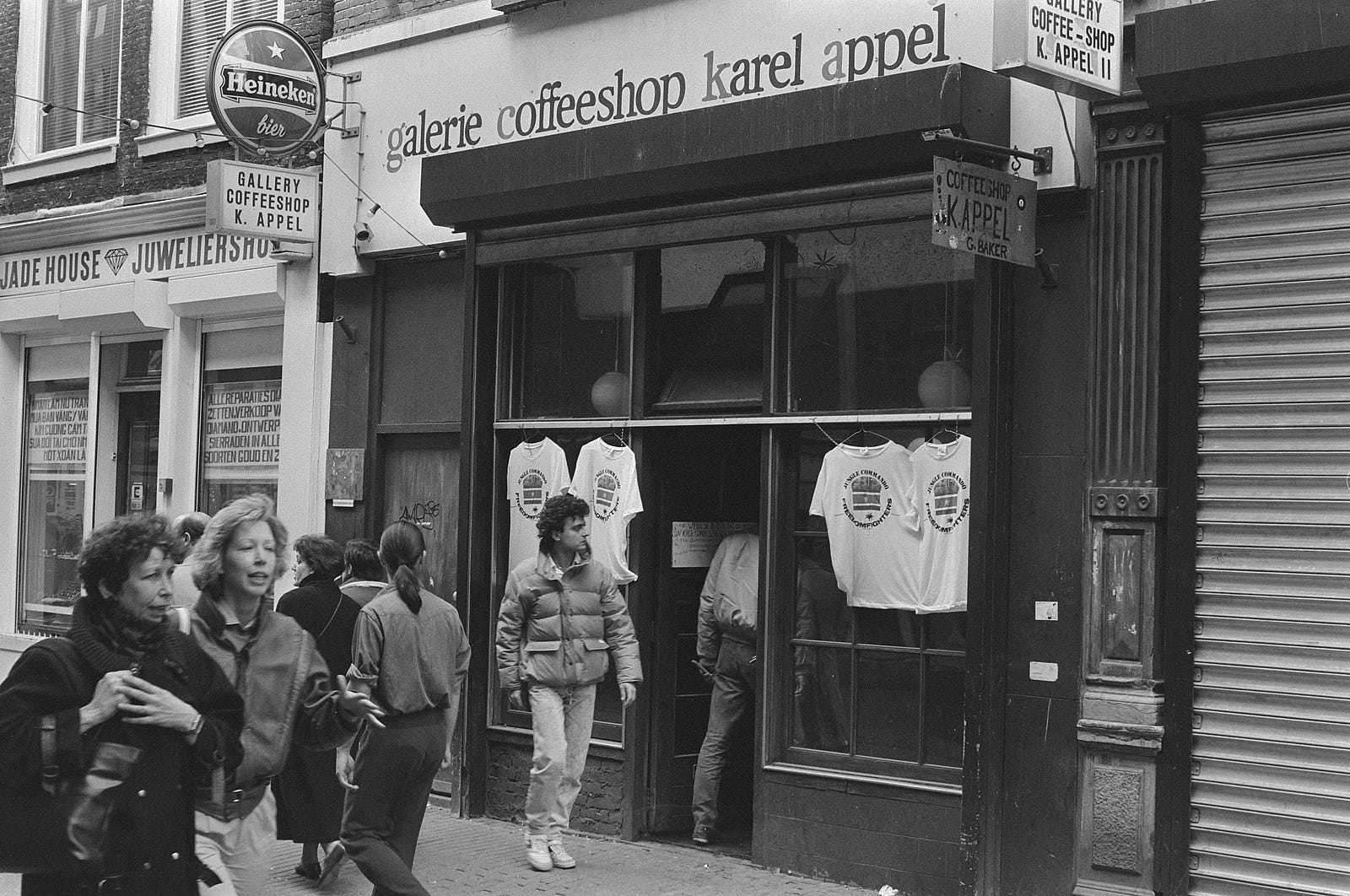
Roth stepped inside the dimly lit café, where the air was thick with the sweet, pungent scent of hashish. Posters of revolutionaries and rock bands clung to the walls, their corners peeling from years of neglect. The bar’s clientele—a motley crew of drug-addled youth and brightly colored prostitutes—eyed Roth with a mix of indifference and suspicion. One woman, her lipstick smeared and her neon wig askew, cackled loudly in the corner while a man in a tattered leather jacket slumped over the bar, oblivious to the world.
When Roth inquired about Baker, the bartender—a sullen figure with bloodshot eyes—gave a brief nod. Without a word, he motioned toward the back of the café, signaling that someone would meet him soon.
Moments later, Baker appeared, dressed in a faded blue jacket, his stature smaller than Roth expected, but his presence undeniably commanding. They exited through the café’s back door into the twisting backstreets, where the buildings, with their crumbling facades, seemed to lean inward, conspiring to hide the truths within. As they walked, Baker gestured to the centuries-old structure they had just left. “This place has secrets,” he said, his voice low. “Back in ’72, they dug beneath it, found layers going back to 1294. Some people in hiding during the war, others just… hiding.” 6Roth caught the brief smile on Baker’s face, and it struck him that Baker enjoyed playing on the building’s mysterious past—one steeped in both history and rumor.
The excavation, as Roth recalled, had stirred up plenty of attention at the time. The building, once called ‘De Appelboom,’ had been at the center of a project led by so-called expertologists—amateur diggers whose enthusiasm made up for their lack of formal training. They had unearthed layers of the past, uncovering artifacts and dreaming up grand plans, but in the end, it was the secrets that remained buried that held Roth’s interest now. He couldn’t help but wonder what Baker’s modern secrets might be, hidden just as deeply.
They entered through a narrow, unmarked door and into a labyrinth of dimly lit corridors, the walls felt too close, almost suffocating. The air grew heavier with each step, as if the weight of centuries was pressing down on them. Baker’s gallery, once known as De Appelboom, had seen many purposes over the years. Decades ago, it had been the site of that quirky excavation, attracting curious locals and amateur archeologists, but now it served a different kind of operation. Roth couldn’t shake the feeling that, just like the ancient artifacts unearthed below, Baker’s modern dealings had layers yet to be revealed.
The stairwell creaked underfoot as Roth followed Baker up to his apartment. The maze-like structure of the buildings gave way to a peculiar space—punching bags and training equipment hung from rough-hewn wooden beams, their presence incongruous with the building’s ancient history. The smell of sweat and stale smoke clung to the air, mixing with the mustiness of the old walls. A small, rudimentary sauna stood in the corner, its wooden door ajar, a strange luxury amidst the disarray. On a table in what passed for a kitchen, a human skull sat atop a pile of papers, its hollow eyes staring blankly at the chaos around it. The room felt both lived-in and abandoned, like the remains of a life teetering between the past and something darker.
It struck Roth that this place, with its layers of history and hidden chambers, was more than just a home for Baker—it was a reflection of the man himself. The excavation might have unearthed the past, but Baker was now writing a new chapter, with secrets just as deeply buried as the ones under the ground.7
A group awaited them—two German women with hard, unreadable expressions, and a Dutchman, all clearly tied to the impending operation. They were poised, like actors waiting for their cue, their eyes betraying a sense of anticipation. The Dutchman, nodding to Baker, led Roth into a separate room where a large bed, worn from use, occupied most of the space. The walls were covered in maps of Suriname, dotted with pins and scrawled notes, and on a nearby chair, a steel helmet sat—a reminder of the violent work that lay ahead.
Roth cut to the chase, expressing his interest in the Ansus Foundation’s fight against Communists in Suriname and proposing media exposure to aid their cause. Skeptical glances were exchanged, especially when Roth suggested a German public appeal for donations. Baker, wary of attracting unwanted attention, and leery of how little Dr. John’s PR campaign had advanced the cause, dismissed the idea of public propaganda, emphasizing the covert nature of their operation.
Baker’s reluctance was typical. He had always operated in the shadows, whether running his café, tangled in Amsterdam’s underworld, or playing the political game with his Keer Uw Toekomst party. Known to some as “the ugly Surinamer of the Netherlands,” Baker had flirted with the idea of bringing change through local politics, though his bold proclamations often masked the more dangerous reality beneath the surface. His ambitions weren’t limited to Amsterdam’s municipal elections—Baker’s true interests lay in influencing the political landscape of Suriname. But while his party slogans might talk of reform, his real tools for change were mercenaries and strategic alliances. Suriname, to Baker, was not just a country of his birth but a chessboard for his larger geopolitical goals. Public appeals and media exposure, Roth quickly realized, were not part of his playbook.8
However, Roth’s offer of a 5,000-mark honorarium prompted a pragmatic shift in Baker. A man known for juggling multiple ventures, from book exchanges in the basement of his café to revolutionary plans, Baker always had a knack for spotting opportunity. “Alright,” Baker said, his tone shifting. “Let’s talk specifics.”
Their dialogue, dense with tactical discussions and veiled intentions, revealed the Ansus Foundation’s struggle for financial backing and their strategic approaches for overthrowing the government in Suriname, underscored by a reliance on international mercenaries and corporate sponsors eager to capitalize on Suriname’s natural resources.
It was always about money and power, Roth thought as he listened. Baker had learned this truth early, back in his days running an underground drug trafficking ring in Europe. From Copenhagen to Amsterdam, Baker had been entangled in one criminal network after another, all while maintaining a veneer of respectability through his café. His arrest in the 1970s for selling marijuana had been just a bump in the road, one more step on a path that now led him to lead shadowy coups and forge alliances with dangerous international figures.
Roth, treading a fine line between journalistic inquiry and ethical boundaries, navigated the conversation with caution. His willingness to aid their intelligence efforts by traveling to Suriname lowered Baker’s guard. He began outlining the Ansus Foundation’s multifaceted structure and ambitious military strategies.
“‘The standard plan is clear,” Baker said with a hint of pride. “We have three different plans. First, an intervention from French Guiana. Second, from Brazil. And third, from Venezuela. Everything is ready.”
The Suriname operation wasn’t just another coup to Baker. It was his chance to redefine his legacy— from a man who dabbled in coffee shops and local elections to someone who could shift the balance of power in an entire country. He had spent years courting political allies and assembling teams of mercenaries for hire. His failed attempts at running for office in Amsterdam hadn’t slowed him down; if anything, they had sharpened his resolve. Suriname was his stage now.
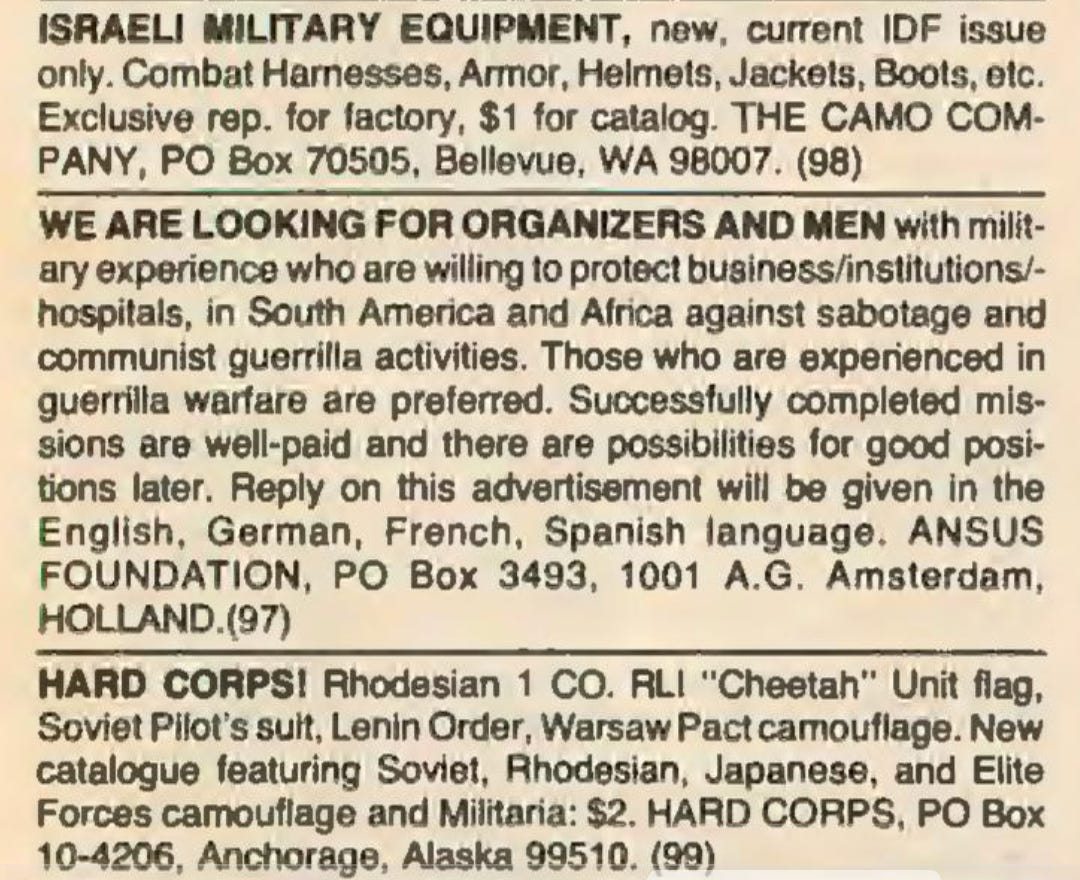
A few weeks later, a taxi dropped Roth off in front of the Krasnapolsky Hotel in the city center before his flight to Suriname. Coup preparations were advancing nicely, due in part to a recent advertisement in the November issue of “Soldier of Fortune.”
The preparations for a neo-Nazi training camp in Latin America highlighted the global reach and dangerous alliances forming around the Ansus Foundation. Was replacing alleged Communists with neo-Nazis really an improvement? The staggering response of 3,000 inquiries in just two weeks underscored the alarming support for their cause, revealing a network of individuals ready to partake in their questionable mission.
At the center of this web stood a new face: a gray-haired American whose name is noticeably absent from Roth’s records. It is possible that the individual is Tommy Lynn Denley or even Oliver North, who was known to be traveling in this region around this time. Whoever he was, his meticulous documentation of potential mercenaries from the USA suggested deep connections and a methodical approach to organizing a force capable of executing the planned coup. His imminent return to the USA to finalize selections added a layer of imminent action to the plot.
A Canadian named Captain Zack, identified as the proposed coup leader, had a stark slogan: “Killing is my business. I’m like an animal. I smell the enemy. We’re fighting because we hate communism in Latin America. Therefore, we must liberate the country.” His compensation of five million dollars upon a successful coup exposed the lucrative stakes for private military endeavors. Additionally, the promise of leading Suriname’s Special Forces underscores the operation’s lethal and appalling nature.
On his flight home, after the investigative whirlwind in Suriname, Jurgen Roth’s mind raced with the realities he’d uncovered. The disparity between the lavish lifestyle of Dictator Desire Bouterse and the economic despair of the Surinamese people starkly outlines the regime’s failings. Conversations with figures like a Catholic Bishop and the unsettling encounters with Libyan operatives hint at deep-seated corruption and external meddling.
Roth’s experiences, such as the invasive surveillance at the hotel and the unnerving interrogation by the Chief of Security Police about Chin A Sen and arms dealer Leinhäuser, crystallize the dangers of delving too deep. A ludicrous attempt at a honeypot by Suriname’s intelligence officer using a Colombian prostitute at the Hotel Ambassador underscores the government’s manipulative tactics. Yet it’s the whispered rumors of a coup, coupled with the desperate economic situation and the strategic interest in Suriname’s bauxite, that dominate his thoughts.
Despite the fear and complexity, Roth’s resolve to expose this looming crisis intensifies. He recognizes the power of the press and his forthcoming book to possibly alter the course of history, making his race against time not just a journalistic duty but a moral imperative. As the plane ascends, leaving Suriname’s troubled land behind, Roth is determined to bring the shadows he’s discovered into the light, understanding that his words might be the key to averting a potential catastrophe.
Links
Trouw. “Praten Met Lettertjes in Cafe.” November 1, 1973. Gevonden in Delpher. https://www.delpher.nl/nl/kranten/view?cql%5B%5D=%28date+_gte_+%2201-01-1955%22%29&cql%5B%5D=%28date+_lte_+%2212-07-1981%22%29&query=%22George+Baker%22+Karel+Appel&coll=ddd&redirect=true&identifier=ABCDDD:010825334:mpeg21:a0142&resultsidentifier=ABCDDD:010825334:mpeg21:a0142&rowid=1.
Gevonden in Delpher. “Nieuwe Arrestatie Te Kopenhagen.” December 3, 1960. https://www.delpher.nl/nl/kranten/view?cql%5B%5D=%28date+_lte_+%2201-01-2015%22%29&query=%22George+Arthur+Baker%22&coll=ddd&redirect=true&sortfield=datedesc&identifier=MMGEM01:163366064:mpeg21:a00089&resultsidentifier=MMGEM01:163366064:mpeg21:a00089&rowid=3.
The Binnenhof. “Russell Temporarily Free.” February 12, 1960. https://www.delpher.nl/nl/kranten/view?cql%5B%5D=%28date+_lte_+%2201-01-2015%22%29&query=%22George+Arthur+Baker%22&coll=ddd&redirect=true&sortfield=datedesc&identifier=MMGEM01:163366064:mpeg21:a00089&resultsidentifier=MMGEM01:163366064:mpeg21:a00089&rowid=3.
Gevonden in Delpher. “Emmer Courant.” December 14, 1960. https://www.delpher.nl/nl/kranten/view?cql%5B%5D=%28date+_lte_+%2201-01-2015%22%29&query=%22George+Arthur+Baker%22&coll=ddd&redirect=true&sortfield=datedesc&identifier=MMGEM01:163366064:mpeg21:a00089&resultsidentifier=MMGEM01:163366064:mpeg21:a00089&rowid=3.
Our North. “Amsterdam Headquarters of Marijuana Smuggling?” November 26, 1960. https://www.delpher.nl/nl/kranten/view?cql%5B%5D=%28date+_lte_+%2201-01-2015%22%29&query=%22George+Arthur+Baker%22&coll=ddd&redirect=true&sortfield=datedesc&identifier=MMGEM01:163366064:mpeg21:a00089&resultsidentifier=MMGEM01:163366064:mpeg21:a00089&rowid=3.
Trouw. “Deskundologen Zoeken Signalen Uit Verleden.” June 24, 1972. Gevonden in Delpher. https://www.delpher.nl/nl/kranten/view?cql%5B%5D=%28date+_lte_+%2201-01-2015%22%29&query=%22George+A.+Baker%22&coll=ddd&redirect=true&identifier=ABCDDD:010818223:mpeg21:a0255&resultsidentifier=ABCDDD:010818223:mpeg21:a0255&rowid=1.
Het Parool. “Judges Lose Track in George Baker’s Maze.” Accessed September 18, 2024. https://www.delpher.nl/nl/kranten/view?cql%5B%5D=%28date+_lte_+%2201-01-2015%22%29&query=%22George+Arthur+Baker%22&coll=ddd&redirect=true&sortfield=datedesc&identifier=ABCDDD:010833416:mpeg21:a0178&resultsidentifier=ABCDDD:010833416:mpeg21:a0178&rowid=1.
Het Parool. “‘Keer UW Toekomst’ Heet Zijn Lijst.” May 10, 1978. Gevonden in Delpher. https://www.delpher.nl/nl/kranten/view?query=%22George+Baker%22+Hoogstraat&page=1&cql%5B%5D=%28date+_gte_+%2201-01-1955%22%29&cql%5B%5D=%28date+_lte_+%2212-07-1981%22%29&coll=ddd&redirect=true&identifier=ABCDDD:010841529:mpeg21:a0230&resultsidentifier=ABCDDD:010841529:mpeg21:a0230&rowid=9.
George Baker, known for his radical views and eccentric personality, ran for local office in Amsterdam in 1978 with a political party named Keer Uw Toekomst (“Turn Your Future”). His campaign, which blended outlandish immigration proposals with populist anti-tax rhetoric, positioned him as a fringe candidate with revolutionary ambitions. Baker referred to himself as “the ugly Surinamer of the Netherlands” and proposed a controversial plan to import women from countries like England, Thailand, and Brazil to solve the city’s drug and crime problems, arguing that the presence of these women would curb the issues young men faced in Amsterdam. His rhetoric emphasized solutions for the working-class, small businesses, and marginalized groups, yet his political program remained thin on specifics. Despite his flamboyant promises, Baker’s campaign reflected his deeper frustration with the establishment, both in the Netherlands and his native Suriname, where he harbored plans to influence governmental change through more covert means, including paramilitary activity.
Date:
September 2, 2025