Part II: From Jailbird to Shrink
The glow up of Dr. John C. McClure
Aug 04, 2024
So, McClure’s sitting in the slammer, and what does he do? Decides to become a brainiac. No joke. He later cracked that he “graduated cum laude in only eight years from Leavenworth [penitentiary].” Classic McClure, turning prison into a punchline.
But here’s the kicker – he wasn’t just joking around. This guy actually hit the books. He snagged an Associate’s degree from Highland Junior College in Kansas in ’73, then followed that up with a Bachelor’s from Mercer University in Atlanta. Not too shabby for a guy doing time, huh?
From Con to College Boy
Once he got out, McClure figured, “Hey, why stop now?” So he kept right on studying. He grabbed a Master’s in Education from Florida Atlantic University in ’77. Then, believe it or not, he went and got himself a Ph.D. in Clinical Psychology from Nova University in Florida.
Talk about a turnaround. One minute he’s on the FBI’s Most Wanted list, the next he’s Dr. McClure. You can’t make this stuff up!
Doctor McClure, I Presume?
After getting his fancy Ph.D., McClure hit the ground running. He worked as a counselor in a state prison (talk about coming full circle, right?), helped out Cuban refugees during the Mariel boatlift, and even ran the Florida State Indigent Drug Program. Imagine that – the ex-con biker in charge of the meds.
McClure said seeing what communism did to those Cuban refugees left quite an impression on him. Guess the guy who used to play dress-up Nazi found a new political boogeyman.
He even did a stint in the ER at Florida Keys Memorial Hospital, dealing with all sorts of nutty emergencies. From most wanted to most educated – McClure was on a roll.
The Shrink Is In
By the early ’80s, McClure had set up shop in Fort Lauderdale. And business was booming. He was living large – bought himself a shiny new Corvette (midlife crisis, much?), had an office on swanky Oakland Park Boulevard, and even landed a part-time gig as a professor at a nearby university.
His ad in the local paper made him sound like a real know-it-all: behavior therapy, hypnotherapy, biofeedback, sleep disorders, stress reduction, and personality evaluations. Quite a resume for a guy who used to run with biker gangs, huh? (Also makes you wonder about Bouterse’s claims that Ronnie Brunswick had been brainwashed in the Netherlands before returning to Suriname as “The Black Robin Hood.”)

Personal Life 2.0
While his career was taking off, McClure’s love life was getting a makeover too. He ditched his first wife, Barbara Ann, in ’76. Can’t blame her, considering his Nazi phase and jail time. Then in 1980, he tied the knot with Alexanda “Alex” Natasha Maston. New wife, new life, right?
Playing Perry Mason
McClure wasn’t content with just seeing patients in his office. No, our boy had to strut his stuff in courtrooms too, playing expert witness in criminal cases. And let me tell you, his performances were something else.
Take the case of Danny Doyle, a guy facing the death penalty for rape and murder in April of 1982. McClure argued that Doyle should get a break because he had dyslexia. But here’s the kicker – other experts believed Doyle had the mental age of a 6 or 7-year-old and an IQ under 65. Talk about missing the forest for the trees.
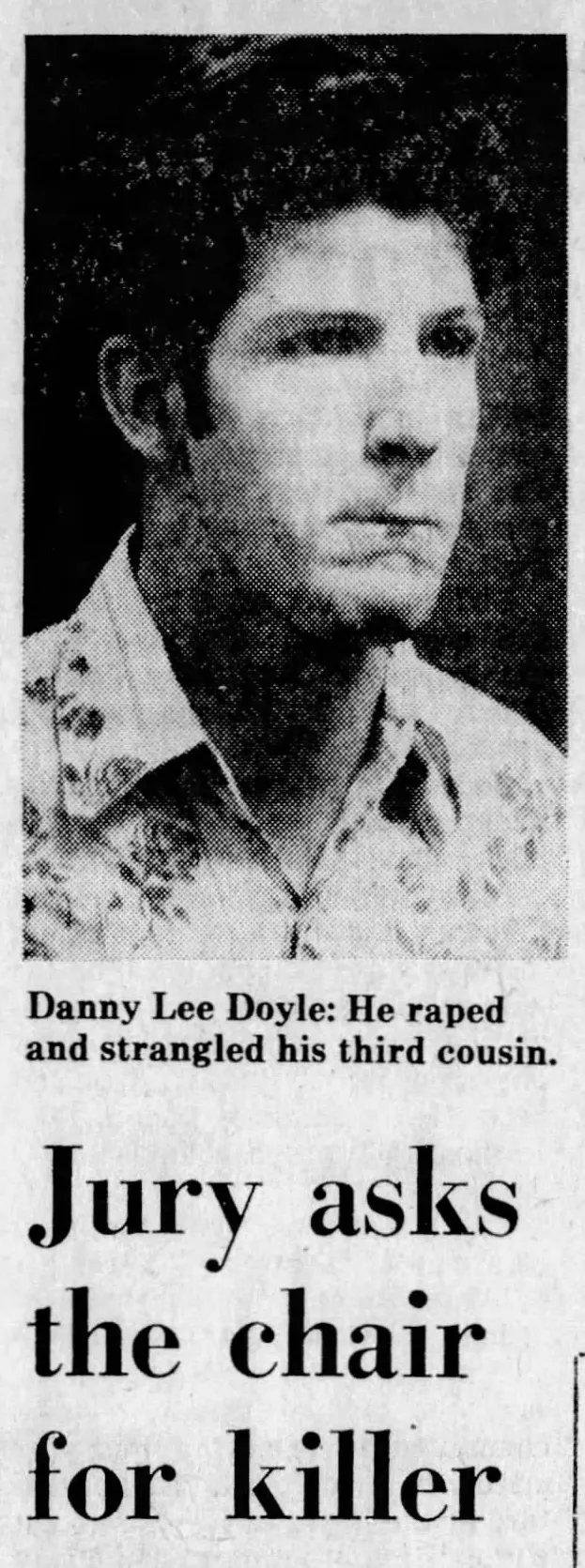
But McClure’s courtroom antics weren’t just misguided – they were downright disturbing. In a Soldier Without Fortune article, he spilled the beans on why he loved being an expert witness:
“Sure, I love showing inkblots to dirtbags and trying to figure out why they like to rape and kill. … Granted, I do love matching wits with the lawyers – especially when they’re paying for it. But I don’t make a net contribution to justice. All I’m doing is selling jargon on the witness stand for a hundred and twenty-five dollars an hour.”
Real classy, John. Real classy.
But karma has a way of catching up, folks. Right around ’82, McClure’s house of cards started to wobble. Nasty rumors were flying – accusations of selling cocaine (old habits die hard?) and whispers about him getting too cozy with patients, if you know what I mean.
As if that wasn’t enough, McClure’s past came back to haunt him in the courtroom. Doyle’s lawyers dug up the dirt on our “expert witness.” They exposed McClure’s six-year federal prison stint for manslaughter, assault with a dangerous weapon, and escape. Oh, and let’s not forget his side gig as a prominent neo-Nazi and white supremacist, writing articles for the NAAWP News, a publication of the National Association for the Advancement of White People.
Suddenly, McClure’s expert opinions weren’t looking so expert anymore.
McClure swore up and down it was all lies, cooked up by some jealous ex-boss who couldn’t stand seeing him succeed. But whether it was the rumors, his criminal past, his white supremacist leanings, or the new licensing laws, McClure’s time as Fort Lauderdale’s hotshot shrink was about to come to a screeching halt.
In the end, the Doyle case became such a mess that the state had to find a creative solution. They agreed to delay any action on Doyle until 2020, essentially ensuring he wouldn’t be executed. All thanks, in part, to our boy John’s stellar reputation.But whether it was the rumors, new licensing laws, or something else entirely, McClure’s time as Fort Lauderdale’s hotshot shrink was about to come to a screeching halt.
One day, out of the blue, he just up and vanished. Left everything behind – furniture, diplomas, the whole nine yards. In his own words: “I left my $1,500/mo office—furniture, degrees, and diplomas—and walked out and never looked back.”
And just like that, Dr. John McClure, the ex-Nazi, ex-biker, ex-con turned psychologist, was gone. Again. Makes you wonder what his next act would be, doesn’t it?
The Child Advocate Interlude: McClure’s Unexpected Pivot
A Fresh Start (Again)
Just when you thought John McClure had run out of career options, he pulls another rabbit out of his hat. After ditching his psychologist gig, he lands a job with Child Advocacy, Inc. in Fort Lauderdale. Turns out, helping kids runs in the family – his grandma Emma used to run the Palm Beach County Welfare Department. Small world, huh?
This outfit, Child Advocacy Inc., was no joke. They’d been operating in Broward County since 1973, funded by the Office of Juvenile Justice and Delinquency Prevention of the Department of Justice. In ’78, a guy named Denny Abbott took the reins, and they started giving the government a real headache over child abuse cases. They even took the Broward School Board to court over a strict attendance policy. These folks meant business.
McCure: Tech Whiz and Data Detective
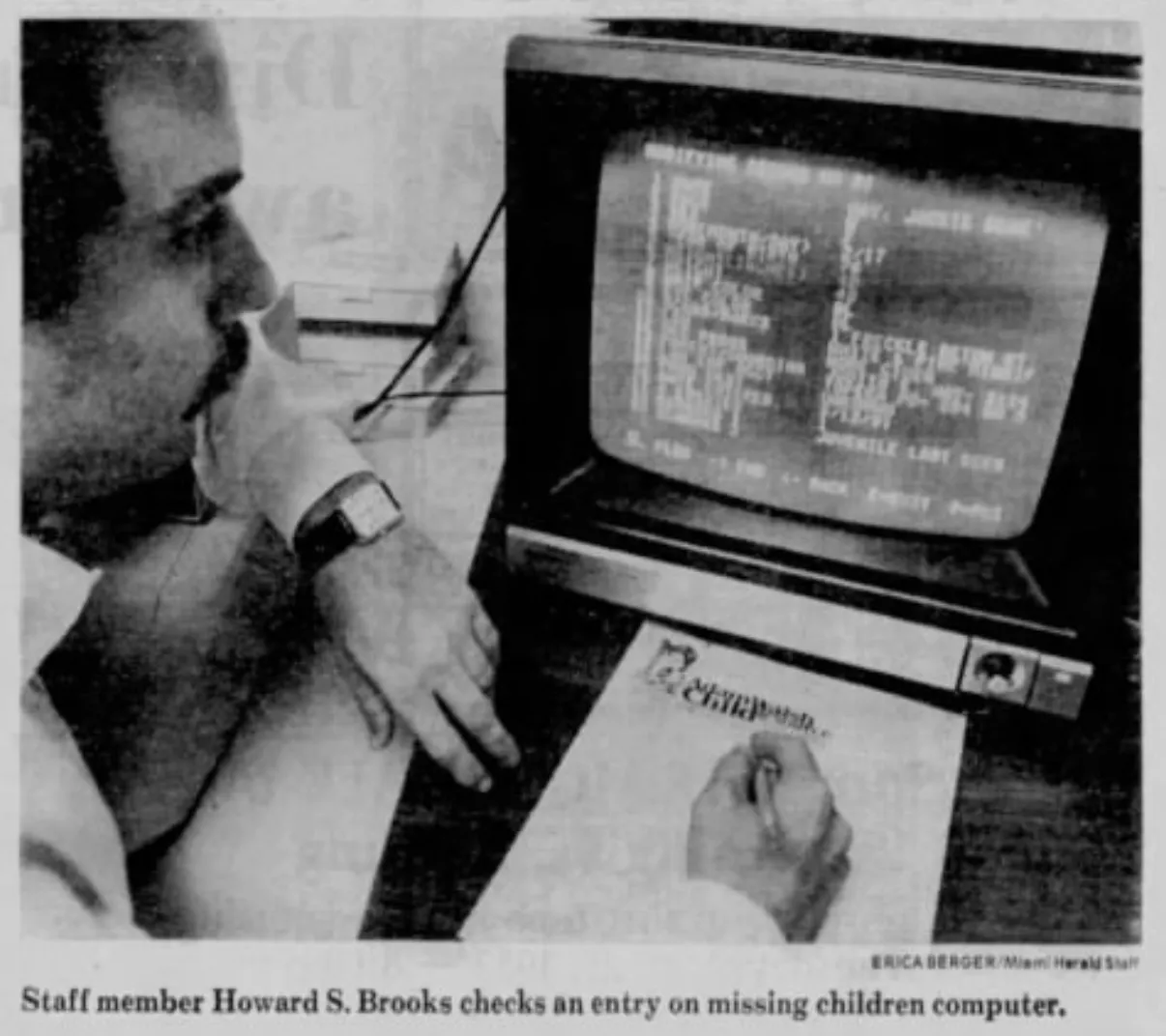
So what was McClure’s big role in all this? Believe it or not, our ex-Nazi, ex-biker, ex-shrink was now playing computer geek extraordinaire. His official title? Evaluation specialist. But that’s just bureaucrat-speak for “guy who’s gonna revolutionize how we find missing kids.”
McClure set up shop in Suite 306 of the Parkview Center Building, part of the swanky Mercede Executive Park at 1876 N. University Dr. From this high-tech lair, he was assembling hardware, writing software, and teaching folks how to use this newfangled system.
The goal? Create a 24-hour local data bank that cops could access without needing to positively ID the kids first. It was like building a Google for missing children before Google was even a twinkle in Silicon Valley’s eye.
Rubbing Elbows with the Big Guns
McClure wasn’t just tinkering with computers in a back room. Oh no. He was out there, schmoozing with the bigwigs. He presented his software to the Special Agent in Charge of the local FBI office. Then, as if that wasn’t enough, he worked his magic on 29 different police chiefs and the Broward County Sheriff. Not too shabby for a guy who’d been on the FBI’s most wanted list, right?
Making Waves in D.C.
McClure’s work was turning heads all the way up in Washington D.C. He even got called up to testify before some big shot legislators. There he was, the same guy who’d once led Nazi rallies, now telling Congress how to improve the national system for finding missing kids. Talk about a 180!
The plan was to pilot this system locally and then roll it out across the nation. Our boy John was dreaming big, folks.
The Mercenary Itch
But here’s the thing about McClure – the guy just couldn’t sit still. Even with all this important work, he was getting antsy. In one of his write-ups in a local paper, he started going on about how great Cuban mechanics in Miami were, and how proud it made him to be American. Sounds like our boy was still nursing that old anti-communist grudge.
As the paperwork started piling up, McClure got that familiar itch for action. He thought about rejoining the military, but decided he was too old to be taking orders from “desk-bound administrators.” So what’s a restless ex-con to do?
Well, if you’re John McClure, you start hanging out at gun shows. You buy yourself a nice AR-15 and spend hours at the shooting range. And those “Soldier of Fortune” magazines? They start showing up all over the house. I’m sure that went over great with the wife and his shrink buddies.
The Mercenary Years
Eyes on Central America
McClure’s attention zeroed in on Central America, especially Nicaragua. He had a bone to pick with Jimmy Carter, blaming him for letting the Sandinistas take over in ’79. He got all starry-eyed over guys like “Commander Zero,” thinking they were the next big thing in revolutionary circles.
“I thought a visit to Central America and perhaps a meeting with this dashing commander might prove interesting,” McClure said. Yeah, right. Because when most folks think “interesting vacation,” they think “war-torn Nicaragua.”
So there you have it. John McClure, once a Nazi leader, then a biker outlaw, then a jailbird, then a shrink, and now a child advocate with dreams of playing Rambo in Central America. Just when you think this guy can’t get any more complicated, he goes and proves you wrong.
So, McClure’s getting bored with the whole child advocacy gig, right? What does he do? Puts out the word that he’s up for some “paramilitary operations.” You know, like you do when you’re looking for a career change. He taps into his old South Florida network – both the straight-laced folks and the not-so-legal crowd. Talk about keeping your options open.
“When I left my practice, I put the word out that I was available for paramilitary operations. I’d grown up with locals who were now in fairly high positions on both sides of the law in South Florida.”
First Gig: Debt Collection, Mexico Style
McClure’s first mercenary job? A little trip down to Mexico to collect a debt owed a South Florida cocaine dealer by his attorney who’d skipped town. John wasn’t a “toe-in-the-water” kind of guy. He tells the wife he’s going mountain climbing with some army buddies. In reality? He’s headed south with some outlaw bikers he’s known since he was a kid.
This little adventure goes about as well as you’d expect. One of the bikers decides to play John Wayne. He acts like a drunk tourist looking for a brothel to get into the lawyer’s villa (he’d seen it work in a movie) until the Mark II grenade he tossed bounced off the gate and rolled back in their direction. McClure ends up with shrapnel in his knee, but hey, they got the cash. Mission accomplished, I guess?
McClure comes home with a suitcase full of cash and a nasty infection from some less-than-stellar Mexican hospitals. His big takeaway? “Never go on such a mission again with ‘assholes as team members.'” Doc’s a quick study.
Nicaraguan Vacation
In July ’83, McClure tells the missus he’s “going south to check out the Sandinistas.” You know, typical vacation stuff. His plan? Join whoever he thinks is the good guy.
“If they are basically a decent bunch getting a raw deal from the American press and government, I’ll offer my services to them. If they are Communists, I’ll go on to Costa Rica, find this guy Pastora, and join his forces. If they don’t need advisers, hell, I’ll sign on as a grunt.”
Real scientific approach there, John.
First stop: Managua. McClure plays tourist, staying at the Hotel Intercontinental, snapping photos of anti-American slogans, ruins of the National Cathedral, and troops marching in the streets. But our boy isn’t as slick as he thinks.
His conspicuous photography, particularly of sensitive locations like the Sandinista headquarters (which he mistook for a colorful bungalow), caught the attention of local authorities. With .45 caliber automatic as a prod, McClure gets free tour of their interrogation rooms. Oops.
This detention, while undoubtedly a harrowing experience, would later prove invaluable to McClure. When he eventually attempted to join the Contras, his first-hand experience of Sandinista interrogation methods served as powerful proof of his anti-communist credentials. It was a classic case of turning adversity into advantage, and it significantly bolstered McClure’s credibility in the eyes of the Contra leadership.
Costa Rica: Mercenary Networking 101
Next up: Costa Rica, July 24, 1983. McClure hits up the Key Largo, a bar that’s basically Mercenaries R Us. He meets a couple of journalist types who give him the lowdown on all the players in this Central American mess.
- Jerry Ruhlow, a Los Angeles Times reporter
- Marcantonio, an Italian journalist who was also a contract agent for Italian intelligence
Marcantonio proved to be a valuable source of information, educating McClure about the various factions involved in the conflict:
- The Misurasata: a Sandinista-oriented organization of indigenous tribes
- Pastora’s group: the Frente Revolucionario Sandino
- The Movimiento Democrático Nicaragüense, led by Alfonso Robelo
- The Unión Democrática Nicaragüense of Fernando “El Negro” Chamorro
The Contra Connection
McClure tries to join up with the Contras, but it’s not as simple as filling out an application, however his networking efforts soon bore fruit. In early August 1983, he secured a meeting with Alfonso Robelo, a key leader in the Nicaraguan Contra movement. McClure presented his anti-communist credentials and even submitted a proposal asking for guaranteed security work after the war.
Robelo’s endorsement was crucial, as he vouched for McClure to the legendary Commander Zero (Eden Pastora). However, the path wasn’t smooth. McClure still had to pass a security screening by Adolfo “Popo” Chamorro, a process complicated by internal conflicts within the Contra leadership.
Joining the Contras: It’s Not Easy Being Green
While waiting for a response from Commander Zero, McClure didn’t remain idle. He participated in relief work at a refugee camp near Limon on the Atlantic coast of Costa Rica. He also made contact with the Committee for Human Rights in San Jose and the UDN of Negro Chamorro. You know, to pad the ol’ resume.
Finally, on August 20, 1983, after being initially refused enlistment by Pastora, McClure took matters into his own hands and enlisted at a local office. This led to a series of experiences that cemented his involvement with the Contras:
- He was flown to a CIA camp in Honduras for training.
- He visited a farm on the Costa Rican side of the Rio San Juan, owned by “Shorty,” a wealthy farmer and active Contra fighter.
- Through Shorty’s connections, McClure finally secured Pastora’s agreement to allow him to join the Contras
Life as a Contra
So, McClure finally gets his wish and joins the Contras. They ship him off to Zeta Tres (Z-3), a camp so remote you need a dugout canoe just to get there. Real five-star accommodations, if you catch my drift.
But here’s the kicker – McClure falls head over heels for the whole Contra lifestyle. He’s all misty-eyed about how the soldiers share everything and look out for each other. Claims he’s never seen anything like it. Next thing you know, he’s ready to “fight and die with them.” Talk about drinking the Kool-Aid, huh?
Now, this is where things start getting really interesting. One day at Z-3, McClure runs into this tall, white colonel with a crew cut straight out of central casting. McClure doesn’t name names, but he leaves plenty clues— in this case we’re left wondering about the colonel with the “steel-gray” hair,
The guy says he’s from the Adjutant General’s Office, (although John believes Pentagon) but then drops this little gem: “I’m not really here.” His description sounds an awful lot like Colonel James Steele. Ring any bells? Steele was the guy who later made waves for his work training death squads to counter leftist insurgencies in the El Salvador. And get this – Lieutenant Colonel Robert K. Brown, the founder of Soldier of Fortune magazine, bragged about sending teams to El Salvador to train their army. Small world, right?
McClure wasn’t just sitting around braiding friendship bracelets at Z-3. He went on missions too. On one of these little outings, they stumble across an abandoned camp full of rations and AK-47 ammo.
Now, here’s where it gets wild. McClure’s Italian buddy, Marcantonio, feeds him this story about Gaddafi sending PLO terrorists evacuated from Beirut to Nicaragua. You know, just to show solidarity. Because nothing says “I’ve got your back” like shipping a bunch of most-wanted terrorists to your pal’s country, right?
At Camp Tango, McClure hits the jackpot. He meets Steve Salisbury, a writer for Soldier of Fortune magazine. Before you know it, McClure’s cranking out articles for them under the name “Dr. John.” Real subtle, doc.
Now, this Soldier of Fortune connection? It’s a big deal. These guys weren’t just writing about the action – they were neck-deep in it. Remember Robert Owen, Oliver North’s go-to guy? He’d been chatting up the Soldier of Fortune crowd, trying to get them to cheerlead for the Contras.
The Propaganda Machine: From Pews to Pew-Pew
Remember when we told you about Pat Buchanan and Ollie North running those slick propaganda campaigns? About how they were raising money from churches and well-meaning patriots? Well, folks, it’s time to connect some dots.
All that cash, all those earnest donations from Sunday collections and bake sales? This is where it was going. Right into the pockets of folks like our boy John McClure and his pals at Soldier of Fortune magazine.
These weren’t just friendly chats about the latest in camo fashion. No, these guys were running a full-service mercenary recruitment center disguised as a magazine. Remember Project Democracy? That covert operation we told you about, Reagan’s secret weapon against the “Red Menace”? Well, Soldier of Fortune was right in the thick of it.
It’s a far cry from what those church-goers thought they were funding, isn’t it? They believed their hard-earned dollars were going to support “freedom fighters” and spread democracy. Instead, it was bankrolling mercenaries and fueling conflicts that would destabilize entire regions for decades to come.
So now we’ve got McClure, fresh from his Contra adventure, spinning yarns for a magazine that’s basically the Contra Fan Club Newsletter. And these stories? They’re not just entertainment. They’re shaping the “official” version of what’s going down in Nicaragua.
The Battle of El Castillo
Alright, here we go. We’re about to dive into one of McClure’s biggest gigs with the Contras – the Battle of El Castillo. Picture this: you’ve got a town with 400 Sandinista troops and an old fortress. Sounds like something out of a Hollywood movie, right?
Now, you’d think our boy John would be leading the charge, guns blazing. But nope. His top-secret mission? Building a helipad for medical evacs. Codenamed “Operation Falcon,” because apparently, even constructing a glorified parking lot needs a cool name in this business.
The whole shebang was led by an unlikely duo – a Miskito Indian and a wealthy Costa Rican landowner known as “Shorty.” I’m telling you, you can’t make this stuff up.
Meeting Commander Zero and Disillusionment
In the first week of September 1983, McClure finally met the legendary Commander Zero, Eden Pastora. McClure, eager to prove his worth, told Pastora about his expertise in reconnaissance and combat intelligence.
However, McClure’s high expectations were soon dashed. He became disillusioned with Pastora’s indecisiveness and what he perceived as failed operations. In his words, Pastora was “a hero with feet of clay.”
Frustrated, McClure requested a transfer, which was granted. However, his disillusionment deepened when Pastora forgot about him, abandoning him at Z-3 camp while the commander went to Costa Rica to liberate weapons seized by the Costa Rican government. Feeling like the kid picked last for dodgeball, McClure decides he’s had enough of this nonsense and heads back to San Jose. Can’t say I blame him.
Home Sweet Jungle Home
But it’s not all bad news for our boy John. His wife, Alexandra, decides to join him in this Central American adventure. She even picks out a cool code name – “Alejandra.” Very spy-chic.
Before making the big move, Alexandra goes full Marie Kondo back in Florida. Sells the cars, the boat, even the kitchen sink (okay, maybe not the sink, but you get the idea).
The happy couple sets up shop in a $400-a-month American ranch house in the mountains northeast of San Jose. And get this – it comes fully furnished, complete with six Doberman pinschers. Because nothing says “welcome to the neighborhood” like a pack of guard dogs, right?
Contra Cause 101: McClure’s Crash Course for Alexandra
Now, John’s not about to let his wife come all this way without understanding what he’s fighting for. So, he takes her on the grimmest sightseeing tour ever – refugee camps. Talk about a stark wake-up call to the human cost of this conflict.
He also fills her in on the whole “Dr. John” nickname thing. Turns out, it’s not just his fancy pen name for Soldier of Fortune. It’s a common practice among the Contras to use nicknames to protect their families still in Nicaragua from potential Sandinista retaliation. Clever, huh?
Alexandra: From Florida Housewife to Contra Nurse
But Alexandra’s not content to just sit on the sidelines. Nope, she rolls up her sleeves and gets involved. First, she takes a job at a pediatric clinic for the exile community’s kids.
Then, she really steps up her game. She becomes a nurse for ARDE (that’s the Democratic Revolutionary Alliance for those of you keeping score at home), patching up wounded Contra fighters.
The Contra boys are all heart-eyes for Alexandra. I mean, can you blame them? A “gringa” who cares enough to come all the way to Central America to patch them up? It’s like Florence Nightingale meets Che Guevara.
McClure’s Descent: From Mercenary to Possible War Criminal
Back to HQ: The Forgotten Man
So, McClure heads back to Contra HQ in San Pedro, probably expecting a hero’s welcome. Instead? Crickets. Commander Zero’s apparently got the memory of a goldfish and has completely forgotten about our boy John.
To make matters worse, the place is in total chaos. All of Pastora’s bodyguards are cooling their heels in Costa Rican jail after a mission gone sideways. McClure’s thinking, “And these guys are supposed to be running a revolution?” Talk about amateur hour.
Enter “The Colonel”: A Cloak-and-Dagger Moment
Just when you think things can’t get any weirder, McClure has this hush-hush meetup with a mysterious figure he only calls “The Colonel.” Now, put on your conspiracy theory hats, folks, because this might just be our old pal James Steele making another cameo or it could be Colonel Oliver North. Tough to say? How many colonels were running off the books missions in Nicaragua at that time?
This wasn’t just your average coffee date. Oh no. This was McClure’s initiation into the big leagues of U.S. intelligence ops. Let’s break it down:
- The Colonel’s all, “We’ve got mutual interests, buddy. You’re a real patriot.”
- McClure, eager to impress, whips out some photos he smuggled out of Nicaragua. Straight out of James Patterson stuff.
- The Colonel drops a name – supposedly the CIA station chief in San Jose.
Now, between you and me, this CIA guy was likely Joseph F. Fernandez, aka Tomas Castillo. He was the CIA station chief in San Jose at the time. Or, it could have been Alan Fiers, the head honcho of the CIA task force overseeing the Contras. Fiers was working hand in glove with Oliver North on the Nicaraguan Humanitarian Aid Office (NHAO). Remember these name, folks. It’s gonna pop up again when we get to the whole Iran-Contra mess.
Luna Roja: Welcome to the Jungle
After his spy movie moment, McClure gets shipped off to a charming little spot called Luna Roja. And by “charming,” I mean a muddy hellhole on a Costa Rican hillside just west of El Castillo.
Picture this: 60 guys, barely any equipment, and enough rain to make you consider building an ark. Oh, and the cherry on top? The camp’s split between two factions— Commander Zero’s loyalists and Alfonso Robelo’s MDN — who don’t exactly see eye to eye. It’s like a really bad season of Survivor, but with more guns and less Jeff Probst.
McClure’s Rambo Moment
Now, this is where things start to get real dark, real fast. McClure and his merry band of Contras get ambushed by some Sandinistas. Our boy John leads a counterattack, and two Sandinistas end up dead.
But that’s just the warm-up act.
The Night Everything Changed
Hold onto your hats, because this is where McClure crosses a line he can’t uncross. One night, he decides to go all Rambo and heads out on a solo mission. His own words? There was “no excuse for” what he did, and it “would’ve gotten him court-martialed in the United States.”
So what does he do? Sneaks into a Sandinista outpost and slits a sentry’s throat. Just like that. And here’s the kicker – this is just the start. McClure claims he personally killed 43 Nicaraguan soldiers. Forty-three. Let that sink in.
The Bigger, Uglier Picture
Now, let’s zoom out for a sec. McClure’s actions? They’re not happening in a vacuum. Remember our friend “The Colonel,” possibly James Steele? Well, over in El Salvador, Steele’s knee-deep in some seriously nasty business. We’re talking “death squads,” torture, civilian killings – the works. After getting convicted in the Iran-Contra affair, he became the favorite child of Donald Rumsfeld, Dick Cheney and General Petraeus in the Iraqi invasion.
And guess who else is playing in this sandbox? Our pals at Soldier of Fortune magazine. They’re over in El Salvador too, recruiting mercenaries and “teaching combat tactics.” Makes you wonder what kind of “tactics” we’re really talking about, huh?
All this stuff – McClure’s actions, Steele’s operations, the Soldier of Fortune crew – it’s all part of this big, ugly strategy the U.S. was using in Central America. Low-intensity conflict, they called it. Looks pretty intense from where I’m standing.
McClure’s War: Glory, Guilt, and Shifting Stories
Lights, Camera, Action!
In the midst of all this jungle warfare, guess who shows up? Chuck DiCaro, a CNN journalist who was also a U.S. Army Special Forces reservist and former Air Force cadet. Talk about wearing multiple hats. DiCaro’s there to interview Commander Zero, giving us a rare peek into this secret world of the Contras. You may remember John calling Chuck to report on the Suriname invasion. This is where they met.
The Thrill of Combat
Back in San Jose, McClure spills his guts to his malaria-stricken wife, Alexandra. And boy, does he have a lot to say:
“Alex, I have found it… I found what I’ve been looking for in life. I have never felt so alive as when I’m walking those jungle trails with a weapon in my hand and every nerve tingling and every sense operating at full alert.”
Sounds like our boy’s found his calling, huh?
The Dark Side of War
But it’s not all glory and excitement. When Alexandra asks point-blank if he enjoys killing, McClure’s response is… complicated:
“No, no, I honestly don’t, Alex. But I love this life and I love this cause — Freedom… Soldiering is what I love — the camp life and the camaraderie with honest men.”
Then he goes into chilling detail about what it’s like to kill someone. It’s not for the faint of heart, folks.
But Wait, There’s More!
Now, here’s where things get really interesting. Remember all those stories McClure’s been spinning? Well, we might need to take them with a grain of salt. Or maybe the whole shaker.
- McClure claims he’s politically naive, just there to fight communism. But is he really that clueless, or is there more to the story?
- War crimes were happening left and right in this conflict. A 1985 report spilled the beans on all sorts of Contra atrocities: rape, torture and kidnapping.
- Remember Soldier of Fortune magazine, where McClure was publishing his war diaries? Turns out, they had a habit of changing their tune to match CIA policy. One minute Eden Pastora’s a freedom fighter, the next he’s better off dead.
- McClure’s stories about Pastora ordering attacks on civilians? Could be true. Or could be part of a CIA smear campaign. Or maybe a bit of both.
- The timing of McClure’s reports is fishy too. Why wait so long to spill such juicy details?
The Big Question
So what’s the deal with John McClure? Is he a guilt-ridden soldier confessing his sins? A cunning operator playing both sides? Or just a guy way over his head, trying to make sense of a mess he barely understands?
The truth? It’s probably a mix of all three. Welcome to the murky world of covert ops and proxy wars, folks. Where nothing’s black and white, and everyone’s got an angle.
McClure and the M3: A Whole New Ball Game look like, as if McClure’s running a dating service for Contra leaders. They’ve got maps spread out, and McClure’s playing tour guide, pointing out camps and battlefields like he’s planning a twisted Central American vacation.
The Million Dollar Questions
But here’s where it gets really interesting. They start poking around about CIA involvement. McClure, ever the comedian, says he didn’t see any “Christians In Action” (get it? CIA?) in the firefights. Classic John.
Then he drops some real bombshells. Cuban soldiers in Managua? Check. East German medics captured by Pastora’s crew? You betcha. But wait, there’s more! He starts talking about PLO and IRA terrorists, even Cuban and Libyan troops, all mixed up in this Central American cocktail. The room practically buzzes with excitement. It’s like McClure’s handing out Christmas presents to these intelligence types. Because why wouldn’t you trust intel from a murdering Nazi and disgraced shrink?
As the debriefing wound down, McClure was told that others on Capitol Hill wished to speak with him. He had become a hot commodity, a rare bridge between the boots-on-the-ground reality of the Contra war and the policy-making machinery of Washington.
Yet, as McClure navigated these halls of power, questions lingered. How much of his account was colored by his own biases or political leanings? Was he being used as a pawn in a larger game of foreign policy chess? And how would his words, spoken in this quiet room in Washington, impact the lives of those still fighting in the jungles of Nicaragua?
McClure’s transformation from jungle fighter to Capitol Hill informant underscores the complex and often murky nature of U.S. involvement in Central America. His story is a reminder that the lines between private citizen, mercenary, and government operative can blur in the shadows of covert operations and proxy wars.
As McClure prepared to return to the fray in Nicaragua, little did he know that his entanglement in Washington politics was just beginning. The web of connections he was weaving would eventually lead him into the heart of one of the most controversial episodes in recent American history: the Iran-Contra affair.
Source:
Link:
Internal Link:
Date:
October 26, 2025