The 65 Hostages You Never Heard Of
The secret hostage crisis in Suriname that made Iran look manageable—and why you never heard about it
Sep 11, 2025
Editor’s Note: This article was part of the original investigation. The definitive, polished version of this story is now being released as a multi-part documentary. Watch Part 1 here.
This was the first time in my life I realized that there are events that happen that the public is not made aware of. We made our way back to Wright-Patterson Air Force Base in the days following the coup. I cannot recall a single conversation taking place about the events of Suriname after we arrived back home.
– Randy L. Losey, Air Force Sergeant, 4950th Test Wing at WPAFB, Dayton, Ohio1
The rifle barrel pressed against the back of Major Toby Rufty’s skull felt cold against his sweat-soaked skin. Face-down on the concrete floor of Zanderij Airport, arms spread-eagle, the Air Force pilot could hear his own heartbeat thundering in his ears as Surinamese rebels screamed orders in Dutch around him.
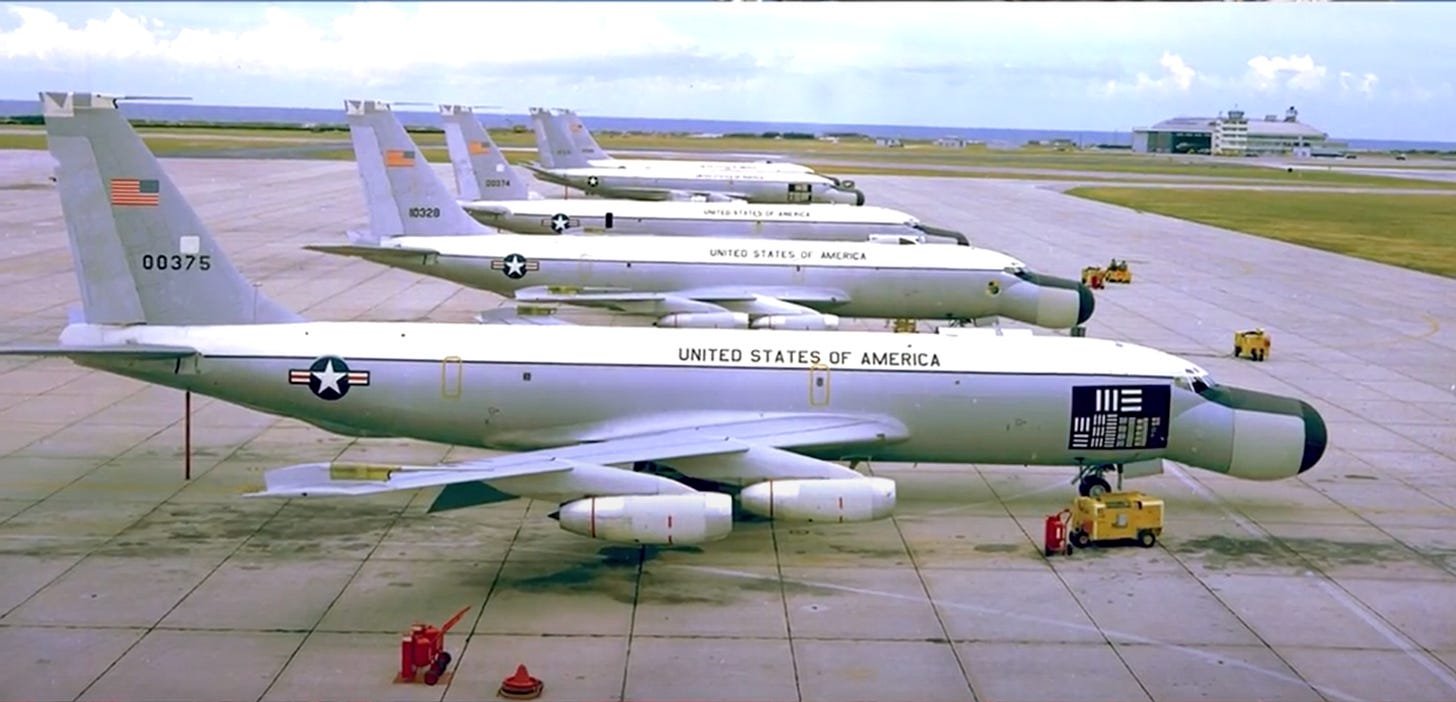
In that moment—gun to his head, 4,500 miles from home—Rufty carried secrets that could shift the global balance of power. The three strange-looking aircraft on the tarmac behind him weren’t just military transports. They were America’s most advanced airborne nuclear command platforms, carrying technology so sensitive that their capture could compromise the nation’s most critical weapons program.
It was 12:00 noon on February 25, 1980. As Americans back home watched Olympic hockey replays and followed the Iran hostage crisis on the evening news, they had no idea their country was hours away from a second, potentially catastrophic international incident. This one involved more hostages than Tehran, higher stakes than anyone imagined, and secrets that could have ended the Carter presidency before the 1980 election even began.
Most people have never heard this story. There’s a reason for that.
By Matthew Smith is a reader-supported publication. To receive new posts and support my work, consider becoming a free or paid subscriber.
Imagine for a second: It’s 3 AM on February 25, 1980, in Paramaribo, Suriname. Just three days earlier, the United States had felt a surge of pride from the “Miracle on Ice” hockey victory over the Soviet Union—a symbolic Cold War showdown that had the whole country buzzing. Ambassador Nancy Ostrander jolts awake to the sound of gunfire echoing through the tropical night. Half-asleep, she thinks to herself, “It’s Chinese New Year, and I wish they wouldn’t shoot off so many firecrackers.” But something gnaws at her—Chinese New Year was weeks ago.2
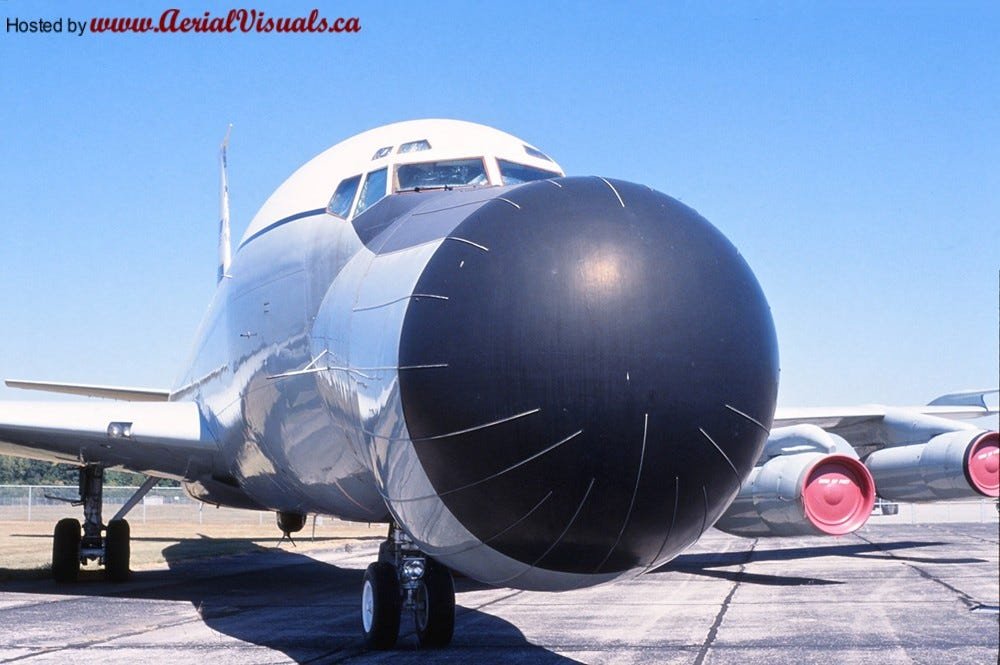
Meanwhile, at Zanderij International Airport, 35 kilometers away in the jungle, three strange-looking U.S. Air Force jets sit on the tarmac. These aren’t your typical military aircraft. With their massive, bulbous noses housing 10-foot radomes, they look like something out of a sci-fi movie. To the rebel sergeants seizing the airport that morning, they look like CIA invasion planes.
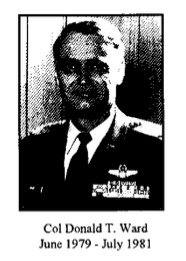
By dawn, 65 American military personnel—including Wing Commander Colonel Donald T. Ward—would be detained at gunpoint.3 Hindu radio would be broadcasting that the CIA had started the coup.4 And one of the Cold War’s most terrifying, untold crises would begin.
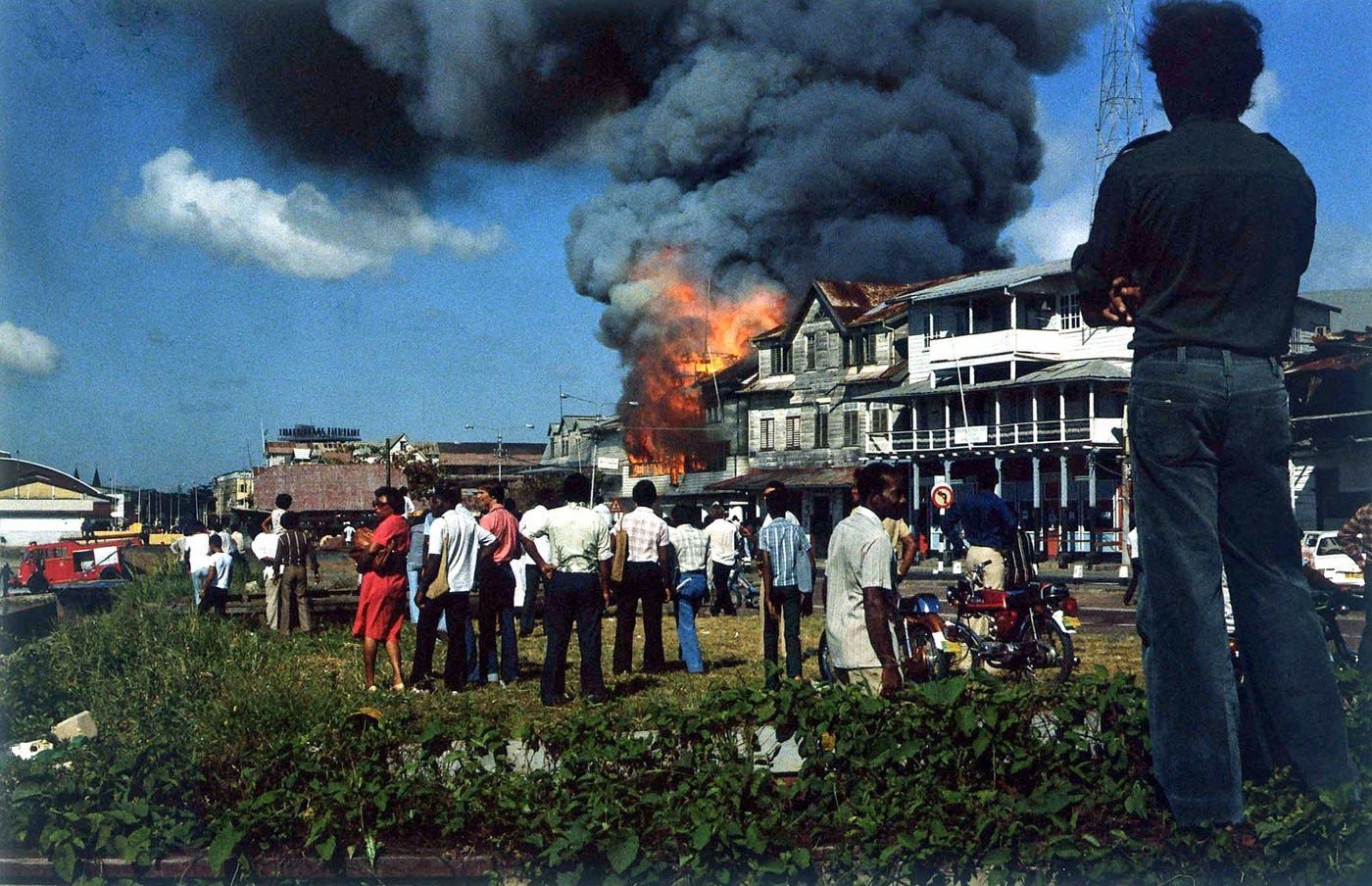
The news from Paramaribo would have landed in the White House Situation Room like a lit stick of dynamite. It was late February 1980, and the Carter administration was already drowning in the Iran Hostage Crisis. For 118 days, Americans had watched the nightly news for word on 52 captive diplomats in Tehran. A brutal presidential election was underway, with Ronald Reagan and George H.W. Bush battling for the Republican nomination.
But Ambassador Ostrander’s emergency call around 5:30 AM contained a cocktail of every possible nightmare scenario: gunfire, a military coup, radio claims of CIA involvement, and 65 American military personnel trapped with the nation’s most sensitive weapons technology. This wasn’t just another Third World coup. This was a potential second hostage crisis that could have submarined the Carter presidency on the spot.
And the assets at risk? Those three “strange-looking jets” weren’t just sophisticated communications aircraft.
They were Advanced Range Instrumentation Aircraft—flying command-and-control centers for America’s most critical nuclear delivery system: the Air-Launched Cruise Missile.
Seconds from Catastrophe
Staff Sergeant Randy Losey would later write that the morning of February 25th taught him “there are events that happen that the public is not made aware of.” He had no idea how prophetic those words would prove.
What happened over the next 15 hours reads like a Cold War thriller, except every terrifying detail actually occurred:
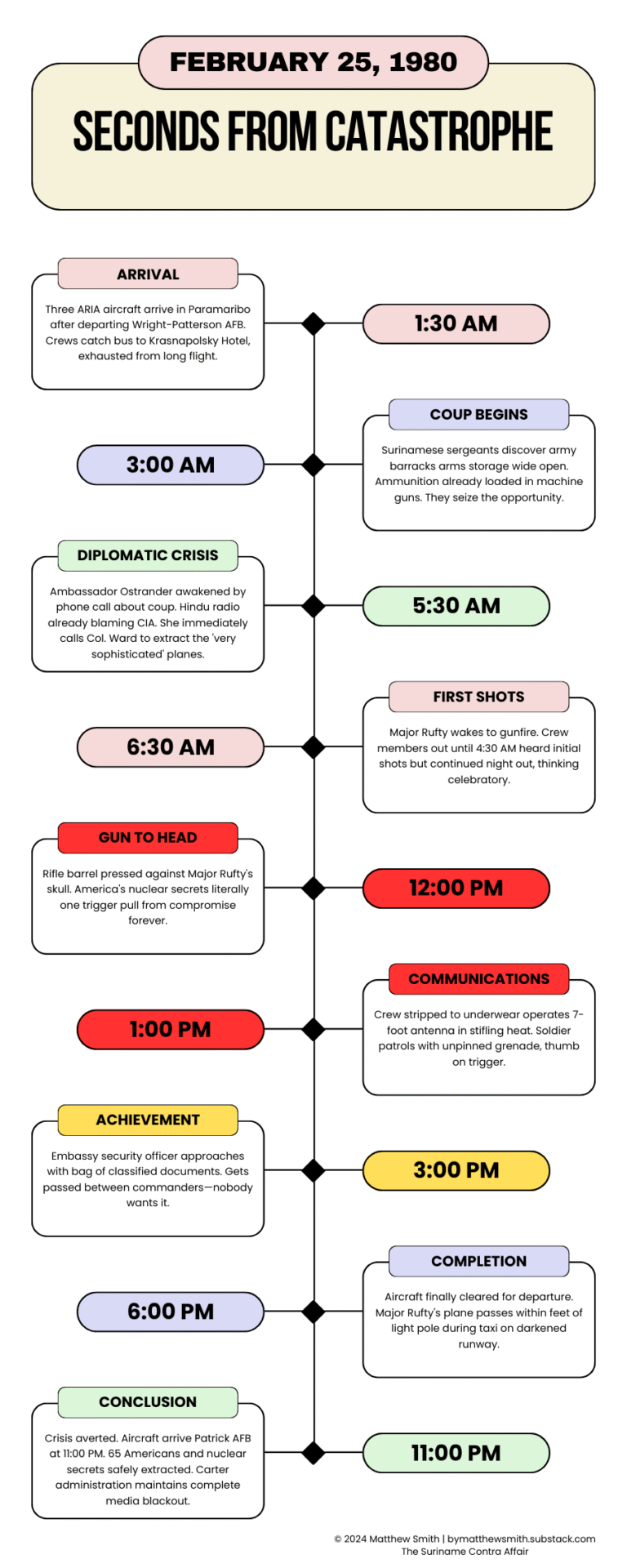
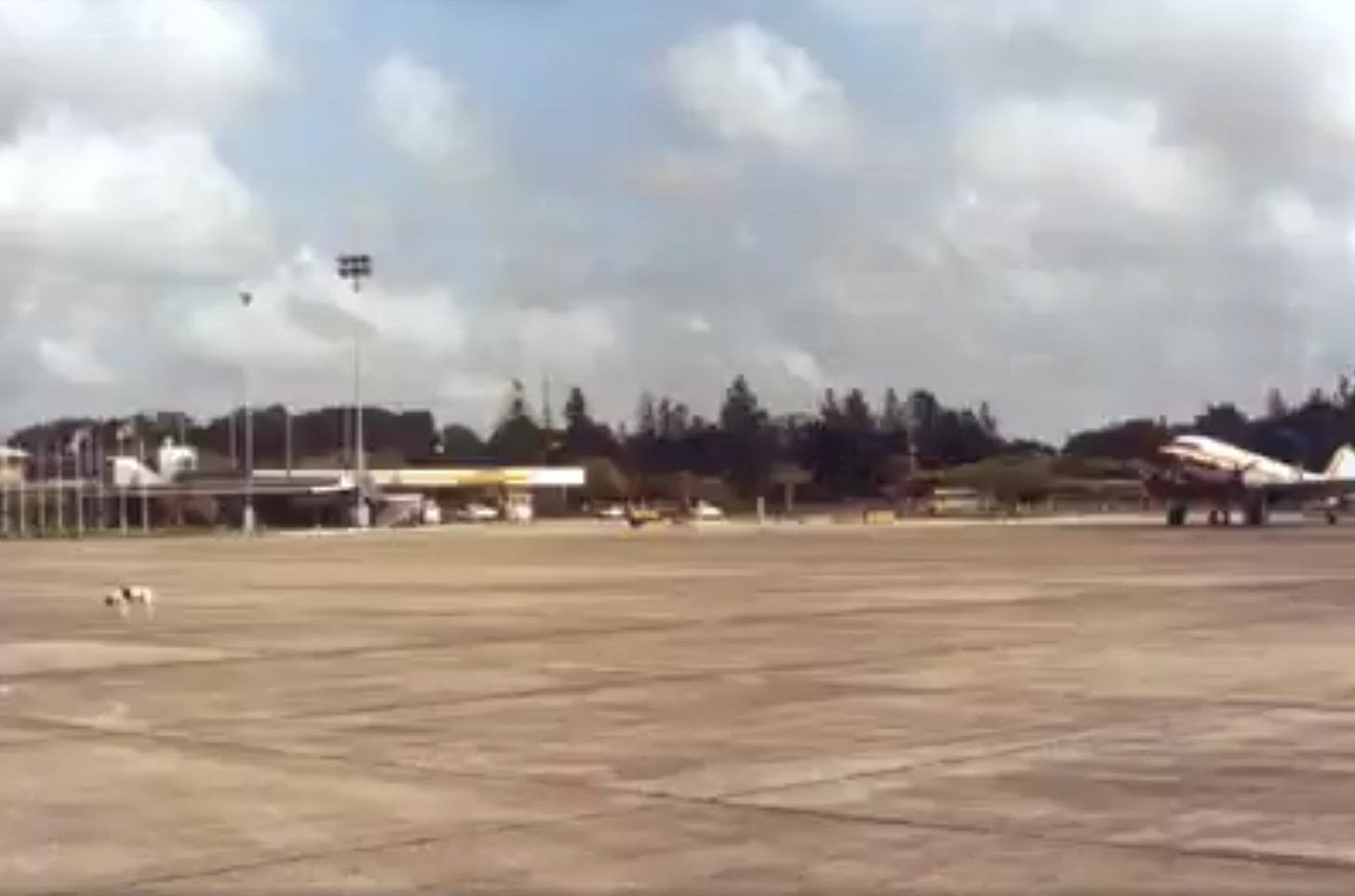
“One plane got off, and then another plane got off, and then the last plane finally left, and that plane flew over my house and dipped its wings. I have never been so glad to see anything go in my life” – Ambassador Nancy Ostrander
The Mission That Never Happened
Here’s what was supposed to happen, according to the military personnel who were there:
The plan was straightforward: depart Wright-Patterson Air Force Base on Sunday, February 24, refuel and rest overnight in Suriname, then continue to Ascension Island for what embassy staff understood as routine satellite tracking support.
Staff Sergeant Randy L. Losey, a Prime Mission Electronic Equipment operator aboard aircraft 60-0374, describes it matter-of-factly:
“Our mission was to acquire, track, and record data from airborne vehicles, including weapons, from governments and private corporations.”13
But Major Toby A. Rufty’s testimony reveals the truth about their real mission.
We were tasked with “a nine-hour support mission for the Eastern Space and Missile Center over the Atlantic Ocean’ supporting ‘a launch from Cape Canaveral.”14
This wasn’t NASA—the Eastern Space and Missile Center was definitively military, focused on weapons testing and strategic systems development. More telling: even after the coup started, they were still trying to coordinate “with the rest of the Eastern Test Range on the next best staging location to gather their data.”15
But here’s the first clue that something didn’t add up: there were three aircraft. As Deputy Chief of Mission Nuel Pazdral noted from the diplomatic side, embassy staff understood previous missions as NASA satellite support, explaining that,
“every time NASA launched a satellite they would send down two Air Force EC-135s… because there was a place over the south Atlantic where there was a hole in their radio coverage.”16
Three aircraft for a routine satellite mission? That’s not standard operating procedure. But it’s exactly what you might need if you were doing some highly secretive weapons testing.
The Routine That Created Natural Assumptions
To understand how embassy staff interpreted the mission, you need to know that these weren’t strangers showing up unannounced. Ambassador Ostrander had developed a personal relationship with ARIA crews over months of routine operations.
“I had a good thing going with fresh vegetables, because at that time we had the Air Force refueling in Suriname,” Ostrander recalled. “They flew down from Wright Patterson Air Force Base, oh, maybe once every three months or so, and refueled in Suriname, and they very kindly would get in touch with me and say, ‘What can we bring you?'”17
This established pattern is crucial to understanding why this has gone unquestioned. Previous ARIA visits claimed to support NASA satellite missions, creating natural expectations about what these aircraft did. When the coup erupted, Ostrander’s immediate protective instincts weren’t just about American assets—she knew these people, what they were doing and their explanation matched the official history of the ARIA from the 1960’s and early 1970s. But times had changed.
“The aircraft were originally modified to meet NASA’s specifications in support of the Apollo lunar mission. Since then, ARIA aircraft have supported almost every major missile and space program of NASA and the Department of Defense.”
— 4950th Test Wing official documentary, Total Test Effort18
But here’s where the timeline becomes critical: the aircraft arrived around 1:30 AM on February 25, and the coup began at 3:00 AM. That two-hour window likely prevented any formal embassy briefing about the mission specifics, and Suriname’s embassy staff may have been on a need-to-know basis.
The tight timeline created a perfect information vacuum that would prove crucial to operational security.
The Information Gap That Reveals Everything
Embassy staff operated on reasonable assumptions based on past experience: NASA satellite support requiring two aircraft to cover South Atlantic gaps. But the military sources tell a different story.
And here’s the critical detail: there were no U.S. satellite launches scheduled for late February 1980 that would require ARIA support. There had been satellite launches earlier that month—a reconnaissance satellite that transmitted images digitally and a GPS satellite using radio signals, neither requiring film recovery or extensive tracking support.19 The last significant launch was NASA’s Solar Maximum Mission on February 14—ten days earlier. The next U.S. launch wouldn’t occur until March.20
So what were three ARIA aircraft really doing positioning for “a nine-hour support mission for the Eastern Space and Missile Center over the Atlantic Ocean”?
The answer lies in understanding what these planes actually were—and why their capture would have created a crisis exponentially worse than Iran.
America’s Flying Nuclear Command Centers
Staff Sergeant Randy Losey provides the technical reality: “Our mission was to acquire, track, and record data from airborne vehicles, including weapons, from governments and private corporations.“21 But calling the ARIA fleet just “NASA’s telephone company” is like calling a Navy SEAL just a “swimmer.”
ARIA crews supported the testing and development of air, land, and sea-launched cruise missiles, as well as major ballistic missile systems.” — Lieutenant General Robert F. Raggio22
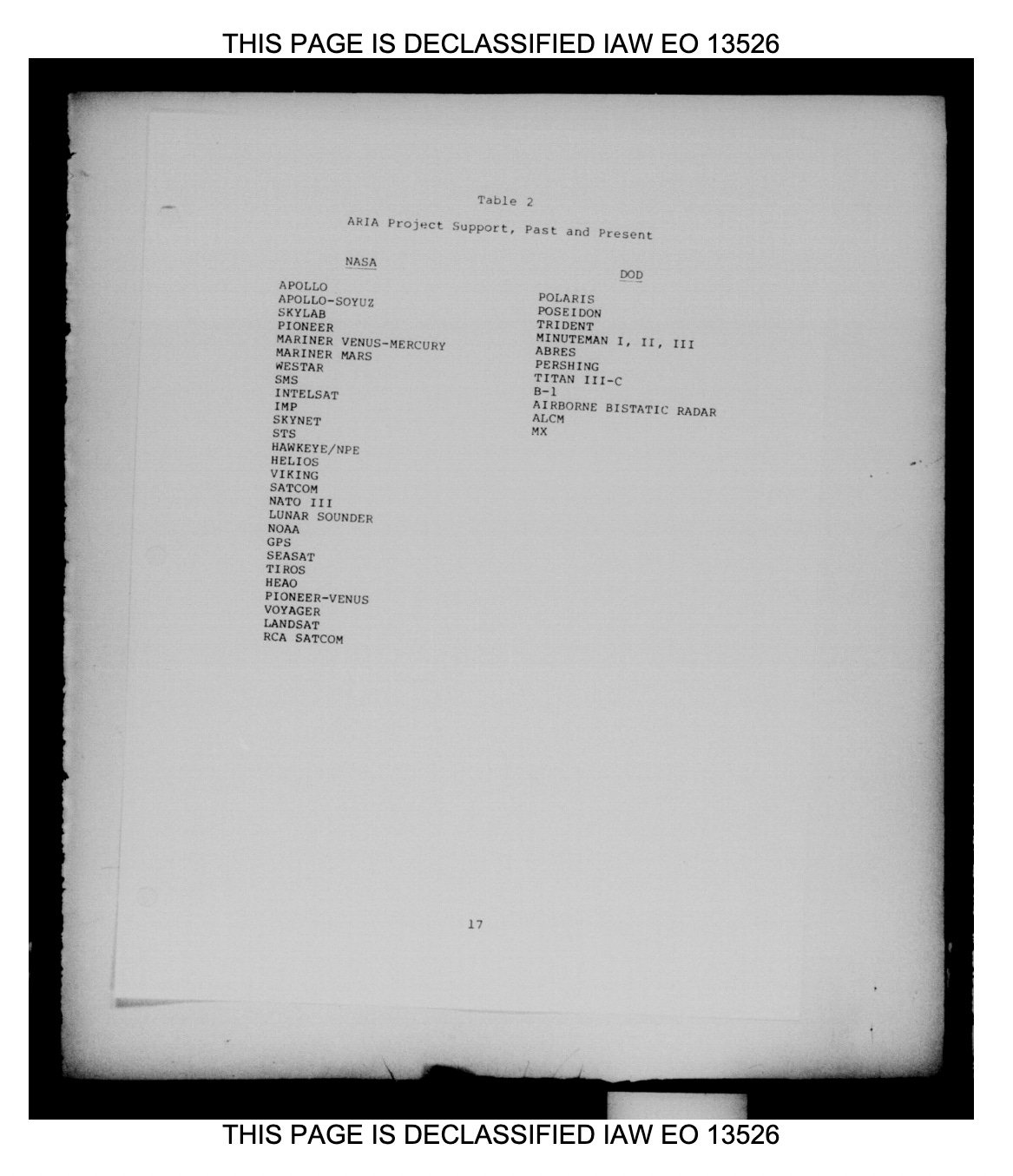
By February 1980, these aircraft had evolved into something far more sophisticated than their Apollo-era origins. They had become the backbone of America’s strategic weapons development program, providing essential test data for every major ballistic missile in the inventory, including the Air Force’s new cruise missiles and the Navy’s Trident.
The new Air-Launched Cruise Missile (ALCM) had become existentially critical to U.S. nuclear doctrine following President Carter’s June 1977 cancellation of the B-1A bomber. With the new bomber program dead, the aging B-52 fleet desperately needed a revolutionary weapon system to penetrate increasingly sophisticated Soviet air defenses.23
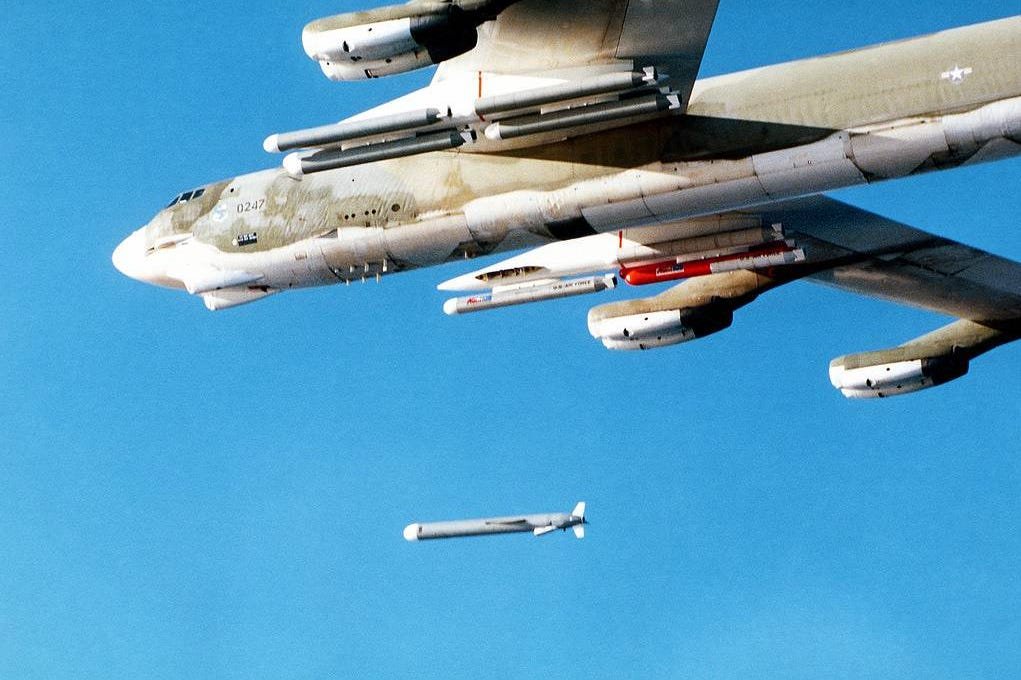
The Air-Launched Cruise Missile was that lifeline—a low-flying, terrain-hugging nuclear delivery system that could extend the operational life of Strategic Air Command’s bomber force well into the 1990s. But ALCM wasn’t just another weapons program. It represented the crown jewel of strategic modernization, requiring unprecedented levels of flight test precision and security.
This program was so important that the ARIA fleet was given a unique and powerful upgrade. For ALCM tests, some ARIA aircraft were fitted with a Remote Command and Control/Flight Termination System (RCC/FTS).24 25
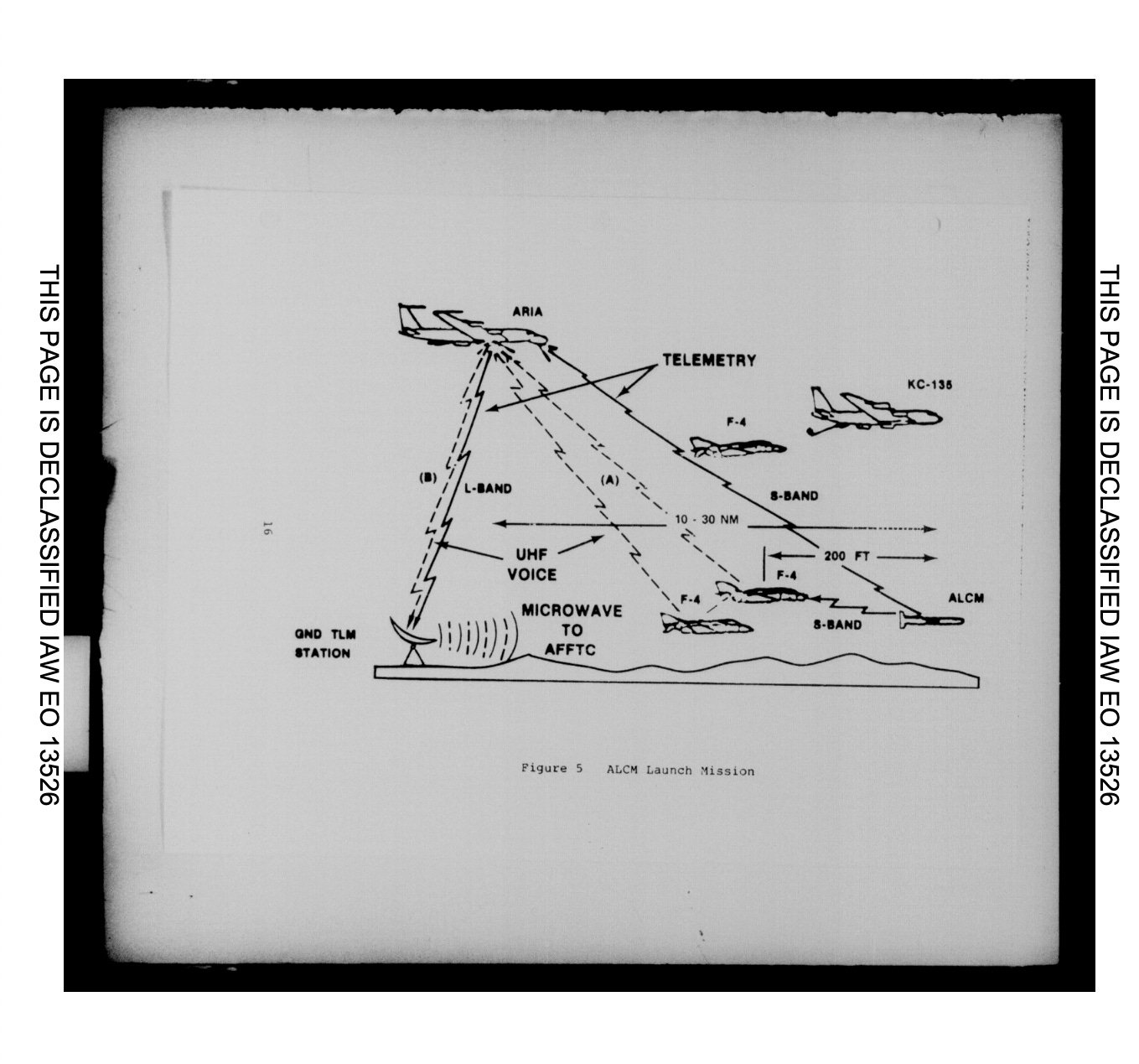
Think about that for a moment. These specially-equipped ARIA aircraft didn’t just passively track missiles—they served as flying mission control centers, holding an electronic leash on nuclear-capable ALCMs throughout their flight. They transmitted a continuous “fail-safe” signal; if that signal was lost, the missile would automatically destroy itself. This active command role was so critical that test protocol required two of these specialized planes to fly in tandem to ensure redundancy.
Each test represented millions of dollars in hardware and years of technological development compressed into a few critical hours of flight time over the South Atlantic. There was zero tolerance for failure.
But here’s where it gets really interesting: the 4950th Test Wing that operated the ARIA fleet also operated B-52G strategic bombers.26 This wasn’t bureaucratic coincidence. It reflected the integrated nature of weapons testing operations where the same unit controlled both the launch platforms and the tracking aircraft.
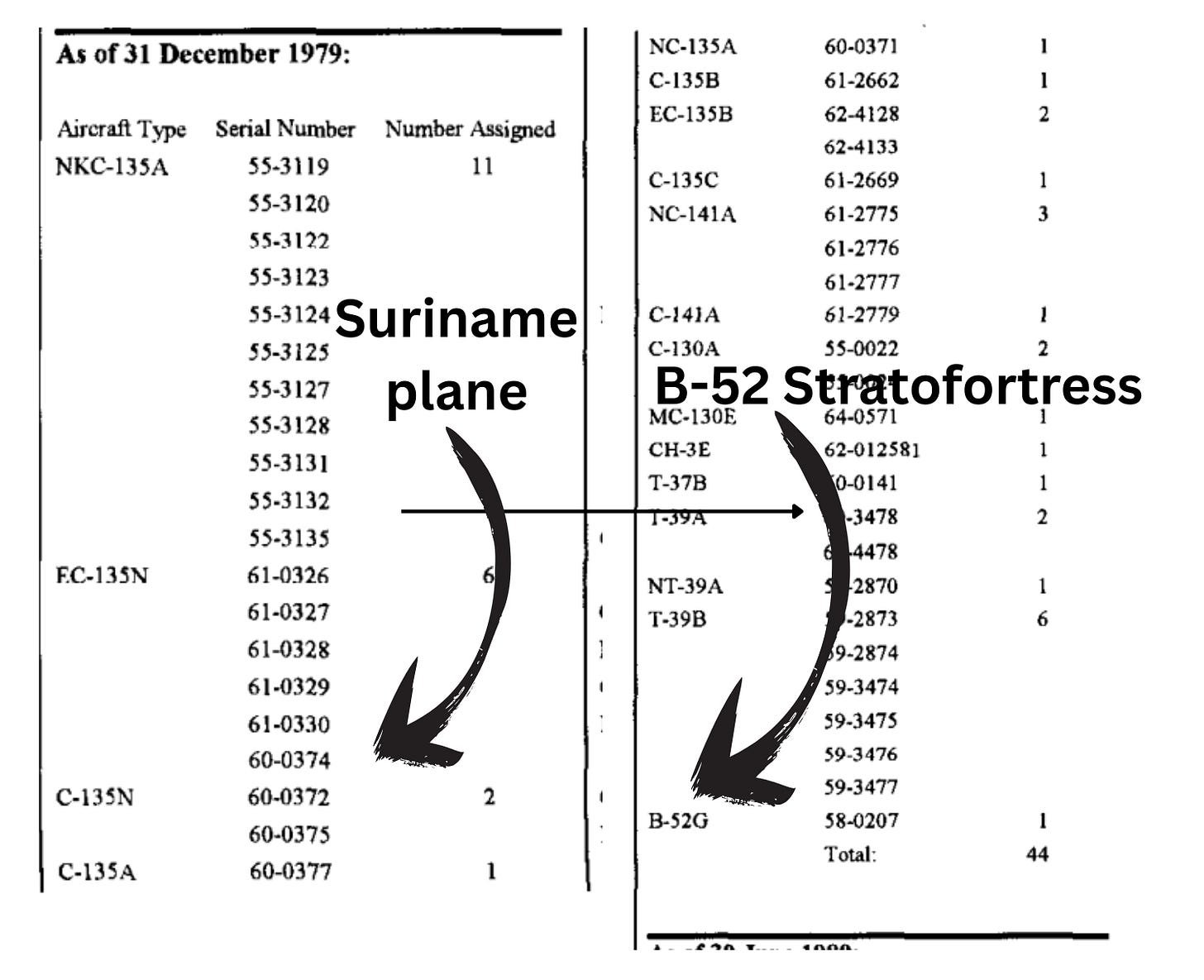
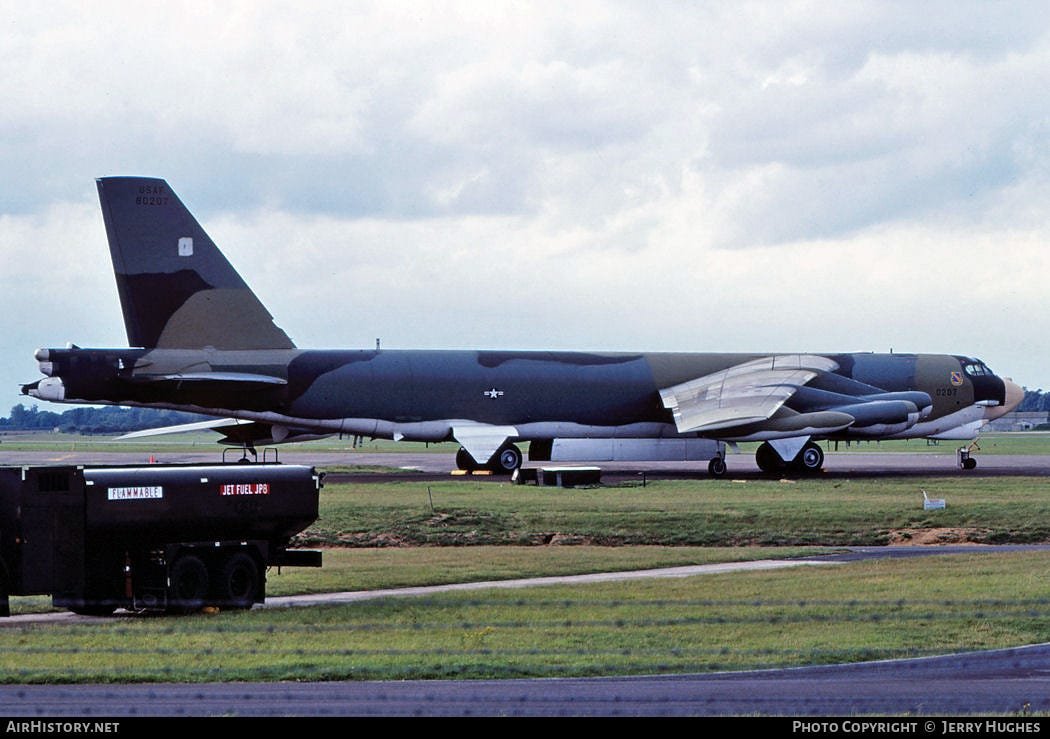
So in the months leading up to the ARIA’s arrival in Suriname, they’d been busy testing new advanced Air-Launched Cruise Missile. But when you watch documentaries from the time about how many support planes were required for ALCM missions, they would say:
“…the ARIA provided valuable instrumentation support in its role as a voice relay and telemetry link for Air Launched Cruise Missles. Two aircraft support is program.“27
So if they weren’t testing the Air Force’s latest weapon… why were there three planes in Suriname?
The Evidence Trail: Why Three Aircraft?
The three-aircraft configuration was the smoking gun. Based on Nuel Pazdral’s explanation of normal operations, routine NASA satellite missions required two aircraft to cover South Atlantic communication gaps. We now know two were also required for the ALCM program they were testing. The third aircraft represented a significant deviation from these established patterns.28
Why Ascension Island? The destination wasn’t chosen randomly. According to the Air Force Eastern Test Range handbook, Ascension was perfectly positioned 1,000 miles south of the equator for monitoring cruise missile tests launched from B-52s or submarines operating out of the continental United States according to the Eastern Test Range handbook.29 But the type of equipment required for the ARIAs changed depending on the type of mission they were supporting.
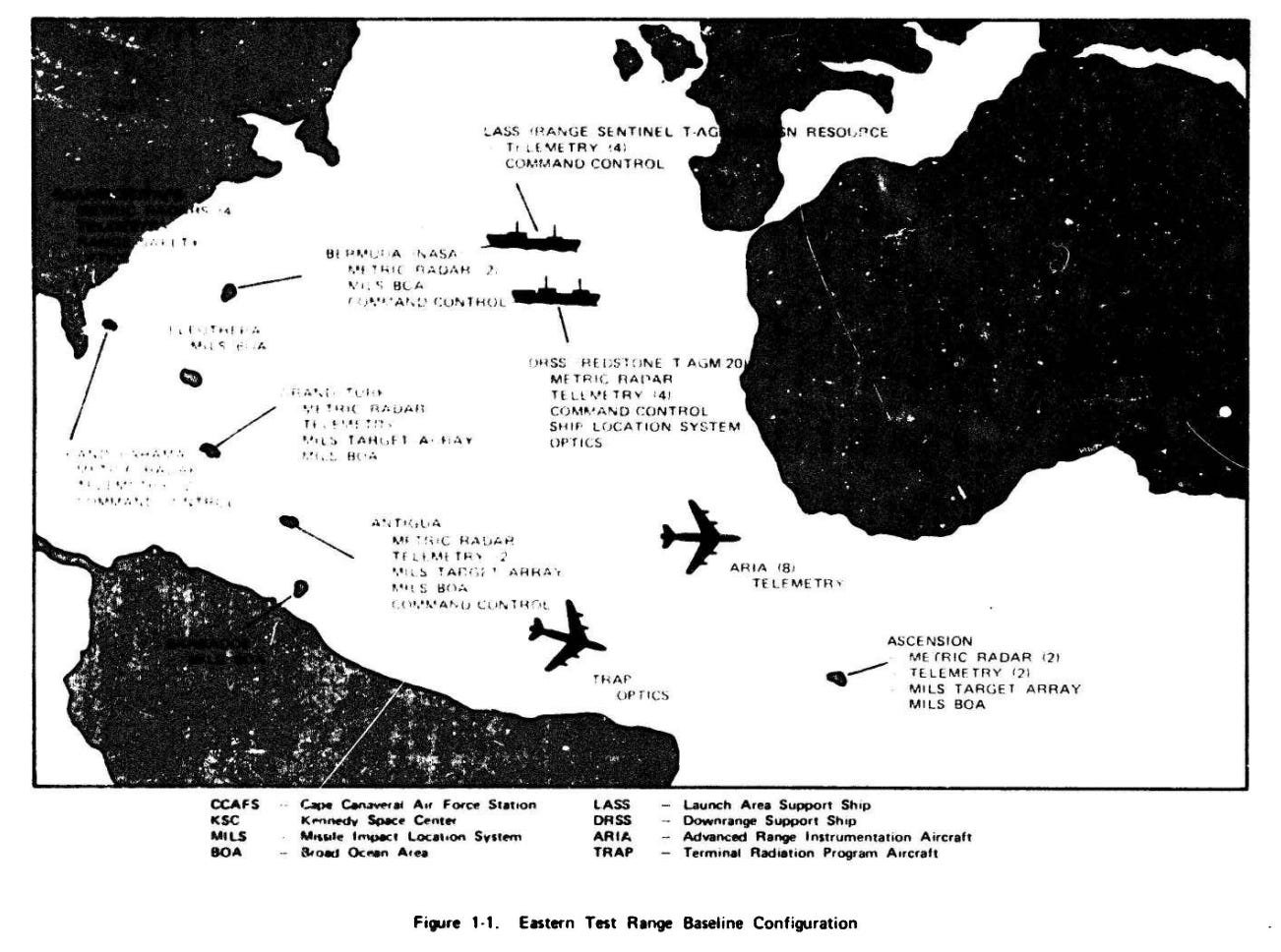
The key to unraveling this mystery lies not in classified documents, but in something hiding in plain sight: the specific technical capabilities of the three aircraft involved. This wasn’t a random collection of planes thrown together for a routine mission. Each aircraft had specific, complementary capabilities that formed a perfect technical constellation for a complex ballistic missile test:
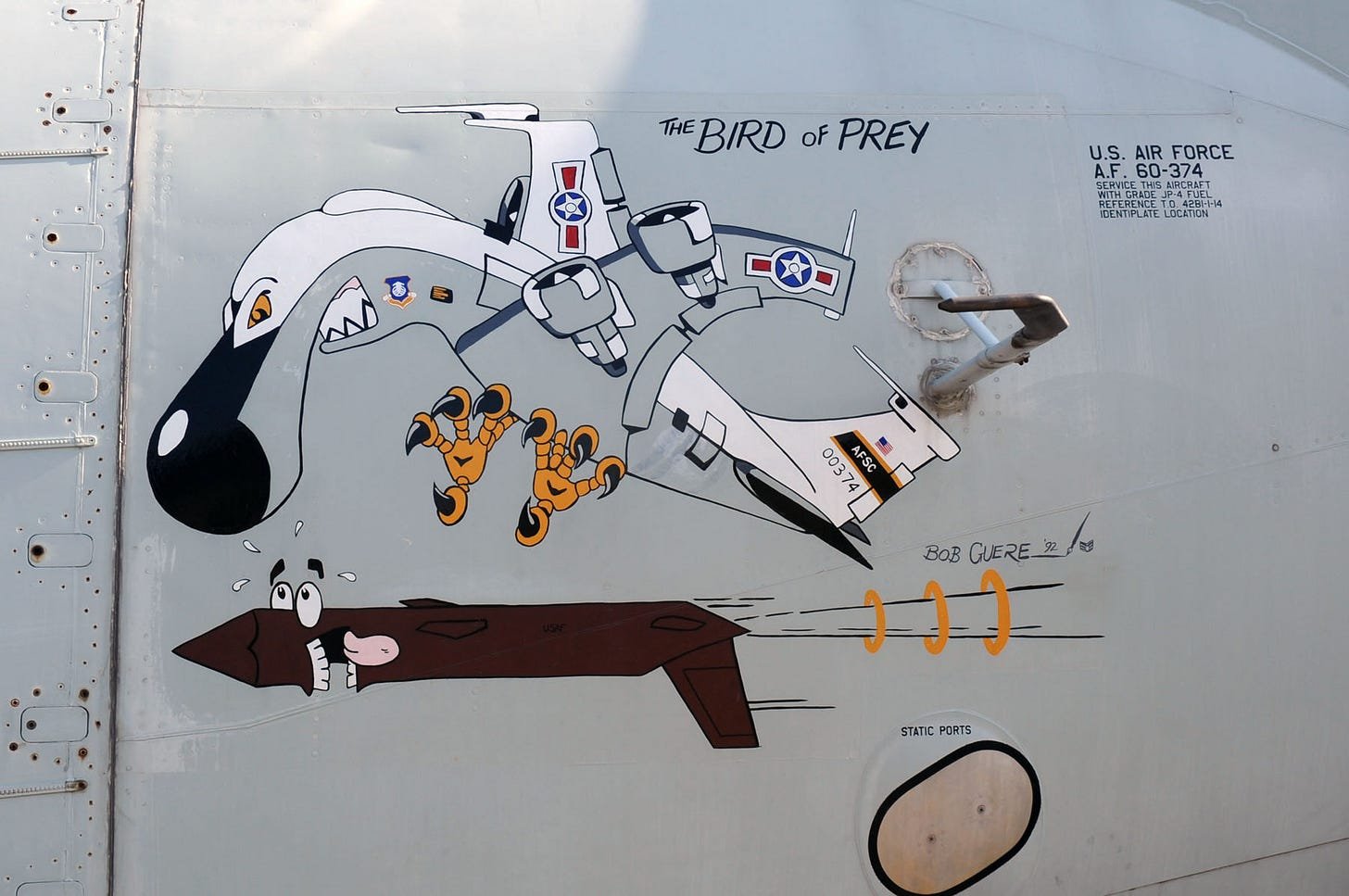
Aircraft #1: 60-0374 (“Bird of Prey”) – Primary Telemetry This EC-135N served as the mission workhorse, equipped with the standard seven-foot steerable dish antenna housed in ARIA’s distinctive “droop snoot” radome.30 Staff Sergeant Randy Losey, who was aboard 60-0374 during the incident, confirms this aircraft maintained the core telemetry gathering capability that was ARIA’s bread and butter. For a Trident test, 60-0374 would have been responsible for collecting the primary stream of electronic data from the missile during its boost phase and MIRV deployment sequence.
Aircraft #2: 61-0326 – Optical Tracking Specialist Here’s where the case becomes airtight. Aircraft 61-0326 was equipped with the Airborne Lightweight Optical Tracking System (ALOTS) pod, giving it the ability to provide visual confirmation of missile performance.31 This visual confirmation was essential for tracking what ARIA commanders later called the “spectacular light show” of multiple warheads reentering the atmosphere—a phenomenon cruise missiles would never create. This capability is absolutely critical for a Trident test, where multiple independent reentry vehicles create a dazzling display as they separate and streak toward their targets.
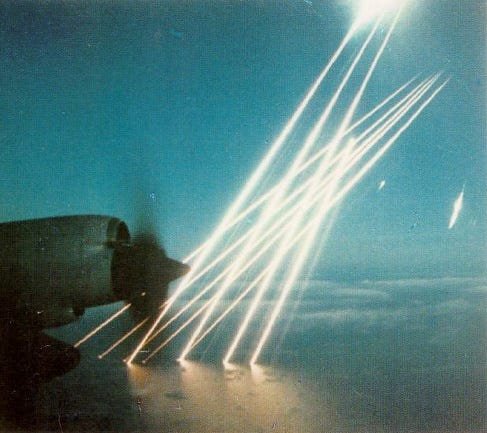
Crucially, ALOTS capability appears completely unnecessary for satellite missions or cruise missile tests. You shouldn’t need optical tracking when radar works fine for slow-moving targets. But for hypersonic reentry vehicles screaming through the atmosphere? Visual confirmation is essential.
Aircraft #3: 62-4133 – High-Performance Data Relay The third aircraft represents perhaps the most telling piece of evidence. Aircraft 62-4133 was one of the newer EC-135B models, equipped with more powerful and efficient TF-33 turbofan engines that provided greater range and performance.32 33Records show this aircraft’s conversion to a high-performance ARIA platform was completed on December 31, 1979—making Suriname its maiden voyage or one of its very first operational missions. You don’t assign a brand-new, top-tier asset to a routine satellite support flight.
This three-aircraft combination makes perfect sense for a Trident test: primary telemetry (60-0374), optical confirmation of MIRV performance (61-0326), and high-performance coordination/relay (62-4133). It’s a complete surveillance and tracking package for the most complex weapons test in the U.S. arsenal.
While the specific after-action report naming the aircraft assigned to the February 28th mission remains in classified archives, official U.S. Space Force and Air Force histories are clear: the EC-135E ARIA fleet was a primary and essential asset for collecting telemetry data during Trident missile tests. The Cape Canaveral Space Force Museum’s official records confirm that ARIA aircraft provided “support of R&D testing in the Navy’s Trident program,” while Air Force unit histories document the 4950th Test Wing’s use of ARIA to “receive, record, and retransmit telemetry data on orbital, re-entry, and cruise missile missions.”34 Records from the program’s prime contractor, Lockheed Martin, further confirm the Navy’s historical reliance on “telemetry aircraft” for Trident flight tests.35
The technical evidence seems to indicate that this aircraft combination was assembled for one specific type of mission—tracking a complex, multi-warhead ballistic missile test over the deep Atlantic.
The Timing That Reveals Everything
The real target was hiding in plain sight on the Eastern Test Range schedule. On February 28, 1980—just three days after the ARIA crews were detained:
The USS Francis Scott Key (SSBN-657) was scheduled to conduct the first operational test of the Trident I (C-4) submarine-launched ballistic missile.36
This wasn’t just another weapons test; it was the debut of America’s newest strategic nuclear delivery system, the backbone of the sea-based deterrent for decades to come.
The Trident had first achieved lift off in 1977 from a pad in Cape Canaveral, before it was succcessfully launched deployed at sea aboard the USS Francis Scott Key (SSBN 657) in October, 1979.37
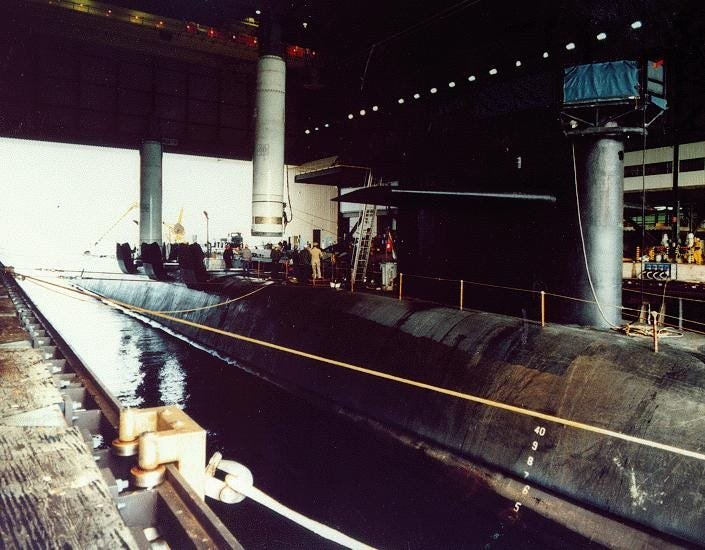
Lieutenant General Robert F. Raggio, who later wrote about the Suriname episode, described ARIA aircraft supporting the testing and development of the Navy’s Trident ballistic missiles, which would involve tracking their reentry. In his remarks at the ARIA Reunion Banquet, he stated,
“ARIA was there for the test and development of air, land and sea-launched cruise missiles, the Army’s Pershing I and Pershing II, and the Navy’s Trident, Poseidon and Polaris ballistic missiles.”38
The 4950th Test Wing, which operated the ARIA fleet, used these aircraft to “receive, record, and retransmit telemetry data on orbital, re-entry, and cruise missile missions
More tellingly, Wing Commander Colonel Ward hadn’t been on a mission in over a year, but he personally flew on this deployment. As Major Rufty explained:
“Since Col Ward hadn’t seen what the guys have to deal with out on the road I went up and talked him into going on this short, no problem TDY.“
When a Wing Commander breaks his pattern to personally oversee a “routine” mission, it’s not routine. Yes, despite its high profile equipment and personnel, so little is known about this mission. So much so, that to this day, Colonel Donald T. Ward does not even have his own dedicated Wikipedia page.
The Scramble: Salvaging a Crisis
Eyewitness accounts confirm that after their release on February 26, the crews did not proceed to their staging base on Ascension Island as planned. Instead, they were ordered back to the United States, officially scrapping their part in the operation.39
The fact that the Trident test proceeded exactly on schedule—despite the loss of the primary support assets—speaks to both the importance of the mission and the effectiveness of the contingency planning. Someone, somewhere, managed to position alternative ARIA aircraft or other tracking assets to ensure America’s newest strategic weapon system could complete its crucial debut test.
This successful scramble may have been one of the most impressive logistics operations of the Cold War—and one of the most secret. I’ve filed multiple FOIA requests and hope to have a definitive answer soon.
And look at what happened after the crews returned home. Losey’s observation is telling: “I cannot recall a single conversation taking place about the events of Suriname after we arrived back home.”40 This wasn’t normal post-mission debriefing. This was operational security lockdown.
Raggio, who oversaw the 4950th Test Wing, confirmed the broader pattern:
“Sixty-five wing members, including the commander, Colonel Ward, were detained at gunpoint for many hours before being allowed to leave the country.41“Yet the incident received virtually no public attention.
By 6:00 PM on February 25, 1980, Americans watching the evening news had no idea their country had just survived a potential international catastrophe. Walter Cronkite reported on Iran, Olympic hockey, and the presidential primaries. No mention of Suriname. No word about 65 American hostages. No coverage of the near-compromise of America’s most sensitive nuclear technology.
The Carter administration, already reeling from Iran, couldn’t afford for the American public to learn that there had been a second, potentially worse hostage crisis happening simultaneously. The political consequences would have been immediate and devastating.
What Almost Happened: The Nightmare Scenario
Imagine if just one of those 16 Surinamese NCOs had decided differently when Major Rufty was spread eagle with a gun to his head. All it would have taken was a slip of a trigger finger or a trip by the soldier carrying the unpinned grenade through Zanderij airport.
This wasn’t far-fetched—the coup plotters had already accidentally killed a guard at the ammunition depot that morning, an unplanned death that transformed their protest into revolution. They now had ‘blood on their hands’ and were operating in that same volatile state where a nervous finger could trigger another fatal accident, escalating the crisis beyond diplomatic resolution.
Imagine the headlines if executions had been broadcast on live television:
“American military officers carrying nuclear weapons secrets, killed by Soviet-backed insurgents as Cuban advisors arrive by the planeload.“
The geopolitical earthquake would have been immediate and catastrophic:
Carter’s Presidency: A second hostage crisis involving more Americans than Iran, carrying more sensitive technology than any embassy. Reagan wouldn’t have needed an October Surprise—Carter would have been finished by March 1980.
U.S. Nuclear Deterrence: The capture of this specialized fleet would have been catastrophic. It would have compromised advanced telemetry and optical tracking technology, potentially blinding the U.S. during critical weapons tests and setting back the vital Trident program by years. Colonel Ward’s comprehensive knowledge of America’s most sensitive test programs represented a worst-case scenario for operational security.
Cold War Dynamics: Soviet intelligence would have gained unprecedented insight into America’s most advanced nuclear delivery systems, while Cuban involvement would have created a second Cuba Missile Crisis scenario in South America.
American Military Intervention: If executions had been broadcast, if nuclear secrets compromised, pressure for immediate military action would have been enormous. The U.S. had intervened in the Caribbean before—just three years later, Reagan invaded Grenada with 7,000 troops to rescue medical students. Sixty-five military personnel carrying nuclear weapons technology represented far higher stakes.
Such intervention might have ended Bouterse’s revolution before it began, preventing the December Murders of 1982. But it would have created a massive geopolitical crisis, potentially drawing in Cuban and Soviet forces, turning a small South American country into another Cold War flashpoint.
The rebels held cards they didn’t know they possessed: one of the highest-ranking American military officers taken hostage in a Third World coup, aircraft containing technology more sensitive than most military installations, and 65 personnel carrying collective knowledge of America’s most classified weapons programs.
All happening simultaneously with Iran, in a country where Cuban advisors were arriving daily, during a presidential election year, with a vulnerable administration already on the brink.
The Broader Implications
This incident offers a masterclass in how Cold War operational security functioned—and how close it came to catastrophic failure.
Embassy staff operated on reasonable assumptions based on past experience: NASA satellite support requiring two aircraft for South Atlantic coverage gaps. They had no way to verify these assumptions, especially given Suriname’s isolation as a communication “dead zone.” The established pattern of routine ARIA visits every three months created natural expectations that provided perfect cover.
But the classified reality was far more complex. These crews weren’t just providing communications support—they were testing and controlling the weapons systems that would determine the outcome of World War III if it ever came. They supported every Apollo mission, but they also tested every Trident missile, every Pershing deployment, every cruise missile that would carry nuclear warheads to Soviet targets.42
The ARIA program represents something often overlooked in Cold War history: the vital role of seemingly mundane military support operations in maintaining America’s nuclear edge. While everyone focuses on the dramatic stuff—spy satellites, nuclear weapons, diplomatic crises—the real work of Cold War deterrence happened in the background, in missions like this one that the public never heard about.
The Final Verdict
After forensic analysis of multiple primary sources and previously classified testimonies, the evidence strongly suggests a definitive conclusion: The ARIA deployment to Suriname was a planned logistical stop for a top-secret mission to provide telemetry and optical tracking for the first operational test of the Trident I submarine-launched ballistic missile.
The established routine of “NASA support” provided perfect cover for this highly sensitive military operation. Embassy staff genuinely believed they were facilitating a peaceful space mission—which is exactly what made the cover story so effective. The truth was compartmentalized at levels far above the diplomatic corps.
The significance of what nearly happened cannot be overstated. For the Carter administration, already reeling from the Iran Hostage Crisis in an election year, the Suriname incident was a nightmare averted by mere hours. Had the coup occurred while the aircraft were loaded with classified mission equipment and positioned for the Trident test, it could have been a national security disaster comparable to the loss of Francis Gary Powers’ U-2 over the Soviet Union.
In the end, Bouterse’s coup inadvertently revealed the hidden complexity of America’s global military operations. A regional political upheaval in a tiny South American nation had nearly derailed the test of America’s most advanced nuclear weapon—proving that in the interconnected world of Cold War strategy, no mission was ever truly routine, and no location was ever truly safe.
What makes this story remarkable isn’t just that it happened, but how close it came to becoming something infinitely worse. America survived what could have been a crisis that made Iran look manageable—65 hostages carrying nuclear secrets, captured by Soviet-backed rebels, during the worst year of Carter’s presidency.
That it remained secret for 44 years speaks to the effectiveness of operational security. That it happened at all speaks to the razor-thin margins on which Cold War stability depended.
In a different timeline—one where that rifle trigger got pulled, where those classified documents were captured, where those aircraft were destroyed on live television—the 1980 election might have ended before it began, and the Cold War might have taken a very different turn.
We came that close.
What Comes Next
The February 1980 aircraft detention was just the beginning. What happened next reveals how that crisis shaped Reagan administration policy toward this small South American nation—and how Suriname became a testing ground for the most sophisticated covert operations network ever constructed by an American administration.
The next chapter in this investigation examines the March 11, 1982 coup attempt that nearly toppled Desi Bouterse’s government—an operation that can now be traced directly to decisions made in Reagan’s National Security Council on November 16, 1981. The story of Hans Lachman’s tank and a thirty-second decision that derailed one of the most ambitious shadow government operations of the Cold War.
The Suriname Contra Affair (Part I)
Help Complete This Investigation
This series represents the first comprehensive documentation of Reagan Doctrine operations in Suriname, but significant gaps remain. If you are:
- A former ARIA crew member or 4950th Test Wing veteran with knowledge of the February 1980 mission
- A Reagan administration official with knowledge of Caribbean Basin operations
- A researcher with access to relevant Dutch, Surinamese, or Cuban archives
- Anyone with information about the events documented in this series
Contact me at with “Suriname Investigation” in the subject line. Multiple FOIA requests are pending, but firsthand accounts and additional documentation could help reveal the full scope of what happened.
This story matters because the operational framework constructed for Suriname operations wasn’t dismantled when the Cold War ended—it evolved. Understanding how shadow government works in practice isn’t just historical curiosity. It’s essential for understanding how power actually functions in American democracy.
Help us get it right.
Endnotes
Losey, Randy L. “ARIA Held Hostage in Suriname South America.” ARIA Apollo / Advanced Range Instrument Aircraft, 2003 2000. https://www.ariaaircraft.com/your-story-aria-held-hostage-in-suriname-south-america-by-randy-l-losey.html.
Association for Diplomatic Studies and Training, ed. Suriname Country Reader. Association for Diplomatic Studies and Training, n.d. Accessed June 26, 2025. https://adst.org/Readers/Suriname.pdf.
“ARIA the Trilogy – Lieutenant General Robert F. Raggio.” Accessed June 5, 2025. https://flyaria.com/aria-history-aria-the-trilogy-aria-reunion-banquet-lieutenant-genaral-robert-f-raggio.html.
Nancy Ostrander, Oral History Interview: “The first call I had had that morning was that the Hindu radio that morning were reporting that the CIA had started the coup.”
Losey, Randy L. “ARIA Held Hostage in Suriname South America.”
The aircraft also featured probe antennas on each wingtip and a trailing wire antenna on the bottom of the fuselage, specifically designed to enhance high-frequency (HF) radio transmission and reception. The communication subsystem included three 1,000-watt single sideband HF transmitters and receivers for voice
Major Toby A. Rufty, personal account from “Caught in the Middle – Revolution in Surinam,” Against the Wind: 90 Years of Flight Test in the Miami Valley, History Office, Aeronautical Systems Center, Air Force Materiel Command, 1994, pages 84-85. Rufty’s firsthand account of being held at gunpoint in the airport terminal.
Losey, “ARIA Held Hostage in Suriname South America.” Losey’s assessment of how close the situation came to becoming deadly.
Rufty, “Caught in the Middle – Revolution in Surinam.” Account of the classified documents incident involving multiple aircraft commanders.
Association for Diplomatic Studies and Training, ed. Suriname Country Reader. Association for Diplomatic Studies and Training, n.d. Accessed June 26, 2025. https://adst.org/Readers/Suriname.pdf. Paul Good, the Public Affairs Officer, confirmed that the CIA “didn’t have anyone at post” in Suriname when the situation was building up before the coup. He noted that they had “TDYers on occasion, coming up from Brazil”. This sentiment is echoed by Neul Pazdral, the Deputy Chief of Mission, who stated that the embassy “hadn’t a CIA station yet but they kept somebody there continually on TDY and later on opened up a station”
Ibid. Paul Good, the Public Affairs Officer, recounted that the Dutch colonel in charge of their military effort, Valk, was living next door to him during the coup in Suriname.
Good stated, “We put a gate in our common side fence so that we could go back and forth, socialize during the coup, which was on for quite a bit of time”. He also mentioned spending “a lot of time under coup conditions in South America, both Chile and in Surinam,” and once told interviewer Charles Kennedy that “Coups are fun, actually.”
Association for Diplomatic Studies and Training, ed. Suriname Country Reader. Association for Diplomatic Studies and Training, n.d. Accessed June 26, 2025.
Losey, Randy L. “ARIA Held Hostage in Suriname South America.” ARIA Apollo / Advanced Range Instrument Aircraft, 2003 2000. https://www.ariaaircraft.com/your-story-aria-held-hostage-in-suriname-south-america-by-randy-l-losey.html.
Against the Wind: 90 Years of Flight Test in the Miami Valley. History Office, Aeronautical Systems Center, Air Force Materiel Command, 1994. https://www.google.com/books/edition/Against_the_Wind/2zfbAAAAMAAJ?hl=en
Ibid. Rufty’s account of planning to coordinate with the Eastern Test Range for mission continuation.
Association for Diplomatic Studies and Training, ed. Suriname Country Reader. Association for Diplomatic Studies and Training, n.d. Accessed June 26, 2025. https://adst.org/Readers/Suriname.pdf.
Nancy Ostrander, Oral History Interview.
DET 2, 1361st Audiovisual SQ. Total Test Effort 4950th Test Wing. SPR 22-70. Aerospace Audiovisual Service, n.d. Accessed September 10, 2025. https://flyaria.com/media-total-test-effort-4950th-test-wing-wright-patterson-air-force-base.html.
Jos Heyman, “Satellite Launch List,” Directory of U.S. Military Rockets and Missiles: Appendix 3: Space Vehicles, 2003-2009, https://www.designation-systems.net/dusrm/app3/sat-summary.html. February 1980 launches included: KH-11 reconnaissance satellite (OPS 2581) on February 7, using electro-optical imaging with digital transmission rather than film recovery; Navstar 5 GPS satellite (OPS 5117) on February 9, transmitting radio navigation signals; and NASA’s Solar Maximum Mission on February 14. None of these missions required the type of extensive South Atlantic tracking support that would justify a three-aircraft ARIA deployment.
Wikipedia, “1980 in spaceflight,” May 5, 2025, https://en.wikipedia.org/w/index.php?title=1980_in_spaceflight&oldid=1288985398.
Losey, Randy L. “ARIA Held Hostage in Suriname South America.”
“ARIA the Trilogy – Lieutenant General Robert F. Raggio.”
Harold Brown, Secretary of Defense, “Decision on B-1 Bomber Program,” Department of Defense press release, June 30, 1977.
Against the Wind: 90 Years of Flight Test in the Miami Valley, page 83. Technical documentation of ARIA aircraft modifications for cruise missile mission control, including “redundant remote command and control/flight termination systems.”
ARIA Engineering Division, An Introduction to the Advanced Range Instrumentation Aircraft, Directorate of Flight Test Engineering, 4950th Test Wing (Wright-Patterson AFB, OH: U.S. Air Force, ca. 1980), 3–4. Preserved as Doc 419 in History of the Aeronautical Systems Division, January–December 1986, Volume VI (Maxwell AFB, AL: Air Force Historical Research Agency [AFHRA], IRIS 01083316). https://www.dropbox.com/scl/fi/lp9db90nbgr1qc8gzw28f/1083316.pdf?rlkey=j5kb2y6fkuroptlr5gjk2h2yr&st=0tk3k1a6&dl=0 Declassified under EO 13526. “ARIA Modifications,” 18. Describes modifications to three EC-135N aircraft to include RCC/FTS signal systems for cruise missile control during special tests.
“Against the Wind: 90 Years of Flight Test in the Miami Valley,” aircraft inventory showing 4950th Test Wing operation of both ARIA fleet and B-52G strategic bomber assets, page 177.
Total Test Effort 4950th Test Wing.
ARIA Engineering Division, An Introduction to the Advanced Range Instrumentation Aircraft, Directorate of Flight Test Engineering, 4950th Test Wing (Wright-Patterson AFB, OH: U.S. Air Force, ca. 1980), 3–4. Preserved as Doc 419 in History of the Aeronautical Systems Division, January–December 1986, Volume VI (Maxwell AFB, AL: Air Force Historical Research Agency [AFHRA], IRIS 01083316). Declassified under EO 13526. “Future Improvements and Modernization,” 22. Notes that phased array telemetry upgrades were planned precisely because missions in 1980 required “two, three, or even four planes.”
Ibid., “Typical Mission Support—Eastern Space and Missile Center (Orbital Mission),” 12. Describes WPAFB–Ascension flight routing for launch support missions, with en route stops at Zanderij/Barbados.
Boeing EC-135E ARIA > National Museum of the United States Air Force™ > Display, accessed September 7, 2025, https://www.nationalmuseum.af.mil/Visit/Museum-Exhibits/Fact-Sheets/Display/Article/197557/boeing-ec-135e-aria/. Technical specifications of ARIA’s seven-foot steerable parabolic dish antenna system.
Burns, Bob. “APOLLO RANGE INSTRUMENTED AIRCRAFT.” ARIA:, n.d. Accessed September 11, 2025. https://www.bfec.us/bfecpho14d.htm.
Losey, Randy L. “Aircraft 62-4133.” FlyAria.Com, n.d. Accessed September 11, 2025. https://flyaria.com/aircraft-624133.html.
ARIA Engineering Division, An Introduction to the Advanced Range Instrumentation Aircraft., Tables 3–4, 19–20. Lists EC-135N endurance at 9.5 hours and EC-135B endurance at 12 hours, confirming improved range and performance.
Losey, Randy L. “Aircraft 62-4133.” FlyAria.Com, n.d.
Cape Canaveral Space Force Museum. “Advanced Range Instrumentation Aircraft (ARIA).” Accessed September 10, 2025. https://ccspacemuseum.org/facilities/advanced-range-instrumentation-aircraft-aria/. Official Space Force documentation confirming ARIA aircraft provided “support of R&D testing in the Navy’s Trident program”; 4950th Test Wing Unit History, USAF Unit Histories, documenting ARIA fleet mission to “receive, record, and retransmit telemetry data on orbital, re-entry, and cruise missile missions.”; Lockheed Martin. “Lockheed Martin-Developed U.S. Navy Tracking Antenna Supports Minuteman III Flight Test.” News Release, June 1, 2006. https://news.lockheedmartin.com/2006-06-01-Lockheed-Martin-Developed-U-S-Navy-Tracking-Antenna-Supports-Minuteman-III-Flight-Test. Prime contractor confirmation that the Navy historically relied on “telemetry aircraft” for Trident flight tests before development of modern ship-based antenna systems.
“Trident I C-4 – United States Nuclear Forces.” Accessed September 11, 2025. https://nuke.fas.org/guide/usa/slbm/c-4.htm. The October 1979 deployment of the Trident missile aboard the USS Francis Scott Key was a significant milestone, marking its first operational patrol and Initial Operational Capability (IOC). However, it is distinct from the first official “Operational Test” in February 1980.
“Trident I (C-4) Missile Chronology.” Nuclear Companion: A Nuclear Guide to the Cold War, November 18, 2024. https://nuclearcompanion.com/data/trident-i-c-4-missile-chronology/.
“ARIA the Trilogy – Lieutenant General Robert F. Raggio.” Accessed June 5, 2025. https://flyaria.com/aria-history-aria-the-trilogy-aria-reunion-banquet-lieutenant-genaral-robert-f-raggio.html.
Losey, Randy L. “ARIA Held Hostage in Suriname South America.”
Ibid.
“ARIA the Trilogy – Lieutenant General Robert F. Raggio.”
ARIA Engineering Division, An Introduction to the Advanced Range Instrumentation Aircraft., Table 2, 17.
Source:
Link:
Internal Link:
Date:
September 11, 2025
Categories:
Desi Bouterse, Foiled Coups & Plots, Matthew Smith, Planned Suriname Invasion, The Suriname Contra Affair