The Incredible True Story of Frits Hirschland
Don’t turn around, uh-oh! Commander Pencil’s in town.
Most information in this article comes from Dossier Moengo ‘290 UUR’ by Frits Hirschland
The Cocaine Plane
A loud bang on the door of Frits Hirschland’s YWCA room in Moengo jolted him awake. His hand instinctively reached for the weapon beside his bed. The clock read 5:30 PM.
“Frits! Open up!” It was Johan Wolly, the second-in-command of the Jungle Commando. His voice was urgent and strained.
Frits yanked open the door to find Johan, his face etched with worry. “What’s wrong?” Frits asked, instantly alert despite his recent nap.
Johan pushed into the room, closing the door behind him. “The plane landed,” he said in a low voice. “But it’s not weapons. It’s cocaine. A thousand kilos.”
Frits felt the blood drain from his face. Just hours ago, they had returned from peace talks in Paramaribo, full of cautious optimism. Now, this.
“Where’s Brunswijk? Is Frank Castro with him?” Frits managed to ask, his mind racing.
“No, Gary has already left with the car to take Frank to the Marowijne,” Johan said, referring to the border river between Suriname and French Guiana.
As the implications sank in, Frits felt a chill run down his spine. This wasn’t just a shipment. It was a Trojan horse, designed by the CIA to destroy everything they’d fought for.
We need to stop this before it’s too late,” Frits said, already moving to the door.
But even as they hurried through the streets of Moengo towards Brunswijk’s quarters, Frits couldn’t shake the feeling that they were already too late. The game had changed, and he was no longer sure which side he was on.
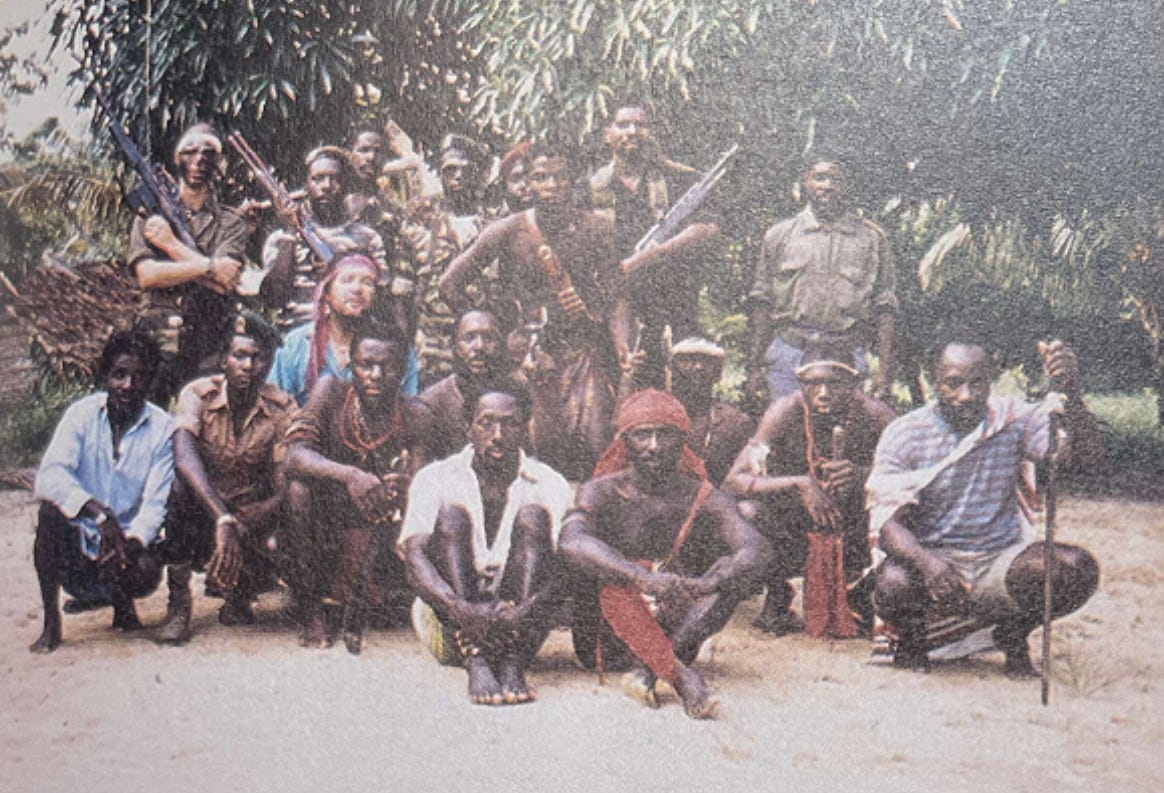
It was the spring of 1987, Dutch marines had returned to work from their holiday, leaving behind their coup plans, and Frits Hirschland was living the high life on the French Riviera. The azure waters of the Mediterranean lapped gently at the shore, visible from his hillside villa in Cannes. The man who had propelled Falco’s “Rock Me Amadeus” to the top of the American charts lounged by his infinity pool, sipping a perfectly chilled Campari. The scent of lavender and sea salt hung in the air as he basked in the warm glow of his music industry success.
But fate had other plans.
A phone call from an old diving buddy named Ruben shattered the tranquility of Hirschland’s Côte d’Azur retreat. The next day, Ruben arrived with a mysterious Frenchman named Jean Luc. Over glasses of chilled Corton Charlemagne on Frits’s sun-drenched terrace, they unveiled a proposition that would change Hirschland’s life forever.
“Jean Luc has a problem,” Ruben said, his voice low despite the privacy of their surroundings. “And that problem is called Suriname.”
What followed was a tale of civil war, shadowy intelligence operations, and a guerrilla movement in desperate need of international support. The Jungle Commando, led by a charismatic former bodyguard named Ronnie Brunswijk, was fighting against the brutal regime of Desi Bouterse. The French and Dutch governments, while officially neutral, were quietly looking for ways to influence the conflict.
They needed someone on the ground – someone with media savvy, language skills, and no official ties. Someone like Frits Hirschland.
“We are not official here,” Jean Luc explained. “This conversation never happened.”
Frits nodded, his mind reeling. The danger was real – a French agent posing as a doctor had already been taken hostage. But for Hirschland, whose Jewish family had fled to the Netherlands due to the pogroms against the Jews, the plight of the Maroon people struck a chord.1
With a mix of excitement and trepidation, Hirschland agreed. His mission: to infiltrate the Surinamese resistance movement in the Netherlands, make contact with the Jungle Commando, and become their voice to the Western world.
The plan was set in motion at Alberto’s cocktail bar in The Hague. There, amidst the clinking of glasses and murmur of patrons, Frits engineered a “chance” encounter with Ab Jüdell, a key figure in the Surinamese resistance. Jüdell, a large man with a bushy mustache and world-weary eyes, regarded Frits with suspicion at first.2
Albert Jüdell cut an imposing figure, his substantial frame matching Dr. John’s description of the enigmatic “fat man” – the alleged financier behind the Council for the Liberation of Suriname. Over dinner, Jüdell’s guest probed gently, and the pieces began to fall into place.
With a mix of pride and caution, Jüdell confirmed his connection to the resistance. He had provided more than just moral support; he had offered tangible aid, renting office space to the Council in his Rijswijk building. It was there, amidst the bustling operations of his resistance newspaper, the Weekkrant Suriname, that tragedy had struck. A botched assassination attempt on Paul Somohardjo had gone horribly awry, claiming the lives of three innocent musicians.
As Jüdell spoke, his eyes betrayed a mixture of defiance and regret. The weight of those unintended casualties seemed to hang heavy on his shoulders, a stark reminder of the violent undercurrents that swirled beneath Suriname’s struggle for liberation.3
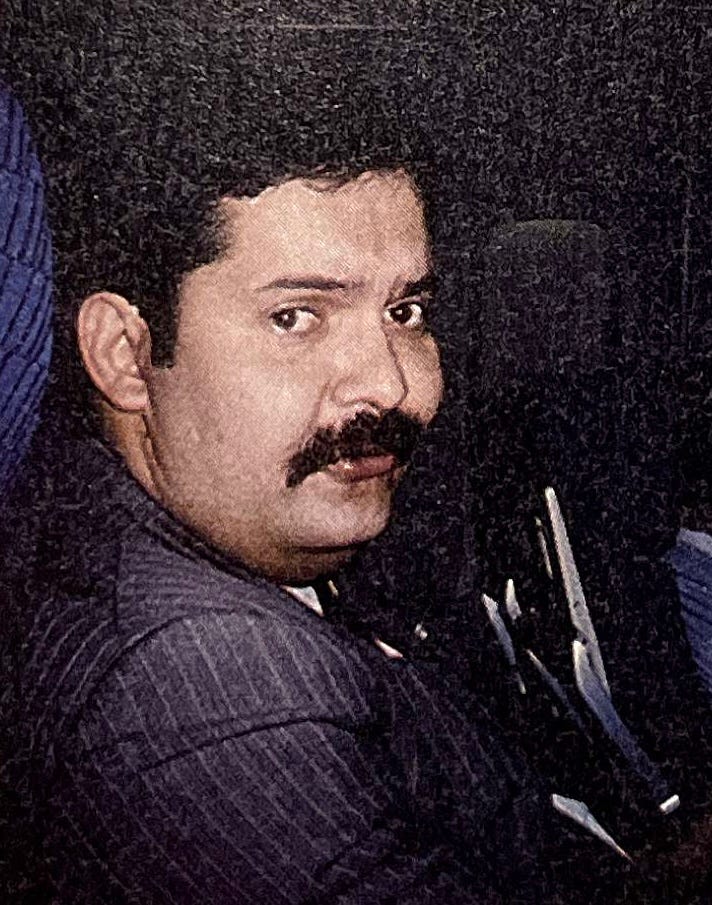
With an emotional voice, he vividly described Bouterse’s atrocities. “Our people are dying,” he said, his fist clenching on the tablecloth. “The world needs to know.”
As Frits listened, he felt the weight of responsibility settling on his shoulders. This was no game, no temporary diversion from his cushy life. People’s lives were at stake.
Within weeks, Frits found himself on a flight to Cayenne, accompanied by Ab, Johnny Kamperveen (son of one of Bouterse’s victims), and a Dutch commando captain named Werner van der Berg and his companion, America’s most notorious mercenary and clinical psychiatrist—Dr. John. As the plane cut through the night sky, Frits stared out the window, the lights of Europe giving way to the darkness of the Atlantic.
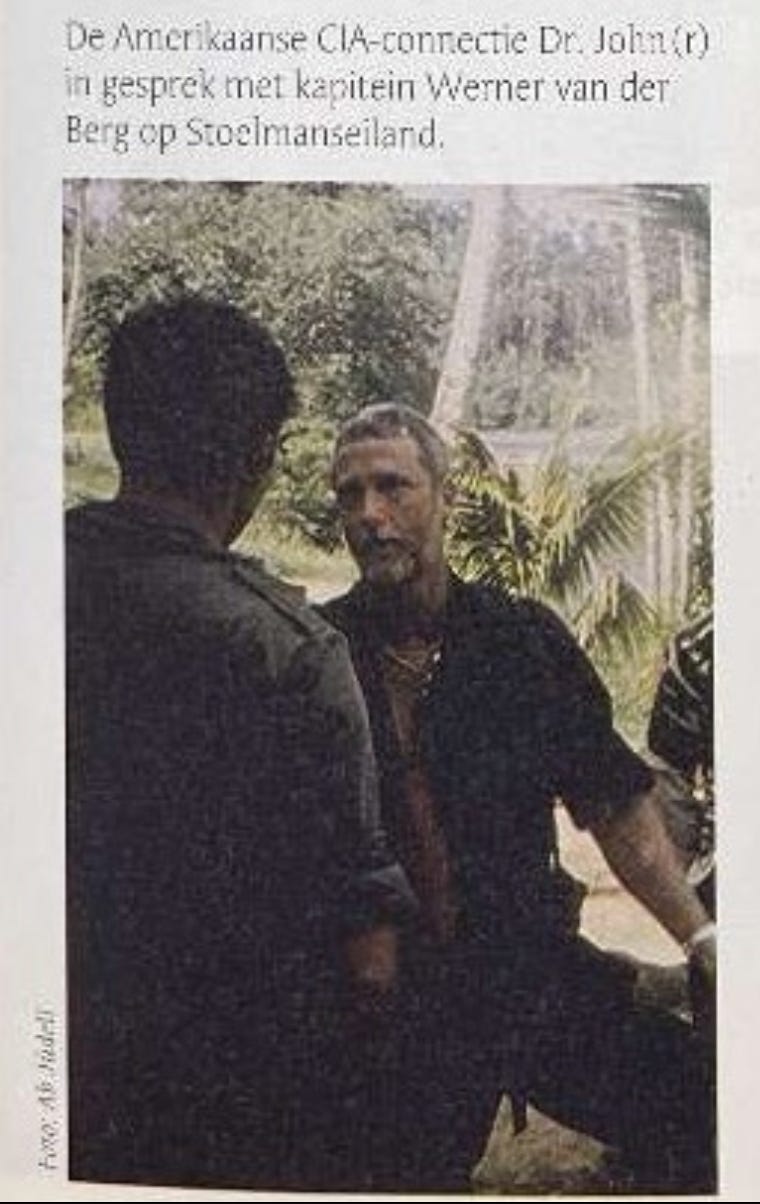
Their destination: the heart of the Surinamese jungle and a meeting with the enigmatic Ronnie Brunswijk. As Frits boarded the boat to Stoelmanseiland, an American mercenary named Dr. John introduced himself, he knew there was no turning back.4 The pop music impresario was about to trade his tailored suits for fatigues, his recording studio for a guerrilla camp deep in the South American rainforest.
Frits took a deep breath of the humid jungle air. Whatever came next, he was committed now. The real adventure was about to begin.
The streets of Paramaribo, once filled with children’s laughter, now echoed with the angry chants of thousands of students protesting against the government.5 Even the city’s largest newspaper couldn’t report on the unrest, announcing its impending closure due to a lack of newsprint and U.S. dollars.6 It felt like the whole country was holding its breath, waiting for something to break.
Into this quagmire, in the spring of 1987, Frits Hirschland’s small plane touched down on Stoelmanseiland. He wasn’t the only unconventional reporter drawn to the conflict. A crew from Soldier of Fortune magazine had recently departed for Holland to visit with Henk Chin a Sen, leaving behind a motley band of mercenaries led by Karl Finch, a man whose eyes glinted with the promise of violence and profit.7
As Frits stepped onto the muddy ground, he came face-to-face with Ronnie Brunswijk, the charismatic leader of the Jungle Commando. The rebel leader, an athletic 30-year-old with a flair for showmanship, sized up the European music producer.
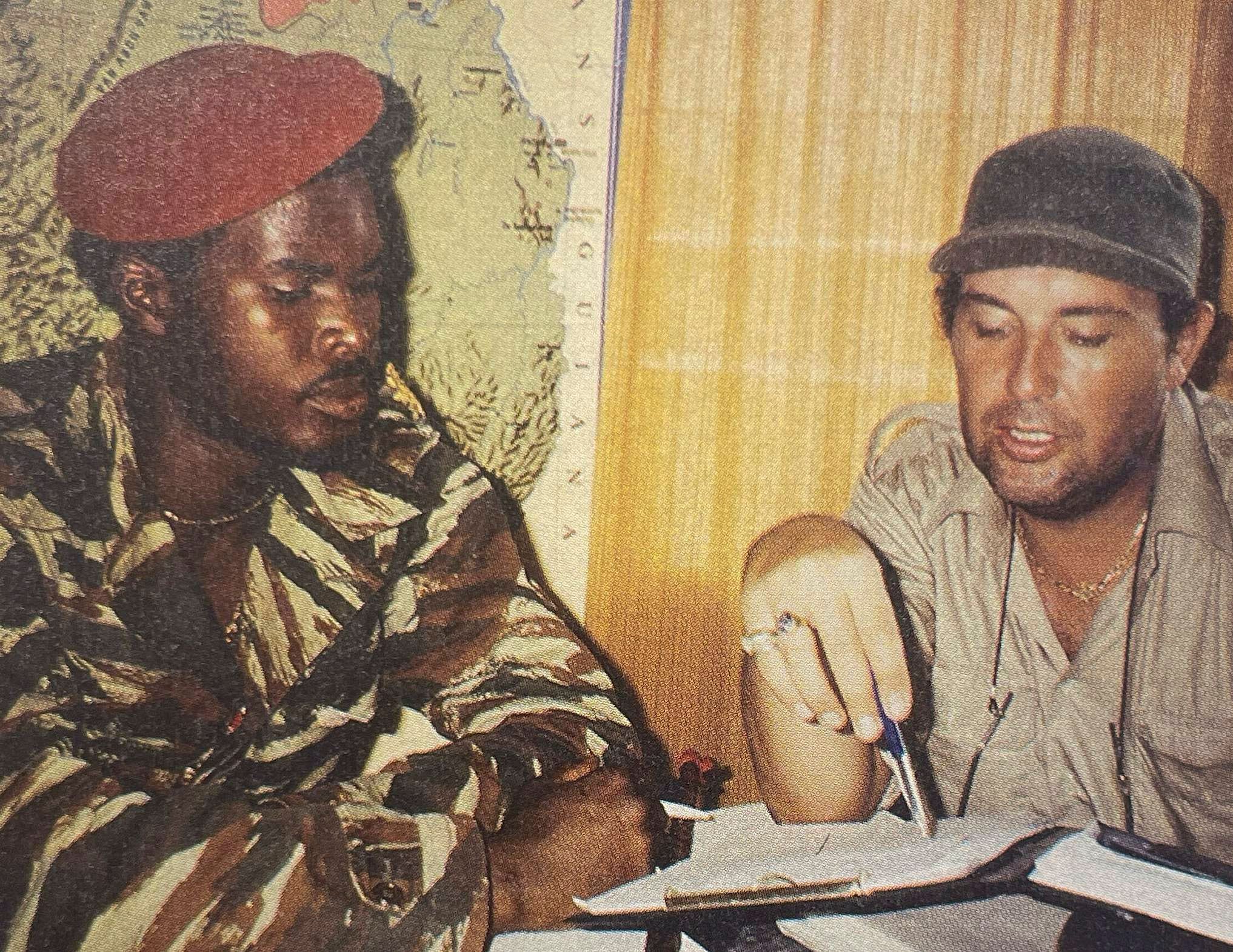
“So, you’re the man who’s going to make the world listen?” Brunswijk grinned, his teeth startlingly white against his dark skin.
Frits straightened his back. “I’ll do my best,” he replied, trying to hide his nervousness.
What followed was a whirlwind of activity. Frits found himself drafting press releases by candlelight, negotiating interviews with Penthouse magazine over crackling shortwave radio, and even securing book deals for Ronnie – a far cry from adjusting soundboards in London studios.
Meanwhile, he witnessed flurry of revolutionary activity. British mercenary Carl Finch and his mercenaries drew up plans for assaults on Albina and Fort Doedel. Whispers of napalm attacks and poisoned water supplies circulated, plans thankfully vetoed by Brunswijk himself.
The conflict attracted an eclectic cast of characters: Dr. Jack Wheeler, the “Indiana Jones of the Right,” made an appearance on the front lines, while Henk Chin A Sen, a former president of Suriname, sought funds from conservative groups in America associated with the discredited Iran-Contra affair with the help of Ray Cline, a former CIA head.891011
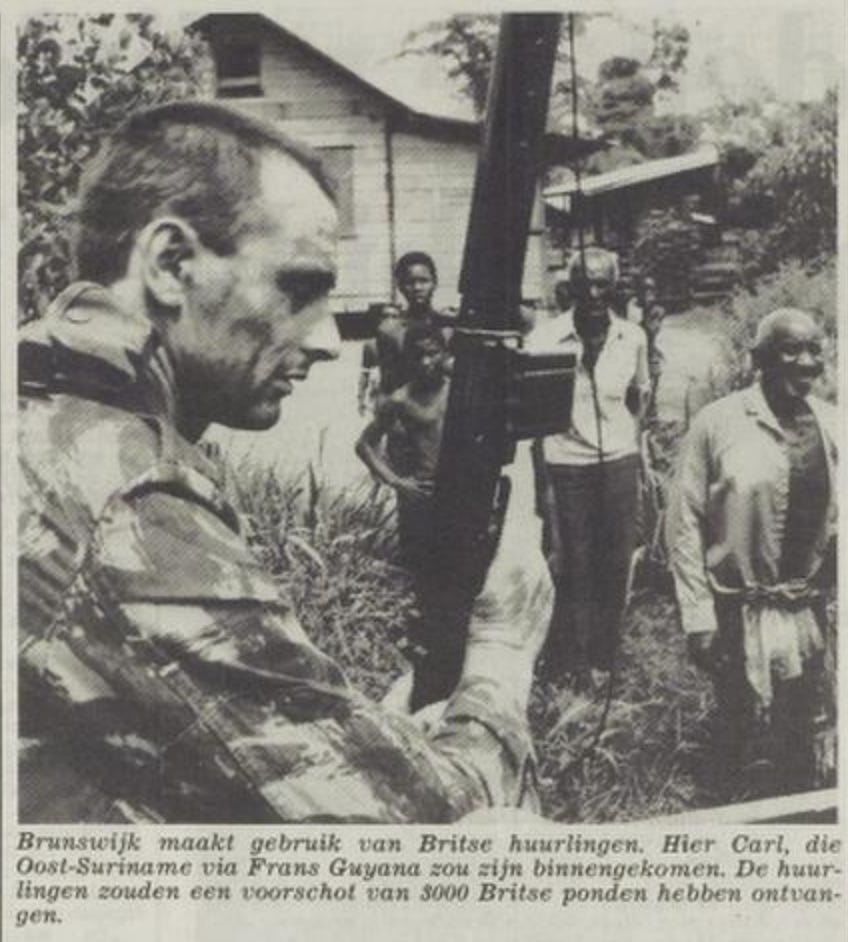
Dr. Jack “Indiana Jones of the Right” Wheeler made an appearance on the front lines days after the Jungle Commando’s assault, while Henk Chin A Sen, following his meeting with the Soldier of Fortune team, attempted to raise funds with the assistance former U.S. CIA head Ray Cline. 1213
George Baker continued his efforts to orchestrate the overthrow of the Surinamese government from a base in French Guiana. He wrote letters to CIA Director William Casey and President Reagan.14 Baker attempted to arrange a clandestine meeting in the Bahamas between Henk Chin A Sen and an American colonel named A.N. Troxel. The plan involved forming a government-in-exile that would make back-end deals with American financiers and mercenaries, some of whom had prior dealings with Oliver North’s enterprise.
Baker claimed to have secured the interest of figures like Captain Jeffrey D. Miller, allegedly connected to the US Defense Intelligence Agency, Lieutenant Colonel Norman Blaylock of the US Army Security Assistance Command and Jimmy William Turney, owner of Phantom Tours and vice president of Civilian Material Assistance. The scheme between American backers and Brunswijk’s resistence, shared elements of the Denley coup—promising $10 million in funding for a mercenary army, with the ultimate goal of overthrowing the Bouterse regime and establishing a American business-friendly government in Suriname, and a Swiss-styled banking system.1516
At the center of this storm was Desi Bouterse, reportedly hopscotching across the country by helicopter, always one step ahead of the assassin’s bullet he was sure was coming for him. For ordinary Surinamese, life had taken on a surreal quality. The road to French Guiana was closed tight, and even a trip to the movies felt like a risk.
“People feel like prisoners in the city,” a local minister, Rev. Polean, confided in the press.
Amidst the chaos, whispers of democracy floated on the wind. Elections were coming, they said, but few believed Bouterse would relinquish power easily. The Dutch dangled their promise of resumed foreign aid like a golden carrot, contingent upon successful elections and a democratic government.17
The turning point for Frits came during a tense meeting with Brunswijk’s commanders. As he outlined his media strategy, the room fell silent. Then, unexpectedly, Brunswijk stood up.
“From this moment on,” he declared, “you are my personal advisor. Commander Pencil, welcome to the Jungle Commando!”
The room erupted in applause. Frits, caught off guard, felt a mix of pride and trepidation. He had come seeking adventure and purpose but now found himself at the heart of a revolution.
That night, as Frits swung in his hammock, the sounds of the jungle all around him, he wondered what he’d gotten himself into. To him, it felt like watching a high-stakes poker game where everyone at the table was cheating. And he was right in the middle of it all, tasked with telling this complex, dangerous story to the world.
Frits Hirschland stood at his makeshift desk, sweat beading on his brow as he pored over reports that painted a grim picture of Suriname’s descent into chaos. The promise of the 1987 elections had faded like morning mist, replaced by a reality of corruption and mismanagement that seemed to worsen with each passing day.
In 1989, a bombshell landed on Frits’s desk: a report from the Netherlands that would change everything. Captain Werner van der Berg’s assessment of the Jungle Commando was scathing. Brunswijk, their charismatic leader, was dismissed as “too young, too playful, and not serious enough to lead a guerrilla movement.” The Jungle Commando itself? “An undisciplined bunch.”
Frits’s hands clenched as he read, knuckles white with tension. But the most shocking revelation was yet to come: this damning report had actually reassured The Hague. They saw it as confirmation of their strategy – keep the Jungle Commando fighting, but never let them win.
“Look at this,” Frits said, his voice tight as he pushed a document across the desk to Johan Wolly. “Another shipment from ZZG that never reached its destination.”
Johan’s face darkened as he scanned the report. “The Zeister Zendings Genootschap… more like a front for fraud these days.”
Frits nodded grimly. He’d seen firsthand how the ZZG, meant to be a lifeline of humanitarian aid, had become a conduit for widespread corruption. Food vouchers meant for the hungry were being traded for ammunition and explosives. Medical supplies vanished into thin air, only to reappear on the black market.
The human cost of this mismanagement haunted Frits. He couldn’t shake the memory of June 28, 1988 – two severely wounded men, waiting by the river for hours, no medical transport in sight. His pen had nearly torn through the paper as he wrote his report that night, rage and frustration evident in every word.
Frits had done everything in his power to expose the truth. Detailed reports to Dutch authorities, highlighting fraud, malaria outbreaks, lack of agricultural support, the need for AIDS awareness. But his pleas fell on deaf ears, lost in a labyrinth of bureaucracy and indifference.
By 1989, the situation had reached a breaking point. The Dutch Ministry of Development Cooperation cut off food aid, naively believing the Jungle Commando’s mission was complete. Brunswijk, backed into a corner, made a desperate move: the occupation of Moengo village, a bid to secure essential supplies and open new smuggling routes.
As if the situation wasn’t complicated enough, American shadows lurked at the edges of Frits’s awareness. Since 1987, CIA operatives had been making regular visits to the Jungle Commando. Yet their hands were tied by political constraints, the specter of Iran-Contra looming large over any official support.
As night fell over Moengo, Frits sat alone in his quarters, the weight of all he’d witnessed pressing down on him. The idealism that had brought him to Suriname seemed like a distant memory, replaced by a grim determination to expose the truth, no matter the cost.
Little did he know, the worst was yet to come. In the jungle’s oppressive darkness, forces were aligning that would soon plunge Suriname – and Frits himself – into a nightmare beyond imagination.
Little did he know, the worst was yet to come.
Frits Hirschland’s world was about to implode. The intricate web of covert operations and shadowy alliances he’d been navigating was about to ensnare them all.
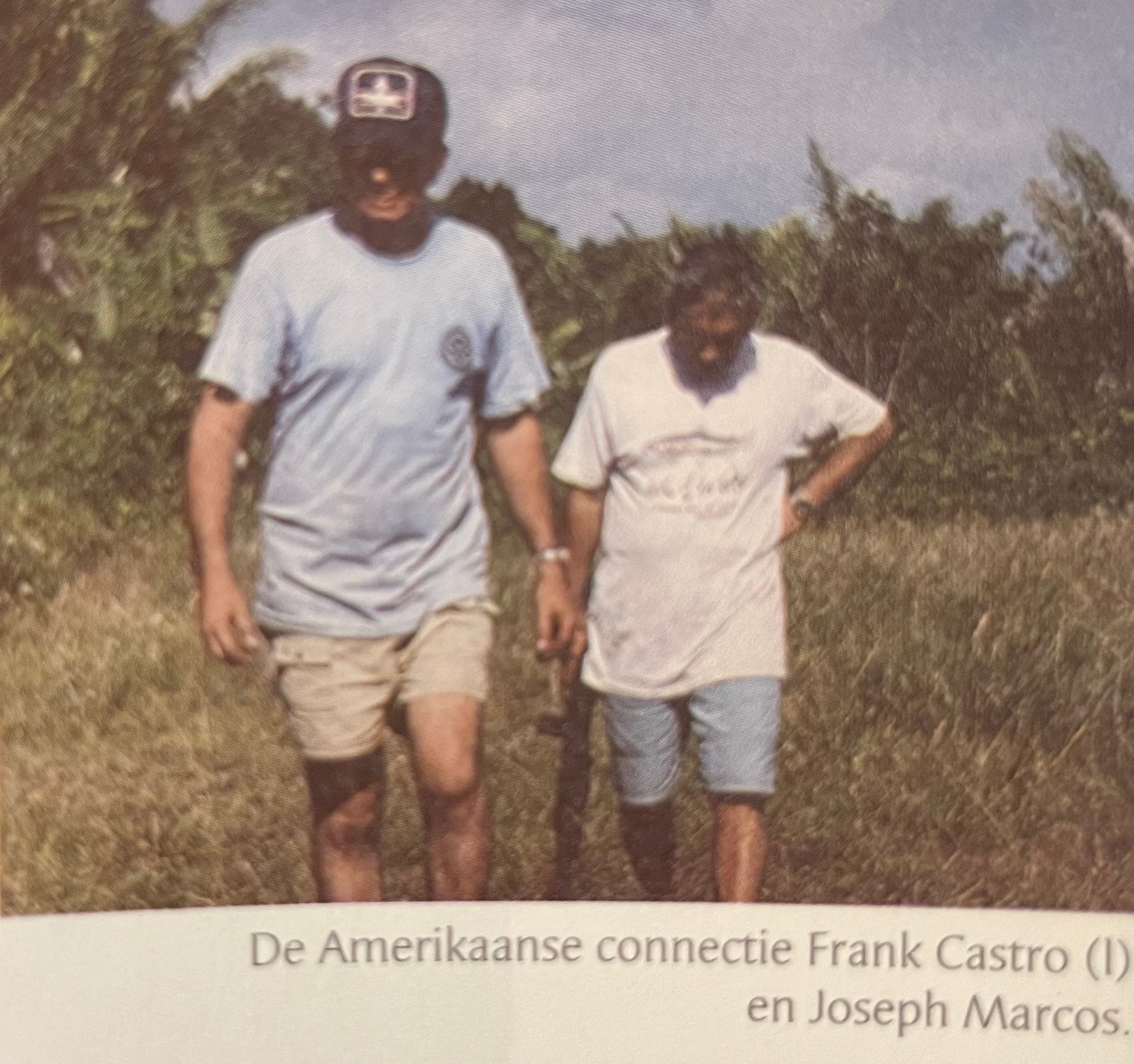
It had begun innocuously enough in August 1989, at the Royal Hotel in Santo Domingo. There, Frits had first met Frank Castro, code name “Foxtrot Charlie” – a Cuban exile with piercing eyes and CIA connections. Castro had arrived flanked by a hulking bodyguard, a Colt pistol prominently displayed on his hip. Their subsequent relationship was a delicate dance of cryptic phone calls and veiled promises.
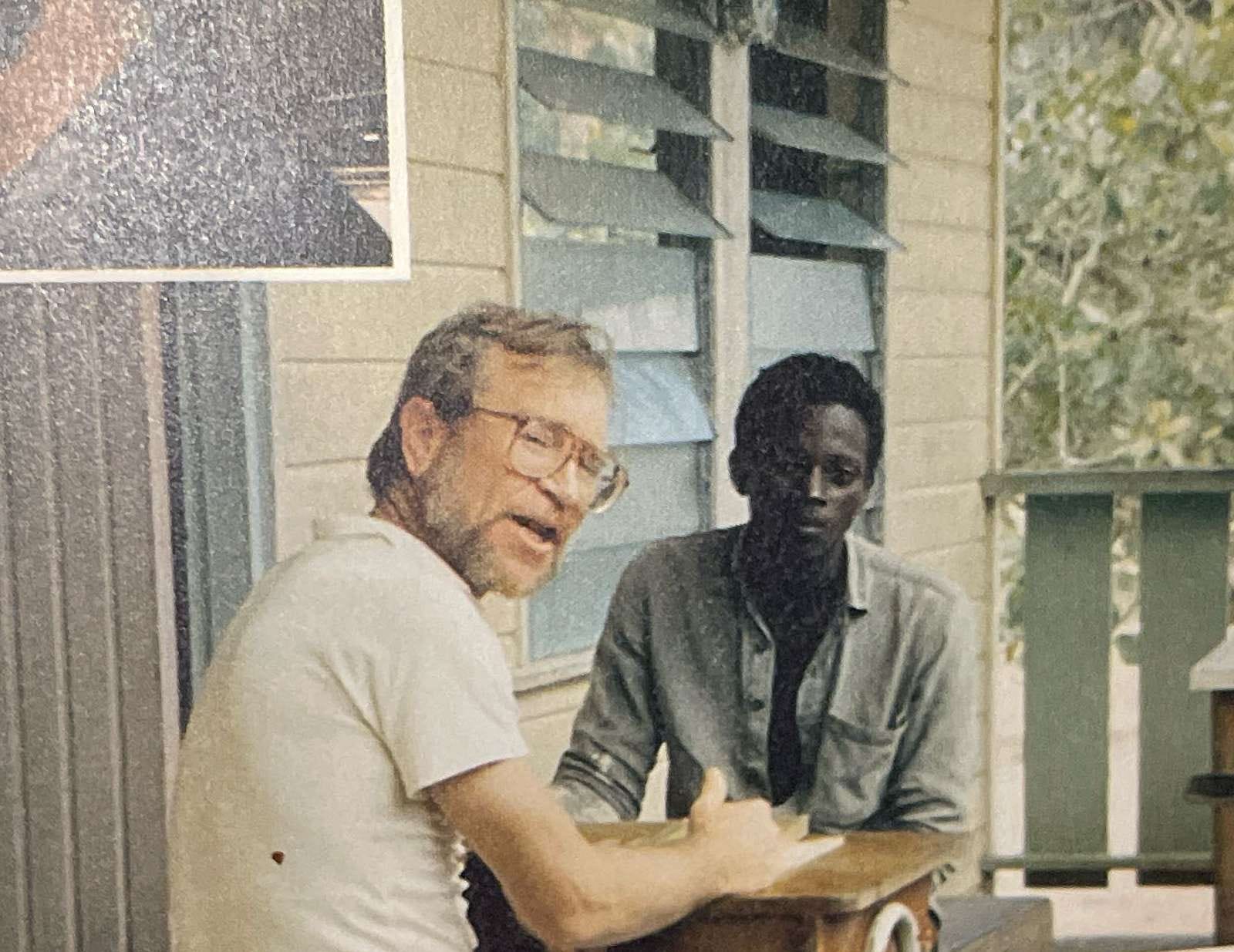
But Castro was merely one player in a vast, clandestine network. At its center sat an unlikely puppet master: retired Dutch Colonel Barend van Tussenbroek, known as “Bravo Tango.” From his base in Cayenne, French Guiana, Van Tussenbroek had woven a web that encompassed the CIA, DEA, French intelligence, and a host of shadowy organizations. Frits couldn’t shake the feeling that they were all caught in the colonel’s intricate snare.
Castro’s involvement in the Iran-Contra affair had already established his reputation as a formidable and dangerous operative. During the 1980s, Castro was deeply involved in the covert operations that aimed to support the Nicaraguan Contras against the Sandinista government. These operations were funded partly through illicit activities, including drug trafficking, to circumvent congressional restrictions on funding the Contras. Frank Castro’s ties to the CIA were well-documented; he was instrumental in setting up a secret military training camp for the Contras in Florida and arranging arms and supplies for their fight. 18192021
On March 20, 1990, that web tightened around them all. Frits had just returned to Moengo with Ronnie Brunswijk and the Jungle Commando leadership, their spirits cautiously buoyed after 17 grueling hours of peace negotiations in Paramaribo. Their optimism evaporated in an instant when Johan Wolly burst in at 5:30 PM, his face ashen.
“A plane landed at 1:00 PM,” Wolly gasped. “A thousand kilograms of cocaine.”
Frits felt the blood drain from his face. This wasn’t just a drug shipment; it was a political powder keg with a lit fuse. As he raced to Brunswijk’s bungalow, his mind reeled. They’d been set up, caught in a trap sprung by unseen hands.
Brunswijk, ever the impulsive showman, greeted the news with misplaced enthusiasm. “Frank explained it all,” he grinned, eyes gleaming. “We’ll say we intercepted it – proof that Bouterse is the real drug lord. The Americans will have to back us now!”
Frits’s heart sank. Brunswijk couldn’t see it, but this bore all the hallmarks of a CIA operation. Not to aid the Jungle Commando, but to perpetuate the conflict. Unable to interfere directly in Surinamese affairs, the Americans had found a way to derail the peace talks while maintaining plausible deniability.
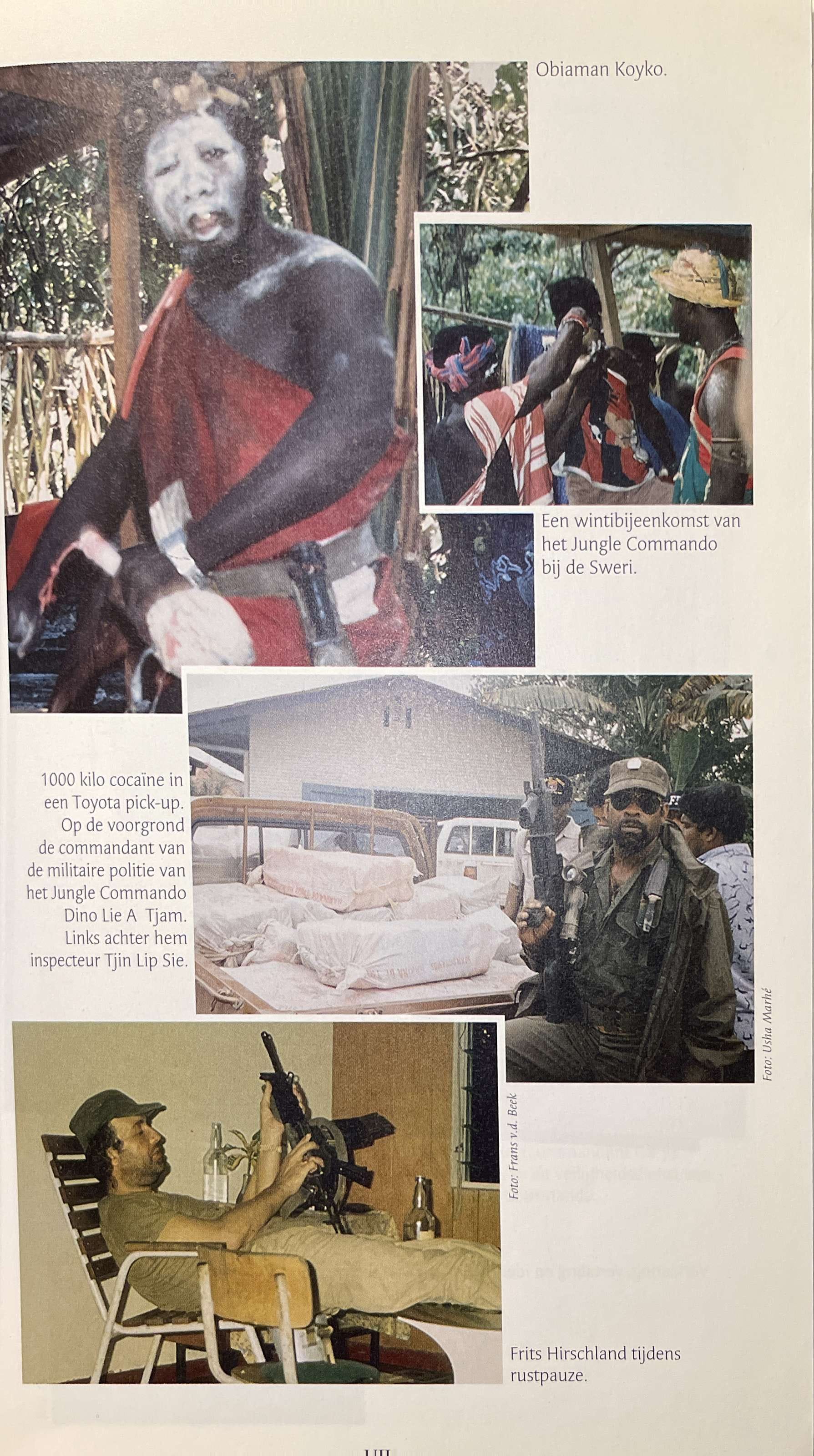
The cocaine plane was a Trojan horse, and Brunswijk was eagerly wheeling it through the gates.
As news of the landing spread through Moengo like wildfire, Frits realized they were perched atop a powder keg. Suralco workers had witnessed the plane’s arrival. Bouterse’s spies were everywhere. It was only a matter of time before the story exploded, taking their hopes for peace with it.
In that moment, Frits grasped the true nature of the game they’d unwittingly entered. This wasn’t just about Suriname’s civil war anymore. They were pawns in a Cold War chess match, with South America’s jungles as the board. Men like Castro and Van Tussenbroek were the players, moving pieces with ruthless precision.
The cocaine wasn’t meant to fund a revolution or expose Bouterse. Its purpose was far more insidious – to sow chaos, to keep Suriname destabilized and malleable to outside interests. And Frits, the former music producer turned guerrilla secretary, now found himself at the heart of an international conspiracy that threatened to consume them all.
As he left Brunswijk’s bungalow that night, the weight of responsibility settled on Frits’s shoulders. He knew his next moves would determine not just the fate of the Jungle Commando, but potentially the future of Suriname itself.
The game was afoot, and the stakes had never been higher. Frits Hirschland, “Commander Pencil,” was about to face the greatest challenge of his improbable revolutionary career.
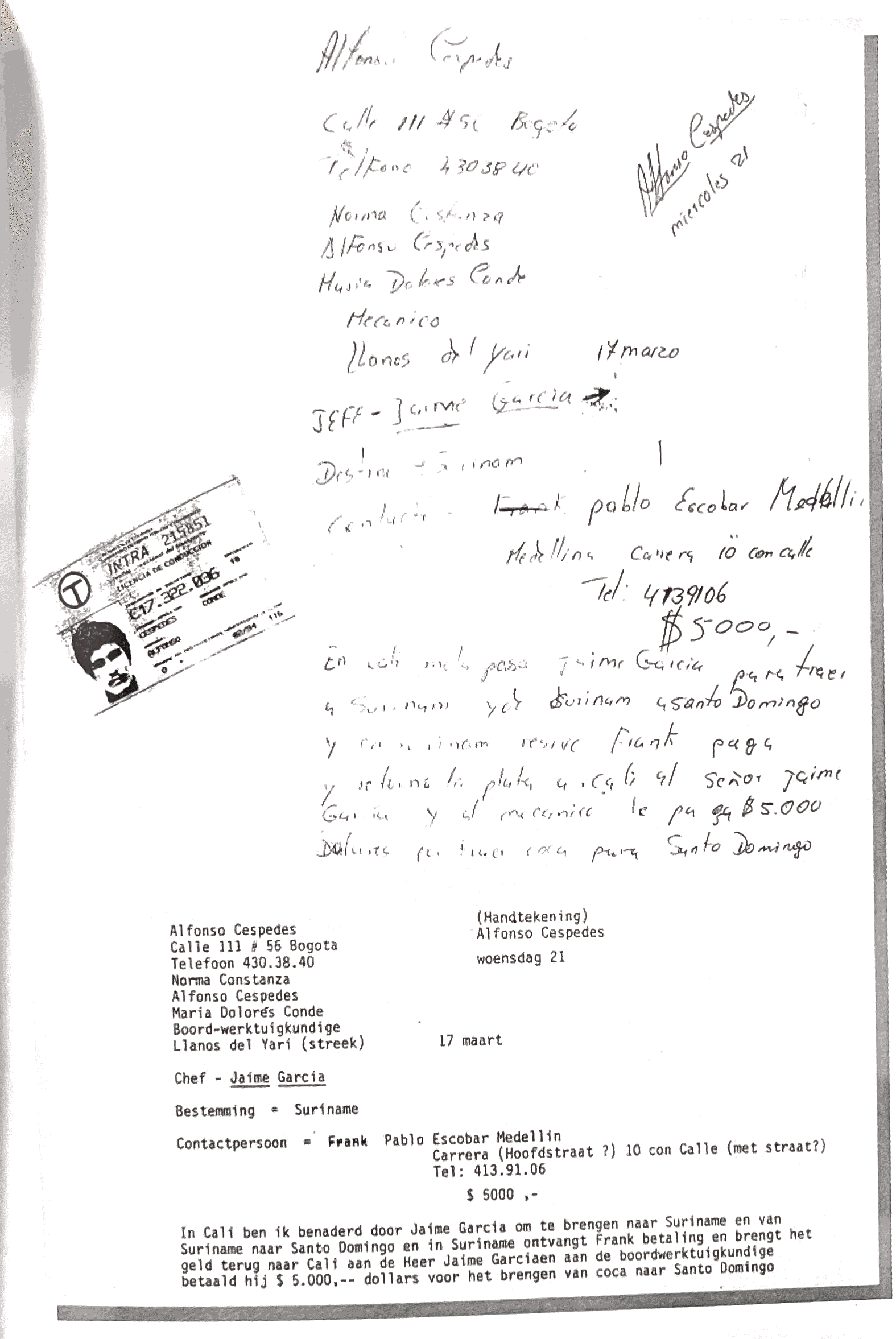
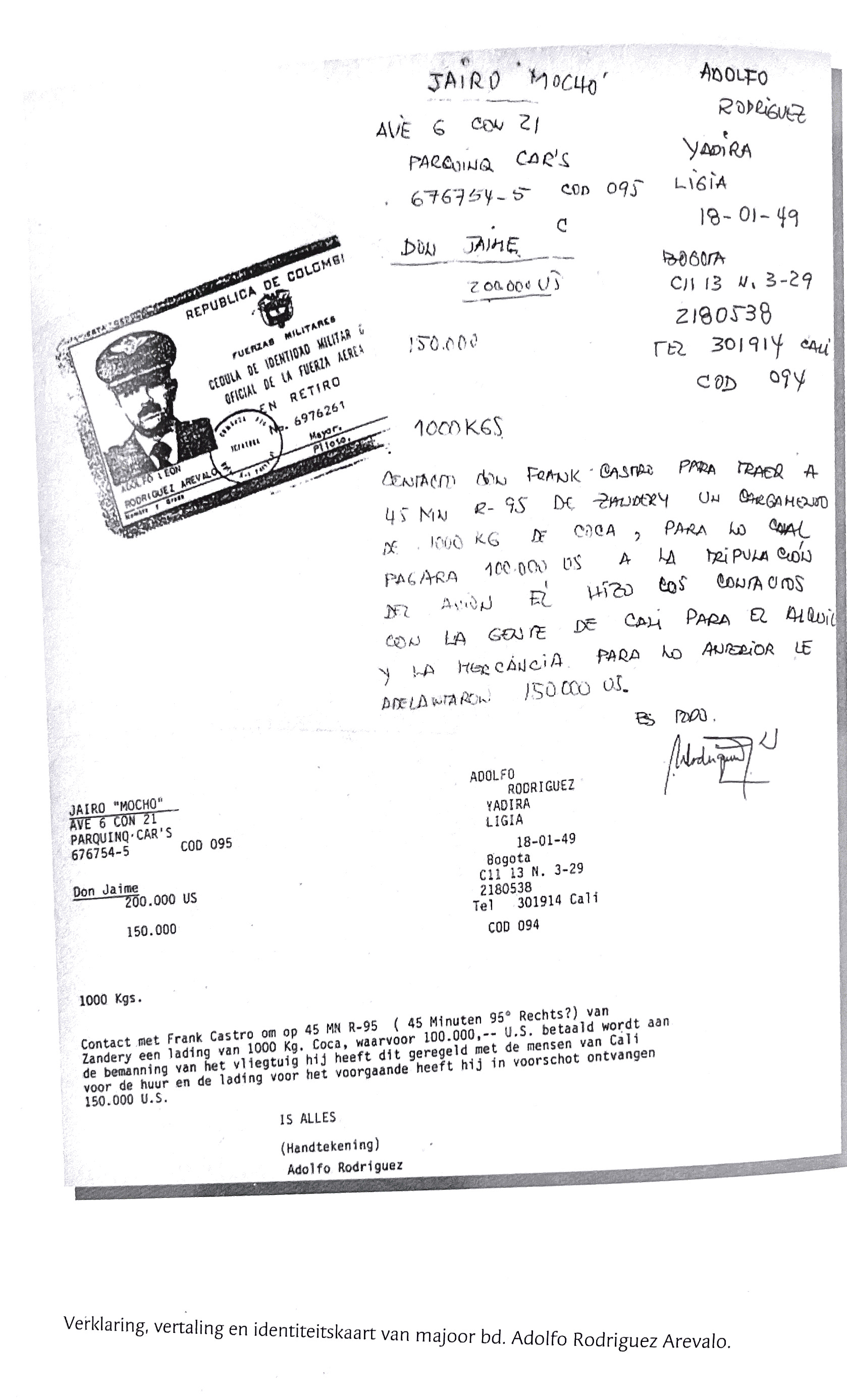
As the cocaine plane crisis unfolded, Hirschland found himself caught in a maelstrom of conflicting loyalties and dangerous political machinations. His attempts to alert the American and French authorities were met with evasion and thinly veiled threats. Lance Hopkins at the U.S. Embassy warned him not to call again, while the French military attaché remained conveniently unreachable.
The situation in Moengo grew increasingly tense. Brunswijk, initially elated at the prospect of exposing Bouterse as a drug trafficker, began to realize the gravity of their predicament. Hirschland’s warnings about the potential consequences fell on deaf ears as Brunswijk insisted on involving the Surinamese police.
On March 26, 1990, the fragile peace process imploded. Brunswijk and several key Jungle Commando leaders were arrested in Paramaribo. In a tragic turn of events, two of Brunswijk’s bodyguards – Stuart and Doetje – were brutally murdered by Bouterse’s men.
Left behind in Moengo, Hirschland found himself thrust into the role of crisis manager. For three harrowing days, he maintained a tenuous grip on the situation, coordinating with the remaining Jungle Commando leaders and feeding carefully crafted misinformation to the press to keep pressure on Bouterse’s regime.
When Brunswijk and the other leaders were finally released on March 28, Hirschland’s relief was tempered by the realization that the cocaine plane incident had irrevocably altered the landscape of the conflict. The peace process lay in tatters, and the Jungle Commando’s credibility had been severely damaged.
In the weeks that followed, Hirschland worked tirelessly to salvage what he could from the wreckage. He arranged for Eddy Jozefzoon to smuggle copies of the damning documents about the cocaine shipment to the Dutch Ministry of Foreign Affairs, hoping to expose the CIA’s role in the affair.
Meanwhile, Bouterse orchestrated an ambush on Jungle Commando forces, further destabilizing the region. The ambush was a calculated move to crush the opposition, and it resulted in significant casualties. This brutal tactic demonstrated Bouterse’s determination to retain power at any cost and further complicated the fragile peace process.
As the conflict dragged on, the international community became increasingly involved. The United States, despite its covert operations, publicly condemned the violence. The French intelligence agency, aware of the delicate balance of power, continued to monitor the situation closely, providing discreet support where possible.
Hirschland was also acutely aware of the broader geopolitical implications. The Cold War backdrop meant that every move in Suriname was scrutinized and manipulated by larger powers. The jungle of Suriname became a microcosm of global tensions, with the local population caught in the crossfire.
In September 1991, Hirschland made the difficult decision to leave Suriname. He returned to the Netherlands, carrying with him a wealth of classified information and a burning desire to expose the truth. His book, “Dossier Moengo,” published in 1991, sent shockwaves through Dutch political circles but ultimately failed to bring about significant change in policy towards Suriname.
The Surinamese civil war would drag on until 1992, when a peace agreement was finally reached. But the scars of the conflict, and the shadows of foreign manipulation, would continue to haunt the country for years to come.
For Hirschland, the Surinamese adventure marked the end of his involvement in international politics. He returned to the business world, opening a luxury handbag shop in The Hague in 1997. But he never forgot the lessons learned in the jungles of South America, nor the people he had left behind.
On January 3, 1999, Frits Hirschland was found dead in Amsterdam’s Amstel Hotel. The official cause was listed as suicide, but questions lingered about the circumstances of his death. He was 50 years old.
Hirschland’s journey from music producer to guerrilla secretary to whistleblower remains a testament to the complex and often morally ambiguous nature of Cold War politics in the developing world. His story serves as a stark reminder of the human cost of geopolitical maneuvering, and the challenges faced by those who dare to speak truth to power
Links
Victoria Hirschland Hess. “From Records to Revolution | Hirschland.” Hirschland: A blog for the Hirschland family of Essen and its descendants, March 6, 2011. https://hirschland.com/2012/02/28/from-records-to-revolution/.
Ab Jüdell is described by Frits as ‘a large, hefty man with a big mustache.’ It is possible that he is the ‘Fat Man‘ that Dr. John talks about meeting in Belgium who distrusted Americans. He before introducing Frits to the Council for the Liberation of Suriname, he tells him, “Those so-called Surinamese patriots here just keep bickering. The work needs to be done. If no one else does it, I will.”
“The Murders of Rijswijk – Het Geheim van Rijswijk.” Accessed July 11, 2024. https://www.geheimvanrijswijk.nl/english/.
Frits Hirschland. Dossier Moengo “290 UUR.” The Hague: Cast Publishing, n.d. 65.
The Palm Beach Post. “Protests in Suriname.” February 20, 1987. https://www.newspapers.com/article/the-palm-beach-post-protests-in-suriname/127398014/
Ruggenberg, Rob. “Jungle Commando Op Vredesmissie.” Leidse Courant, March 28, 1987. Historische Kranten, Erfgoed Leiden en Omstreken. https://leiden.courant.nu/issue/LLC/1987-03-28/edition/0/page/9.
Chauvel, Patrick. “Mercs In Surinam: Brits Organize Jungle Army.” Soldier of Fortune Magazine, 1987. Internet Archive. http://archive.org/details/soldieroffortunemagazine.
This report by Rob Ruggenberg in “Aanval Met Napalm Op Albina Verwacht” remains one of the closest things to a public admission in the press of direct ties between the Jungle Commandos, the Council for the Liberation of Suriname and Project Democracy.
Brown, Robert K. “A Slow Boat To A Slow War.” Soldier of Fortune Magazine, 1987. https://archive.org/details/soldier-of-fortune-1987-08-ocr/page/35/mode/2up?q=Slow+Boat
The Sault Star. “Attack on Military Base Repelled.” March 19, 1987. https://www.newspapers.com/article/the-sault-star-attack-on-military-base-r/127400532/
Ruggenberg, Rob. “HUURLINGEN BRUNSWIJK WILLEN IN DE AANVAL.” Leidse Courant, March 26, 1987. Historische Kranten, Erfgoed Leiden en Omstreken. https://leiden.courant.nu/issue/LLC/1987-03-26/edition/0/page/1.
Leidse Courant | 30 maart 1987 | pagina 5. “Brunswijk Kan Allen Hopen []Og Wonder.” March 30, 1987. Historische Kranten, Erfgoed Leiden en Omstreken. https://leiden.courant.nu/issue/LLC/1987-03-30/edition/0/page/5.
Ruggenberg, Rob. “Aanval Met Napalm Op Albina Verwacht.” Leidse Courant, March 26, 1987. Historische Kranten, Erfgoed Leiden en Omstreken. https://leiden.courant.nu/issue/LLC/1987-03-26/edition/0/page/7.
Het Parool. “Justitie Treedt Niet Op Tegen Ronselaar.” November 4, 1986. https://www.delpher.nl/nl/kranten/view?query=%22George+Baker%22+Suriname&coll=ddd&resultsidentifier=ABCDDD:010832574:mpeg21:a0057&page=1&identifier=ABCDDD:010832574:mpeg21:a0121&cql%5B%5D=%28date+_gte_+%2201-01-1979%22%29&cql%5B%5D=%28date+_lte_+%2201-01-2015%22%29.
Hartog, Dick. “Amerikanen Wilden Een Coup Tegen Bouterse Financieren.” Het Vrije Volk: Democratisch-Socialistisch Dagblad. Gevonden in Delpher. Accessed July 17, 2024. https://resolver.kb.nl/resolve?urn=ddd:010962491:mpeg21:p005.
Hartog, Dick. “Surinamese Resistance Misses ‘Deal.’” Het Vrije Volk: Democratisch-Socialistisch Dagblad. Gevonden in Delpher. Accessed July 17, 2024. https://resolver.kb.nl/resolve?urn=ddd:010962491:mpeg21:p005.
Leidse Courant. “Alsof in Suriname de Leeuw Niet Meer Gevaarlijk Is.” May 7, 1987. Historische Kranten, Erfgoed Leiden en Omstreken. https://leiden.courant.nu/issue/LLC/1987-05-07/edition/0/page/5.
Corcoran, Patrick. “New Shows Examine CIA’s Past Role in Latin America’s Drug Trade.” InSight Crime, August 22, 2017. http://insightcrime.org/news/analysis/new-shows-examine-cia-past-in-latin-america-drug-trade/.
Spartacus Educational. “Eulalio Francisco Castro Paz (Frank Castro).” Accessed July 24, 2023. https://spartacus-educational.com/JFKcastroFr.htm.
Spartacus Educational. “Robert W. Owen.” Accessed November 17, 2023. https://spartacus-educational.com/JFKowenR.htm.
According to Frits on Page 34, “Frank Castro’s right-hand man was Joseph Marcos. He was the one who maintained contact with the DEA’s narcotics agent McGrooder in Miami. Using a powerful transmitter located on Stoelmanseiland, and supervised by Brunswijk, Marcos, when visiting East Suriname, maintained radio contact with, among others, Bas Van Tussenbroek (code name Bravo Tango) in Cayenne, who used the transmitter of an agent from the SDECE (French foreign documentation and counter-espionage secret service, nicknamed ‘La Piscine’) for this purpose.
Joseph Marcos also had direct radio contact with the SDECE agent (code name ‘the doctor’) and with Frank Castro (code name Foxtrot Charlie), who had transmitters both at his parents’ place in Miami and in Santo Domingo.
Through the transmitters in Santo Domingo and Miami, Frank Castro also maintained radio contact with Van Tussenbroek and the SDECE agent. In 1986, at the beginning of the war, the French SDECE was physically present in the Mongotapoe area of East Suriname through an agent who initially presented himself as a doctor (he was a doctor in Cayenne in his daily life). He was unmasked as a spy by one of the Jungle Commando commanders and arrested.
After his arrest, he told Brunswijk that he worked for the French intelligence service and promised to send weapons and ammunition if Brunswijk would release him. However, after his release, the promised delivery never arrived.
The promised weapons and ammunition never arrived from the French agent, but he did provide the Jungle Commando with dynamite and fuses (detonators) several times, which were delivered by him to Abolo in Saint Laurent. It appears that the French agent was not allowed by his superiors to enter the area, fearing another hostage situation. Consequently, all contacts went solely through Colonel Van Tussenbroek.”
Date:
September 2, 2025