The Insider (Part II): The Perfect Witness
How Belgium’s Most Notorious Killers Were Trained for a Suriname Coup (allegedly)
Dec 26, 2024
Last time, we delved into the enigmatic figure of Peter van Haperen, a self-proclaimed Dutch intelligence operative whose story weaves through some of the Cold War’s most shadowy corners. From his early days as a long-haired karate instructor and sex-club bouncer to his dramatic 2009 testimony in Paramaribo about alleged coup attempts in Suriname, van Haperen’s narrative challenges easy categorization.
Through his various, alleged online personas—including the mysterious “Anansi9” and “Insider”—he painted a complex picture of covert operations involving Oliver North, Dutch intelligence, and a secretive paramilitary network known as “De Dienst.” While official sources, including the Dutch Ministry of Defense, deny any connection to van Haperen, his detailed accounts of operations and training protocols, particularly the “Pirate, Mammoth, Sniper” technique, suggest an insider’s knowledge that continues to intrigue and perplex investigators.
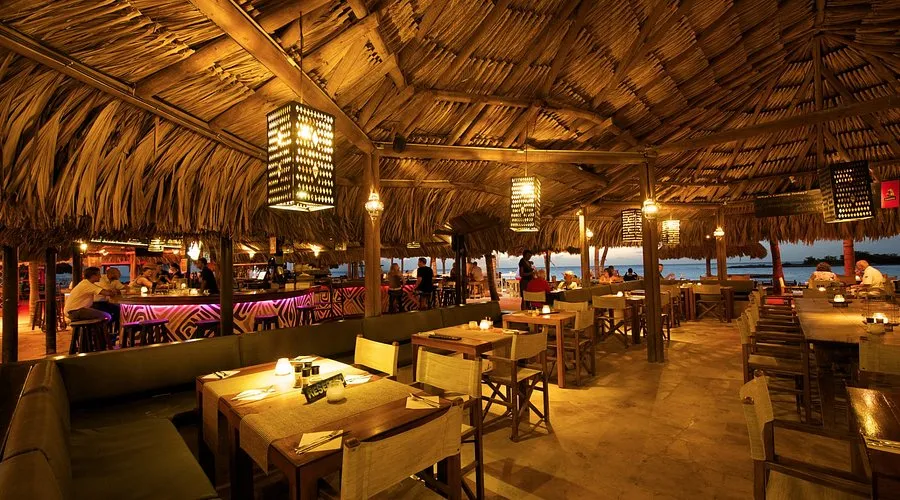
Today, we continue our investigation into van Haperen’s claims by following an unexpected thread that emerged in June 2011, when three Belgian police officers sat down for what seemed like a routine conversation in a humid Café Zanzibar opposite Hotel Torarica in Paramaribo. Their casual chat with our curious Dutch expatriate would unexpectedly connect one of Europe’s most notorious unsolved crime sprees to our in covert operations in South America.
The Brabant Killers: Belgium’s Deadliest Cold Case
Between 1981 and 1985, Belgium was gripped by a series of brutal armed robberies now known as the Brabant Killings. The crimes left an indelible mark on the nation’s cultural psyche, comparable to the impact of the JFK assassination in America. Like that event, the Brabant Killings have inspired a web of conspiracy theories, countless books, and a surge of podcasts in Belgium and the U.S., each seeking to unravel the mystery.
What made these crimes unique wasn’t just their violence – though they would claim 28 lives and leave 40 wounded – but their peculiar pattern. The gang primarily targeted supermarkets rather than banks, often stealing trivial amounts of money and oddly specific items: wine, coffee, tea. They wielded standard, NATO-issued FN FAL assault rifles and police-issue GP pistols with military precision, and demonstrated intimate knowledge of police response protocols, suggesting their brutal attacks were motivated by something other than robbery.
The gang consisted of three main figures who acquired near-mythical status in Belgian culture. “The Giant” – their apparent leader – stood around two meters tall (6’6″), lean but commanding. Witness descriptions varied wildly: sometimes he had blonde hair, sometimes dark, sometimes chestnut brown with a mustache. But his height remained the constant feature. “The Killer” – shorter but more aggressive – earned his nickname through apparent pleasure in violence, often shooting without hesitation or provocation. “The Old Man” – usually their driver – appeared to be in his fifties, gruff and strong despite his age.
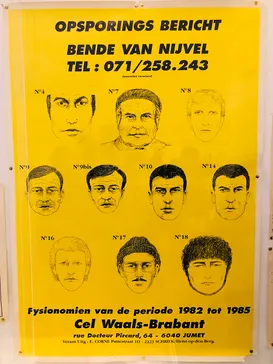
Their methods showed disturbing sophistication. In contrast to typical armed robbers who aimed to avoid police contact, the Brabant gang would often wait for authorities to arrive before engaging in precise shootouts and making coordinated escapes. They used military tactics against military police, particularly in confrontations with the gendarmerie – Belgium’s paramilitary police force. Their victims were often bound using distinctive techniques that suggested professional training – techniques that would later feature prominently in van Haperen’s testimony.
The murder of Jose Vanden Eynde in December 1982 particularly showcased their methods. The 72-year-old caretaker of Beersel Castle was found bound with distinctive ligatures, shot seven times in the head with five rounds grouped near his ear. The precision of both the binding and the shooting suggested military or police training. Adding to the mystery, Vanden Eynde had fought for Franco in the Spanish Civil War and maintained connections to far-right groups – the kind of background that would later feature in theories about targeted killings disguised as robberies.
The gang’s sophistication extended to their evidence management. They regularly burned their getaway vehicles, destroying forensic evidence. They used multiple stolen cars, showing expertise in vehicle theft and modification. When they hit the Wavre weapons shop in September 1982, they knew exactly what weapons and ammunition they wanted, suggesting advance intelligence. Despite one of the largest criminal investigations in Belgian history – including the examination of 2,748 fingerprints, 593 DNA samples, and the exhumation of 40 bodies – the case remains unsolved.
A Handler Emerges
That June evening in Paramaribo, as conversation turned to the Brabant Killers, van Haperen demonstrated detailed knowledge of specific binding techniques used in the murders—techniques that had never been made public. This “perpetrator knowledge” led to his formal interrogation on October 13, 2011, at the Zaandijk police station in the Netherlands. But what makes this interrogation crucial isn’t what was asked—it’s what wasn’t.
When Commissioner Eddy Vos recognized van Haperen possessed insider knowledge about crime scene details, van Haperen explained he had taught these techniques during coup training in Suriname. Yet the commissioner notably failed to pursue any questions about when and where this training occurred, who participated, or its purpose. The commissioner’s studied lack of interest would prove significant.
Van Haperen wasn’t a new figure in this story. Two years earlier, in 2009, he had emerged in Paramaribo to testify about his alleged role in a 1982 counter-coup attempt.1 At first glance, he seemed an unlikely source: a Dutch ex-soldier with a questionable past, including allegations of fraud in Spain. The Dutch Defense Ministry quickly denounced him, claiming no record of his service. However, this denial stands in stark contrast to earlier reports in the Dutch press detailing Van Haperen’s infiltration of the anti-Bouterse regime as a secret agent on behalf of Dutch intelligence. 2 These conflicting narratives raise questions about the extent of his ties to Dutch intelligence and their possible motives for disavowing him publicly.3
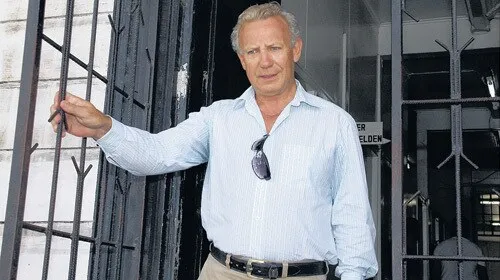
But van Haperen didn’t begin with broad claims about covert operations. Instead, he provided specific, verifiable details: his commanding officers in Section 2 TRIS (Major Bavinck and Captain Dicky Mekkering), surveillance operations targeting Polish fishermen in Suriname, involvement in the 1969 VOLMEK teachers’ strike that brought down Jopie Pengel’s cabinet. These weren’t the tactics of someone spinning tales—these were testable claims that could be easily verified or disproven, and newspapers in the 1980’s as seemed to confirm such facts as the 1969 plot and his service as a corporal in Suriname. 45
In November 2012, frustrated by the Belgian authorities’ apparent unwillingness to investigate, van Haperen wrote an extraordinary 25-page letter to Investigating Judge Martine Michel. The document laid out a complex web of connections between European intelligence networks and Project Democracy operations, centered around a figure whose very existence seemed almost too perfect: Count Carl Magnus Torsten Armfelt.
The Spymaster’s Shadow: Carl Armfelt and Project Democracy
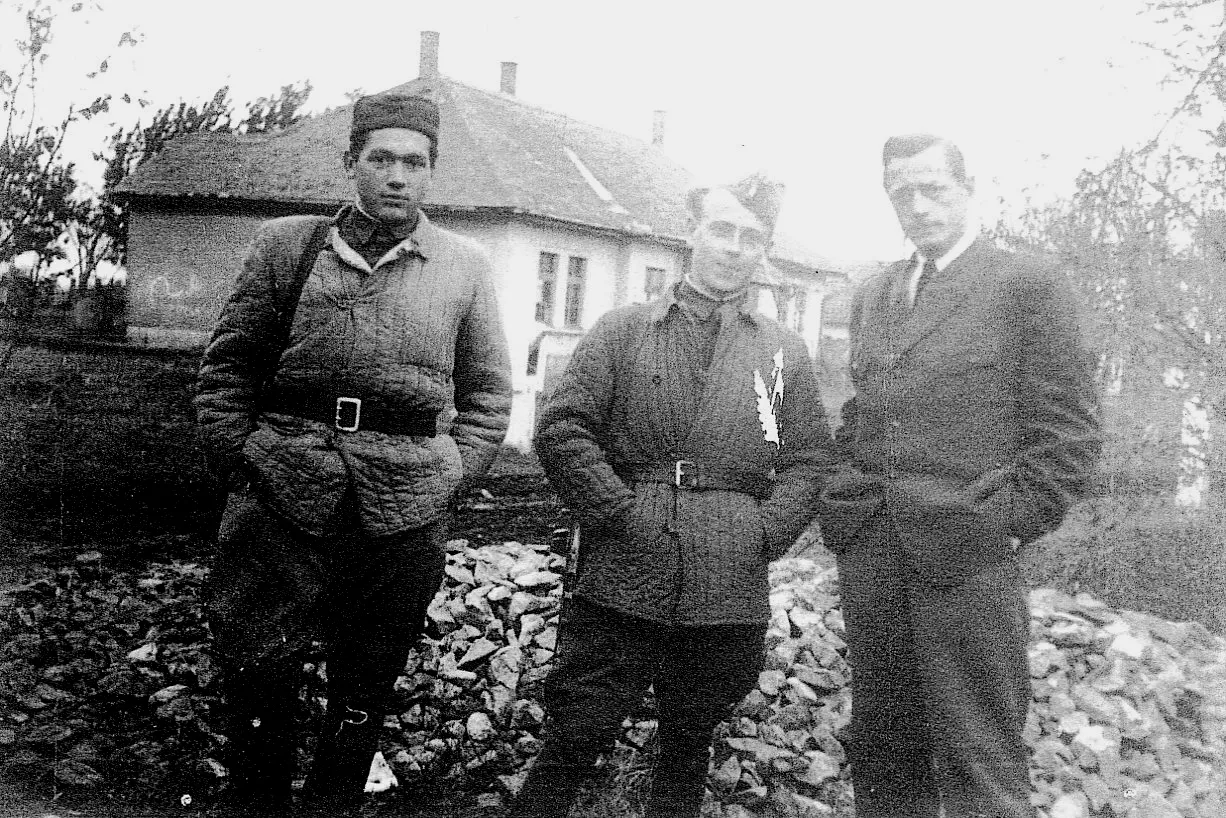
According to van Haperen, Armfelt was the hidden architect of Project Democracy’s European operations, coordinating between intelligence services, managing weapons procurement, and orchestrating coup attempts. It seemed, at first glance, like the stuff of spy novels. But Carl Armfelt was very real indeed.
Born in New York on January 1, 1918, Carl Magnus Torsten Armfelt emerged from a complex web of Nordic aristocracy. His father, Carl Magnus Mauritz, had served as Finland’s attaché in Copenhagen and later as director for Portable Pump Corporation in New York.6 His Swedish mother came from a prominent Stockholm family, creating a heritage that straddled both sides of the Baltic.
Armfelt’s early life was marked by both privilege and persecution. By 1937, military records show him stationed at Luke Field in Honolulu as a private in the Fourth Observation Squadron. However, his service took an unexpected turn in December 1941 when, despite his military service, he was interned as a suspected Nazi sympathizer based largely on hearsay evidence from FBI agent George E. Allen.7 The irony of this accusation—particularly given his later emergence as a fierce anti-communist—offers a window into the complex forces that would shape his future path.
By age 38, Armfelt had transformed this early experience of government suspicion into a position of significant influence, operating an independent intelligence network that drew concern from CIA Director Allen Dulles himself. When van Haperen claims Armfelt activated European networks for the Suriname operation in 1981, Armfelt had already established himself as a key figure in anti-communist circles, founding both the World Anti-Communist League and European Anti-Communist League, cultivating relationships with figures like Richard Nixon and George H.W. Bush, and moving easily through the highest levels of European society, even sharing golf games with King Baudouin of Belgium.
Armfelt’s Role in Project Democracy
Armfelt’s work with Project Democracy highlights a pattern of collaboration that connects to Oliver North’s operations in Central America. According to van Heperen,8 While North was spearheading efforts to arm the Contras, Armfelt was activating European networks that facilitated arms procurement and strategic destabilizations. The connection between these efforts lies in shared intermediaries, overlapping logistics, and a unified ideological objective: the suppression of communist influence.
- Shared Frameworks: Both Armfelt and North relied on clandestine funding mechanisms, including shell companies and black-market arms deals. European arms brokers like Manucher Ghorbanifar, known for his involvement in Iran-Contra, moved weapons across continents under the cover of overlapping covert programs.
- Strategic Synchronization: The weapons thefts connected to the Brabant Killers in Belgium (1981-1982), involving NATO-grade firearms, mirrored similar procurement efforts for the Contras in Nicaragua. Van Haperen’s timeline of coup preparations in Suriname dovetails with North’s expansion of supply lines to Central America. Both initiatives required decentralized networks like those Armfelt built.
- Intelligence Intersections: Figures like William Casey and Carl Armfelt moved in the same circles as Oliver North. The creation of overlapping paramilitary networks suggests that Armfelt’s European efforts indirectly supported or paralleled North’s American operations.
Armfelt’s European Network: Connecting Belgium to Suriname
Armfelt’s role becomes even more significant when tied to the Belgian connection and the Brabant Killers. Van Haperen’s testimony that Belgian operatives, including Madani Bouhouche, were involved in training for Surinamese coup attempts points to a deliberate convergence of European criminal and intelligence networks. These Belgian operatives, implicated in the Brabant Killings, allegedly sourced weapons and training from the same infrastructure that Armfelt had cultivated.
The thefts at Etterbeek barracks and Diane unit, coupled with coup preparations following the failed Rambocus operation, showcase a disturbing overlap:
- Weapons Flow: NATO-grade arms stolen in Belgium were not only linked to Brabant operations but also intended for use in Suriname. Armfelt’s network facilitated this dual-use approach, creating an interchangeable system for destabilization.
- Training Grounds: Training facilities near Wavre, used for coup operatives, were connected to both Brabant criminal operations and European covert action programs. Armfelt’s involvement in coordinating these efforts further integrates his role into broader Cold War machinations.
By Matthew Smith: Operation Suriname is a reader-supported publication. To receive new posts and support my work, consider becoming a free or paid subscriber.
Controlled Destabilization: Armfelt and North’s Shared Playbook
The methods employed by Armfelt in Europe and North in Central America reveal striking parallels. Both relied on shadowy actors who could operate outside conventional military and diplomatic frameworks. Armfelt’s use of Belgian operatives and van Haperen’s testimony about specific binding techniques reflect a shared reliance on paramilitary precision and plausible deniability.
Moreover, van Haperen’s claim that Armfelt activated European networks after Bouterse’s 1981 visit to Cuba suggests a synchronization with North’s push to “open the southern front” in Central America. The acceleration of coup preparations following Rambocus’s failure mirrors the pressure North faced to deliver results in Nicaragua. The larger geopolitical strategy tied these seemingly disparate operations together under the umbrella of Project Democracy.
Carl Armfelt’s shadow looms large over both van Haperen’s testimony and the broader narrative of Project Democracy. His European operations, anchored by figures like Bouhouche and networks spanning Belgium to Suriname, showcase the intersection of intelligence, criminality, and ideology. This overlap directly connects Armfelt to the frameworks employed by Oliver North and others, revealing the global dimensions of Cold War covert operations.
By situating Armfelt within this context, we not only see the interconnectedness of these networks but also gain insight into the mechanisms of control and narrative construction that shaped Cold War history. Armfelt’s legacy, much like van Haperen’s testimony, serves as a key to unlocking the intricate web of alliances and agendas that defined the era.
The Belgian Connection and the Council for the Liberation of Suriname
Van Haperen claims his own path through these networks followed a clear progression:
- 1968-69: Military intelligence work in Suriname (S2 TRIS), mapping leftist parties and Cuban influences
- 1972: Recruitment into “The Service,” a secret section under Interdoc modeled after the PIO
- 1974: Connection to PIO (later Résau Miller) under Jean Bougerol
- 1980: Assignment to assess coup possibilities in Suriname after Ormskerk’s failure
- 1982: Tasked with Christmas Coup planning and training
- 1983: Training for Easter Coup with members of the Council for the Liberation of Suriname
The timeline aligns perfectly with documented events. When Bouterse visited Cuba in May 1981, van Haperen claims Armfelt activated his European networks. The operation accelerated after the failed Rambocus coup in March 1982, leading to a planned Christmas Eve operation that was only canceled after the December murders.
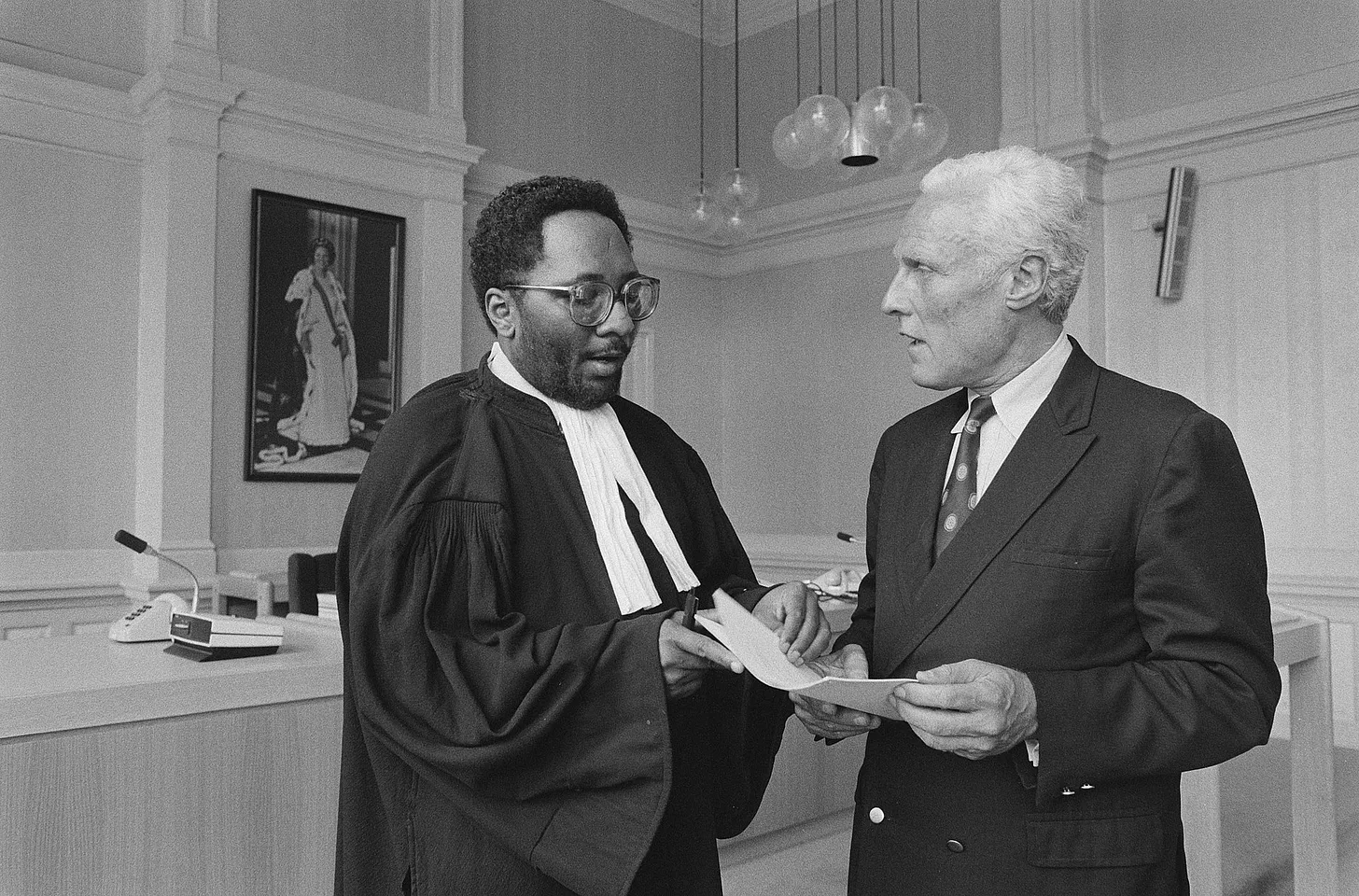
This narrative gains additional weight from an investigation by André Haakmat, a former Surinamese deputy prime minister and key figure in the resistance. Haakmat’s inquiry confirmed that van Haperen had served as a conscript corporal in Suriname and had access to detailed military intelligence— including photos of the Dutch detachment for the Middle East9 and intel about the December murders.10 Documents that only someone from the intelligence service could have gotten hold of.11 Haakmat also cited testimony from a Surinamese officer who personally identified van Haperen as an intelligence officer, further corroborating his alleged connections to covert operations. Despite later expressing doubts about van Haperen’s motives, Haakmat’s findings lend credibility to the claim that van Haperen was a shadowy player in these networks.
What’s also interesting is that in 1985, the National Endowment for Democracy (NED) Annual Report revealed12 what William Blum would later disclose in his book, “Killing Hope13“: that NED had been funding organizations in Suriname since 1983, including the Dutch-based Council for the Liberation of Suriname through its Free Trade Union Institute (FTUI).
The Christmas Coup: Financing, Betrayal, and Repercussions
The Christmas coup’s inner workings reveal not only the breadth of its planning but also the dangerous fractures within the anti-Bouterse resistance. According to the Surinamese paper, de Ware Tijd, the coup included elements, like an advance team, that sounded a lot like Tommy Denley’s later attempts with a team of “international bankers.”
He claimed that the 15 men killed on 8 December in Fort Zeelandia would have become part of the new government if the coup, which was planned for the night of 24 and 25 December 1982, had been successful. These coup plans failed because of the actions Bouterse and his supporters took on 8 December. Van Haperen claimed the coup plans were leaked because “Surinamese are too loose-lipped,” so Bouterse could take action. As he explained, Van Haperen would carry out an invasion with around 80 men, while a 13-man advance team would travel to Suriname from French Guyana, disguised as a sports team. Assistance with the coup plans would allegedly be provided by the French secret service and the former Dutch military attaché in Suriname, Bas van Tussenbroek, while the rest of the “invasion army” was to be flown in from Curacao with a C-130 Hercules plane of the US Army. If that plan were to fail, the invaders would land by parachute on the Zorg en Hoop airfield and then take over the Memre Boekoe barracks and Fort Zeelandia. Bouterse, Errol Alibux, Iwan Krolis, Harvey Naarendorp, and others who would resist were to be liquidated by a team specially trained in Belgium (individuals who later formed the Gang of Nijvel14).15
Van Haperen claims evidence that places early Council member Edgar Wijngaarde, a prominent Surinamese financier, at the heart of the operation.16 Far from a latecomer to the resistance, Wijngaarde was reportedly an early architect and key financier of the coup, alongside Ab Juddel and Wilfried Lionarons, who were poised to join Chin a Sen’s proposed government as ministerial appointees. We’ve explored his possible connections to George Baker and the ANSUS Foundation in an earlier post. We’ve also confirmed China a Sen’s involvement with Horb and the CIA leading up to the events preceding the December massacre.
However, the coup’s unraveling can be traced to a dramatic betrayal. Lieutenant Colonel Willem Küchler, a liaison officer embedded within the European intelligence networks supporting the coup, allegedly leaked plans to Bouterse through Colonel Hans Valk. Küchler’s motivations appear to stem from a moral dilemma. Shocked by the predicted casualties—projected between 800 and 1,200 deaths—he decided to warn Bouterse. Using an intermediary, the Belgian José Vanden Eynde, Küchler ensured that detailed plans reached Valk, who passed them directly to Bouterse.17
This act of conscience had catastrophic consequences. Bouterse, forewarned of the coup, launched the brutal crackdown known as the December murders. Küchler’s betrayal did not go unnoticed. In January 1983, Colonel Görlitz relayed to Carl Armfelt the full scope of Küchler’s actions. Armfelt, furious at the coup’s exposure and the subsequent loss of key operatives, ordered Küchler’s assassination. The killing was carried out in “Interdoc fashion”—a targeted lethal injection designed to mimic natural causes, a method later used against Görlitz himself. Van Heperen himself claimed to have been the target of the same alleged assassination team that took the live intelligence operatives and whistleblower, Pieter Roel Meyer.
These revelations underscores the precarious nature of the Christmas coup. While financiers like Wijngaarde and operatives like Armfelt pursued a vision of a post-Bouterse Suriname, internal dissent, moral conflicts, and breaches of trust created vulnerabilities that ultimately doomed the operation. Küchler’s actions illustrate the profound ethical challenges within these clandestine networks, contrasting sharply with Armfelt’s uncompromising ruthlessness.
The Christmas coup’s failure highlights how internal betrayals and shifting allegiances shaped not only Suriname’s history but also the broader dynamics of Cold War covert operations. The web of financiers, intelligence operatives, and intermediaries like Valk reveals a chaotic and often contradictory resistance, where ideological fervor clashed with human conscience.
The most compelling evidence supporting van Haperen’s account comes from Belgium. His most explosive claim involved the planned use of a Belgian hit team led by Madani Bouhouche. This wasn’t just any assassination squad—these were the same men who would later be implicated in Belgium’s notorious Gang of Nijvel killings.
Consider the sequence:
- April 1980: following Ormskerk’s failed coup, Van Haperen was tasked with assessing the feasibility of another coup. This required evaluating potential support from neighboring countries like French Guiana and Brazil, calculating manpower needs, and sourcing weapons.18
- 1981: Van Haperen is stationed in Suriname as a team leader within a secret service of the Dutch army. This underground section, allegedly financed by the CIA and set up by the Internal Security Service (BVD), was tasked with destabilizing the military regime.19
- December 31, 1981: Weapons theft at the Etterbeek barracks in Belgium, marking the beginning of resource gathering for covert operations.
- January 1, 1982: Theft of NATO-grade weapons by the Diane unit, further supplying the underground operation.
- March 15, 1982: Coup preparations were accelerated after the failure of an earlier attempt by Surinamese dissident Soerendre Rambocus.20
- December 1982: A “Christmas coup” was planned, involving an undercover sports team entering Suriname through French Guiana, supported by a parallel, underground intelligence section within the Dutch army. This section, allegedly financed by the CIA, aimed to destabilize and overthrow the military regime.
- February 1983: Continued destabilization operations, posing as captain in the Dutch army, laden with insignia of the Commando Troops Corps.21
- May-June 1983: 19 Provides pre-screened Surinamers a two-week training course in Gasselte in the province of Drenthe. Evening exercises held in uniform on the obstacle course of the Schipborg military training ground. 22
- June 15 1983: Peter van Haperen goes missing with the 300,000 guilders. Claims an assassination attempt is also made on his life the same day whistleblower Pieter Meyer is killed in an freak auto accident.23 BVD come looking and interrogating Surinamers— claim van Haperen is “unreliable.”
These weren’t parallel events—they were interconnected operations using the same personnel, weapons, and techniques. Van Haperen’s planned Belgian hit team, led by Madani Bouhouche, would later be implicated in the Brabant Killers case. The same training facilities near Wavre that prepared coup forces would later be linked to domestic Belgian operations.
The Council for the Liberation of Suriname’s own accusations against Peter van Haperen a few months later add another layer of intrigue. According to Vrij Nederland, the Council claimed that a “Belgian mercenary” had embezzled 300,000 guilders from funds meant for the planned Easter coup of 1983. The Council believed this individual had trained operatives— including Belgians— for the operation, a claim that aligns with van Haperen’s own testimony in 2009.
Dr. John’s testimony further corroborates this narrative. In his book, he recounts the Council accusing a “Belgian” of stealing 310,000 guilders—a strikingly similar figure to that cited by the Council in the Vrij Nederland article. This discrepancy in phrasing (“Belgian mercenary” versus Peter van Haperen) suggests confusion or deliberate obfuscation, but the overlap in details strengthens the case for van Haperen’s involvement.
Van Haperen himself admitted in his 2012 letter that he had trained Belgians connected to the Brabant Killers. He alleged that this training was part of preparations for the coup following the failed Rambocus operation. Newspapers in 1983, claimed that he “possessed photos of the 1982 Rambocus coup attempt and claimed knowledge of the individuals who had allegedly escaped arrest.”24 Notably, one of the key plotters of the Rambocus coup, Mahabier, resurfaced as a leader of the group planning “the Easter coup” 1983 invasion of Suriname, a group that included operatives trained by van Haperen.25 The weapons stolen by the Brabant Killers—including NATO-grade firearms—were allegedly intended for use in this mission, highlighting a disturbing overlap between European criminal networks, anti-Bouterse resistance efforts, and clandestine operations in Suriname. This connection underscores the continuity between earlier failed coups and the subsequent efforts to destabilize Bouterse’s regime, with van Haperen operating as a critical link between European operatives and Surinamese plotters.
Investigative reporting by Vrij Nederland confirmed that van Haperen led a unit comprised of Dutch, Belgians, and Moluccans for the Council, adding further credibility to his claims. The Council’s own accusations about embezzlement, combined with Vrij Nederland’s findings, suggest that van Haperen’s version of events is not merely speculative but grounded in verifiable actions. There’s also the fact that Tommy Lynn Denley’s “man on the inside,” Juan Brinkmann, who helped facilitate his coup attempt was thought to be Belgian.
The Florida Connection: Project Democracy’s Training Networks
When Peter van Haperen claimed connections to Oliver North and the December coup attempt, his story seemed almost too perfect – Belgian mercenaries who would later be connected to the Gang of Nijvel, NSC coordination, Project Democracy networks. But examining parallel operations in Florida reveals patterns that lend credibility to his account.
Just after the December Murders that van Haperen claims prevented North’s Christmas coup, two NSC agents – using the aliases “Bob Hogan” and “Gregory Hale” – appeared at Hotel Babylon in The Hague to meet Andre Haakmat.26 They showed him intelligence about assassination targets and pushed Haakmat to spread anti-Bouterse propaganda in the press. Days later, “Surinamese in America” (likely Henk Chin A Sen in Pittsburgh) reported meetings with an American mercenary whose profile matched North perfectly: a decorated Vietnam veteran (Silver Star, Bronze Star with Combat V, two Purple Hearts), well-versed in the international arms trade, who now had access to sophisticated training infrastructure in Florida.27
That infrastructure becomes significant when we examine Frank Castro’s operation near Naples (remember the surprise cocaine plane during the peace talks?)28 and Major Andres Jorge “Bombillo” Gonzalez’s Montura Ranch camp where self-styled Cuban freedom fighters armed with semi-automatic rifles conducted weekend maneuvers under the cover of a remote subdivision.2930 These weren’t just Cuban exile training grounds – they were part of North’s broader network. The pattern mirrors what van Haperen described: mercenary training combined with weapons procurement, parallel channels maintaining plausible deniability, cover operations disguising real activities (Castro’s Golden Falcon Skydiving Club, van Haperen’s martial arts dojo).31
This pattern becomes particularly significant when considering van Haperen’s claims about training Florida mercenaries in the summer of ’83. According to the New York Times:
The invasion force reportedly would have been composed of some 300 men — half of them US and South American nationals, the others Surinamese — who were to be flown from Florida to the Suriname capital of Paramaribo on the northern tip of South America. The invaders were then to be augmented by Surinamese exiles from the Netherlands. It was this latter group which the Dutch had infiltrated to learn of the plans.
But another figure emerged in the Netherlands in February: an American Indian using the alias “Grizzly,” who criticized this expensive Miami-based operation.32 “The people who are willing to pay ten to twelve million dollars for this, are only interested in their own interests,” he told Dutch press. “The people they hire, mostly former Vietnam fighters, only want to earn money.” Grizzly claimed his own operation could succeed with just $1.5 million total, focusing on guerrilla tactics rather than large-scale invasion.
Newspaper articles in the Netherlands reported that the operation was entrusted to an “American veteran of Vietnam, who head one of the numerous training centers for mercenaries in the American state of Florida. The man has extensive experience in leading military operations with mercenaries in Latin America.”33
On January 1, 1983, according to reporter Karel Bagijn, representatives met with a “Vietnam veterans organization” at the Scheveningen Promenade Hotel – just 2.5 miles from where “Bob Hogan” had met Haakmat days earlier.34 The unnamed veteran had allegedly already received $1.5 million of a planned $12 million operation (30 million guilders).35 The description – a Vietnam veteran with extensive experience leading military operations in Latin America – fits North’s background perfectly. After leading Marines in combat during Operation Virginia Ridge, he was now coordinating between his official NSC position and the covert training camps of Castro and Gonzalez.
Van Haperen’s claims about Belgian mercenaries also gain context when viewed alongside Castro’s operation. Just as Castro moved between legitimate resistance training and covert operations, maintaining multiple identities (drug smuggler, Contra supporter), van Haperen described a similar fluidity in his European networks. The parallel suggests a Project Democracy pattern: operators who could bridge official and unofficial worlds while maintaining plausible deniability.
Converging Operations: The Summer of ’83
When multiple coup attempts converged in the summer of 1983, the intricate nature of these networks became clear. Van Haperen, who had allegedly trained Belgian mercenaries (later connected to the Gang of Nijvel) in 1982, emerged as a key figure through Andre Haakmat in February of 1983. This contingency began financing the European operation planned for June 15, while The Council for Liberation of Suriname and Roy Bottse were coordinating with a larger Florida-based effort targeting July 1.36
But the operation began unraveling in unexpected ways. In May 1983, Rob Wormer and E. Tjon of the Action Committee Herstel Democratie Suriname (AHDS)— who had been part of the Council for the Liberation of Suriname37— suddenly traveled to Paramaribo at the military authorities’ invitation. They returned declaring Suriname democratic, praising Bouterse’s expulsion of Cuban advisers after events in Grenada. Their dramatic reversal, denounced as “complete nonsense” by the Liberation Council, suggested deeper currents at work.
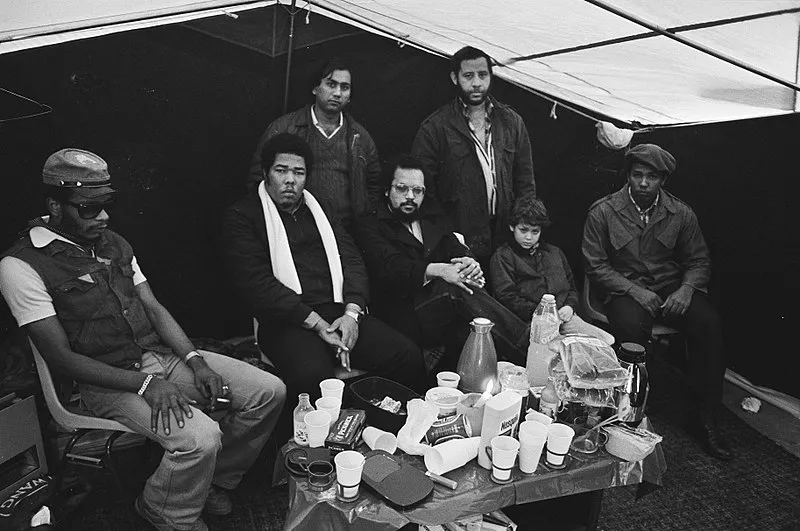
This wasn’t the first betrayal AHDS had been involved with. In 1982, the group had attempted to organize a coup involving 70 Belgian mercenaries, each to be paid 10,000 guilders. That operation unraveled when the group’s First Secretary, Mirza “Edo” Joeman, traveled to Paramaribo and revealed the plans to military leaders.
When van Haperen disappeared with the Council’s money in mid-June 1983, effectively sabotaging their plans, he wasn’t just derailing one operation – he was disrupting an intricate web of coordinated actions that stretched from Pittsburgh to The Hague to Florida’s Everglades. Complicating matters even further, were allegations of an assassination attempt on van Haperen’s life on the same day whistleblower Pieter Meyer died in a freak car accident after promising an expose in which “heads were going to rolll.”38 39 This was followed by the BVD allegedly wiretapping the phones of Surinamese in the Netherlands and visiting to inquire about van Haperen and insist he was unreliable— sounds like damage control.40 The web of betrayals suggested something more calculated than simple opportunism. As we would later discover through Operation Guiminish, these apparent failures might have been part of a larger plan.
Tantalizing Connections
The convergence of these accounts—van Haperen’s admissions, Vrij Nederland’s investigative reporting, and Dr. John’s testimony—paints a picture of interconnected operations:
- The Council for the Liberation of Suriname hired van Haperen to train operatives and plan a coup.
- Van Haperen embezzled funds, leading to accusations by the Council.
- He trained Belgians connected to the Brabant Killings, allegedly using the same stolen weapons intended for the coup.
This web of connections doesn’t merely hint at the murky alliances between Project Democracy’s European networks and Surinamese resistance efforts—it directly ties them to one of Europe’s most infamous unsolved crime sprees. These revelations lend credibility to van Haperen’s broader narrative, suggesting his claims may be less speculative and more reflective of a deeply interwoven covert history.
Managed Disclosure: The Handler’s Multiple Personas
Van Haperen’s disclosure of information wasn’t just strategic – it was masterful. His 2009 emergence in Paramaribo marked the beginning of a carefully orchestrated series of revelations that would unfold over years through multiple channels and personas. This pattern of controlled disclosure, we now understand, mirrors how other Project Democracy operators managed their public personas and private operations.
Consider his online identities: As “Anansi9” on Surinamese forums – named for the trickster spider of Caribbean folklore – van Haperen began adding crucial details about European networks behind these operations. Later, as “Insider” on the Gang of Nijvel message board, he revealed specifics about paramilitary training, including the “Pirate, Mammoth, Sniper” (PMS) technique. These weren’t random posts; they were methodical releases of information responding to and building upon others’ questions and theories.
Just as Frank Castro maintained multiple identities – legitimate businessman, freedom fighter, alleged drug smuggler – van Haperen crafted personas that served different purposes. His martial arts instructor cover wasn’t just camouflage; it provided a legitimate framework for his training activities while making him appear too unpolished to be an intelligence operative. When users speculated that “Insider” was van Haperen, he denied it while claiming to know van Haperen and offering to relay questions – a classic intelligence technique for maintaining plausible deniability while continuing to shape narratives.
Understanding the Handler
Van Haperen’s testimony adds crucial detail to our understanding of how Project Democracy operated in practice – but not necessarily in the way he presents it. His account is neither pure fabrication nor simple whistleblowing. Rather, it represents something more sophisticated: the work of someone who understood how to construct and manage intelligence narratives within Project Democracy’s broader operational framework.
Consider how he builds his account: He starts with demonstrably true elements – specific weapons thefts, documented training operations, verified timelines of Bouterse’s movements. His knowledge of these details isn’t surprising given his position in Dutch intelligence by 1983, where he would have had access to extensive information about both European networks and Surinamese operations. He then connects these verified facts into a larger narrative about Armfelt, Project Democracy, and covert operations that’s compelling precisely because it’s anchored in provable details.
But the very precision with which he constructs these connections should give us pause. His account feels less like the messy, fragmentary recollections of a direct witness and more like the careful work of someone who had access to intelligence files and operational histories after the fact. He knows enough to build a convincing narrative, but his knowledge has the texture of analytical reconstruction rather than lived experience – a pattern we see in other Project Democracy operators who later shaped narratives about their activities.
The parallel with Frank Castro is particularly instructive. Both men maintained multiple operational identities while carefully managing their public narratives. Just as Castro navigated between his roles as legitimate businessman, freedom fighter, and alleged drug smuggler, van Haperen moved seamlessly between martial arts instructor, resistance trainer, and intelligence operative. Their ability to maintain these seemingly contradictory personas while coordinating sophisticated operations reflects Project Democracy’s broader pattern of using complex cover identities to maintain plausible deniability.
Constructing the Narrative: Lessons from The Handler
Van Haperen’s testimony about Armfelt, the Brabant Killers, and Project Democracy operations offers us more than just historical claims to verify or debunk. It provides a masterclass in how intelligence operatives construct and deploy information. By examining exactly how he built his narrative, what it reveals about intelligence tradecraft, and what purposes it might have served, we can develop a sophisticated framework for evaluating similar claims about covert operations.
The Architecture of Intelligence Narratives
Consider how van Haperen constructs his account. He begins with highly specific, verifiable technical details: the exact binding techniques used in the Brabant killings, precise dates of weapons thefts, detailed knowledge of training operations. These serve as foundation stones – concrete facts that establish his credibility. But more importantly, they’re the kind of details someone would have access to through intelligence files rather than direct experience. The very precision of his knowledge suggests careful study rather than lived chaos.
From these verified details, he builds upward, connecting Belgian stay-behind networks to Surinamese operations through the figure of Carl Armfelt. Each connection is carefully anchored in documentable fact while gesturing toward larger patterns that are harder to verify but equally plausible. It’s sophisticated work – perhaps too sophisticated for someone claiming to be just a witness to these events.
Tradecraft in Action
Van Haperen’s own background demonstrates classic intelligence tradecraft. His cover as a long-haired martial arts instructor and sex club bouncer provided perfect camouflage for intelligence work. It gave him access to criminal networks while making him appear too unpolished to be an intelligence operative. This wasn’t just cover – it was craft. The very elements that might make him seem less credible actually authenticate his sophistication as an operative.
His handling of information shows similar expertise. He provides enough specific details about events and operations to establish authority, while maintaining strategic ambiguity about command structures and ultimate objectives. This matches known patterns of intelligence disclosure, where limited revelations serve to redirect attention or shape narratives rather than expose complete operations.
The comparison with Castro’s operation in Florida is revealing. Both men’s training operations combined verifiable elements – Castro’s documented weapons supplies, van Haperen’s specific training techniques – with strategic gaps in the record. Both maintained multiple channels of operation while carefully managing what information became public. Their parallel methods suggest a common playbook for Project Democracy operators.
The Purpose Behind the Testimony
What then was van Haperen trying to accomplish with his testimony? Several possibilities emerge:
- Controlled Exposure: By revealing certain connections between European networks and Project Democracy operations, he may have been helping manage the eventual exposure of these operations in a way that protected key aspects while appearing to expose others.
- Narrative Shaping: His account helps establish a particular understanding of how these networks operated, potentially directing attention away from other aspects that remained sensitive.
- Personal Positioning: The testimony helps establish his own role as more peripheral than it might have been, while demonstrating his value as someone with deep knowledge of these operations.
- Future Operations: His revelations may have served to close off certain avenues of investigation while leaving others open for ongoing or future operations.
A Framework for Understanding
Van Haperen’s case offers us several key principles for evaluating similar intelligence narratives:
- Excessive precision often suggests reconstruction rather than direct experience
- The most revealing aspects may be how information is structured rather than what it contains
- Cover stories that seem to undermine credibility may actually demonstrate sophistication
- The timing and context of revelations can be as significant as their content
- Parallel operations often reveal common patterns of tradecraft
These principles help us understand not just van Haperen’s testimony but the broader landscape of Project Democracy operations. When we examine other operators – like Frank Castro, Gary Betzner, or George Morales – we see similar patterns of narrative construction and information management. The very sophistication of these constructions tells us something important about how Project Democracy maintained its networks of deniable operations.
A Betrayal Explained: New Documents Reveal Reagan’s Secret Suriname Strategy
Van Haperen’s testimony about the failed “Red Christmas” coup of 1982 has long puzzled investigators. But his subsequent actions—particularly his sabotage of both the Easter Coup and June coup attempts in 1983—have remained even more mysterious. Until now.
A few weeks ago, an unexpected email arrived in my inbox from our research partner, Sander Peeters. The attached document, titled “Operation Guiminish,” blows apart everything we thought we knew about U.S. policy in Suriname. Written by Frank Naarendorp and Dennis Levens—themselves targets of the very operation they expose—it reveals something even more disturbing than what we’ve uncovered about van Haperen’s role in Project Democracy.
Next week, we’ll show how after the Christmas coup’s failure, Reagan’s administration made a stunning pivot. Instead of trying to remove Bouterse, they actively worked to keep him in power. The document reveals how Brazil’s military dictatorship convinced Reagan to adopt their Operation Condor playbook in Suriname, creating a dark partnership that would reshape Caribbean politics.
Suddenly, van Haperen’s seemingly contradictory actions in 1983 make perfect sense. He wasn’t just a Dutch intelligence operative—he was responding to a dramatic shift in U.S. strategy, one that would trade the promise of Surinamese democracy for cold war realpolitik. Stay tuned for a story that challenges everything we thought we knew about American involvement in the Caribbean. I may have even unearthed a smoking gun…
Footnotes
When questioned by reporters about his timing to come forward as a witness, Peter van Haperen stated, “Fear.” However, a report from the Dutch House of Representatives (Aanhangsel van de Handelingen, 2008–2009, nr. 3384) revealed discrepancies in his claims. The Dutch government stated that van Haperen was never employed by the Ministry of Defense and attributed his allegations of Dutch, Belgian, and American involvement in planning a coup in Suriname solely to him. Furthermore, van Haperen admitted during a self-organized press conference on July 3, 2009, that he was approached by Bouterse’s lawyer, Irwin Kanhai, to testify, contradicting suggestions that he came forward voluntarily. Bouterse’s defense attorneys said they did not know the man. It calls into question whether Peter was motivated by something other than fear. Het Parool. “Wie Is Die Van Haperen Die Bouterse Vrijpleit?” August 16, 2018. https://www.parool.nl/nieuws/wie-is-die-van-haperen-die-bouterse-vrijpleit~b1d030cc/.
“Gevonden in Delpher – Nieuwsblad van Het Noorden.” Accessed October 27, 2024. https://www.delpher.nl/nl/kranten/view?coll=ddd&identifier=ddd:011010764:mpeg21:a0065.
Amigoe. “Den Haag Verijdelt Invasie Suriname.” July 13, 1983, 158 edition. Gevonden in Delpher. //www.delpher.nl/nl/kranten/view?coll=ddd&identifier=ddd:010640932:mpeg21:a0005.
De Volkskrant. “BVD Houdt Surinaams Verzet in Nederland in de Gaten.” Gevonden in Delpher. Accessed October 27, 2024. https://www.delpher.nl/nl/kranten/view?coll=ddd&identifier=ABCDDD:010878460:mpeg21:a0105.
Leidsch Dagblad|. “Invasiegroep Suriname Oefende in Nederland.” July 14, 1983. Historische Kranten, Erfgoed Leiden en Omstreken. https://leiden.courant.nu/issue/LD/1983-07-14/edition/0/page/7.
Elgenstierna, Gustaf. “173 (Den introducerade svenska adelns ättartavlor / 1. Abrahamsson-Celsing).” Project Runeberg. Accessed December 22, 2024. https://runeberg.org/elgenst/1/0195.html.
Rosenfeld, Alan. “Neither Aliens nor Enemies: The Hearings of ‘German’ and ‘Italian’ Internees in Wartime Hawai‘i.” Breaking the Silence: Lessons of Democracy from the World War II Honouliuli Internment and POW Camp in Hawai’i Vol. 45 (2014): 80-108). https://dspace.lib.hawaii.edu/server/api/core/bitstreams/08c3ae96-7d3b-4e7a-832b-008119455d46/content
Redacteur. “De Beverwijk Files (013).” Kleintje Muurkrant. Accessed October 30, 2024. https://www.stelling.nl/kleintje/overzicht-actueel/de-beverwijk-files-013.
Amigoe. “Den Haag Verijdelt Invasie Suriname.” July 13, 1983, 158 edition. Gevonden in Delpher. //www.delpher.nl/nl/kranten/view?coll=ddd&identifier=ddd:010640932:mpeg21:a0005.
De Volkskrant. “BVD Houdt Surinaams Verzet in Nederland in de Gaten.” Gevonden in Delpher. Accessed October 27, 2024. https://www.delpher.nl/nl/kranten/view?coll=ddd&identifier=ABCDDD:010878460:mpeg21:a0105.
Ramdharie, Ramdharie. “Controversial ‘former Soldier’ Fully Agrees with Bouterse.” De Volkskrant, July 1, 2009. Internet Archive. https://web.archive.org/web/20090705092103/https://www.volkskrant.nl/buitenland/article1252856.ece/Omstreden_oud-militair_geeft_Bouterse_groot_gelijk.
Ralph McGehee. CIABASE by Ralph McGehee, 1992. http://archive.org/details/CIABASE-Ralph_McGehee.
Blum, William. Killing Hope : U.S. Military and CIA Interventions since World War II. Monroe, Me. : Common Courage Press, 2004. http://archive.org/details/killinghopeusmil0000blum.
“Van Haperen: ‘Counter-Coup with Belgian Death Squad’ – Gang of Nijvel,” January 14, 2012. https://bendevannijvel.com/2012/01/14/van-haperen-tegencoup-met-belgisch-doodseskader/.
“Witness Tells Suriname Court of Being Recruited for 1982 Coup Plot against Bouterse – Stabroek News.” Accessed November 27, 2023. https://www.stabroeknews.com/2012/01/14/news/guyana/witness-tells-suriname-court-of-being-recruited-for-1982-coup-plot-against-bouterse/.
Redacteur, and Redactie. “Fred En de Deals.” Kleintje Muurkrant, March 1, 2014. https://www.stelling.nl/kleintje/dossiers/fred-en-de-deals.
Ibid.
tueriesdubrabant.1fr1.net. “Bouhouche, Madani – Page 19.” Accessed December 27, 2024. https://tueriesdubrabant.1fr1.net/t152p450-bouhouche-madani.
“Van Haperen: ‘Counter-Coup with Belgian Death Squad’ – Gang of Nijvel”
Ibid.
Ramdharie, Ramdharie. “Controversial ‘former Soldier’ Fully Agrees with Bouterse.” De Volkskrant, July 1, 2009. Internet Archive. https://web.archive.org/web/20090705092103/https://www.volkskrant.nl/buitenland/article1252856.ece/Omstreden_oud-militair_geeft_Bouterse_groot_gelijk.
Nieuwsblad van het Noorden. “Weekblad: ‘Anti-Bouterse-Groep Trainde in Noorden.’” Gevonden in Delpher. Accessed December 27, 2024. https://www.delpher.nl/nl/kranten/view?coll=ddd&identifier=ddd:011010760:mpeg21:a0044.
tueriesdubrabant.1fr1.net. “Bouhouche, Madani – Page 19.” Accessed December 27, 2024. https://tueriesdubrabant.1fr1.net/t152p450-bouhouche-madani
Leidsch Dagblad|. “Invasiegroep Suriname Oefende in Nederland.” July 14, 1983. Historische Kranten, Erfgoed Leiden en Omstreken. https://leiden.courant.nu/issue/LD/1983-07-14/edition/0/page/7.
Amigoe. “Den Haag Verijdelt Invasie Suriname.” July 13, 1983, 158 edition. Gevonden in Delpher. //www.delpher.nl/nl/kranten/view?coll=ddd&identifier=ddd:010640932:mpeg21:a0005.
Haakmat, Andre. De Revolutie Uitgegleden:Politieke Herinneringen. Amsterdam: Uitgeverij Jan Mets, 1987.
De Volkskrant. “Surinamers in VS Bereiden Actie Tegen Bewind van Bouterse Voor.” Gevonden in Delpher. Accessed December 26, 2024. https://www.delpher.nl/nl/kranten/view?coll=ddd&identifier=ABCDDD:010878627:mpeg21:a0062.
Spartacus Educational. “Eulalio Francisco Castro Paz (Frank Castro).” Accessed July 24, 2023. https://spartacus-educational.com/JFKcastroFr.htm.
De Volkskrant. “Surinamers in VS Bereiden Actie Tegen Bewind van Bouterse Voor.” Gevonden in Delpher. Accessed December 26, 2024. https://www.delpher.nl/nl/kranten/view?coll=ddd&identifier=ABCDDD:010878627:mpeg21:a0062.
The Daily Times. “Cuban Freedom Fighters Prepare for Invasion.” April 28, 1980. https://www.newspapers.com/article/the-daily-times-cuban-freedom-fighters-p/161602545/
Castro’s background, like Gonzalez’s, provides crucial context for understanding how such training operations functioned within Project Democracy’s framework. A man with numerous connections inside Brigade 2506 from the Bay of Pigs invasion, Castro emerged as a key figure in CORU, an alliance of anti-Castro Cuban organizations partly financed by Guillermo Hernandez-Cartaya. Through the Cuban National Liberation Front (FLNC), he worked alongside Rene Corvo and bombmaker Luis Crespo – expertise that would later surface in planned operations against Bouterse. His shuttling between Miami and the Dominican Republic parallels van Haperen’s movements between Belgium and Suriname, suggesting a pattern of operators maintaining multiple bases of operation.
Schumacher, Peter. “Duivelse Methoden Nodig Tegen Bouterse.” NRC Handelsblad, February 2, 1983. Gevonden in Delpher. https://www.delpher.nl/nl/kranten/view?coll=ddd&identifier=KBNRC01:000027909:mpeg21:a0034
“Invasie in Suriname Is Kwestie van Weken.” January 20, 1983. Historische Kranten, Erfgoed Leiden en Omstreken. https://leiden.courant.nu/issue/LLC/1983-01-20/edition/0/page/10.
Bagijn, Karel. “Invasie Suriname in de Maak.” Algemeen Dagblad. Gevonden in Delpher. Accessed December 26, 2024. https://www.delpher.nl/nl/kranten/view?coll=ddd&identifier=KBPERS01:003002016:mpeg21:a00002.
Nieuwsblad van het Noorden. “Gewapende Actie van Surinamers Op Stapel.” Gevonden in Delpher. Accessed December 26, 2024. //www.delpher.nl/nl/kranten/view?coll=ddd&identifier=ddd:011010609:mpeg21:a0020.
De Telegraaf. “Robin Hood En De Revolutie In De Jungle.” Gevonden in Delpher. Accessed October 27, 2024. //www.delpher.nl/nl/kranten/view?coll=ddd&identifier=ddd:011207293:mpeg21:a0748.
De Volkskrant. “Surinamers in VS Bereiden Actie Tegen Bewind van Bouterse Voor.” Gevonden in Delpher. Accessed December 26, 2024. https://www.delpher.nl/nl/kranten/view?coll=ddd&identifier=ABCDDD:010878627:mpeg21:a0062.
tueriesdubrabant.1fr1.net. “Bouhouche, Madani – Page 19.” Accessed December 27, 2024. https://tueriesdubrabant.1fr1.net/t152p450-bouhouche-madani.
Leidse Courant. “Waarom Affaire-Valk Maar Het Beste in de Doofpot Kon Belanden.” August 4, 1983. Historische Kranten, Erfgoed Leiden en Omstreken. https://leiden.courant.nu/issue/LLC/1983-08-04/edition/0/page/10.
De Volkskrant. “BVD Houdt Surinaams Verzet in Nederland in de Gaten.” Gevonden in Delpher. Accessed October 27, 2024. https://www.delpher.nl/nl/kranten/view?coll=ddd&identifier=ABCDDD:010878460:mpeg21:a0105.
Further Reading
For those interested in diving deeper into the Brabant Killers connection:
That Chapter Podcast. Brabant Killers Pt. 1, Europe’s Scariest Unsolved Mystery | That Chapter Podcast, 2024.
That Chapter Podcast. The Brabant Killers Pt. 2, Conspiracy Time | That Chapter Podcast, 2024.
Unresolved. The Brabant Killers | Unresolved, 2017.
For contemporary Dutch press coverage of the thwarted invasions:
Nieuwsblad van het Noorden. “Anonymous Organizers: Invasion of Suriname Thwarted at the Last Moment.” Gevonden in Delpher. Accessed October 27, 2024. https://www.delpher.nl/nl/kranten/view?coll=ddd&identifier=ddd:011010764:mpeg21:p005.
Leidsch Dagblad|. “Tweede Kamer Buiten Onderzoek Zaak-Valk.” July 14, 1983. Historische Kranten, Erfgoed Leiden en Omstreken. https://leiden.courant.nu/issue/LD/1983-08-25/edition/0/page/16.
Donk, Karel. “Karel Donk’s Blog » The December Murders in Suriname,” November 4, 2016. https://web.archive.org/web/20161104184912/https://blog.kareldonk.com/researchnotes/the-december-murders-in-suriname/.
Het Nieuwsblad. “‘Bende van Nijvel Werkte Mee Aan Surinaamse Coup.’” January 16, 2012, sec. Binnenland. https://www.nieuwsblad.be/cnt/dmf20120116_162.
Debels, Thierry. “Onderzoek Bende van Nijvel: Onderzoeksrechter Martine Michel Kreeg Deze Merkwaardige Brief.” P Magazine, January 30, 2023. https://p-magazine.com/nl/articles/onderzoek-bende-van-nijvel-onderzoeksrechter-martine-michel-kreeg-deze-merkwaardige-brief.
Source:
Link:
Internal Link:
Date:
October 26, 2025