The Wolf Pack of Paramaribo (Deep Cut)
Profiles of Covert Operators at the US Embassy in Suriname (1982)
Apr 28, 2025
This page provides detailed background information on the key U.S. personnel operating within the U.S. Embassy in Paramaribo during the critical 1981-1983 period, as discussed in Part II of “The Secret War for Suriname.”
In the shadowy world of Cold War intelligence operations, certain names appear again and again across different theaters, different crises, different decades—human bridges connecting what official histories would prefer to keep separate. The story of Richard LaRoche, Edward Donovan, and Albert Buys isn’t just about three operatives deployed to a small South American nation. It’s about the systematic development and deployment of destabilization techniques refined through years of Caribbean operations.
Recently obtained documents from the Covert Action Information Bulletin—a publication that tracked CIA activities in real-time during the early 1980s—reveal the sophisticated operational framework these men brought to Suriname. Their deployment wasn’t experimental; it was the application of battle-tested methods that had been perfected against Maurice Bishop’s Grenada and would later be refined for global deployment through the Iran-Contra network.
But who exactly were these wolves? Their backgrounds reveal careers steeped in Cold War intelligence operations and psychological warfare.
Introduction
Official histories portray the early 1980s U.S. presence in Suriname as a period of diplomatic concern over leftist influence and regional instability. A closer examination reveals a far more complex reality: the U.S. embassy in Paramaribo functioned as a forward operating base for Project Democracy’s destabilization efforts, staffed not merely by diplomats but by covert operatives embedded within official roles.
By Matthew Smith is a reader-supported publication. To receive new posts and support my work, consider becoming a free or paid subscriber.
Among the most significant of these was Richard R. LaRoche, a Foreign Service Officer whose public biography would later depict him as a mid-level administrator focused on improving State Department inspection procedures. In truth, LaRoche’s career trajectory — from Vietnam, Jakarta, and Chile to Grenada and Suriname — reveals a consistent pattern of covert action assignments conducted under diplomatic cover. His post-Suriname work, far from bureaucratic retirement, involved designing new State Department “inspection” systems that effectively institutionalized lessons learned from field destabilization operations abroad.
This deep-dive companion piece examines, with rigorous sourcing, the individual operatives, methods deployed, and systematic redesigns that connected the failed destabilization campaign in Suriname directly to the covert operational architecture of the later Iran-Contra era. Through detailed profiles, declassified records, contemporaneous sources, and oral histories, we reconstruct not just what happened — but how covert influence was embedded within formal diplomatic frameworks.
Strategic Context: The Cold War Shift to Covert Democracy Promotion (1980–1983)
The transition from overt Cold War diplomacy to covert democracy promotion was catalyzed by Reagan-era National Security Decision Directives (NSDDs) including NSDD-2, NSDD-17, and NSDD-61. Project Democracy was conceived to institutionalize a fusion of covert political action, public diplomacy, and clandestine destabilization, with Suriname emerging as a strategic laboratory.
Key Operatives: Deep Biographical Profiles and Operational Patterns
Richard R. LaRoche — Chargé d’Affaires and Covert Architect
Early Life and Aspirations
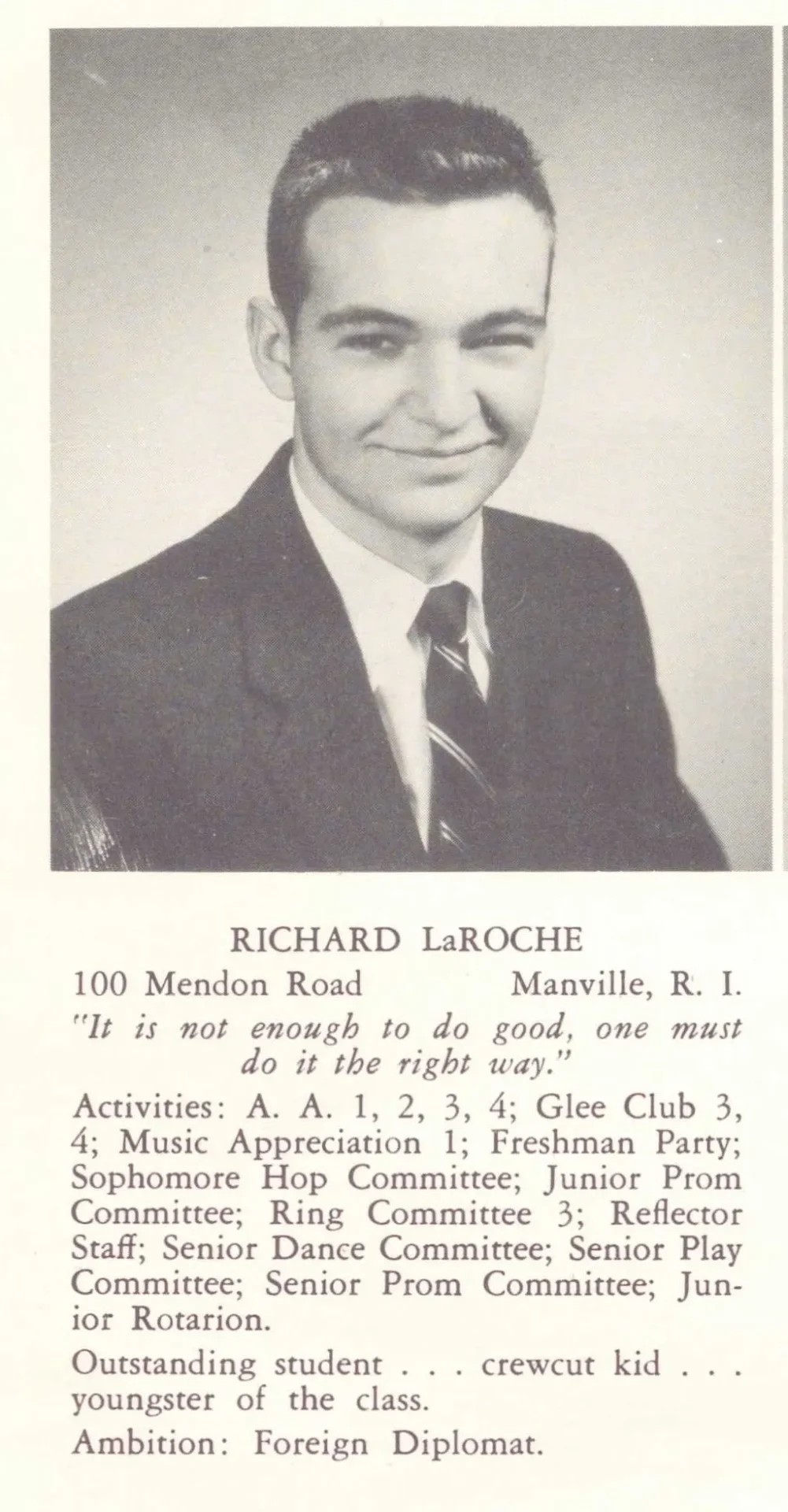
In his 1955 Cumberland High School yearbook, 16-year-old Richard LaRoche, son of a life insurance agent, listed his ambition: “Foreign Diplomat.” Below his smiling portrait was a quote that would take on unintended significance decades later: “It is not enough to do good, one must do it the right way.“
The fresh-faced Rhode Island teenager described as an “outstanding student… crewcut kid… youngster of the class” could hardly have imagined how his diplomatic career would unfold – or that he would one day play a central role in one of the Cold War’s most controversial covert operations.
Military Service and Entry into the State Department
Before Richard “Dick” LaRoche ever set foot in Suriname, his career had already followed a pattern that intelligence historians would recognize immediately. Born in Rhode Island in 1939, LaRoche’s path took him from Vietnam-era Navy service (1960-1966) directly into the State Department in April 1967.
What stands out in the official State Department Biographic Register isn’t just where LaRoche served, but the timing and nature of his rapid ascent. Just three months after joining the department, he became an international relations officer—an unusually quick promotion that suggests specialized sponsorship.
Early Overseas Postings: Covert Foundations
By September 1968, LaRoche was in Jakarta, Indonesia—a posting that placed him squarely in the aftermath of one of the CIA’s most consequential Cold War operations. The 1965 coup that brought General Suharto to power had occurred just three years earlier, resulting in the deaths of 500,000 to 1,000,000 suspected communists. U.S. Embassy officials during this period reportedly provided lists of Communist Party members to Indonesian death squads. Within months of his arrival, LaRoche received multiple promotions.
His next significant posting—as “special assistant” in Canberra, Australia starting in October 1971—represents another telltale sign of intelligence work. Such positions typically involve liaison with Five Eyes intelligence services, a critical function during Cold War operations in Southeast Asia.
Elizabeth Ann Swift, who served as an Economic/Political Officer in Jakarta from 1968-1971, later recalled LaRoche’s unusual advantages as a consular officer: “I was always very, very jealous of [LaRoche] because [he] did much more traveling, had a bigger travel budget than we did up in the political section.” She described joining him on “one wonderful trip” where they “went all up through [Borneo] by dugout canoe… Carrying the American flag going to visit our constituents out there.”
On the surface, LaRoche was helping missionary families “with passport services, and reports of birth and all that sort of stuff, and basically making sure they were okay.” But the consular role provided perfect cover for intelligence gathering among remote communities, with Swift noting she “got to meet all the local dignitaries” while traveling with him. The larger travel budget Swift described is a telltale sign of CIA funding supplementing normal State Department resources—a common practice for officers with dual roles.
His next significant posting—as “special assistant” in Canberra, Australia starting in October 1971—represents another telltale sign of intelligence work. Such positions typically involve liaison with Five Eyes intelligence services, a critical function during Cold War operations in Southeast Asia.
LaRoche’s career path then took him to Chile during the Pinochet years—another country where the CIA had played a decisive role in regime change. His time in Santiago during this period would have provided direct experience with the very tactics later deployed in Suriname: economic destabilization, media manipulation, and the cultivation of military assets.
As Consul based in Bridgetown covering Grenada, LaRoche was on the ground immediately following the March 1979 coup that brought Maurice Bishop’s New Jewel Movement (NJM) to power. State Department cables (e.g., BRIDGE 01105, 01108, 01387) document his direct meetings with Bishop and other NJM leaders, his role in conveying U.S. positions, handling security concerns (like the potential arrival of underworld figures), and assessing the new government’s stability and intentions. This provided him with invaluable firsthand knowledge of Bishop, the NJM, Grenada’s political dynamics, and regional sensitivities before his Suriname assignment.
Suriname Operations: Political Destabilization Under Diplomatic Cover
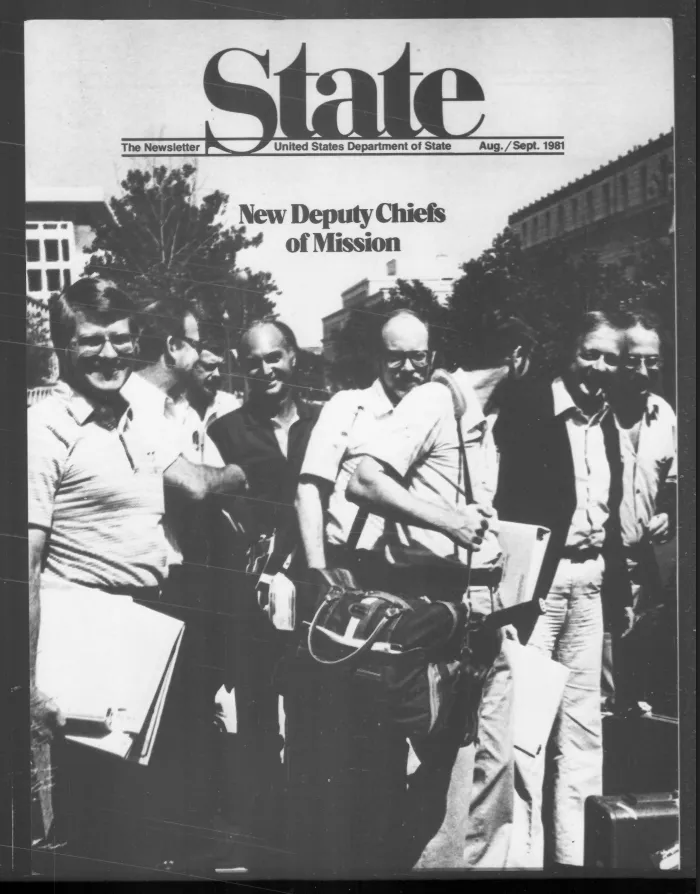
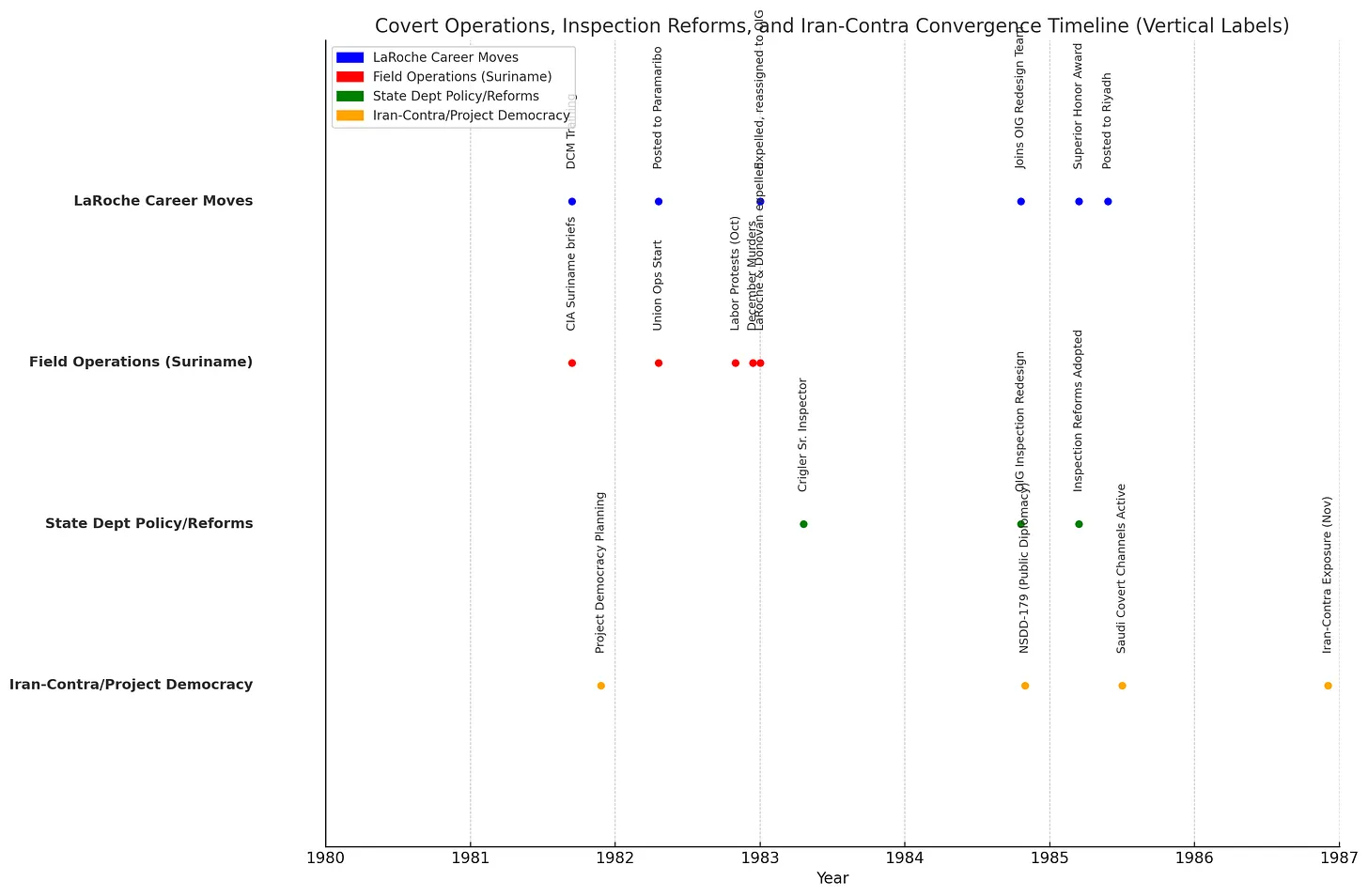
By the time LaRoche showed up in the August-September 1981 State Department Newsletter photo of DCM trainees, he had accumulated precisely the kind of experience needed for the Suriname operation. His training occurred exactly when Dewey Clarridge was briefing the CIA Director about Suriname—months before the formal diplomatic exchange with Cuba that would supposedly trigger U.S. concern.
In Paramaribo, LaRoche quickly established himself as ‘a man about town’—a classic cover approach for intelligence gathering. But his activities went far beyond routine intelligence collection. LaRoche’s regular meetings with labor leader Cyril Daal of the Moederbond, one of Suriname’s most influential union federations, were so concerning that Bouterse personally ordered surveillance of these contacts.
The strategic timing of these operations is perhaps most revealing. In October 1982, when Grenadian Prime Minister Maurice Bishop (Bouterse’s ideological ally) visited Suriname, LaRoche’s groundwork with labor leaders bore fruit in a devastating public relations crisis. While Bishop attempted to deliver a speech to 1,500 supporters, Daal simultaneously presided over a far more impressive rally that reportedly drew between 15,000 to 150,000 participants (in a country of just 350,000). Bouterse’s government was forced to watch as protesters waved banners reading ‘Down with military terror,’ ‘We want freedom of the press,’ and ‘Bouterse wants to destroy workers.’
The coordinated strikes brought electric companies, hospitals, ferries, banks, and insurance companies to a standstill. More damaging still, the government was forced to publicly acknowledge the evidence of LaRoche’s operations. On October 30, 1982, Bouterse’s Foreign Minister Harvey Naarendorp revealed that Daal had been under surveillance for months and ‘visited the American embassy three times a week’ to meet with a person who had previously ‘led the destabilization in Chile against the progressive government of Allende’—a direct reference to LaRoche.
When the strikes failed to mobilize the entirety of Suriname’s labor movement, LaRoche personally approached Fred Derby, leader of the Centrale-47 federation, attempting to recruit him for an anti-government rally on October 31. Derby declined, later escaping the December Murders when Bouterse explicitly told him he was needed to ‘cool the temper of the unions.’
What makes these operations particularly striking is their timing: the destabilization campaign occurred precisely when Bouterse’s right-hand man Roy Horb and former president Henk Chin A Sen were meeting with ALCOA, CIA, and NSC representatives in Washington about the upcoming coup.
While officially serving under Ambassador Duemling, LaRoche operated with striking independence, establishing direct communication channels that bypassed normal embassy protocols. As Duemling later admitted, ‘I was Ambassador in name only. LaRoche and Donovan were running the show.’
This narrative effectively demonstrates all three elements of Project Democracy’s strategy working in concert: LaRoche’s cultivation of opposition leaders (including Daal), Donovan’s psychological operations through media and protests, and military contingency planning through Lt. Col. Buys—all while parallel tracks of coup planning were advancing with Horb and Chin A Sen in Washington.
Surinamese government surveillance eventually uncovered LaRoche’s activities. Foreign Minister Harvey Naarendorp publicly accused LaRoche of leading destabilization efforts modeled after Chilean tactics against Allende.
Collapse and Expulsion
After the December Murders and the collapse of Operation Red Christmas, where fifteen opposition figures were executed by Bouterse’s regime, the destabilization campaign collapsed. LaRoche, alongside Edward Donovan, was expelled from Suriname in January 1983 for “destabilizing activities.”
Reintegration into Washington and Systemic Embedding
LaRoche’s career didn’t suffer the setback one might expect from a failed operation.
Instead, he returned to Washington and was assigned to the State Department’s Office of Inspector General (OIG). There, under the leadership of Senior Inspector T. Frank Crigler, he participated in a special team tasked with overhauling the Department’s inspection and audit procedures. Instead, he received a Superior Honor Award in 1985 for redesigning “policies and procedures for functional audits, program inspections, and post inspections”—suggesting his Suriname experiences were valued for informing future covert operations.
Their reforms modularized inspections into functional audits, program reviews, and post evaluations, thereby embedding greater flexibility to assess (and support) parallel covert influence activities under bureaucratic cover. For this work, LaRoche received a Superior Honor Award in February 1985.
Post-Suriname Career: Embassies as Covert Platforms
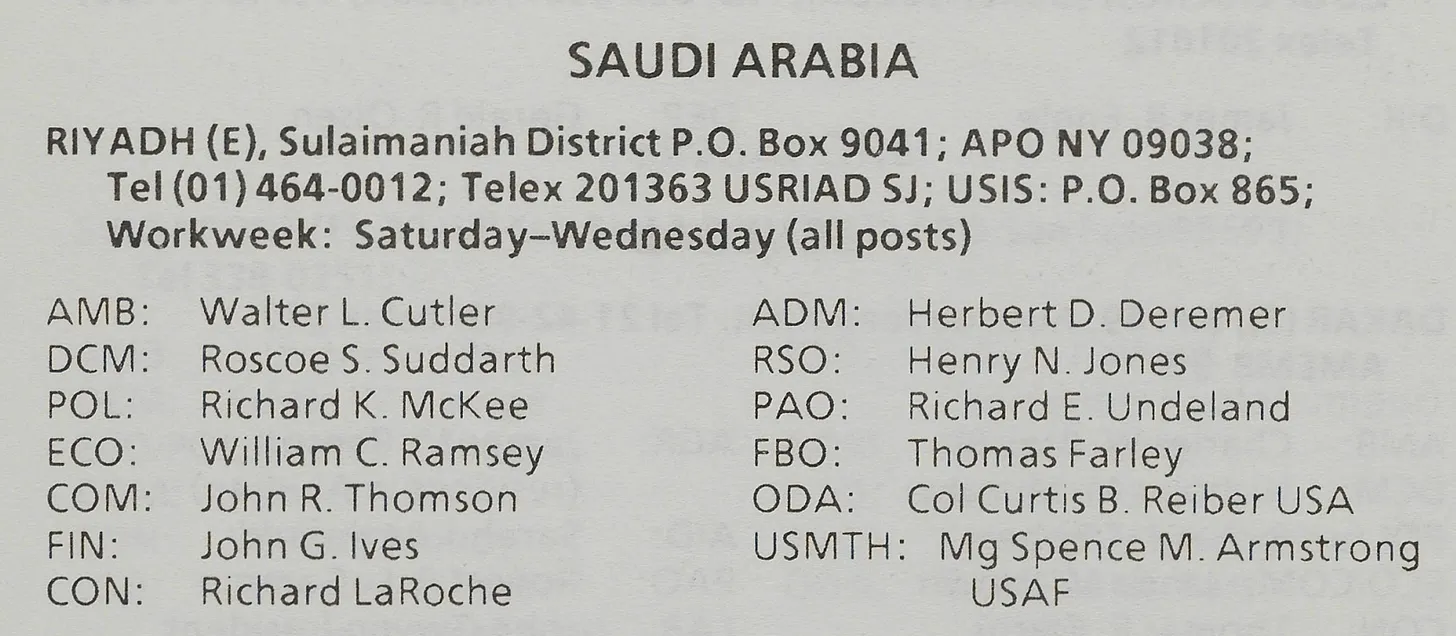
Following his work with T. Frank Crigler’s special inspection team at the State Department (1984-1985), LaRoche was stationed as Consul at the U.S. Embassy in Riyadh, Saudi Arabia where he was alternately listed as a member of the Office of the Inspector General. This posting coincided precisely with Saudi Arabia’s crucial role in the Iran-Contra network, when the Kingdom was providing millions in funding for Contras and facilitating arms deals with Iran. Saudi Ambassador Prince Bandar bin Sultan was actively coordinating with Oliver North during this period, serving as a key financial conduit for covert operations.
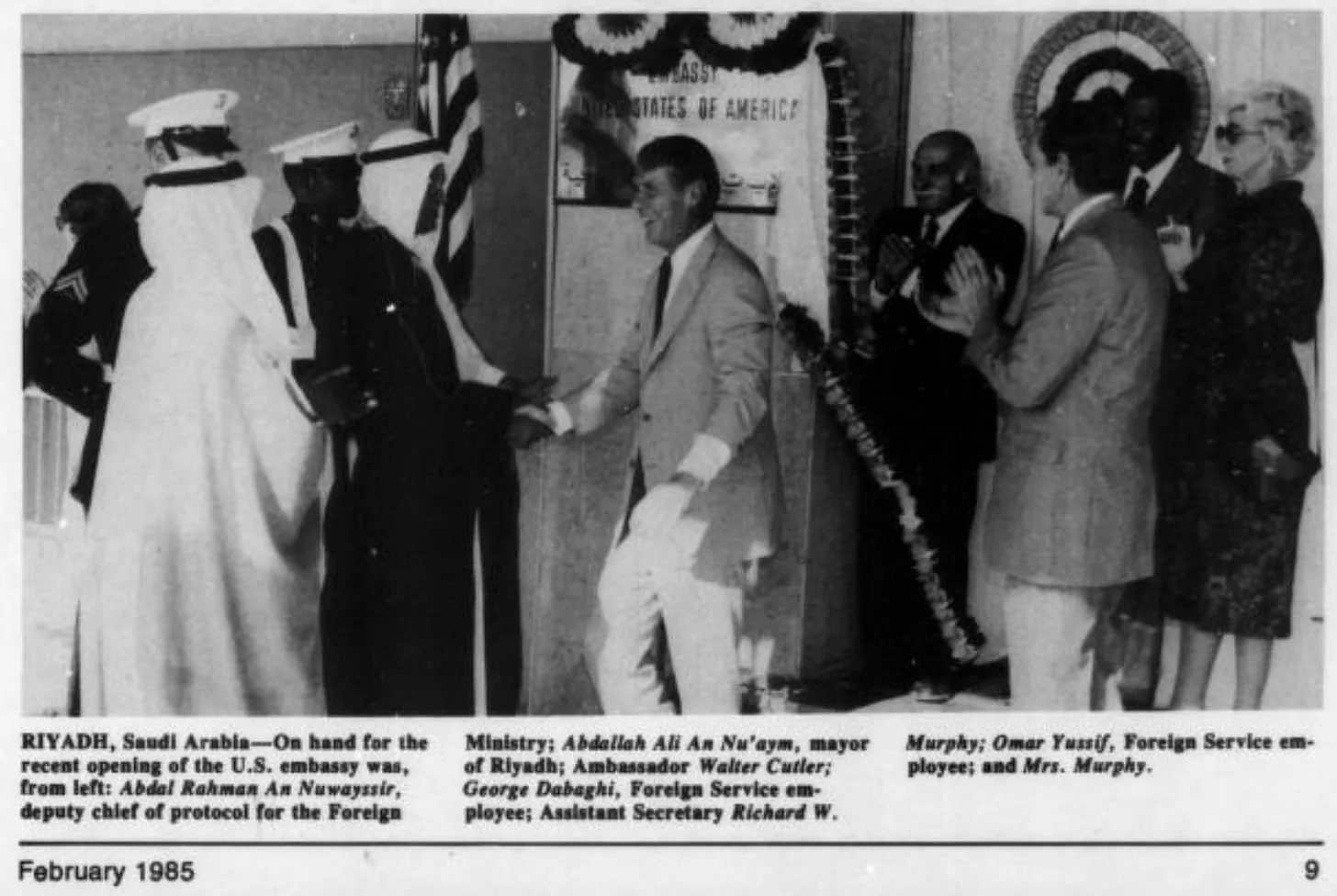
This continued pattern of postings to sensitive areas during critical periods strongly suggests LaRoche operated at the intersection of diplomacy and intelligence throughout his career. His presence in Saudi Arabia during the height of Iran-Contra operations indicates his role in Project Democracy activities likely extended well beyond the Suriname operation.
LaRoche’s career represents the perfect embodiment of what presidential advisor Arthur Schlesinger Jr. identified as the “47% problem”—the infiltration of U.S. diplomatic posts with intelligence operatives whose real mission often remained hidden even from their State Department colleagues.
Edward J. Donovan – Public Affairs Officer (PAO) and PsyOps Specialist
Early Life and Career Path
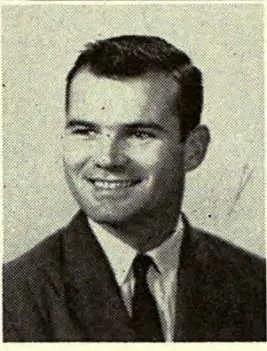
In his University of Florida yearbook photo from the late 1950s, Edward J. Donovan smiles confidently at the camera, a clean-cut young man with a bright future ahead. His college activities hinted at interests that would shape his career: membership in the Latin American Club and a position as chairman of the Mayor’s Council. What the yearbook couldn’t capture was how this Massachusetts-born student would one day apply his skills in one of the Cold War’s most secretive operations.
According to his biographical register of the Department of State, Edward was born on October 11, 1937, Donovan’s path to Suriname began with U.S. Navy service from 1954-1958, including overseas deployments during a particularly tense period of the Cold War. After his military service, he returned to academia, becoming a history instructor at the University of Florida from 1962-1963. But it was his subsequent recruitment into the United States Information Agency (USIA) that would define his career and ultimately place him at the center of Project Democracy’s implementation in Suriname.
USIA Assignments and Vietnam PsyOps
Donovan’s USIA postings reveal a carefully crafted career in psychological operations and cultural influence. From Recife and São Paulo to Rio de Janeiro, his early assignments in Brazil provided deep experience in Latin American affairs and likely language skills valuable for work in the Caribbean Basin. But it was his Vietnam-era posting that is perhaps most revealing—serving as a “provincial psychological operations advisor” in Saigon from 1970 before becoming “director of Psychological Operations” later that year.
By the time he was assigned to the U.S. Embassy in Paramaribo, Donovan had accumulated over a decade of experience in what the intelligence community euphemistically called “perception management.” Officially assigned to the USIA as a Public Affairs Officer, he had previously served in the Office of Assistant Director for Broadcasting, working on the Engineering and Radio Development drafting staff—a division tasked with designing Cold War media infrastructure for U.S. international broadcasting.
Within the USIA, Donovan was strategically positioned under the Caribbean Affairs desk of the Office of American Republic Affairs, where he had served as Acting Country Public Affairs Officer for Trinidad before his Suriname assignment. His immediate supervisor, Program Officer Robert “Bob” Riccio, would later rise to become Area Director for Latin America, placing Donovan within the direct command chain for executing U.S. strategic messaging across the Caribbean Basin.
Suriname Operations and Expulsion
In Suriname, Donovan operated as far more than a spokesperson. His arrival months before NSDD-61 was signed indicates that Project Democracy-style operations were already underway, using embassy resources to shape narratives, engage opposition figures, and support anti-Bouterse organizations like “De Stichting Herstel Democratie en Suriname” (The Foundation for the Restoration of Democracy and Human Rights in Suriname), which was formed in March 1982. The Bouterse regime clearly recognized the threat he posed—Donovan was expelled from Suriname in January 1983 for “destabilizing activities.”
Ambassador Duemling’s later admission that “LaRoche and Donovan were running the show” speaks volumes about their operational independence from normal diplomatic channels. Where LaRoche provided the covert operational expertise, Donovan brought the psychological operations and media manipulation skills necessary to implement the “public information task force” directive of NSDD-17.
Later Life
Donovan’s career after Suriname remains less documented than his earlier postings. What we do know is that he died relatively young—at just 52 years old—on December 12, 1989 in Lee County, Florida. His death came less than a month after the fall of the Berlin Wall, as the Cold War he had spent his career fighting was drawing to a close.
The psychological operations specialist who once shaped perceptions in Vietnam and Suriname was cremated through the Direct Cremation Society in Cape Coral, leaving behind a legacy that remained largely classified until decades after his death. While Richard LaRoche may have been the intelligence architect of Project Democracy’s Suriname operation, Edward Donovan was its voice—crafting narratives, mobilizing opposition, and implementing the media strategies that made the operation possible.
Lt. Col. Albert P. Buys – U.S. Army Attaché
Early Life and Military Background
Of the three key figures implementing Project Democracy in Suriname, Lt. Col. Albert P. “Bob” Buys brought perhaps the most strategically valuable background: born to Dutch parents from the East Indies, he likely spoke the language and understood the cultural terrain of the former Dutch colony in ways his American colleagues could not.
The Buys family arrived in the United States in March 1960 aboard the SS America when Albert was 21 years old. His father Albertus, a chemist who had survived imprisonment in a Japanese POW camp during World War II, instilled in his son both Dutch heritage and scientific aptitude. After attending Temple University and ROTC training, Buys entered active duty with the U.S. Army in 1965 and saw service in Vietnam with the 490th Combat Support Company by 1966.
Military records show his rapid rise through the ranks—from Second Lieutenant to Captain in the Quartermaster Corps by 1968, and reaching Lieutenant Colonel by October 1971. This accelerated progression, particularly during the Vietnam era, suggests valuable specialized knowledge and likely intelligence training that would later prove useful in Suriname.
Suriname Posting and Operational Role
As the Office of Defense Attaché (ODA) at the U.S. Embassy in Paramaribo beginning in spring 1982, Buys represented a direct Department of Defense intelligence presence during a critical period—after the failed March 1982 Rambocus coup attempt and as U.S. covert planning for Suriname was accelerating. Unlike LaRoche and Donovan, who were eventually expelled for “destabilizing activities,” Buys maintained a lower profile that allowed him to remain in country even after the December Murders and subsequent diplomatic breakdown.
His unique value to the triumvirate implementing Project Democracy came from multiple angles: his Dutch language skills provided access to information his colleagues couldn’t access directly; his military background complemented LaRoche’s intelligence expertise and Donovan’s psychological operations capabilities; and his formal role as military liaison gave him legitimate access to Surinamese armed forces while gathering intelligence on Cuban and Soviet influence.
What sets Buys’s contribution apart was his role in contingency planning—precisely what NSDD-61 was ostensibly designed to address. As the Pentagon’s representative on the ground, his assessments of the Surinamese military’s factional divides would have directly informed Washington’s approach to potential intervention or evacuation scenarios. When LaRoche and Donovan were expelled in January 1983, Buys remained—maintaining critical continuity of intelligence during a period of deteriorating relations.
The son of a Dutch East Indies expatriate who had survived Japanese internment, Buys brought unique perspectives on post-colonial instability to his role in Suriname. Where LaRoche was the covert operative and Donovan the propaganda specialist, Buys was the quiet military observer whose cultural fluency made him invaluable to Project Democracy’s implementation in a former Dutch colony at the precipice of Cold War conflict.
The Official Presence: The Ambassador Sidelined
Robert W. Duemling — Ambassador and Official Diplomatic Face (1982-1984)
Diplomatic Career and Suriname Posting
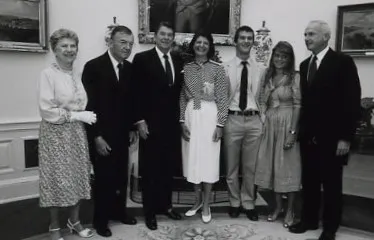
While the “Wolf Pack” allegedly operated in the shadows, Robert W. Duemling represented the official face of the United States in Suriname during its most turbulent period under Bouterse. His background, detailed in his ADST Oral History, paints a picture of a traditional, accomplished diplomat seemingly unprepared for the covert machinations unfolding within his own embassy.
Born in Indiana but transplanted to San Diego during WWII, Duemling followed a path typical of his generation’s establishment: high school in California, Yale (majoring in American Studies), a fellowship year at Cambridge studying architectural history, and an M.A. in Art History back at Yale. His entry into public service came via Navy OCS during the Korean War era (1953). He served as a pre-designated intelligence officer, planning nuclear strike missions against potential targets in China and the Soviet Maritime provinces while based in Japan and deployed on carriers in the Western Pacific. This early exposure to the sharp end of Cold War strategy contrasted with his academic interests.
Inspired by a fellow officer, he took and passed the Foreign Service exam while still in the Navy. Joining the State Department in 1957, his early career included roles that provided broad exposure:
- Executive Secretariat (S/S): His first assignment involved editing the “Morning Summary” of key overnight telegrams for senior Department leadership, offering a crash course in policy priorities and bureaucratic navigation.
- Rome (1960-1963): Served as aide to political appointee Ambassador Zellerbach and then career Ambassador Frederick Reinhardt, before moving to the Political Section during the controversial “Apertura-a-Sinistra” (Opening to the Left) debates.
- Kuala Lumpur & Borneo (1963-1966): Gained diverse experience running the Consular Section, working in the Economic Section (reporting on rubber and tin), and finally serving as Consul in Kuching, Sarawak (East Malaysia) during the Indonesia-Malaysia “Confrontation.”
- Washington (1966-1970): Returned as Special Assistant to Assistant Secretary for East Asian and Pacific Affairs William Bundy, and later Marshall Green, during the height of the Vietnam War. He acted as Executive Secretary for the inter-agency SIG/RIG groups and organized advisory panels with prominent academics.
- Tokyo (1970-1974): After language training, headed the Political-External section, liaising with the Japanese Foreign Ministry. He experienced the Nixon “shokku” firsthand, working closely with the Japanese to maintain UN support for Taiwan only to be blindsided by Kissinger’s secret diplomacy with Beijing.
- Washington (1974-1976): Served as Executive Assistant to Deputy Secretary Robert Ingersoll, gaining insight into high-level personnel appointments and Kissinger’s operational style.
- Ottawa (1976-1980): Served as Deputy Chief of Mission under Ambassador Tom Enders, focusing on internal embassy management, consular oversight, and substantive issues like fishing rights, energy pipelines, the “Orlikow” affair (related to past CIA funding of psychiatric research), and the Quebec separatism movement.
- Senior Seminar & Sinai MFO (1980-1982): Attended the Senior Seminar, then played a key role negotiating contributions from various countries for the Multinational Force and Observers (MFO) established to monitor the Camp David Accords in the Sinai.
It was after the MFO assignment that his old colleague Tom Enders, now Assistant Secretary for Inter-American Affairs, tapped him for the Suriname post in 1982. Duemling viewed it as a “peculiar” but challenging assignment, requiring him to learn Dutch. He arrived in August 1982, just months before the December Murders.
Marginalization in Suriname
According to his own oral history, Duemling found himself sidelined from key operations almost immediately. LaRoche (the DCM until Jan 1983) and Donovan (USIS Chief until Jan 1983) were already established and, in Duemling’s view, “running the show.” He recounts being kept unaware of certain actions, most notably the CIA Station Chief’s independent handling of the forged “Horb letter” incident, which Duemling felt was “disloyal” and left him dangerously uninformed when confronted by Bouterse. He also learned later of “silly things” done by his expelled subordinates and critiqued the poor tradecraft used by the CIA in handling Roy Horb (the ponies, the US trip) which likely contributed to Horb’s demise.
Despite feeling operationally bypassed initially, Duemling remained Ambassador after the expulsions and the December Murders. He argued against a US invasion when briefing the Joint Chiefs in 1983, maintained diplomatic contact with the regime (including Bouterse), reported on the growing and then receding Cuban influence, and advocated for a policy requiring verifiable democratic reforms from Bouterse before resuming aid. His perspective was that of the official representative trying to manage a volatile situation through diplomatic means, even as other elements (some within his own embassy initially, then later through initiatives like “Operation Guiminish” planned in Washington and Brasilia, which he was also initially unaware of) pursued different, often covert, agendas. His experience highlights the stark disconnect that could exist between overt diplomacy and covert action within the same mission. Upon his departure in 1984, the Bouterse government awarded him Suriname’s highest decoration for a foreigner, acknowledging his professional handling of the relationship during extremely tense times.
Lone Wolf: T. Frank Crigler
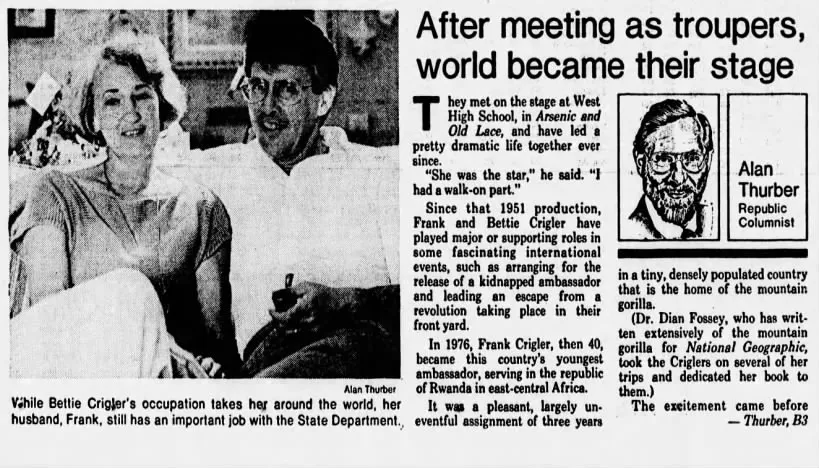
While not part of the operational team in Suriname during 1982, Trusten Frank Crigler’s career and subsequent connection to Richard LaRoche provide valuable context about the professional environment and networks these individuals moved within.
Crigler was a highly experienced career Foreign Service Officer (joining in 1961) with a background mirroring the complexities of the era. His postings included politically charged environments like Zaire (during the Congo crisis, where he received an award for evacuation efforts), Gabon, and multiple tours in Mexico. He served as U.S. Ambassador to Rwanda (1976-1979) and later as Deputy Chief of Mission in Bogota, Colombia (1979-1981), where he acted as Chargé d’Affaires during the extended hostage crisis involving U.S. Ambassador Diego Asencio. Following this, he served as Director of the Office of Mexican Affairs (1981-1983). (Source: The American Presidency Project; Arizona Republic, June 3, 1985).
Crucially, Crigler’s transition to become a Senior Inspector in the State Department’s Office of the Inspector General in 1983 coincided with a major government-wide reform effort. As documented in the June 1982 report by the President’s Council on Integrity and Efficiency, the Reagan administration had launched an unprecedented initiative to strengthen Inspector General operations across all federal departments. This effort, which reported over $5.8 billion in direct savings and improved use of funds in just six months, established new standards for audits, investigations, and reporting that would shape Crigler’s work.
It was in this capacity, in late 1984, that Crigler led the special team tasked with redesigning the Department’s inspection and audit procedures. Richard LaRoche, now back in Washington following his Suriname assignment, was a member of this Crigler-led team and shared in the Superior Honor Award given in February 1985 for this work. (Source: State Dept. Newsletter, Nov 1984 & Feb 1985).
The timing of Crigler’s leadership in redesigning State Department inspection procedures is particularly significant when viewed against the backdrop of increasing political tension over the State Department’s Inspector General office. As illustrated by Senator Jesse Helms’ later actions to remove insider IGs through the 1986 Omnibus Diplomatic Security and Antiterrorism Act, this was a period when oversight of State Department operations was becoming politically contentious. Crigler’s team was therefore operating during a time of transition and heightened scrutiny of the IG’s role.
The timing of this collaboration between Crigler and LaRoche in 1984-1985, coinciding with the height of Iran-Contra operations, is particularly noteworthy. Their work on “redesigning policies and procedures for functional audits, program inspections, and post inspections” could have served as a mechanism for reviewing and refining covert operations protocols based on lessons learned from Suriname and other Project Democracy implementations.
The Inspector General report framework established in 1982 emphasized computer matching, investigation referrals, and prosecution activities – all systems that Crigler’s team would have been adapting specifically for State Department operations. This context helps explain why their work received special recognition, as they were implementing sensitive oversight mechanisms at a time when billions of dollars in government spending were being scrutinized.
Following this assignment with Crigler’s team, LaRoche was posted to Saudi Arabia as Consul at the U.S. Embassy in Riyadh—a critical node in the Iran-Contra network. This continuation of LaRoche’s career in sensitive areas during key operational periods further emphasizes the systematic nature of Project Democracy’s personnel deployments and suggests LaRoche remained a valuable asset in implementing Reagan-era covert foreign policy initiatives well beyond Suriname.
LaRoche’s posting to Saudi Arabia coincided with the period when, according to the July 1985 National Intelligence Council activity report, there were intensive discussions about Middle East issues, nuclear cooperation with Pakistan, and coordination between intelligence agencies and the State Department. Ray Gonzales, who is identified in the NIC report as ‘a State Department Inspector General,’ was meeting with intelligence officials about coordination between the East Asia Bureau and the Intelligence Community in the same timeframe.
Crigler himself later expressed disagreement with Reagan administration policy in Central America and went on to serve as Ambassador to Somalia (1987-1990).
Mechanisms of Covert Control: Fieldcraft in Suriname and Beyond
- Labor Union Penetration and Agitation
- Psychological Operations through Media Manipulation
- Diplomatic Compartmentalization for Parallel Intelligence Channels
- Militarized Contingency Planning
- Redesign of Inspection and Audit Procedures to Support Dual Functions
The December Murders and the Collapse of Operation Red Christmas
The December 1982 murders destroyed Washington’s immediate plans for regime change in Suriname. Expulsions of key operatives ended overt influence efforts, but covert intelligence collection persisted quietly.
Post-Suriname Institutionalization: Redesigning the Infrastructure
Under Crigler’s leadership, LaRoche helped reshape the State Department’s inspection regime, allowing embassies greater operational cover and dual-use flexibility at a time when Iran-Contra logistics demanded it.
Legacy and Implications
Suriname served as a case study for embedding clandestine influence structures into normal diplomatic channels. LaRoche’s Riyadh posting placed him at a strategic node in the Iran-Contra financial web, linking Project Democracy’s field operations to their institutionalized, global-scale successors.
Source:
Link:
Internal Link:
Date:
October 26, 2025