Where are they now?
Revolutionaries, Rogues, and Rebels Revisited
Sep 19, 2024
Desi Bouterse: The Strongman Who Refused to Fade Away
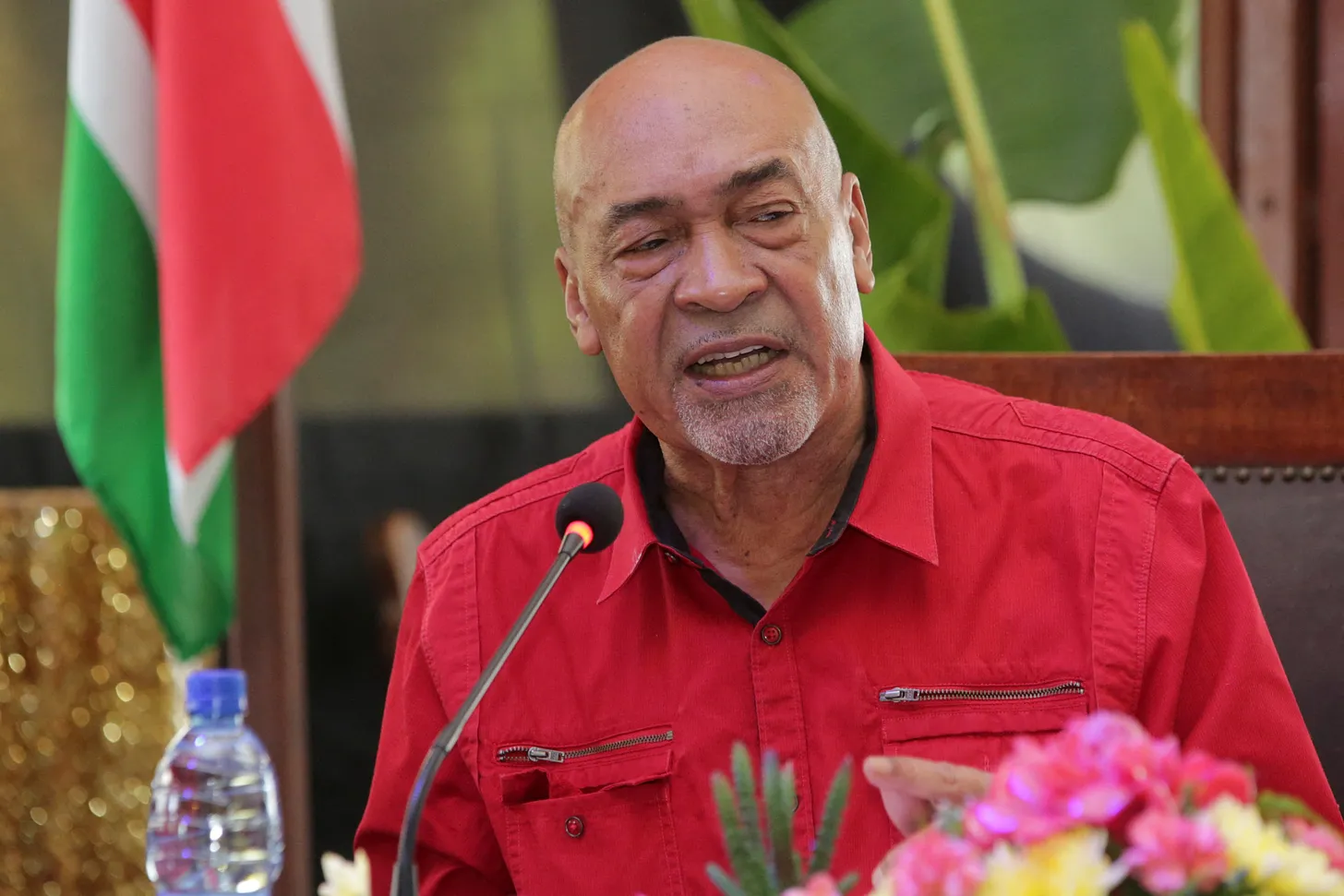
Desi Bouterse knew better than to believe in easy retirements. He’d seen too many former U.S. allies—Somoza in Nicaragua, Hussein in Iraq, Noriega in Panama—topple, leaving behind nothing but scandal and prison cells. Power wasn’t just his ambition; it was his lifeline. The alternative? A one-way ticket to international pariah status, or worse.
Faced with the daunting task of keeping Suriname afloat, Bouterse made alliances that raised eyebrows in diplomatic circles. Gaddafi, Pablo Escobar—if these names don’t scream “great company,” you’ve probably been paying attention. But in the murky waters of geopolitics, beggars can’t be choosers.
Throughout his career, legal troubles followed him like a persistent shadow. A 1999 drug trafficking conviction in absentia by a Dutch court was just the beginning. When Suriname finally began proceedings for the December murders in 2007, Bouterse and his cohorts turned the legal system into a maze of delays and obstructions. (Sound familiar? Dictators seem to come with blueprints for these things.)
In a brazen move that spoke volumes about his grip on power, Bouterse—then serving as president—pushed through an amnesty law in 2012. Essentially, he handed himself and his allies a ‘get-out-of-jail-free’ card, because if you can’t rewrite history, at least you can rewrite the law. The international community bristled, but to his supporters, it was a necessary step for “national reconciliation.”
By the time we hit July 2024, the story took another twist. Sentenced to 20 years for the December murders, Bouterse simply… didn’t show up to start his sentence. Cue his wife’s no-nonsense statement: “He has no intention of surrendering.” Gotta love the honesty, if nothing else.
It’s a fitting end for a man who seized power in a 1980 coup, ruled with an iron fist until 1987, then managed the rare feat of returning to power through the ballot box from 2010 to 2020. Love him or loathe him, Bouterse’s ability to weather storms is a testament to his remarkable—albeit sinister—cunning.
Ronnie ““Biggie Bravo” Brunswijk: From Rebel to Rapper to Vice President (and Still Dodging Drug Scandals)
Remember our old friend Ronnie Brunswijk? Well, “The Black Robin Hood” has been busy.
Back in 1990, we saw him nabbed at the airport with 50,000 guilders, right after that cocaine plane fiasco with Frits Hirschland. Fast forward to that now-legendary Gert Berg interview—gold chains, flashy suit, and all—where Ronnie claimed regret for his armed struggle against Bouterse. Of course, he vehemently denied any claims of his connection to Klaas Bruinsma, Amsterdam’s “Godfather,” despite the mountain of evidence suggesting otherwise. (Is anyone ever really innocent in these circles?)1
It looked like the end of the line for him, but Ronnie had other plans. By the 2000s, he’d transformed from fugitive to political force, founding the General Liberation and Development Party (ABOP). The 2010 election fiasco, where his party missed deadlines in key constituencies, was just a bump in the road for Ronnie, who doesn’t seem to understand the concept of setbacks.
In classic Ronnie style, he bounced back with flair. By 2013, he was hosting campaign events that were part political rally, part pop concert. Imagine André Kamperveen Stadium—American rapper Rick Ross on stage, and Brunswijk himself, now rapping under the name Romeo “Biggie Bravo,” announcing his bid for the presidency. Because if Bill Clinton can ride a sax solo to the White House—why not hip-hop, right?
By 2014, Paramaribo’s streets were lined with pitch-black Hummers bearing his portrait—Brunswijk as a messianic figure, cowboy hat on, broad smile, and arm outstretched, ready to make it rain cash at a moment’s notice. The imagery was clear: the King of Marowijne had arrived.
Despite his colorful history—including a 1999 cocaine trafficking conviction in the Netherlands—Ronnie’s political star kept rising. By June 29, 2020, he’d achieved the ultimate political twist: unanimously elected chairman of the National Assembly, representing ABOP. But Ronnie didn’t stop there. Oh no—he was just warming up. Soon after, he snagged the vice presidency, a remarkable transformation from guerrilla fighter to one of the highest offices in the land.
But even as Brunswijk climbed the political ladder, his old life never really let go. Recent leaks from Colombia’s Attorney General’s Office suggest that Brunswijk’s ties to the drug trade are far from over. It’s the gift that keeps on giving. In 2020, just after taking office as vice president, he was allegedly linked to a botched drug seizure operation in Suriname. The DEA even suggested that he was in contact with notorious figures like Jayant “Alex” Roman and Gilbert Samuels.
Adding to this, Suriname’s former president, Desi Bouterse—Brunswijk’s one-time nemesis and later political ally—was also implicated in these leaked emails. Despite his advanced age and claims of retirement, Bouterse is still believed to be involved in drug trafficking, acting as a broker between Surinamese and Colombian traffickers. These revelations highlight the deeply entrenched criminal networks that continue to operate in Suriname, with Brunswijk and Bouterse at their center.
And just when you thought Brunswijk’s story couldn’t get any more surprising, he pulled off another feat. In 2021, at the age of 60, he set a record as the oldest professional soccer player to take the field—playing for a club he owns, alongside his son Dino, one of his fifty children.
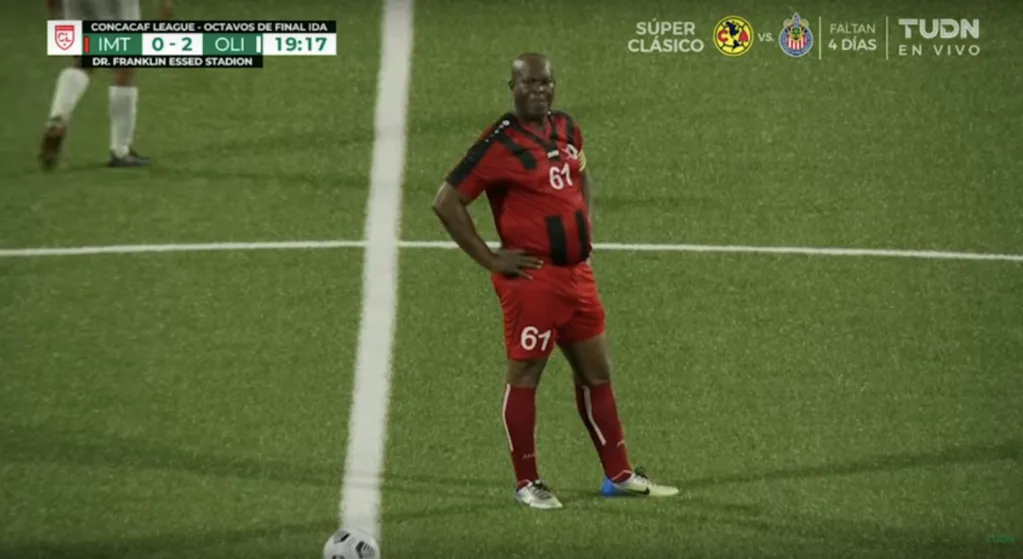
From the jungles of Suriname to the halls of power, from rap stages to soccer pitches, Ronnie Brunswijk’s journey has been anything but predictable. The man once known for his role in a cocaine trafficking scandal has reinvented himself time and again, keeping us all on our toes. But as these new allegations surface, it’s clear that Brunswijk’s complex legacy is far from settled. As Suriname heads into the next election cycle, one thing is certain: with Brunswijk in the mix, it’s bound to be anything but boring.
Oliver North: From Iran-Contra Scandal to Political Comeback Kid (And Still No Dirt on Suriname)
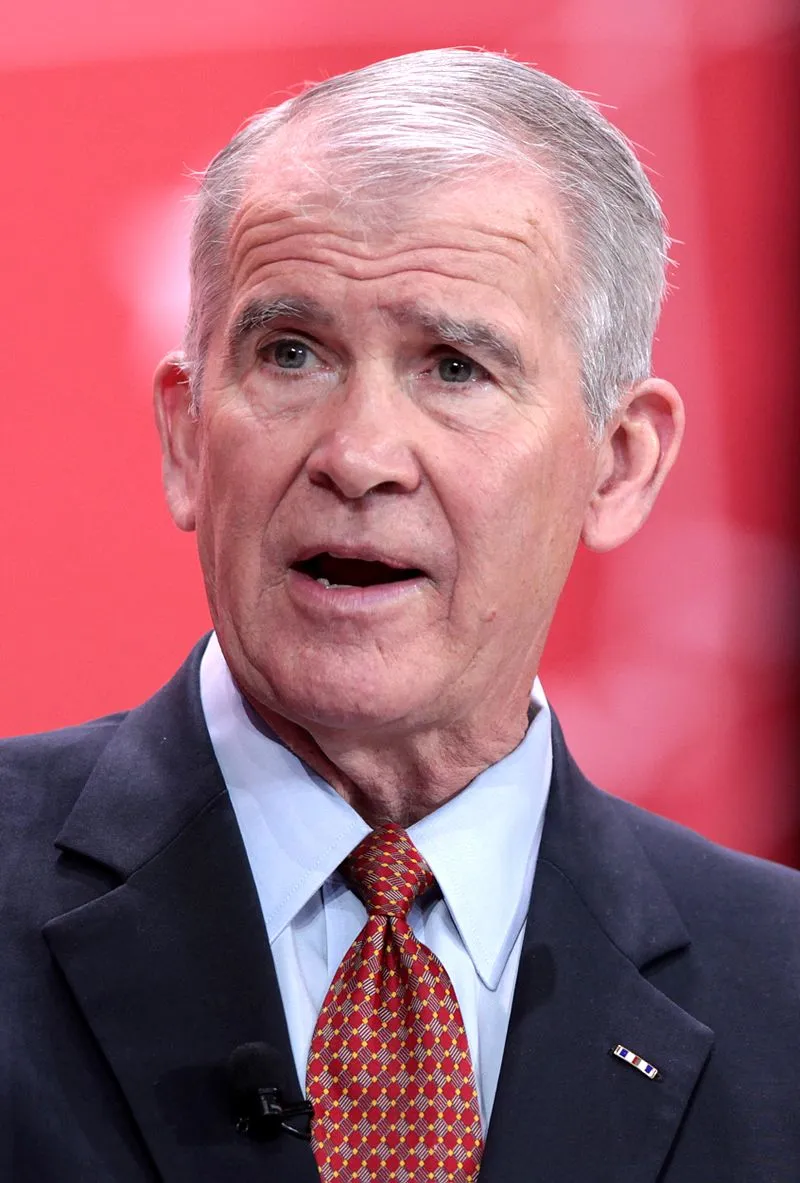
What about the Marine Lt. Colonel at the heart of the Iran-Contra scandal? Well, if you thought Ollie North’s life peaked with those congressional hearings in the 80s, you’d be wrong. Turns out, that was just Act I.
After facing down 16 felony charges in 1988, North seemed destined for a long stint behind bars. He was found guilty on three counts, including the destruction of documents and obstructing Congress. But in a legal twist that would make any TV courtroom drama proud, an appeals court vacated these convictions in 1990. Turns out, Ollie’s immunized congressional testimony was improperly used against him. Oops!
But freedom wasn’t enough for North. He decided to dive headfirst into the world of politics, running for a U.S. Senate seat in Virginia in 1994. Picture it: the man who’d been at the center of one of the biggest political and drug-running scandals in recent memory, now asking for votes. He managed to snag the Republican nomination, but ultimately lost to the Democratic incumbent in a race that had political junkies on the edge of their seats.
Undeterred by his loss at the ballot box, North found a new arena: the media. He reinvented himself as a conservative commentator, hosting radio and TV shows, and penning books. It turns out the same charisma that had Congress and the nation captivated during the Ollie-mania of the Iran-Contra hearings played well on cable news.
In a move that raised eyebrows even among those who thought they’d seen it all, North was named president of the National Rifle Association in 2018. But his tenure at the helm of the powerful gun rights organization was short and anything but sweet. By 2019, he was out, losing a power struggle with longtime NRA boss Wayne LaPierre amid accusations of financial impropriety flying in all directions.
Now, here’s where it gets interesting for us. Despite all the twists and turns of Iran-Contra, and all the scrutiny North has faced over the years, no one’s ever managed to connect him officially to any shenanigans in Suriname. No drug charges, no nothing. It’s a curious blank spot in a story that otherwise seems to span the globe.
North remains a Rorschach test in American politics. To some, he’s a patriot who took the fall for his higher-ups. To others, he’s the poster boy for government overreach and shady dealings. Love him or hate him, one thing’s for sure: if Ollie North’s involved, you better keep your eyes peeled.
Dr. John: From Nazi Biker to Mercenary Shrink and International Man of Chaos
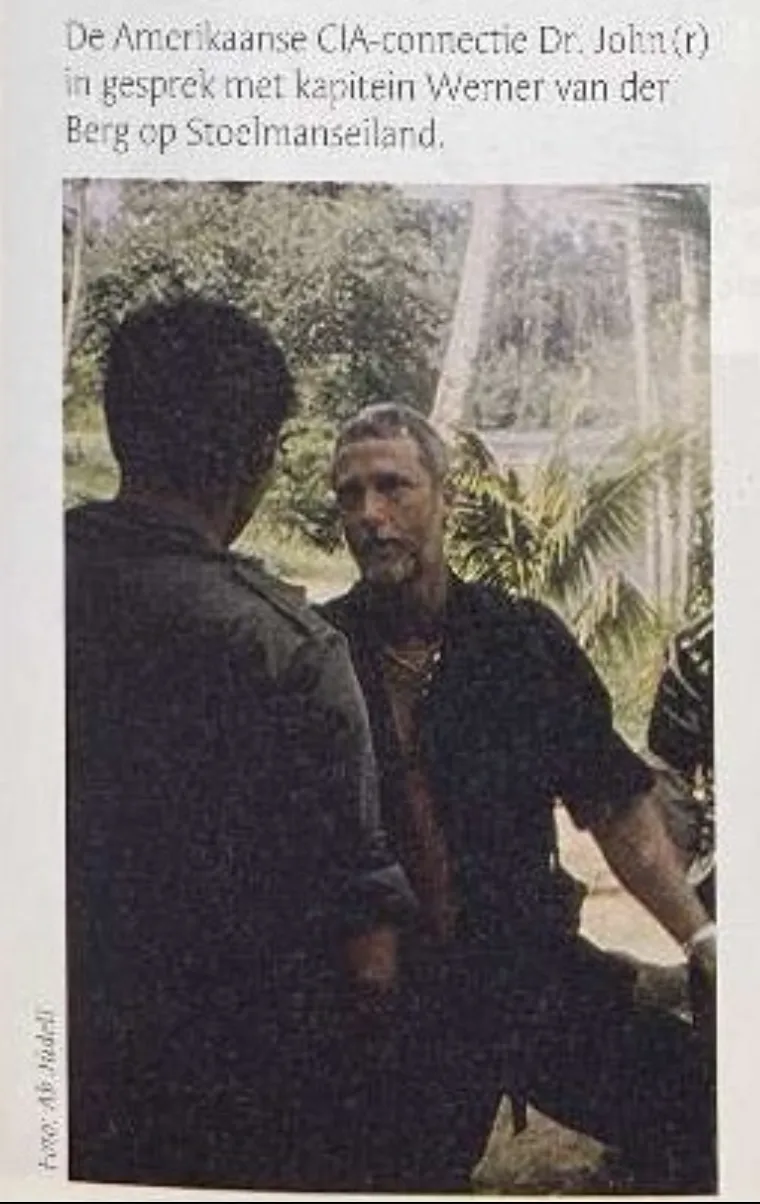
Our clinical Nazi psychologist turned mercenary, Dr. John McClure, took career changes to a whole new level. He was the central figure in the attempted overthrow of the Surinamese government by the Council for the Liberation of Suriname from 1983 until Frits Hirschland arrived in 1987.
Though he denied being a CIA agent, Ronnie Brunswijk’s press secretary, Frits Hirschland, who snapped the only known photo of him unobscured to protect the doctor’s identity, claimed otherwise. Known for his aviator glasses, camouflage hats, and a prominent tattoo on his left forearm, Dr. John kept his face hidden from most cameras. His mysterious persona was legendary among reporters like CNN’s Chuck Caro and the mercenary-hungry readers of Soldier of Fortune.
Yet, Dr. John was more than just a mercenary. When he returned home, Dr. John McClure, penned his own accounts of his times as a mercenary in Nicaragua and Suriname entitled, “Soldier without Fortune: True Firsthand Account of a Free-Lance Mercenary in Central America.”2 He continued his mercenary work in Africa and Southwest Asia, until his final years between New Jersey, California, and Kenner, LA—headquarters of Tommy Lynn Denley’s coup plotting.
San Diego Reader editor Judith Moore recruited McClure on the strength of his Soldier of Fortune exploits. He wrote for her under the pseudonym John Abraham Fultz III, and his notable article “Through the Belly of the Beast” detailed his personal battle with AIDS—a deeply humanizing, still brash, yet candid contrast to his brutal mercenary persona.
I later connected with Dr. John’s former friend and paramour from Costa Rica, known simply as Amy. Initially, Amy expressed an openness to talk about her time with Dr. John. However, after reading my previous work on his life, her tone shifted. She firmly denied many of the claims John had made in his book, particularly those suggesting she had ties to the CIA or that there had ever been any romantic involvement between them. Amy dismissed the idea that their time together involved any espionage at all, insisting that John had misinterpreted their interactions.
She also outright rejected John’s claim that “Mark Horsky was ever associated with the CIA,” clarifying that she and Horsky “didn’t ‘tie the knot and head back to the States,” as Dr. John had implied in his writings.
In response to Amy’s denials, I followed up with specific points from my research, including her military records, public records of her marriage and divorce to Horsky, and John’s own accounts. Despite these documented contradictions to some of her statements, Amy ceased all communication with me. Whether out of a desire to protect her own privacy or simply a reluctance to revisit that turbulent chapter of her life, her silence remains an unresolved chapter in this story.
As I continue to uncover more about Dr. John’s enigmatic life, his complex relationships and shadowy dealings leave much to be explored. I have filed a recent FOIA request to the FBI, which could reveal new insights. If any of his remaining family or friends are reading this and would like to share their stories, I would welcome the opportunity to hear more.
Tommy Lynn Denley: The man who would be king of Suriname
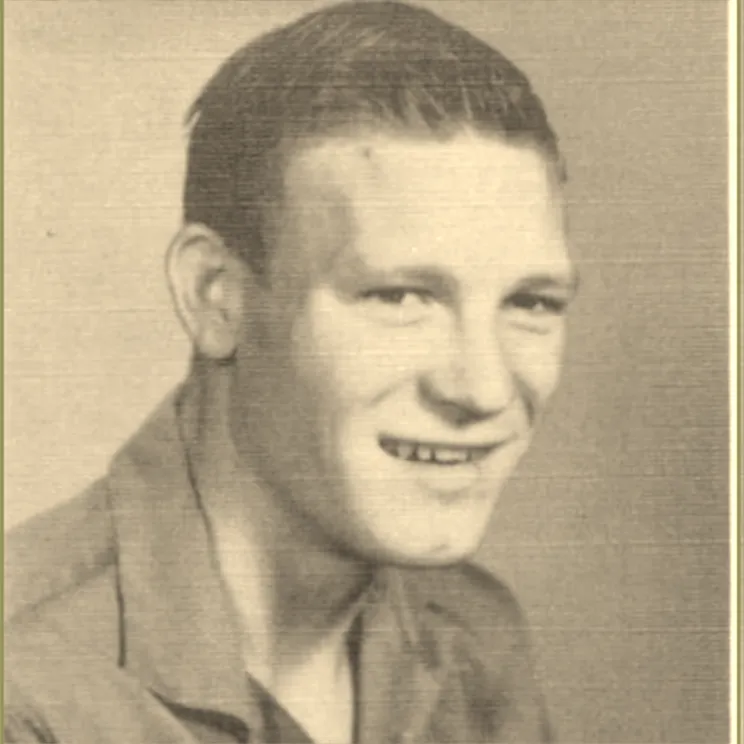
Dubbed “The man who would be king of Suriname” by Assistant U.S. Attorney Fred Harper, Tommy Lynn Denley was the alleged mastermind behind the failed 1983 coup attempt in Suriname. Denley claimed that U.S. Senators and Dutch financiers had approached him about staging the coup, which only deepened the intrigue surrounding him. At 6’0″, blonde-haired, and brown-eyed, Denley often used aliases and had ties to both Silver Spring, Maryland (not far from Fort Meade and the NSA) and Brunswick, Georgia (home to Federal Law Enforcement Training Centers).
Denley’s career was as eclectic as it was shady. He’d served as a U.S. Customs patrol officer, a Panama Canal Zone policeman, and even worked for an aviation company with mob connections. His name surfaced in various drug smuggling operations, most notably with Georgia Jet, Inc., which eventually led to his 1986 arrest for violating both the Currency Act and the Neutrality Act in connection with the Suriname coup plot. Some speculate that Denley may have been a civilian operative for Project Democracy, whose cover was blown. Unfortunately, many of the juicier details of CIA involvement were never revealed, as all the men tied to the coup took plea deals.
After serving a 2.5-year prison sentence, Denley’s life took a strange turn. He led an almost nomadic existence, drifting from job to job. At one point, he was working at an A&P Quick Stop in Grenada, MS. Later, he was a long-haul truck driver under the CB handle “T-Bird Express,” and there are even whispers that he dabbled in online fantasy wolf role-playing communities—a far cry from his coup-plotting days.
Curiously, no obituary or memorial ever surfaced for Tommy, in stark contrast to his brother, who received a standard tribute. This odd absence raises the question: did Denley’s family distance themselves from the failed coup and its lingering stain on the Denley name? Or perhaps he slipped into obscurity intentionally, vanishing in the shadow of his past?
As someone who’s typically good at finding graves, obituaries, or records for public figures like Tommy, I can’t help but wonder if he was using an alias in his later years. He may have gone by Tom Denly or Tom Len Denley, as some records suggest. His DOT records indicate that Tommy moved from Grenada, MS, around 2004 to 1641 Liberty Hill Dr. in Madison, TN. There was even a Barbara Sue Denley (maiden name Stone) listed as living with him in both Grenada and Tennessee, suggesting he may have married.
Tommy Denley passed away in 2013, taking his secrets—and perhaps a few untold stories—with him to the grave.
George Arthur Baker: A Drug Dealer, a Revolutionary, and a T-Shirt Salesman Walk into a Coup
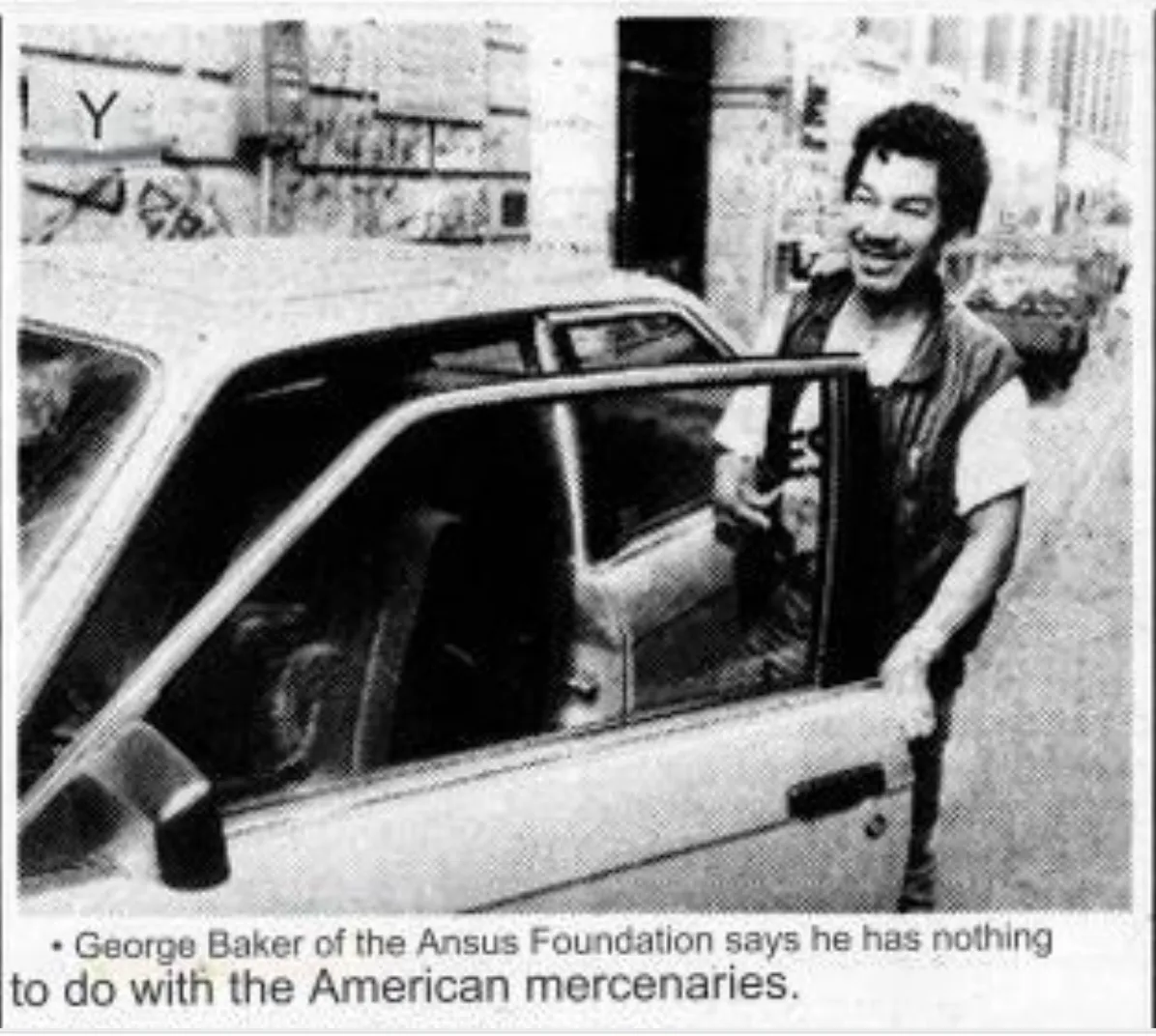
Our friend who got unceremoniously expelled from French Guiana after the Tommy Lynn Denley coup fiasco? Well, he didn’t exactly ride off into the sunset.
Nope, George Arthur Baker headed back to Amsterdam and, in a move that screams “totally innocent,” started hawking SURINAM JUNGLE COMMANDO t-shirts out of the back pages of Soldier of Fortune magazine. Because nothing says “I wasn’t involved in a coup” like silk-screening merch, right? You could even see these fashion statements hanging in the window of his hash bar. Talk about diversifying your portfolio.
Even as Dutch papers were claiming he was bankrolling 200 mercenaries’ training in New Orleans, Baker kept insisting he had nothing to do with the Denley coup attempt. When it all went south, a “furious” Baker told the press, “I have been running my feet off for years to arrange an opposition to them.” Poor guy, all that cardio for nothing.
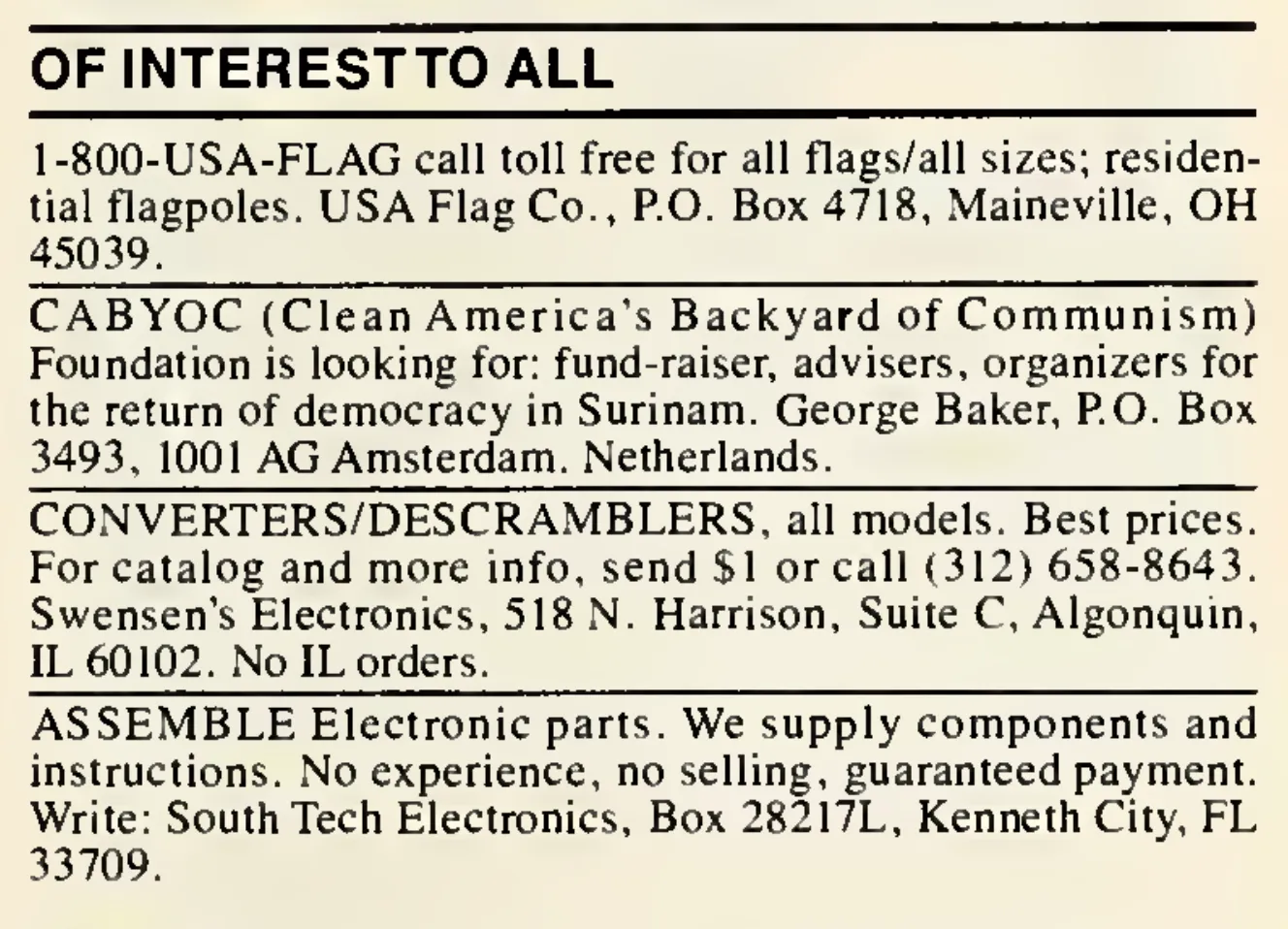
But Baker wasn’t about to let a good coup go to waste. He quickly pivoted to drumming up funds in the U.S. through a foundation called CABYOC (Clean America’s Backyard of Communism). And we can’t help but appreciate a catchy acronym and a little Cold War-era red scare tactic.
The 1990 Amsterdam Raid: More Than Just T-Shirts
But wait, there’s more! On April 16, 1990, Amsterdam police raided two of Baker’s buildings on the Oude Hoogstraat, where Café De Dood had once been located and where his Karel Appel Café still stood. And boy, did they hit the jackpot: nearly six kilos of hashish, over 2,000 methadone pills, and a pharmacy’s worth of other drugs (seresta, rohypnol, paracetamol, valium, paludrine). Oh, and let’s not forget the 41,950 guilders in cash and bags full of loose change.
But in true George Baker fashion, he wasn’t going down without a fight. Baker tried to wriggle off the hook on a technicality, claiming the police had raided the wrong address. According to him, the officers had entered through Oude Hoogstraat 27, when they were supposed to raid number 29—a distinction that was muddied by the labyrinthine layout of his interconnected properties. The officers themselves admitted that the buildings “flowed into each other in a maze of corridors,” making it difficult to tell where one property ended, and another began. Baker hoped this technicality would make the evidence inadmissible, as he argued the police had entered through the wrong door.
As for the drugs? Baker’s bizarre explanation was that they were meant to poison Suriname’s water supply to incapacitate Bouterse’s supporters, allowing resistance forces to arrest them easily. This outlandish claim echoed Karl Penta’s plans to sabotage the water supply in Albina, adding yet another layer of intrigue and absurdity to Baker’s ever-evolving story.
Annie M.G. Schmidt Fiasco: Misusing a Famous Name
Baker’s flair for using unconventional methods to achieve his goals got him in hot water once again in 1993. This time, it wasn’t a coup, or a drug bust, but rather a bizarre case of name misappropriation. Baker, always a resourceful fundraiser, created the Annie Schmidt Foundation, claiming it was to raise money for neglected children and the elderly in need of help. However, the foundation was set up without the permission of Annie M.G. Schmidt, a beloved Dutch author and playwright.
Schmidt publicly demanded that Baker immediately cease using her name, making it clear she had no involvement with his cause. Whether it was another attempt by Baker to bolster his revolutionary fundraising efforts or a misguided charitable endeavor, it showed once again how Baker operated in the gray areas of legality and ethics, often blurring the lines between philanthropy and self-interest.34
The Political Side of Baker: A Fringe Candidate with Big Ideas
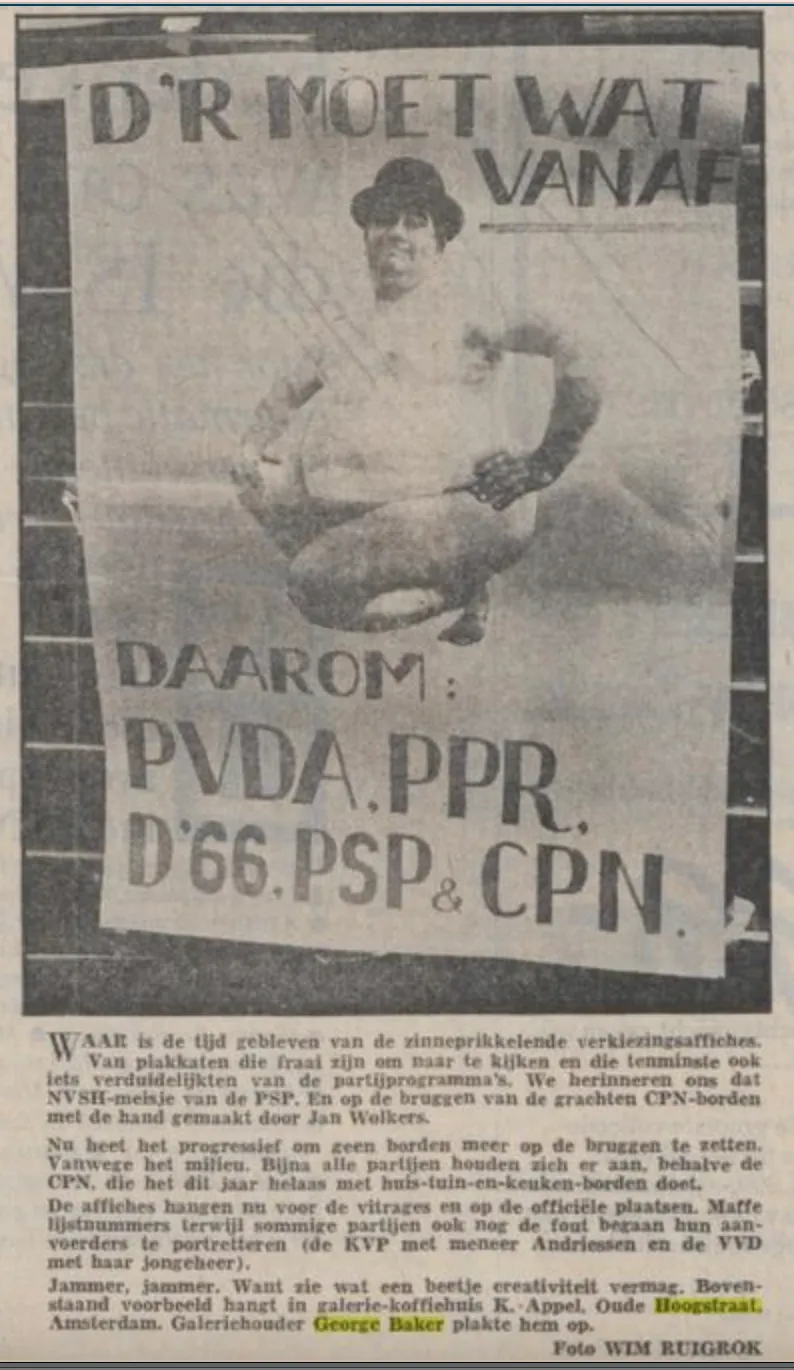
What many didn’t realize at the time is that Baker wasn’t just a coup-plotting t-shirt salesman—he was also a political aspirant. In the late 1970s, he ran for local office in Amsterdam under the banner of the Keer Uw Toekomst (“Turn Your Future”) party. Baker’s political platform was as unconventional as his lifestyle. He proposed importing women from countries like England, Thailand, and Brazil to solve the city’s drug and crime problems, believing that young men would be less inclined to cause trouble with women around. Despite the outlandishness of his ideas, his populist anti-tax rhetoric and promises of change did tap into the frustrations of some voters, even if his platform never gained significant traction. Baker was known for blending progressive politics with guerrilla tactics—he once plastered his gallery with posters mocking traditional Dutch political parties and advocated for bizarre solutions to social problems.
But this wasn’t just about local politics. Baker’s real passion was Suriname, the country of his birth. He saw himself as a potential player in Suriname’s future, constantly working on plans to overthrow the government and replace it with one that aligned with his ideals—or perhaps just one that paid him well. While his local political ambitions fizzled out, his revolutionary ideas for Suriname burned on, albeit mostly behind closed doors.
Baker’s Mysterious Motivations
From his early efforts to overthrow Suriname in the 1970s to his continued covert work into the 1990s, George Baker remained an enigmatic and multifaceted figure. On any given day, you could find him running an international drug ring, managing a free book exchange in the back of his café, displaying avant-garde art, plastering political posters across Amsterdam, running for office, or negotiating arms deals for mercenary forces.
Baker was a man of contradictions—just as comfortable in the world of intellectual debate as he was in illicit operations. What drove him? Was it money, patriotism, or simply the thrill of playing multiple sides in the murky game of Cold War politics? Perhaps it was a bit of everything. Was he working for the CIA, Dutch intelligence, or just himself? Or was he a tool for all three, adapting to whichever role best served his interests at the time?
Baker’s story reads like a Cold War spy novel, with more than a hint of a 1970s counterculture manifesto. His antics were often absurd, leaving us with more questions than answers. Was he a patriot trying to reshape Suriname’s future? A profiteer capitalizing on the instability of the region? Or simply a man who turned “grassroots revolution” into a chaotic blend of idealism and opportunism?
What makes Baker so difficult to pin down is that he seemed to embody all these roles at once—the revolutionary, the hustler, the visionary, and the con man. He blurred the lines between activism and criminality, between legitimate political action and underground schemes. In the end, Baker’s life was a reflection of the messy, morally ambiguous reality of Cold War geopolitics, where the lines between right and wrong were never as clear-cut as ideologues would have us believe.
In the end, George Baker’s story leaves us searching for answers, a reminder that sometimes, the most enigmatic figures in history don’t offer tidy conclusions. But perhaps that’s the point. In a world where ideals, profits, and power converge, the loose ends are where the real stories hide.56.
Frits Hirschland: From Pop Producer to Jungle Commando
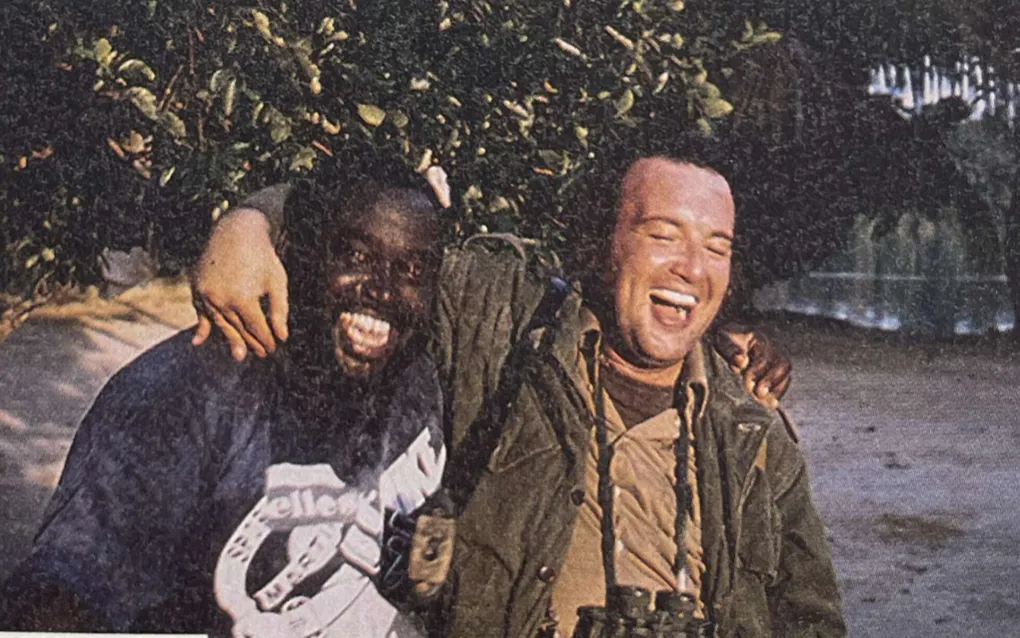
Few lives can compare to the rollercoaster ride that was Frits Hirschland’s. Born into a wealthy Dutch banking family, Hirschland’s early career saw him producing chart-topping hits and managing Dutch pop legends like Kayak and Falco, whose iconic “Rock Me Amadeus” skyrocketed to number one in the U.S. charts. But by the late 1980s, the music executive traded in his flashy Riviera lifestyle for something far more dangerous—becoming a key player in Suriname’s civil war.
It all began with a fateful phone call in 1987, one that would set the stage for the most bizarre chapter of Hirschland’s life. An old diving buddy introduced him to a French intelligence officer, who recruited him to act as a liaison between Ronnie Brunswijk’s Jungle Commando and various international intelligence agencies. Suddenly, the man who had brokered record deals was navigating a guerrilla movement in the South American rainforest.
In Suriname, Hirschland became Brunswijk’s personal secretary, drafting press releases, negotiating deals, and even acting as a mediator between the Jungle Commando and the CIA. Dubbed Commander Pencil, Hirschland wore a yarmulke while trekking through the jungle, comparing Brunswijk’s fight to the struggles his own Jewish ancestors had faced during the Holocaust. But the romanticized revolution quickly turned darker than any pop song he had ever produced.
The defining moment of Hirschland’s jungle career came in March 1990, when a plane landed in Moengo, East Suriname—not with the anticipated weapons shipment, but with 1,000 kilograms of cocaine. Hirschland quickly realized they had become pawns in a much larger game, with the CIA using the cocaine drop to sabotage the peace process. The “cocaine plane” incident unleashed a chain of events that nearly derailed Brunswijk’s entire operation. Frits found himself navigating treacherous political waters, with American, French, and Dutch intelligence services pulling strings from the shadows.
By the early 1990s, Frits had returned to the Netherlands, his revolutionary zeal tempered by the harsh realities of jungle warfare. He penned a book, Dossier Moengo: 290 Hours, which documented the labyrinthine world of covert operations, political machinations, and Suriname’s tragic descent into chaos. The book shed light on secret dealings with the CIA and revealed the internal struggles of the Jungle Commando, exposing a world most would never glimpse.
In his final years, Hirschland turned to more peaceful pursuits, opening a luxury handbag shop in The Hague. Yet, his colorful and controversial life came to an abrupt and mysterious end in 1999, when he was found dead in Amsterdam’s Amstel Hotel. Officially ruled a suicide, questions still linger about the circumstances of his death. Was it truly suicide, or was there more to the story, given his tangled history with international intelligence?
From producing pop hits to guerrilla warfare, Frits Hirschland lived a life that defied convention at every turn. His story is a testament to the strange intersections of music, politics, and war, forever etching his name into the annals of Cold War intrigue.
By Matthew Smith: Operation Suriname is a reader-supported publication. To receive new posts and support my work, consider becoming a free or paid subscriber.
Bruinsma’s name had been linked to an international cabal, a story sensationalized in the Netflix documentary “American Conspiracy: The Octopus Murders.” Despite evidence of Bruinsma’s massive drug trafficking operations in Suriname during the late ’80s, Brunswijk vehemently denied any association. The following year, in 1991, Bruinsma’s story would end abruptly in a hail of gunfire outside Amsterdam’s Hilton Hotel.
Santa Maria Times. “A Mercenary Doctor in Nicaragua.” December 13, 1987. https://www.newspapers.com/article/santa-maria-times-a-mercenary-doctor-in/151549323/
Het Parool. “Misbruik Naam A.M.G. Schmidt.” Gevonden in Delpher. Accessed September 19, 2024. https://www.delpher.nl/nl/kranten/view?query=%22George+Baker%22+Annie+M.G.+Schmidt+&page=1&cql%5B%5D=%28date+_gte_+%2201-01-1955%22%29&coll=ddd&redirect=true&identifier=ABCDDD:010842298:mpeg21:a0147&resultsidentifier=ABCDDD:010842298:mpeg21:a0147&rowid=1.
Leidsch Dagblad. “Naam Annie M.G. Schmidt Misbruikt.” December 20, 1993. Historische Kranten, Erfgoed Leiden en Omstreken. https://leiden.courant.nu/issue/LD/1993-12-20/edition/0/page/3.
Nieuwsblad van het Noorden. “Georg Baker Frans-Guyana Uitgezet.” October 15, 1966. Gevonden in Delpher. https://www.delpher.nl/nl/kranten/view?cql%5B%5D=%28date+_gte_+%2201-01-1979%22%29&cql%5B%5D=%28date+_lte_+%2201-01-2015%22%29&query=%22George+Baker%22+++Suriname&coll=ddd&redirect=true&identifier=ddd:011000681:mpeg21:a0205&resultsidentifier=ddd:011000681:mpeg21:a0205&rowid=1.
Het Parool. “Nam de Politie Bij Inval de Verkeerde Deur?” January 26, 1991. Gevonden in Delpher. https://www.delpher.nl/nl/kranten/view?query=%22George+Baker%22+Suriname&page=4&cql%5B%5D=%28date+_gte_+%2201-01-1979%22%29&cql%5B%5D=%28date+_lte_+%2201-01-2015%22%29&coll=ddd&redirect=true&identifier=ABCDDD:010833207:mpeg21:a0549&resultsidentifier=ABCDDD:010833207:mpeg21:a0549&rowid=2.
Comments
Hi Matthew, you might be interested to know that the aircraft that delivered weapons to Bouterse in 1987, were actually also used to transport weapons to Iran as part of the Arms-for-Hostages deal. I sent you a message, get in touch and I can share more details…
Date:
October 26, 2025