Light and Color as a Means of Altering Human Behavior
Controlled Offensive Behavior USSR
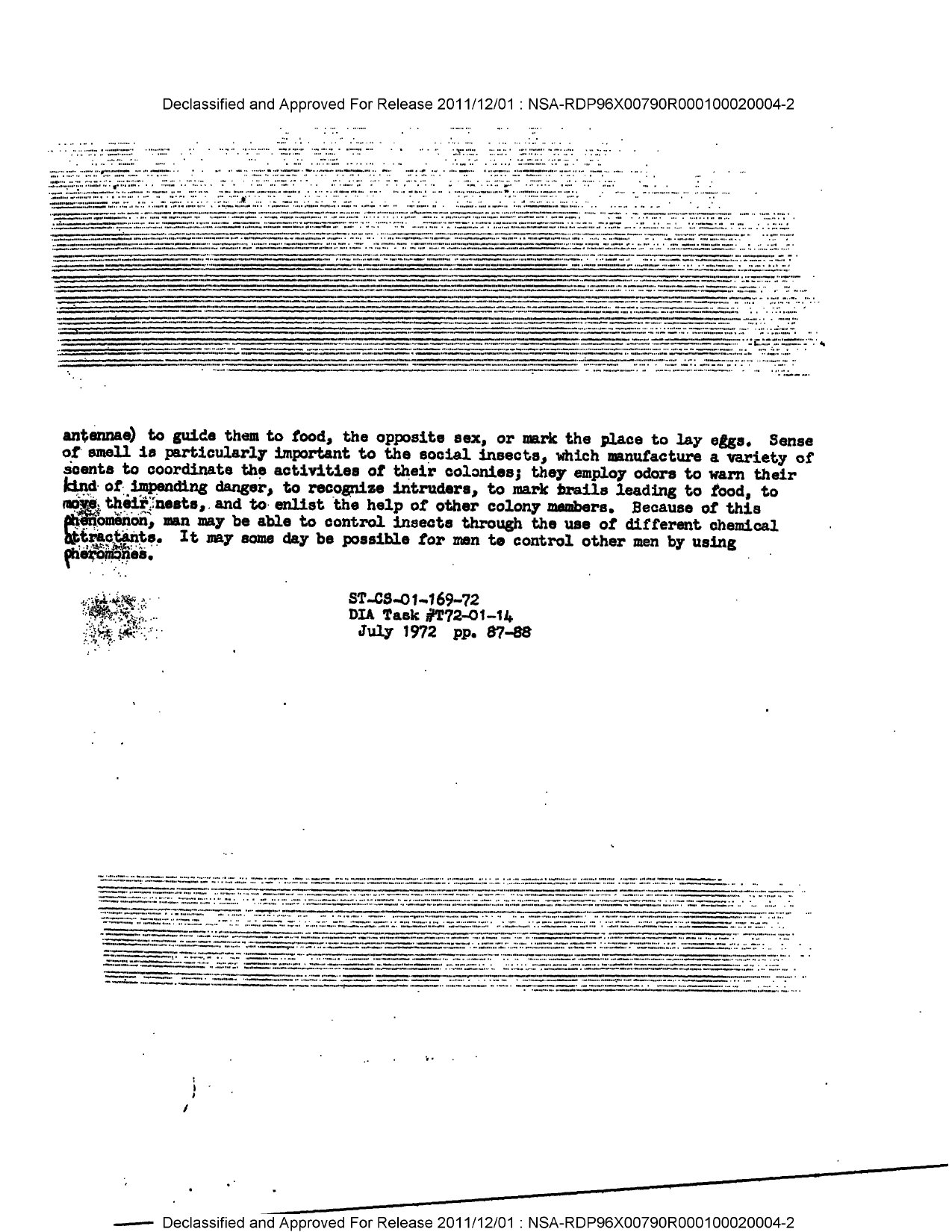
ST-CS-01-169-72
DIA Task #T72-01-14
July 1972 pp. 91 and 93
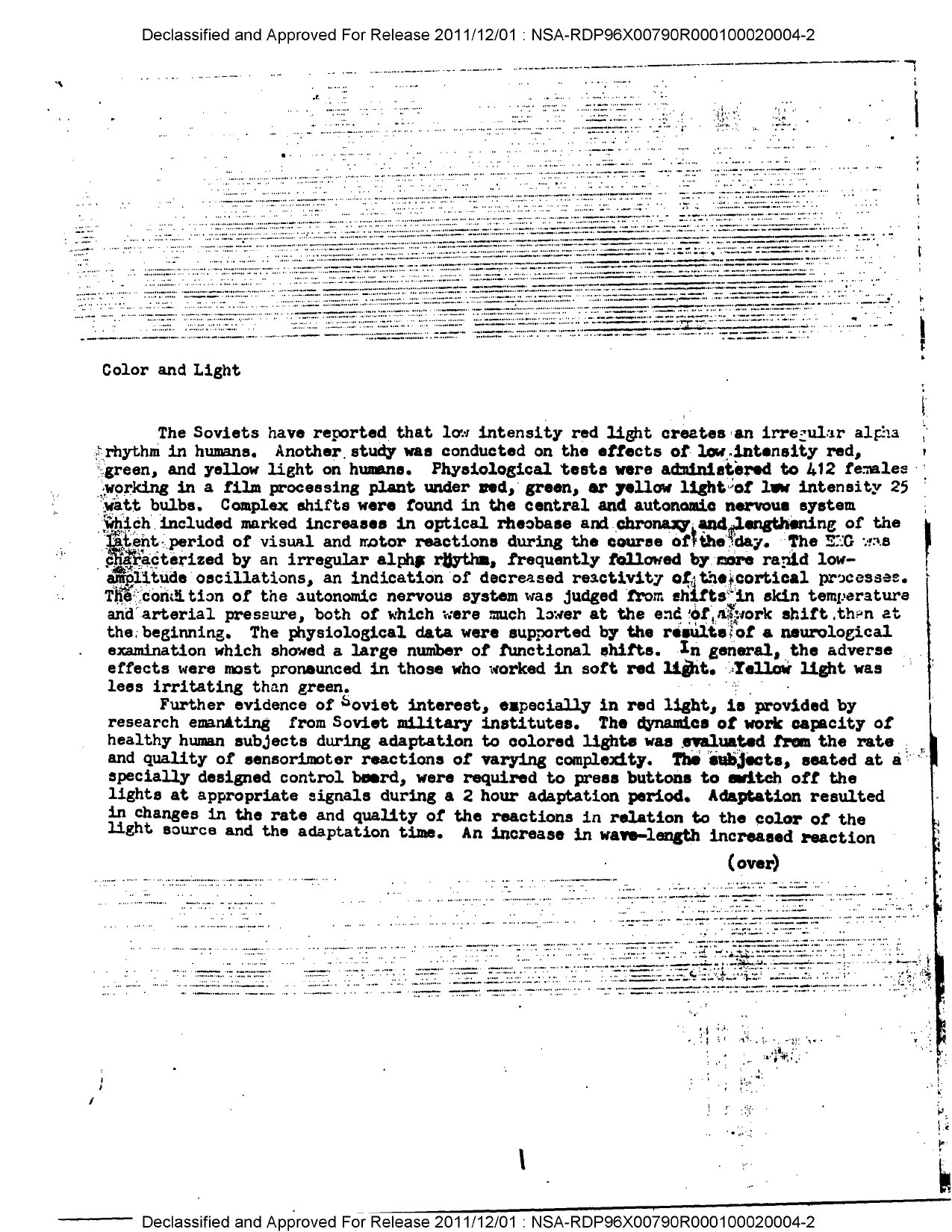
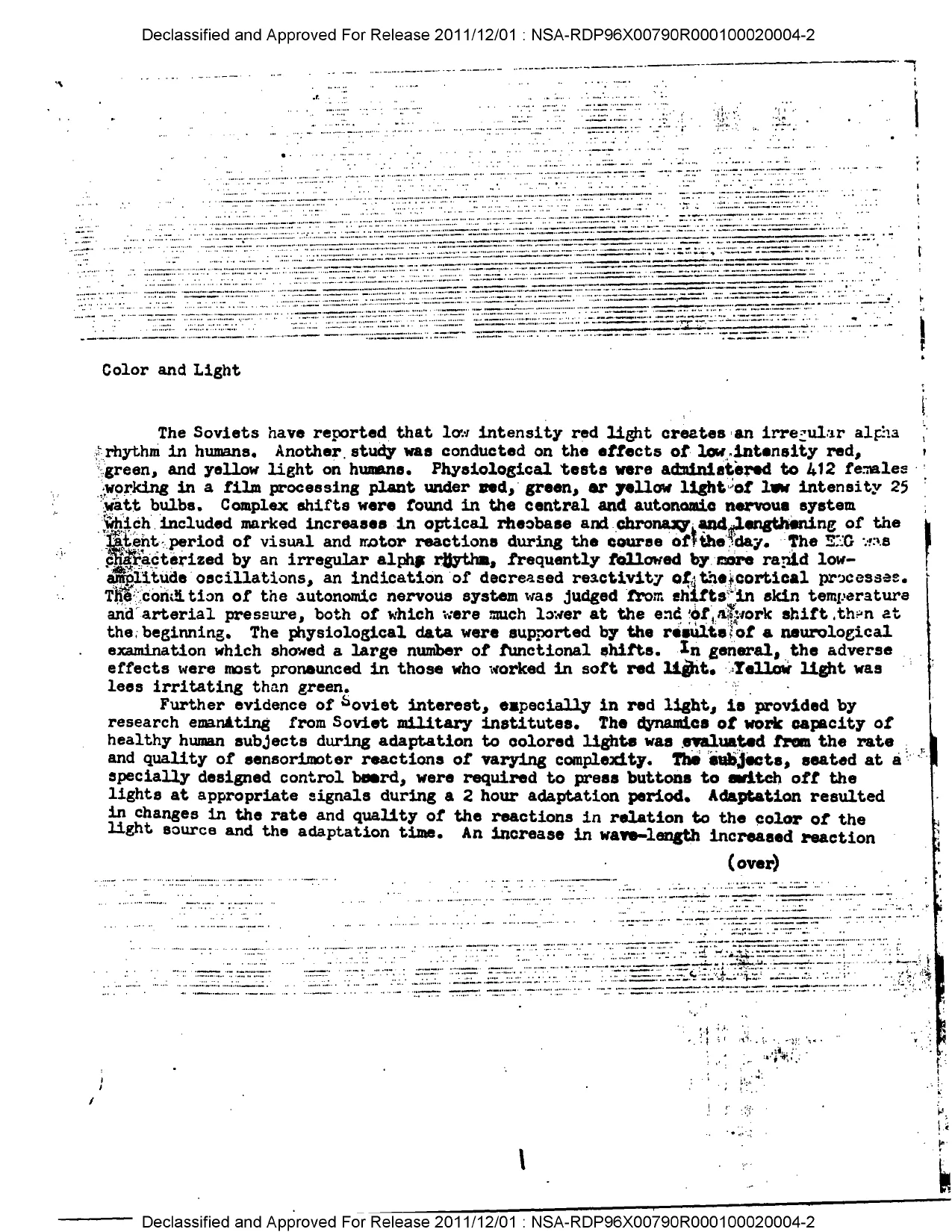
Color and Light
The Soviets have reported that low intensity red light creates an irregular alpha rhythm in humans. Another study was conducted on the effects of low intensity red, green, and yellow light on humans. Physiological tests were administered to 412 females working in a film processing plant under red, green, ar yellow light of lew intensity 25 watt bulbs.
Complex shifts were found in the central and autonomic nervous system which included marked increases in optical rhesbase and chronaxy and lengthening of the latent period of visual and motor reactions during the course of the day. The EEC was characterized by an irregular alphs rythm, frequently followed by ore ranid lowamplitude oscillations, an indication of decreased reactivity of the cortical processes.
The contion of the autonomic nervous system was judged from shifts in skin temperature and arterial pressure, both of which were much lower at the end of a work shift then at the beginning. The physiological data were supported by the results of a neurological examination which showed a large number of functional shifts. In general, the adverse effects were most proneunced in those who worked in soft red light. Yellow light was lees irritating than green.
Further evidence of Soviet interest, expecially in red light, is provided by research emanating from Soviet military institutes. The dynamics of work capacity of healthy human subjects during adaptation to colored lights was evaluated from the rate and quality of sensorimoter reactions of varying complexity. The subjects, seated at a specially designed control beerd, were required to press buttons to switch off the lights at appropriate signals during a 2 hour adaptation period.
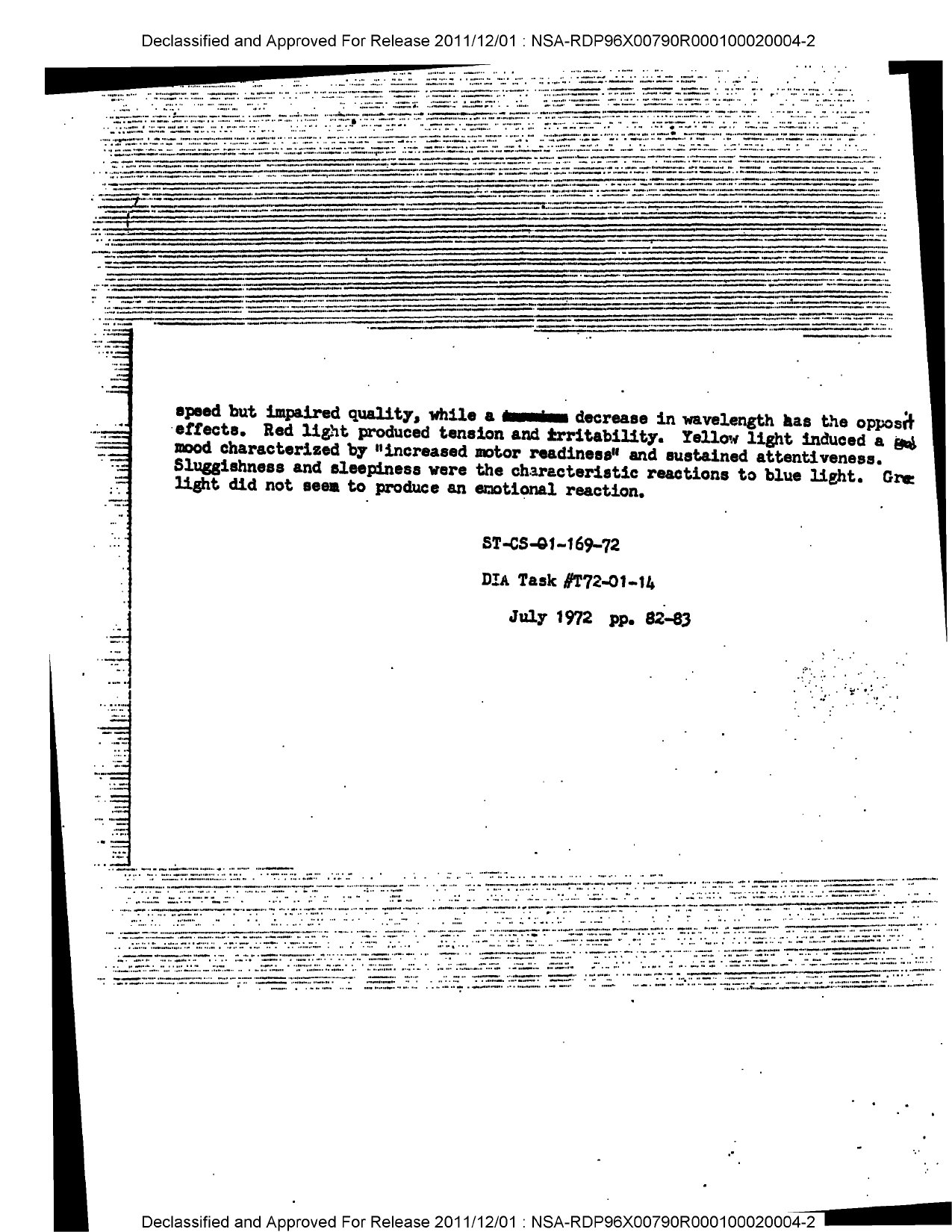
Adaptation resulted in changes in the rate and quality of the reactions in relation to the color of the light source and the adaptation time. An increase in wave-length increased reaction speed but impaired quality, while a di decrease in wavelength has the opposit effects. Red light produced tension and frritability. Yellow light induced a mood characterized by “increased motor readiness” and sustained attentiveness. Sluggishness and sleepiness were the characteristic reactions to blue light. Gre light did not seem to produce an emotional reaction.
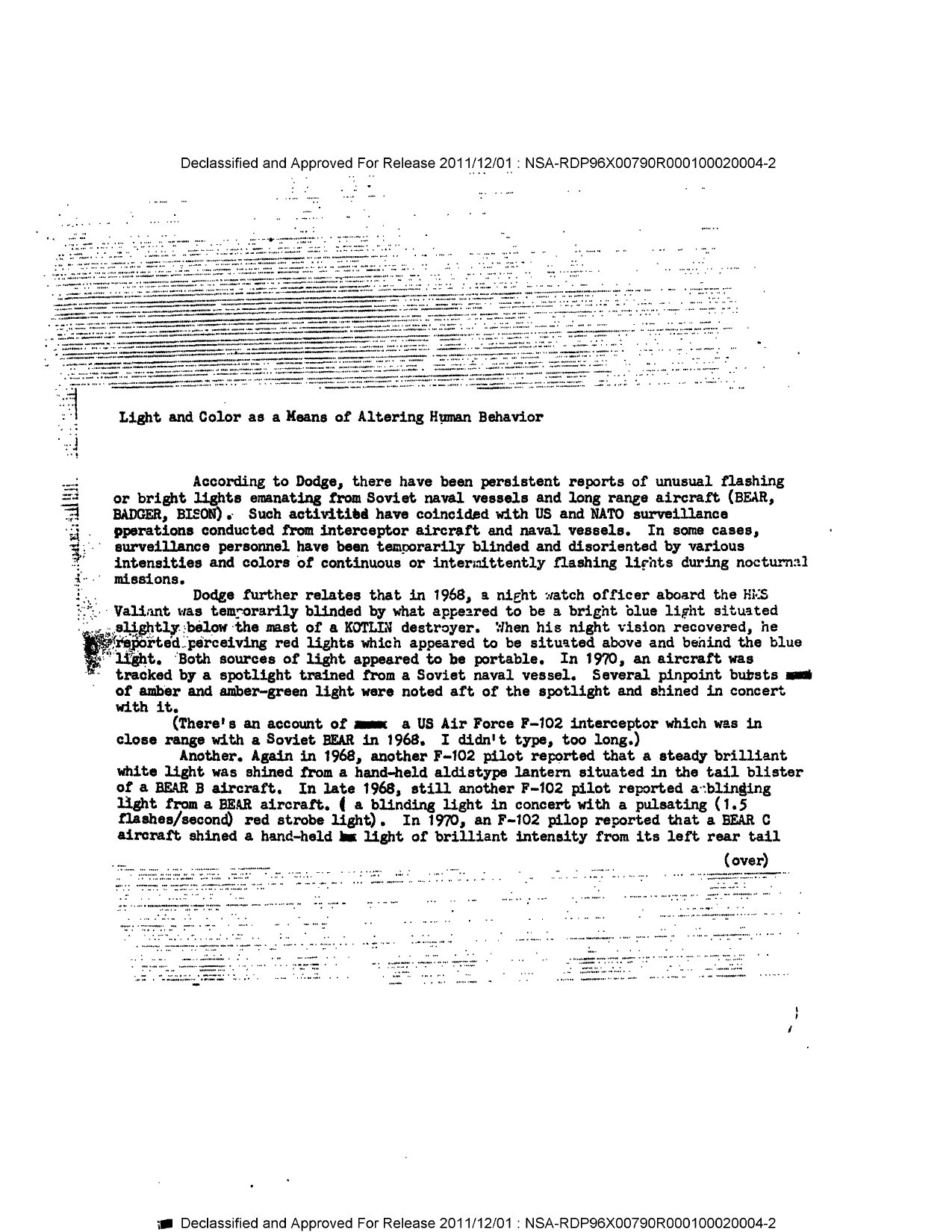
Light and Color as a Means of Altering Human Behavior
According to Dodge, there have been persistent reports of unusual flashing or bright lights emanating from Soviet naval vessels and long range aircraft (BEAR, BADGER, BISON). Such activitied have coincided with US and NATO surveillance pperations conducted from interceptor aircraft and naval vessels.
In some cases, surveillance personnel have been temporarily blinded and disoriented by various intensities and colors of continuous or intermittently flashing lights during nocturnal missions.
Dodge further relates that in 1968, a night watch officer aboard the HIS Valiant was temrorarily blinded by what appeared to be a bright blue light situated slightly below the mast of a KOTLIN destroyer. When his night vision recovered, he raported perceiving red lights which appeared to be situated above and benind the blue light. Both sources of light appeared to be portable.
In 1970, an aircraft was tracked by a spotlight trained from a Soviet naval vessel. Several pinpoint bursts of amber and amber-green light were noted aft of the spotlight and shined in concert with it.
(There’s an account of a US Air Force F-102 interceptor which was in close range with a Soviet BEAR in 1968. I didn’t type, too long.)
Another. Again in 1968, another F-102 pilot reported that a steady brilliant white light was shined from a hand-held aldistype lantern situated in the tail blister of a BEAR B aircraft. In late 1968, still another F-102 pilot reported a blinging light from a BEAR aircraft. ( a blinding light in concert with a pulsating (1.5 flashes/second) red strobe light).
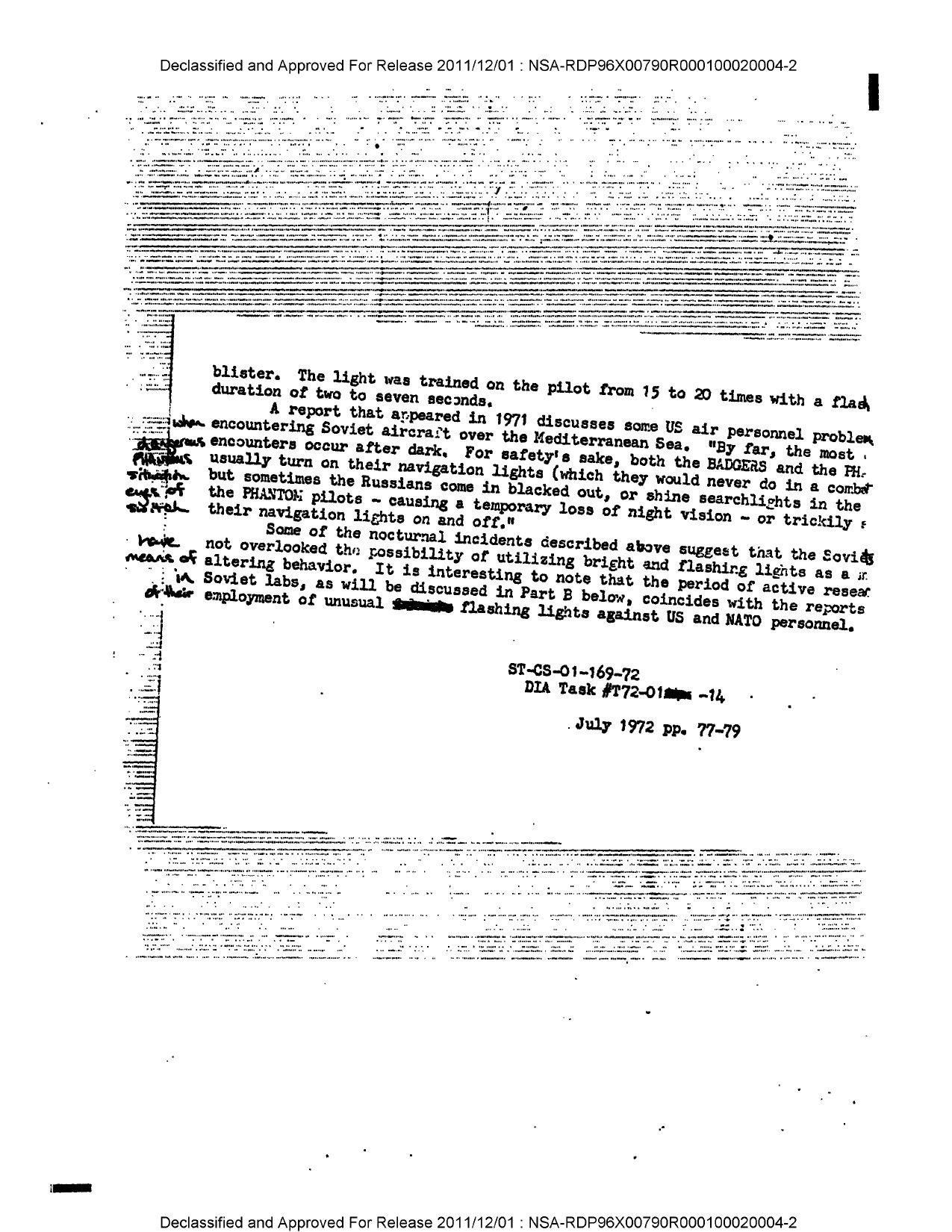
In 1970, an F-102 pilop reported that a BEAR C aircraft shined a hand-held light of brilliant intensity from its left rear tail blister. The light was trained on the pilot from 15 to 20 times with a flas duration of two to seven seconds.
A report that arpeared in 1971 discusses some US air personnel problem encountering Soviet aircraft over the Mediterranean Sea. “By far, the most eferous encounters occur after dark. For safety’s sake, both the BADGERS and the PH. HAS usually turn on their navigation lights (which they would never do in a combar situhon but sometimes the Russians come in blacked out, or shine searchlights in the eves of the PHANTOM pilots- causing a temporary loss of night vision- or trickily: seek their navigation lights on and off.”
Some of the nocturnal incidents described above suggest that the Sovie have not overlooked the possibility of utilizing bright and flashing lights as a ir means of altering behavior. It is interesting to note that the period of active resear Soviet labs, as will be discussed in Part B below, coincides with the reports ftheir employment of unusualmceflashing lights against US and NATO personnel.
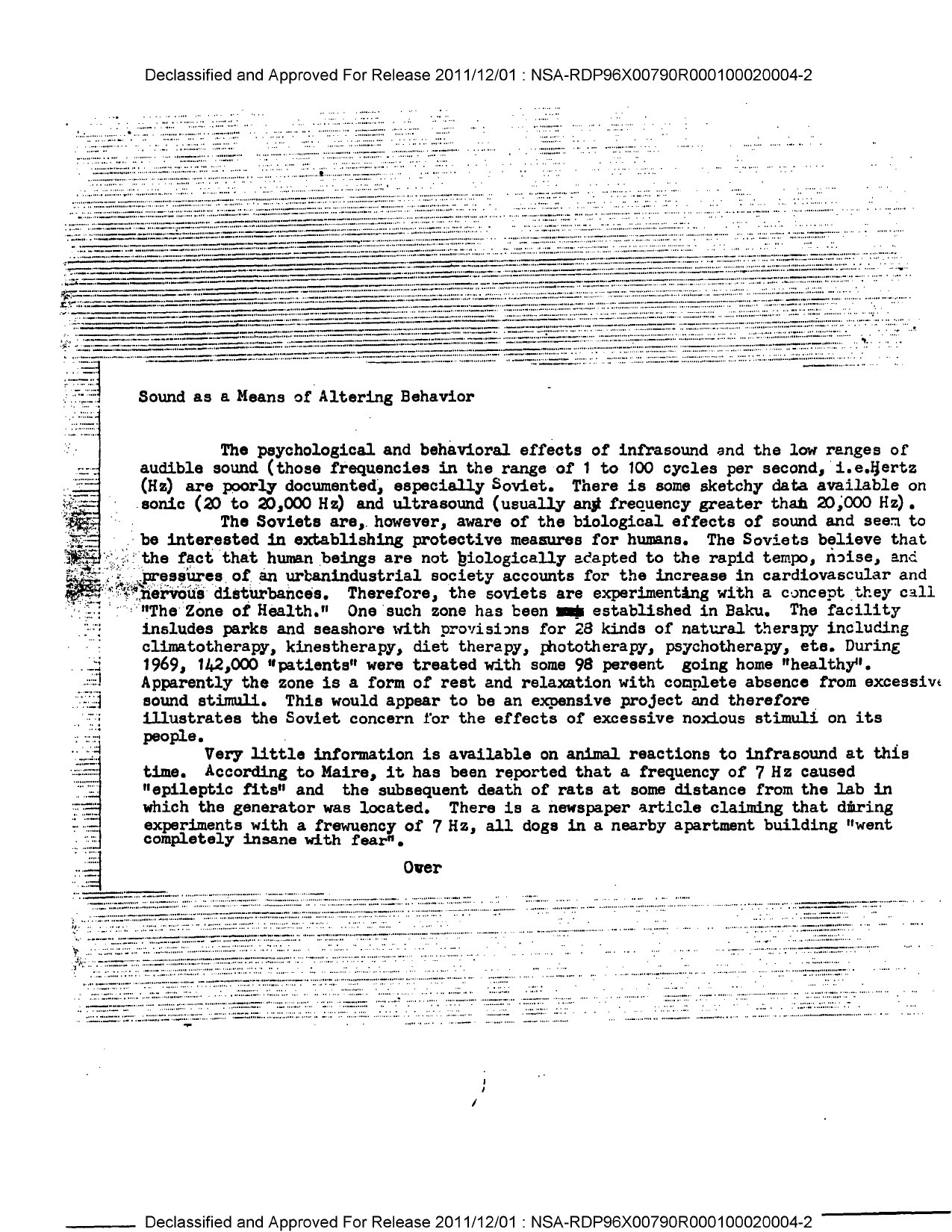
Sound as a Means of Altering Behavior
The psychological and behavioral effects of infrasound and the low of audible sound (those frequencies in the range of 1 to 100 cycles per second, i.e.Hertz (Hz) are poorly documented, especially Soviet. There is some sketchy data available on sonic (20 to 20,000 Hz) and ultrasound (usually ant frequency greater thah 20,000 Hz).
The Soviets are, however, aware of the biological effects of sound and seem to be interested in extablishing protective measures for humans. The Soviets believe that the fact that human beings are not biologically acapted to the rapid tempo, noise, and cali pressures of an urbanindustrial society accounts for the increase in cardiovascular and nervous disturbances.
Therefore, the soviets are experimenting with a concept they “The Zone of Health.” One such zone has been established in Baku. The facility insludes parks and seashore with provisions for 28 kinds of natural therapy including climatotherapy, kinestherapy, diet therapy, phototherapy, psychotherapy, ets.
During 1969, 142,000 “patients” were treated with some 98 pereent going home “healthy”. Apparently the zone is a form of rest and relaxation with complete absence from excessive sound stimuli. This would appear to be an expensive project and therefore illustrates the Soviet concern for the effects of excessive noxdous stimuli on its people.
Very little information is available on animal reactions to infrasound at this time. According to Maire, it has been reported that a frequency of 7 Hz caused “epileptic fits” and the subsequent death of rats at some distance from the lab in which the generator was located. There is a newspaper article claiming that diring experiments with a frewuency of 7 Hz, all dogs in a nearby apartment building “went completely insane with fear.
(over)
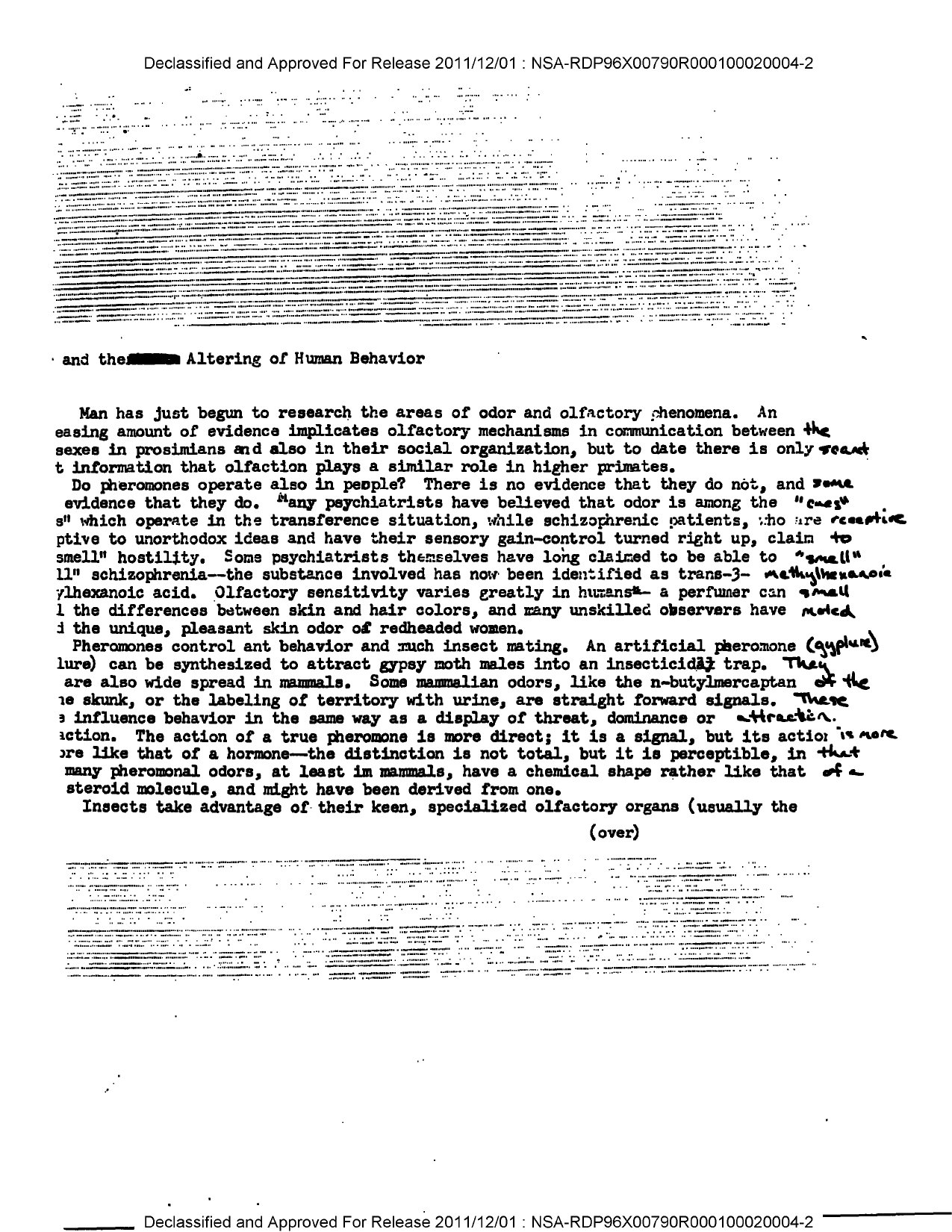
and the [CENSORED]
Altering of Human Behavior
Man has just begun to research the areas of odor and olfactory chenomena. An easing amount of evidence implicates olfactory mechanisms in communication between the sexes in prosimians and also in their social organization, but to date there is only seant t information that olfaction plays a similar role in higher primates.
Do pheromones operate also in pepple? There is no evidence that they do nót, and seme evidence that they do. Many peychiatrists have believed that odor is among the “cmes s” which operate in the transference situation, while schizophrenic patients, tho are reeaptice ptive to unorthodox ideas and have their sensory gain-control turned right up, claim to “smell” hostility. Some psychiatrists themselves have long claimed to be able to “smell” schizophrenia–the substance involved has now been identified as trans-3- methylhexалоiе ylhexanoic acid.
Olfactory sensitivity varies greatly in hurans a perfumer canmell 1 the differences between skin and hair colors, and many unskilled observers have moted the unique, pleasant skin odor of redheaded women.
Pheromones control ant behavior and much insect mating. An artificial pheromone (gyplure) lure) can be synthesized to attract gypsy moth males into an insecticidaž trap. They are also wide spread in mammals. Some mammalian odors, like the n-butylmercaptanthe ne skunk, or the labeling of territory with urine, are straight forward signals. These influence behavior in the same way as a display of threat, dominance or Hrectin action.
The action of a true pheromone is more direct; it is a signal, but its actiors more ore like that of a hormone-the distinction is not total, but it is perceptible, in that many pheromonal odors, at least im mammals, have a chemical shape rather like thatof steroid molecule, and might have been derived from one.
Insects take advantage of their keen, specialized olfactory organs (usually the antennae) to guide them to food, the opposite sex, or mark the place to lay eggs. Sense of smell is particularly important to the social insects, which manufacture a variety of scents to coordinate the activities of their colonies; they employ odors to warn their kind of impending danger, to recognize intruders, to mark brails leading to food, to move their nests, and to enlist the help of other colony members. Because of this Phenomenon, man may be able to control insects through the use of different chemical attractants. It may some day be possible for men te control other men by using pherompnes.
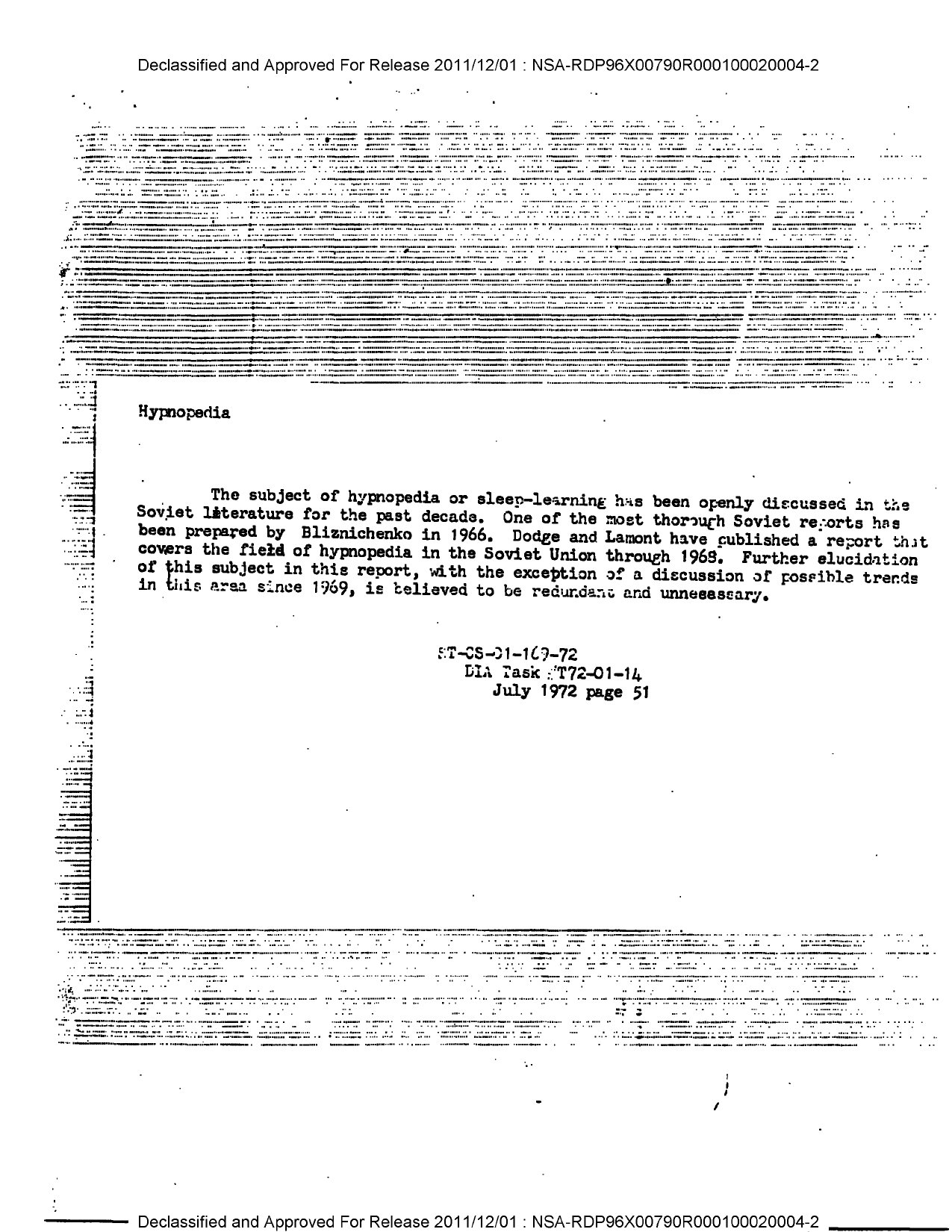
Hypnopedia
The subject of hypnopedia or sleep-learning hus been openly discussed in the Soviet lèterature for the past decade. One of the most thoruch Soviet regorts has been prepared by Bliznichenko in 1966.
Dodge and Lamont have cublished a report that covers the field of hypnopedia in the Soviet Union through 1968. Further elucidntion of this subject in this report, with the exception of a discussion of possible trends in this araa since 1969, is telieved to be redundane and unnesessary.
Source:
Link:
Internal Link:
Date:
July 1, 1972
Categories:
Tags:
Military Research, NSA, Olfactory Phenomena, Sensory Disorientation, Sleep Learning, Sonic Effects, Soviet Behavioral Research