United States Southern Command Historical Report 1984
few parts mention Suriname:
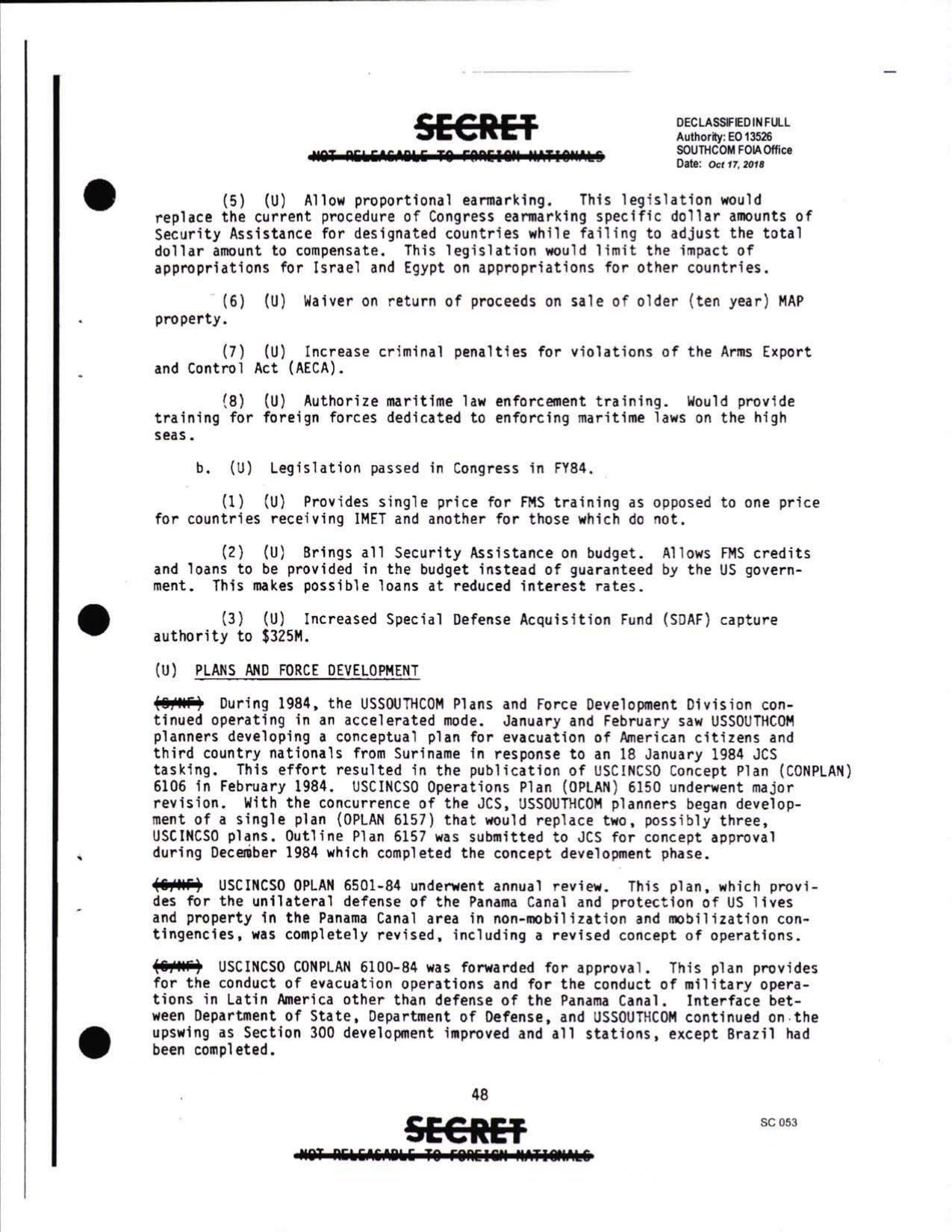
Plans and Force Development
During 1984, the USSOUTHCOM Plans and Force Development Division continued operating in an accelerated mode. In January and February, USSOUTHCOM planners developed a conceptual plan for the evacuation of American citizens and third-country nationals from Suriname in response to an 18 January 1984 JCS tasking.
This effort resulted in the publication of USCINCSO Concept Plan (CONPLAN) 6106 in February 1984. USCINCSO Operations Plan (OPLAN) 6150 underwent major revision. With the concurrence of the JCS, USSOUTHCOM planners began developing a single plan (OPLAN 6157) that would replace two, possibly three, USCINCSO plans. Outline Plan 6157 was submitted to the JCS for concept approval in December 1984, completing the concept development phase.
…
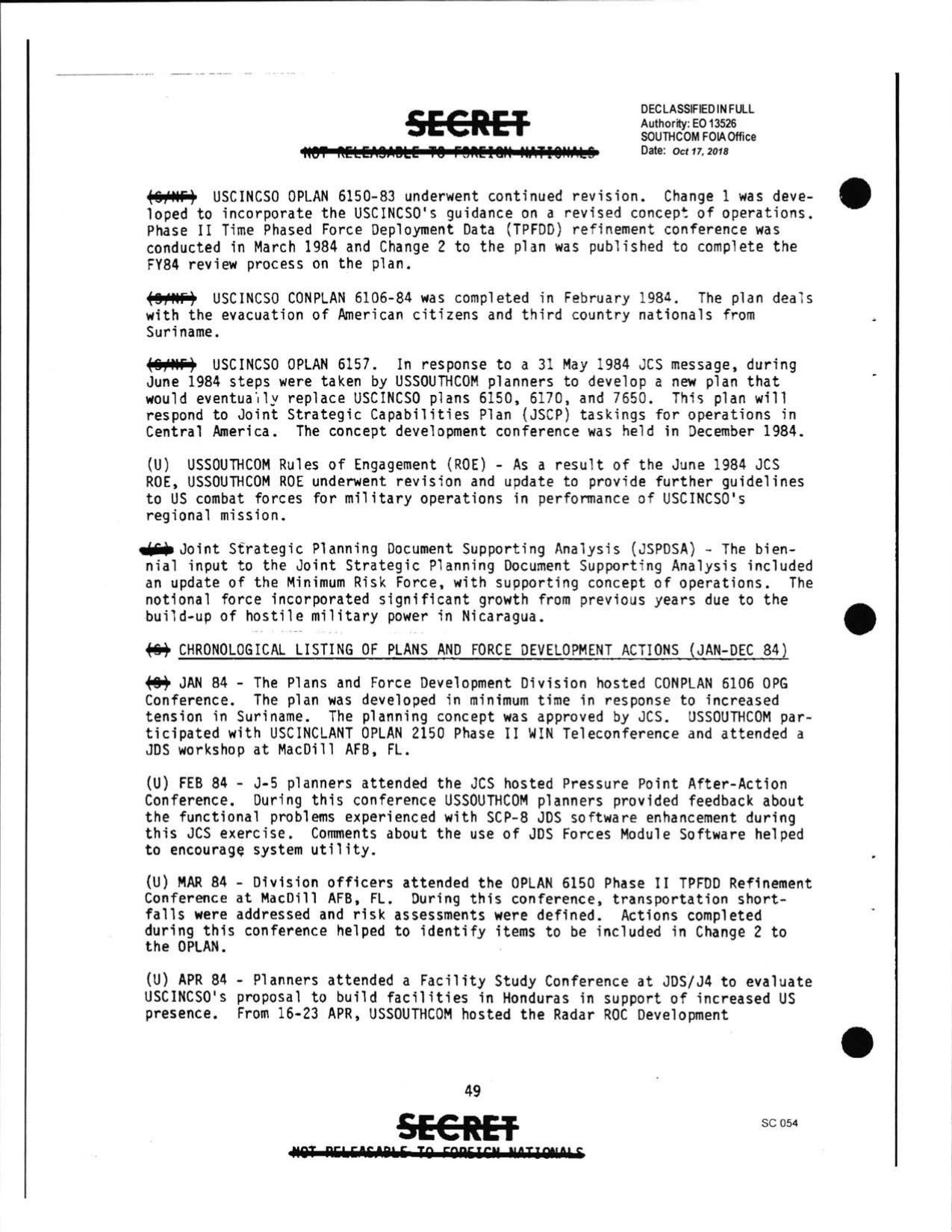
Chronological Listing of Plans and Force Development Activities (Jan–Dec 1984)
Jan 1984 – The Plans and Force Development Division hosted the CONPLAN 6106 OPG Conference. The plan was developed in minimal time in response to increased tension in Suriname. The planning concept was approved by the JCS. USSOUTHCOM participated with USCINCLANT OPLAN 2150 Phase II via teleconference and attended a JCS workshop at MacDill AFB, Florida.
…
Politico-Military Summary
…
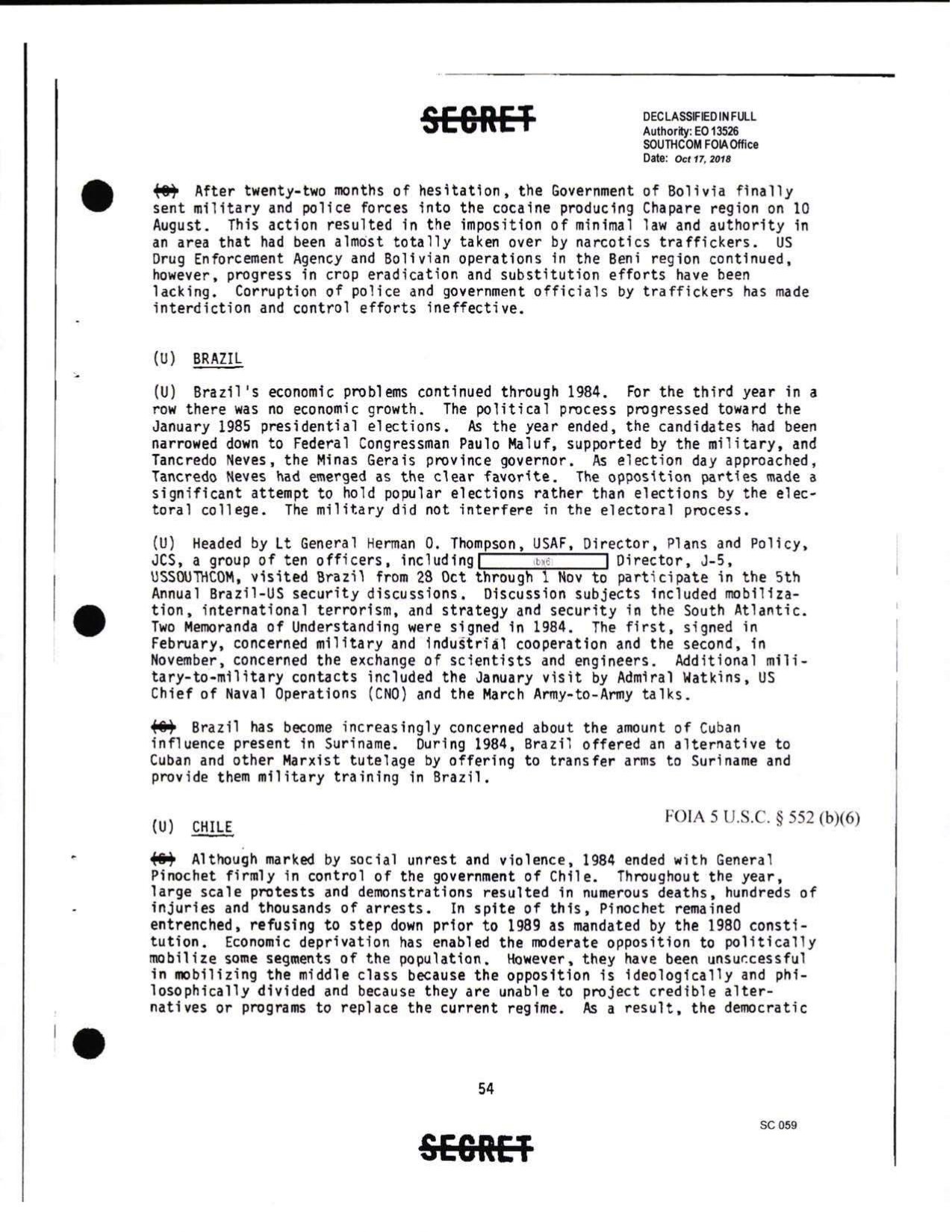
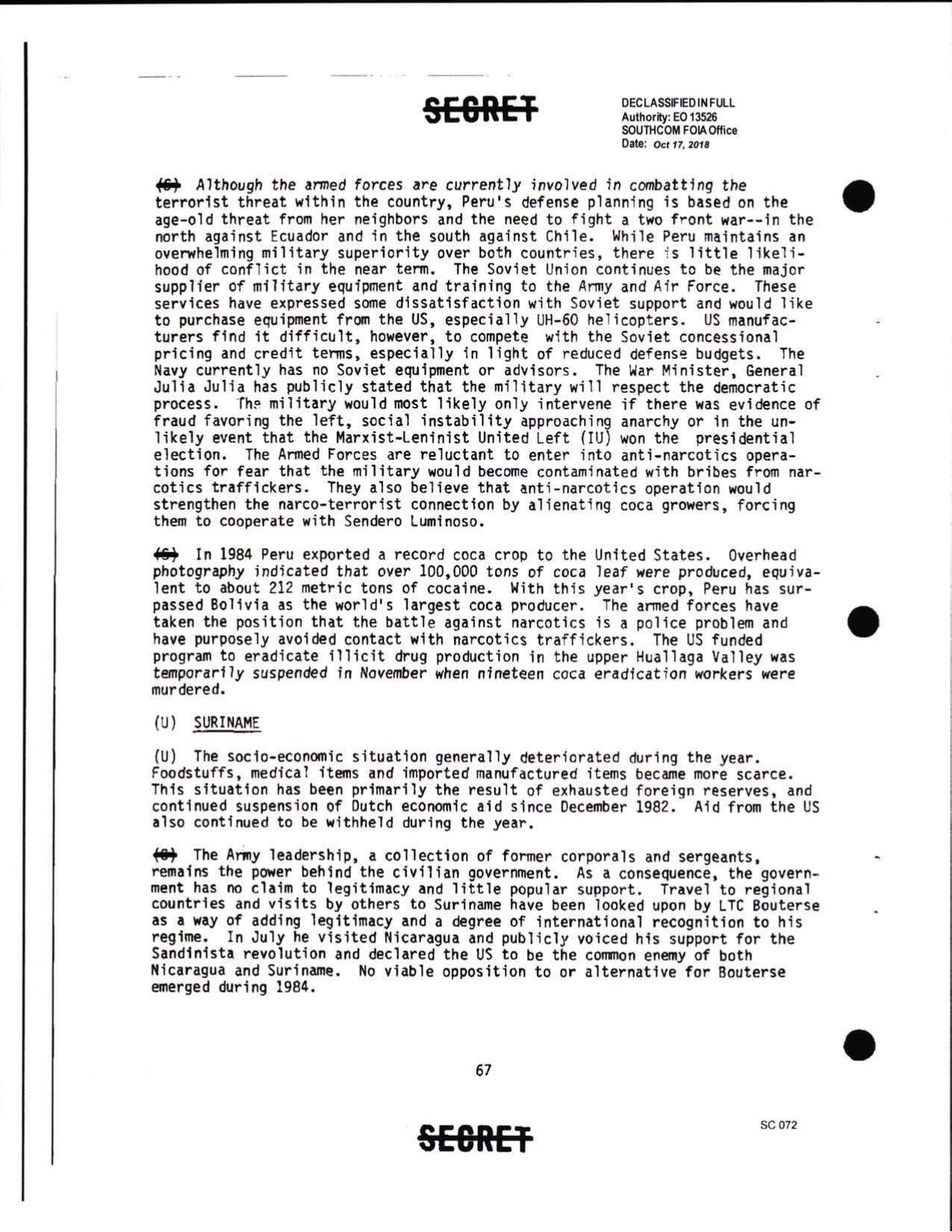
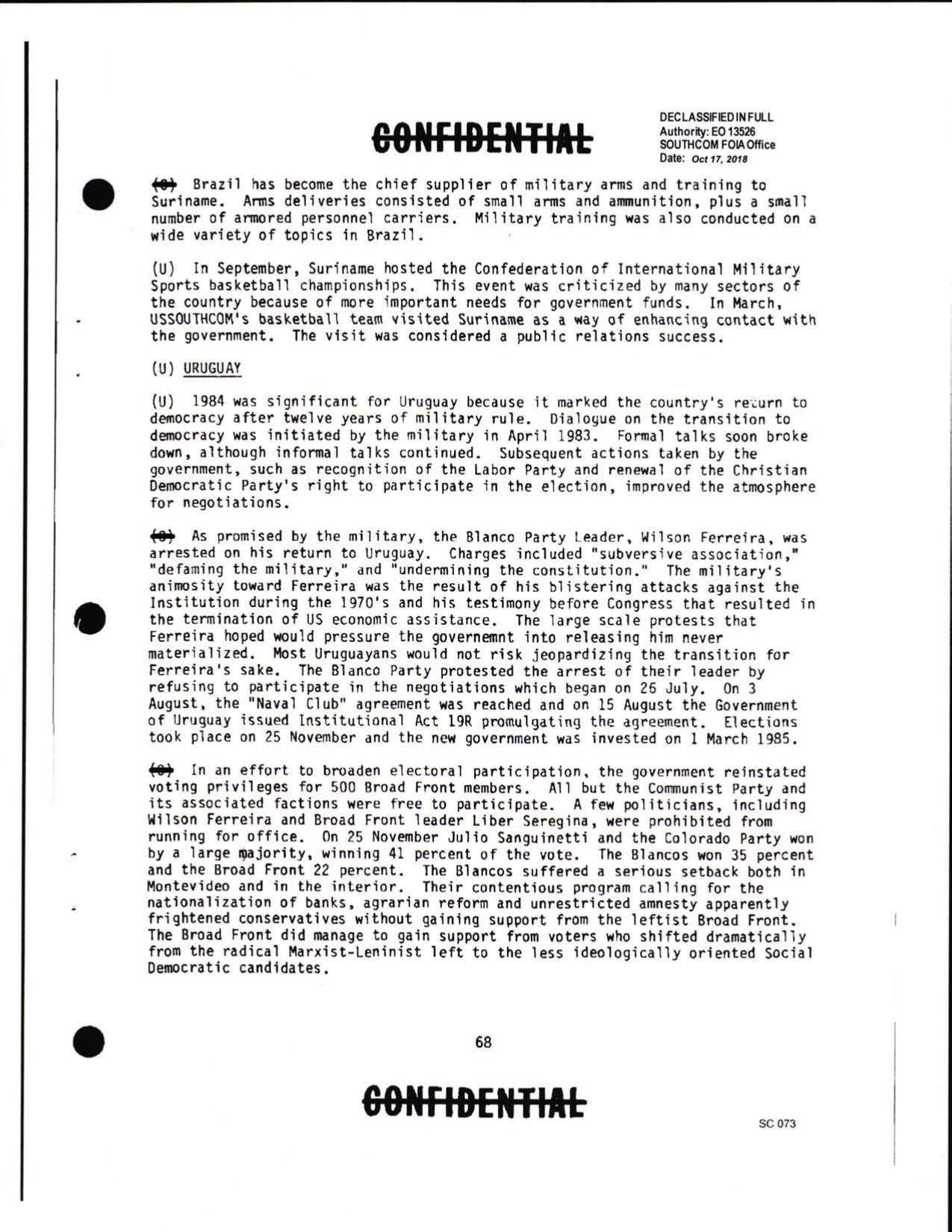
Suriname
The socio-economic situation in Suriname generally deteriorated during the year. Foodstuffs, medical items, and imported manufactured goods became increasingly scarce. This was primarily due to exhausted foreign reserves and the continued suspension of Dutch economic aid since December 1982. Aid from the United States was also withheld throughout the year.
The Army leadership, composed of former corporals and sergeants, remained the power behind the civilian government. As a result, the government had little legitimacy and minimal popular support. Travel to regional countries and visits by foreign officials were seen by LTC Bouterse as a way to gain legitimacy and international recognition for his regime. In July, he visited Nicaragua, publicly voiced support for the Sandinista revolution, and declared the United States the common enemy of both Nicaragua and Suriname. No viable opposition to Bouterse emerged during 1984.
Brazil became the chief supplier of military arms and training to Suriname. Arms deliveries included small arms, ammunition, and a small number of armored personnel carriers. Military training in Brazil covered a wide variety of topics.
In September, Suriname hosted the Confederation of International Military Sports basketball championships. The event faced criticism due to pressing domestic needs for government funds. In March, USSOUTHCOM’s basketball team visited Suriname to strengthen contact with the government. The visit was considered a public relations success.
…
Source:
Link:
Internal Link:
Date:
July 15, 1985